3.4 - Case Study: Robert Peel, Penal Reform & Policing
Key facts and dates
Sir Robert Peel, as Home Secretary in the 1820s and later Prime Minister, drove significant changes in Britain's approach to crime and punishment. His reforms reduced the severity of the legal system and introduced professional policing, influenced by earlier reformers and a growing emphasis on fairness and prevention.
Timeline of key events
- 1823 – Peel introduces acts reducing capital offences and passes the Gaols Act for prison improvements.
- 1829 – Establishment of the Metropolitan Police Force in London, the first professional police service.
- 1832 – Further parliamentary acts under Peel abolish death penalty for many minor crimes.
- Mid-19th century – Peel's policing model extends nationwide, shaping modern law enforcement.
Influences on Peel's penal reforms
Sir Robert Peel, serving as Home Secretary in the 1820s, was instrumental in reshaping Britain's criminal justice system. His efforts were shaped by the humanitarian ideas of earlier reformers and a broader push for change, aiming to make punishments less harsh and more focused on rehabilitation.
Key influences on Peel's approach
- Ideas from John Howard - Howard's reports on poor prison conditions, including overcrowding and disease, inspired Peel to advocate for better treatment of inmates.
- Influence of Elizabeth Fry - Fry's work highlighting the neglect of female prisoners and the need for education and care encouraged Peel to incorporate reforms addressing these issues.
- Reformist spirit of the era - A growing belief in fairness and effectiveness over brutality motivated Peel to sponsor laws that reduced extreme penalties, reflecting Enlightenment ideals of justice.
Reduction of capital offences under Peel
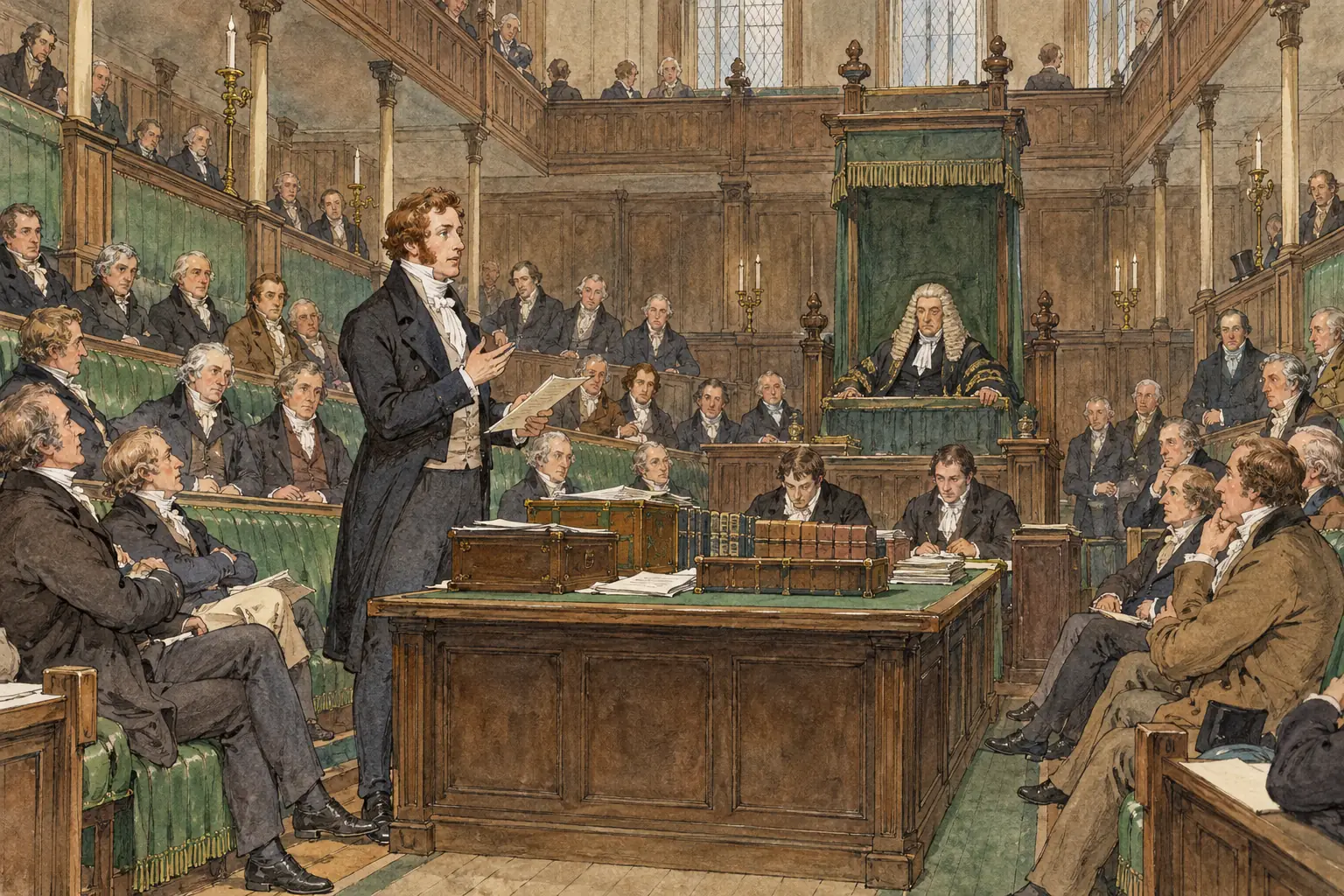
Peel worked to dismantle aspects of the Bloody Code, which had imposed the death penalty for numerous minor crimes. Through parliamentary acts, he significantly decreased the number of offences punishable by death, making the system more humane and practical.
Changes to capital punishment
- Acts of Parliament in 1823 - These laws removed the death penalty for over 100 minor offences, such as petty theft, focusing capital punishment on serious crimes only.
- Further reforms in 1832 - Additional acts abolished execution for hundreds more minor crimes, including forgery and certain types of larceny, reducing hangings dramatically.
- Overall impact - By limiting capital offences, Peel's measures addressed the ineffectiveness of widespread death sentences, which juries often avoided, leading to more consistent justice.
The Gaols Act 1823 and prison regulations
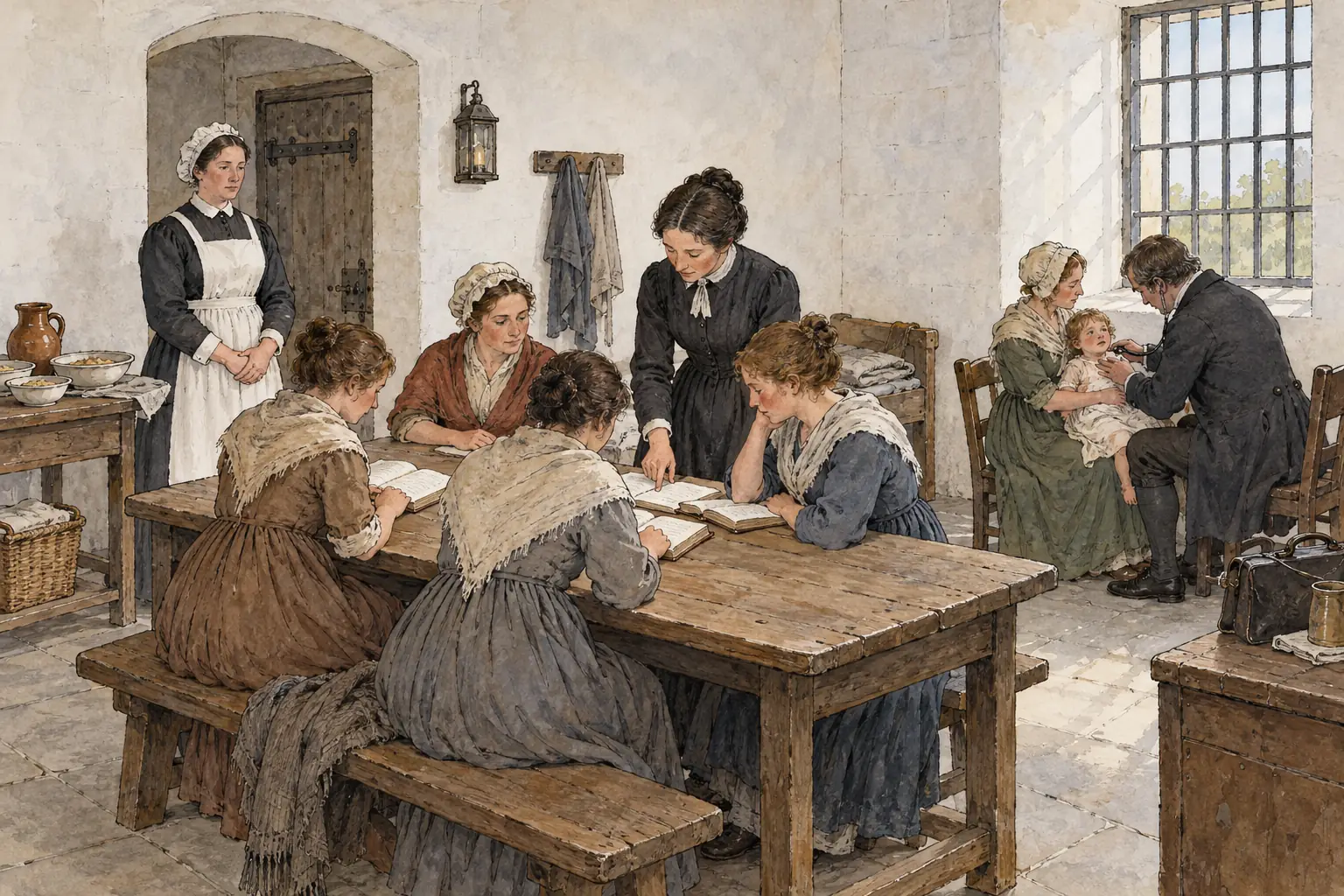
One of Peel's key achievements was the Gaols Act 1823, which set new standards for prison management. Although implementation varied across regions, it marked a shift towards treating prisoners with basic dignity and offering opportunities for improvement.
Regulations introduced by the Gaols Act
- Provision of essentials - Prisons were required to supply proper food and medical care, with regular visits from doctors to address health needs.
- Gender-specific staffing - Female warders were mandated for female prisoners to ensure appropriate supervision and reduce exploitation.
- Education and reform - Inmates were to receive some basic education, promoting the idea that prisons could rehabilitate rather than just punish.
- Enforcement challenges - While the act was a milestone, inconsistent local application meant not all prisons adopted the changes fully, highlighting the need for stronger oversight.
Creation of the Metropolitan Police Force
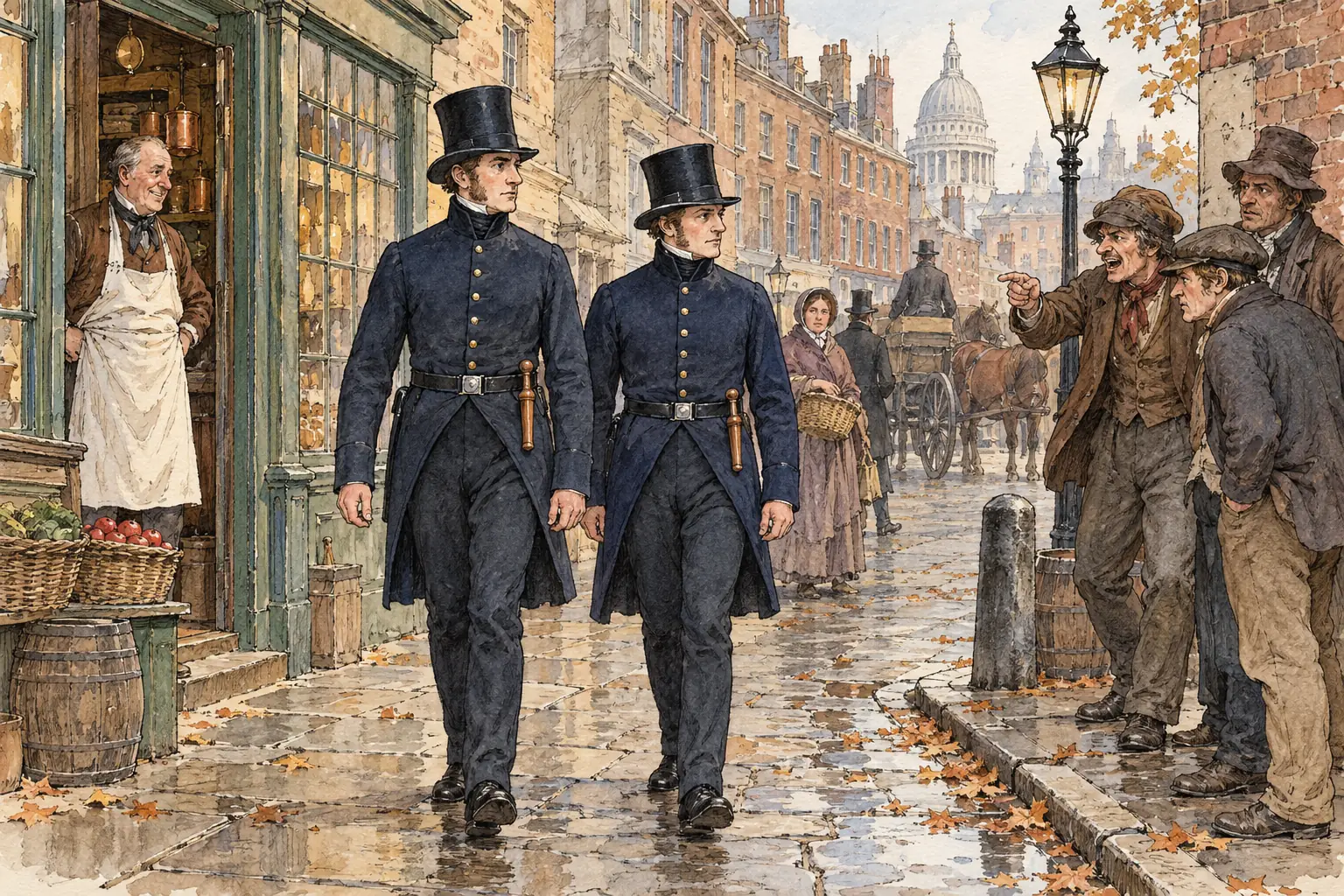
Peel's most enduring reform was establishing the Metropolitan Police Force in 1829, transforming law enforcement in London. This was the first centrally organised, professional police service in Britain, emphasising prevention over mere reaction to crime.
Features of the new police force
- Professional structure - Officers, known as "Peelers" or "Bobbies", were full-time, salaried professionals under central control, unlike previous unpaid watchmen.
- Uniform and patrol system - They wore distinctive blue tailcoats and top hats, patrolling assigned beats to maintain visibility and deter potential offenders.
- Focus on prevention - The force aimed to stop crimes before they occurred through constant presence, a revolutionary shift from earlier reactive methods.
- Initial public reaction - Many viewed the police with suspicion, fearing it resembled a military-style control, but over time it gained acceptance as crime rates fell.
Peel's principles for policing and their legacy
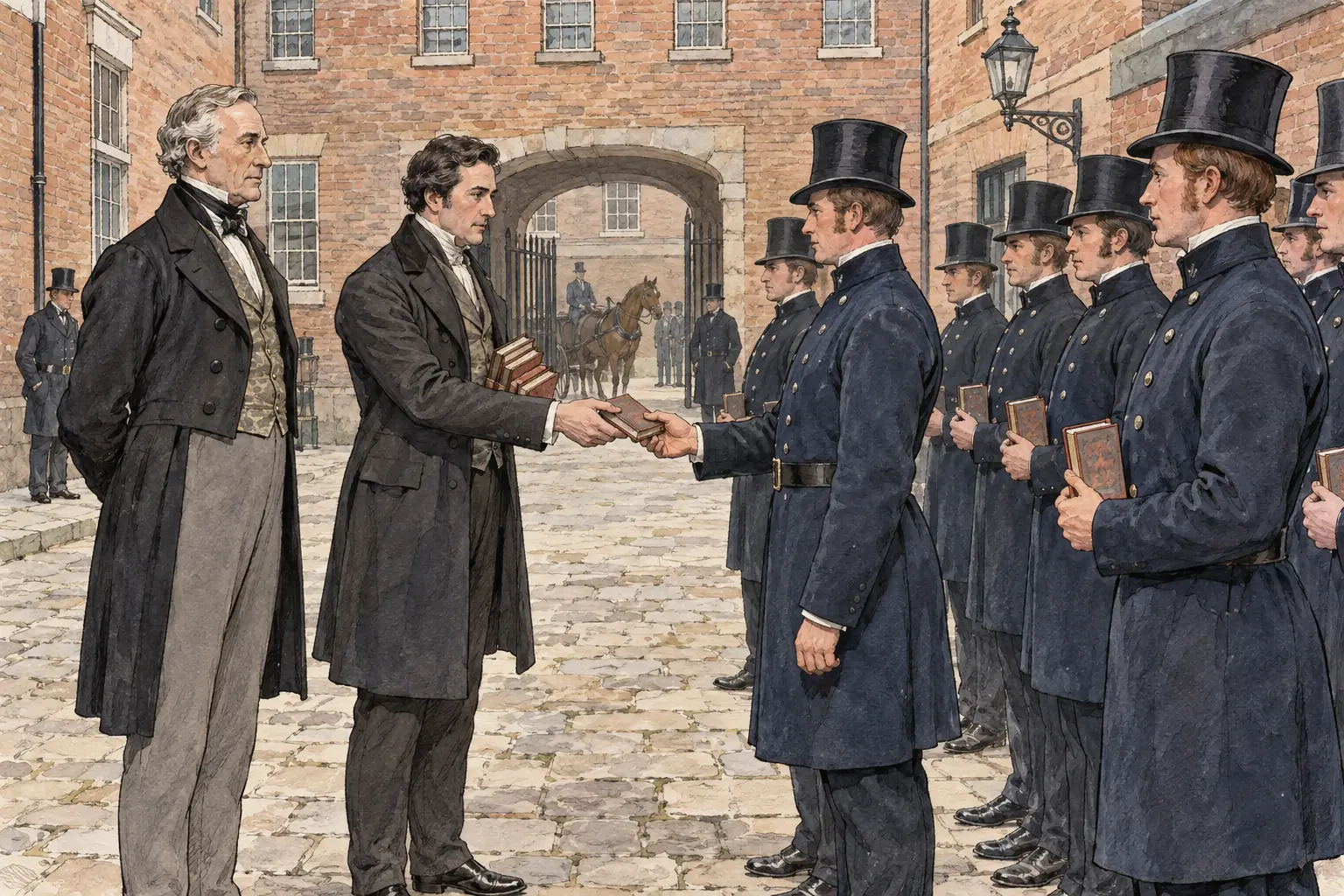
Peel outlined core principles to guide the new police force, stressing community involvement and restraint. These ideas ensured the police operated as part of society, influencing law enforcement beyond London.
Peel's policing principles
- Public support essential - Police effectiveness depends on gaining the approval and cooperation of citizens, treating officers as uniformed members of the public.
- Minimal force - Officers should use the least force necessary, maintaining impartiality and focusing on upholding the law rather than imposing authority.
- Crime prevention priority - The primary goal is to prevent offences through visible patrols, rather than just detecting and punishing after the fact.
Long-term legacy of Peel's reforms
- Expansion across Britain - The Metropolitan Police model's success led to its adoption nationwide in the following decades, forming the basis of modern forces.
- Fairer criminal justice - Peel's work created a less barbaric legal code, with reduced death penalties and improved prisons, contributing to 19th-century advancements in public order.