2.1 - Greensboro Sit-Ins, 1960
Key facts and dates
The Greensboro sit-in of 1960 marked a pivotal moment in the Civil Rights Movement, inspiring widespread nonviolent protests against segregation in public spaces. Initiated by young Black students, it demonstrated the power of direct action and youth involvement in challenging racial injustice.
Timeline of key events
- 1 February 1960 – Four Black students stage the first sit-in at a segregated Woolworth's lunch counter in Greensboro, North Carolina.
- February 1960 – Sit-ins quickly spread to other cities in North Carolina, including Charlotte and Durham.
- April 1960 – Formation of the Student Nonviolent Coordinating Committee (SNCC) to organise student-led protests.
- Spring 1960 – Congress of Racial Equality (CORE) provides training and support for nonviolent sit-ins.
- July 1960 – Woolworth's in Greensboro desegregates its lunch counter after sustained protests and boycotts.
- By end of 1960 – Sit-ins occur in over 50 cities across the South, leading to desegregation of numerous public facilities.
Origins of the Greensboro sit-in
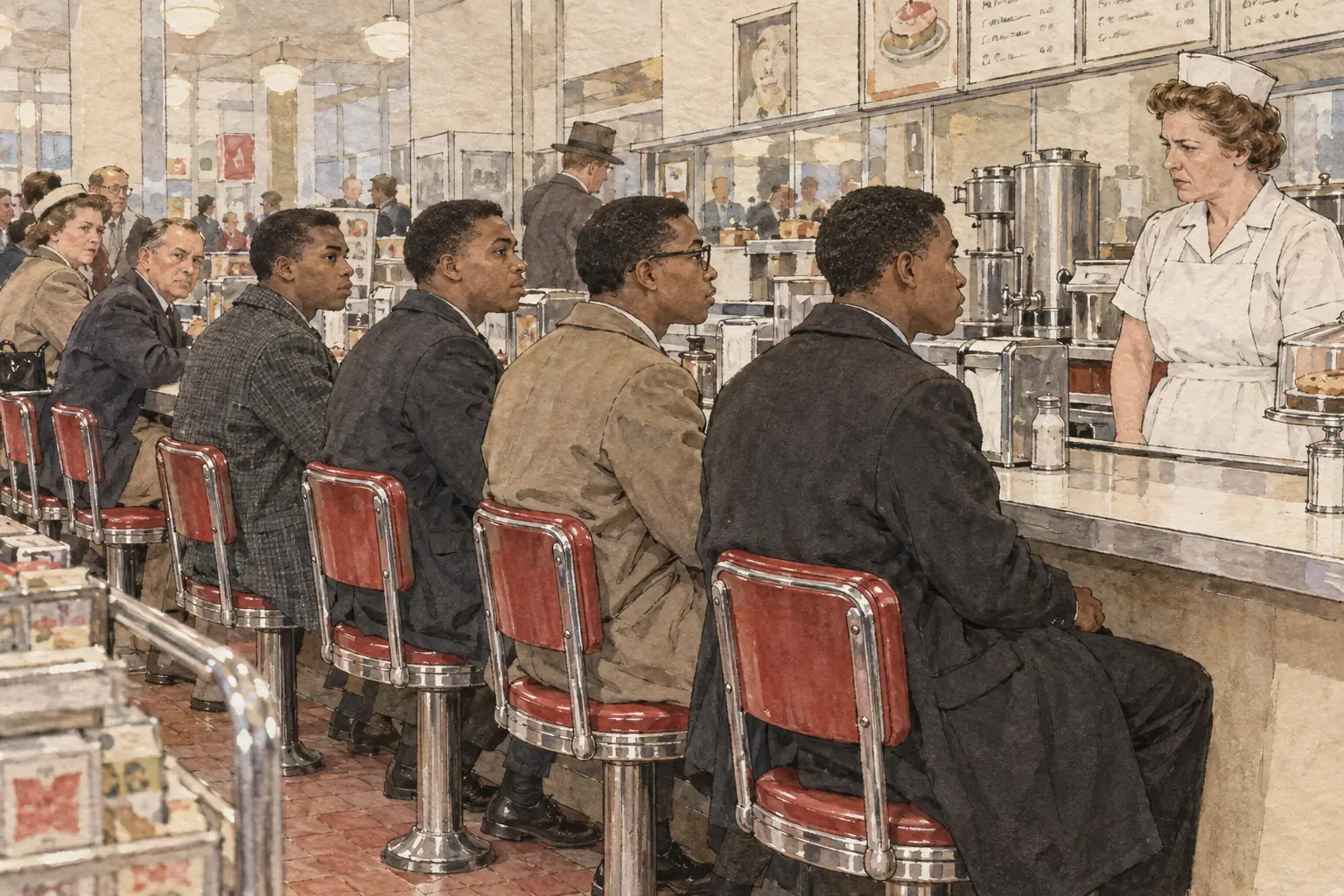
The Greensboro sit-in began as a spontaneous act of defiance against racial segregation in public eating establishments. It was sparked by four young Black students who sought to challenge the discriminatory policies enforced in the American South during the Jim Crow era.
Events leading to the first sit-in
- Initiation by students - On 1 February 1960, four Black college students from North Carolina Agricultural and Technical State University entered a Woolworth's store in Greensboro, North Carolina, purchased items, and then sat at the whites-only lunch counter, requesting service.
- Refusal to leave - Despite being denied service due to segregation laws, the students remained seated peacefully until the store closed, drawing attention to the injustice without resorting to violence.
- Inspiration from prior movements - The action was influenced by earlier civil rights efforts, such as the Montgomery Bus Boycott, and reflected growing frustration among young Black Americans with the slow pace of legal reforms.
Spread of the sit-in movement across the South
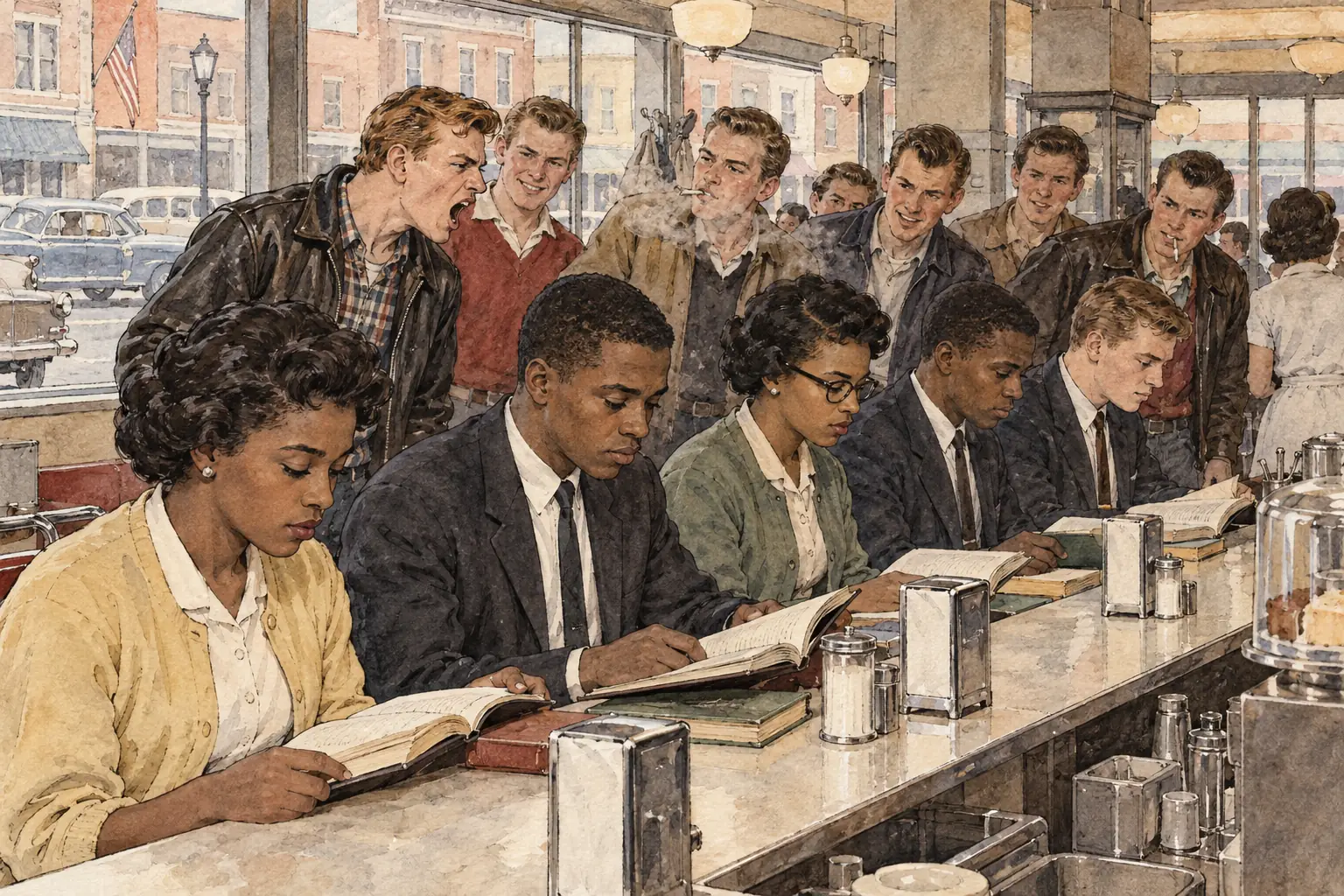
Following the initial protest in Greensboro, the sit-in tactic rapidly gained momentum, expanding beyond North Carolina to other southern states. This growth was fuelled by word-of-mouth, media reports, and the enthusiasm of student activists seeking immediate change.
Expansion and scale of sit-ins
- Rapid dissemination - Within days, similar protests erupted in nearby cities like Charlotte and Durham, and soon spread to states including Virginia, Tennessee, and Georgia.
- Involvement of wider communities - High school and college students, along with some sympathetic white allies, joined the movement, organising sit-ins at segregated diners, department stores, and other public venues.
- Geographical reach - By the end of 1960, sit-ins had taken place in more than 50 cities across the South, transforming a local action into a regional campaign against segregation.
Organisations and tactics used in sit-ins
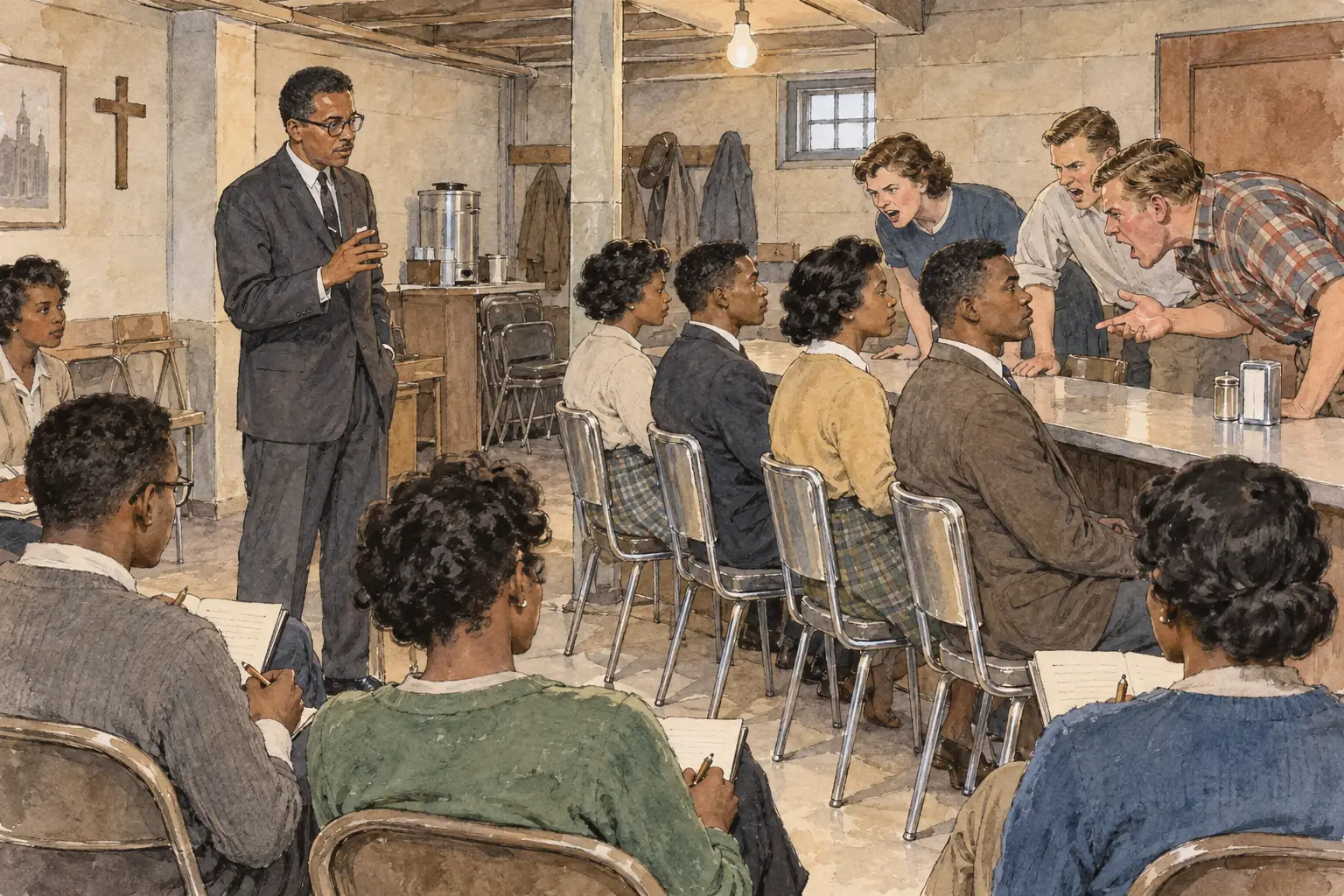
Key civil rights organisations played a crucial role in coordinating and sustaining the sit-in movement. They provided structure, training, and resources, while protesters employed nonviolent strategies to maximise impact and garner public support.
Supporting organisations
- Congress of Racial Equality (CORE) - This established group offered guidance and support, helping to organise protests and emphasising nonviolent resistance.
- Student Nonviolent Coordinating Committee (SNCC) - Formed in April 1960, this new student-led organisation coordinated efforts among young activists, facilitating communication and strategy sharing across campuses.
Key tactics employed
- Nonviolent discipline training - Protesters underwent sessions to prepare for verbal abuse, physical threats, and arrests, learning techniques to remain calm and composed.
- Economic boycotts - Activists encouraged boycotts of targeted stores, pressuring businesses financially by reducing customer traffic and sales.
- Media coverage - Protests were designed to attract newspaper, radio, and television attention, highlighting the dignity of demonstrators against the aggression of segregationists to sway public opinion.
Outcomes and impact of the sit-in movement
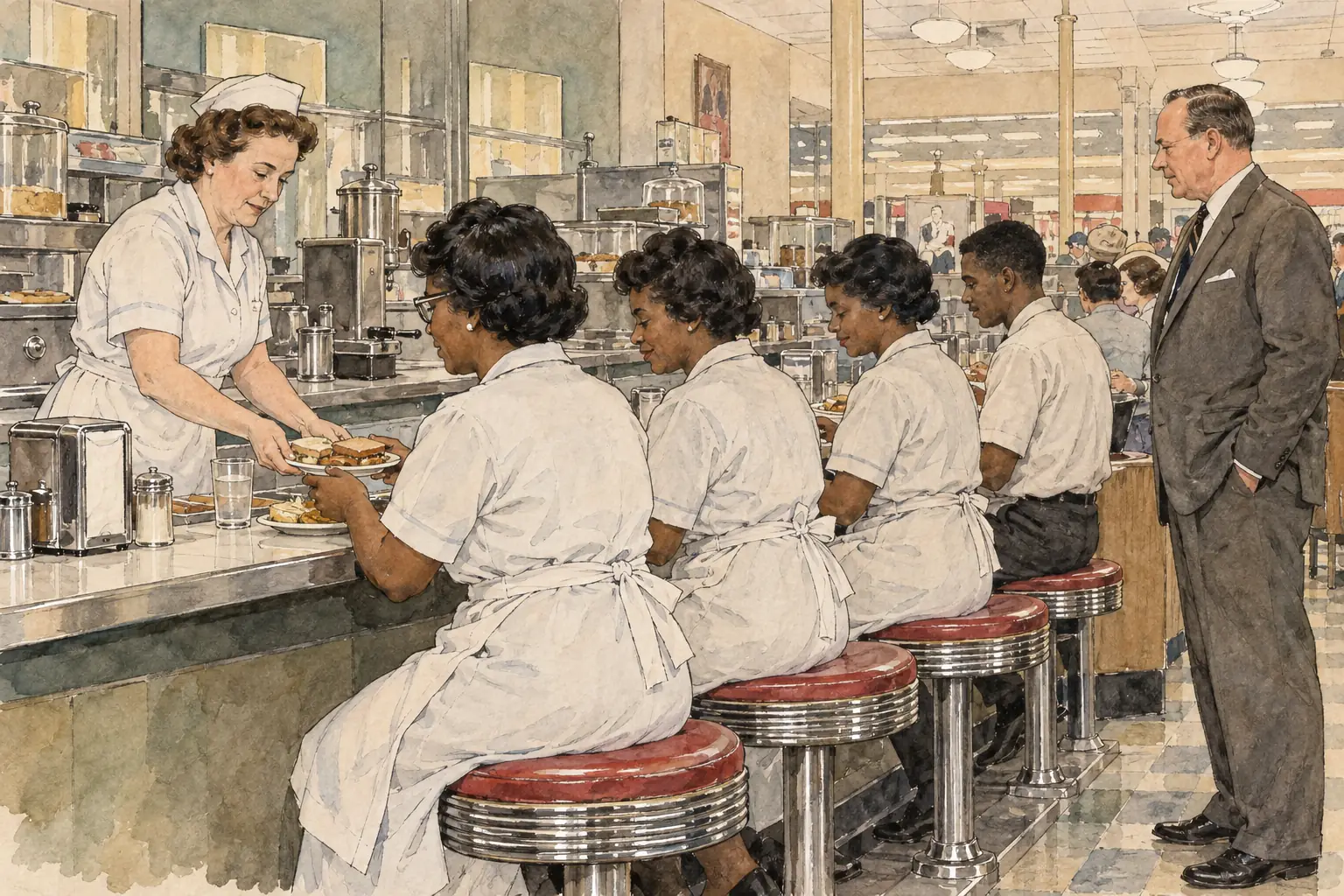
The sit-in movement achieved significant victories in dismantling segregation while inspiring a new generation of activists. It shifted the focus of the Civil Rights Movement towards grassroots action, proving that direct confrontation could yield faster results than litigation alone.
Achievements of the movement
- Desegregation successes - Many lunch counters and public facilities, including the original Woolworth's in Greensboro, integrated by mid-1960, with hundreds of others following suit across the South.
- Energising young activists - The protests mobilised thousands of students, fostering leadership skills and a sense of empowerment among Black youth.
- Broadening civil rights tactics - By moving beyond courtroom battles, the movement introduced innovative, nonviolent methods that influenced future campaigns, such as freedom rides and marches.