2.2 - Freedom Riders, 1961
Key facts and dates
The Freedom Rides of 1961 were a pivotal campaign in the American Civil Rights Movement, organised by activists to challenge racial segregation in public transport. These interracial journeys highlighted deep-seated resistance in the South and forced federal intervention, advancing desegregation efforts.
Timeline of key events
- 1960 – Supreme Court ruling in Boynton v. Virginia bans segregation in interstate bus terminals and facilities.
- May 1961 – Freedom Riders, organised by CORE and SNCC, begin journeys from Washington, D.C., testing desegregation laws.
- 14 May 1961 – In Anniston, Alabama, a bus is firebombed by a mob, forcing riders to flee amid violence.
- 15 May 1961 – Riders face brutal beatings in Birmingham, Alabama, with KKK involvement and police failure to intervene.
- September 1961 – Interstate Commerce Commission issues regulations enforcing desegregation on interstate buses and terminals.
- November 1961 – New rules take effect, marking a key victory for the riders' nonviolent protest strategy.
Aims of the Freedom Rides
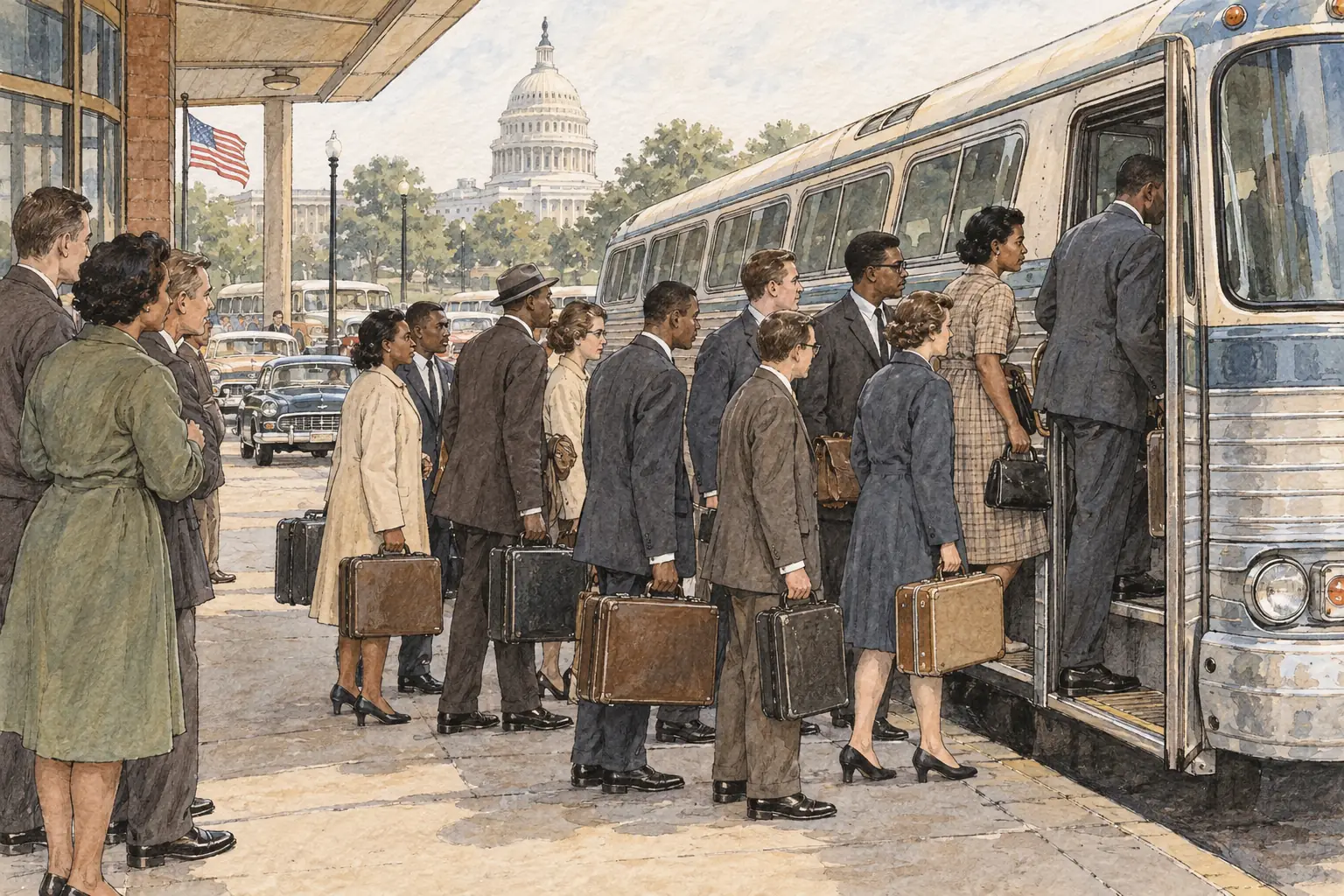
The Freedom Rides were a deliberate campaign launched in 1961 by civil rights groups to confront ongoing racial segregation in the United States. They targeted public transport systems, where discriminatory practices persisted despite legal prohibitions.
Main objectives of the campaign
- Testing Supreme Court decisions - Riders aimed to enforce rulings like Boynton v. Virginia (1960), which outlawed segregation in facilities used for interstate travel, such as bus terminals, restrooms, and cafes.
- Challenging Southern resistance - By travelling through the Deep South, the campaign sought to expose and dismantle Jim Crow laws that maintained racial separation on buses and related services.
- Promoting nonviolent action - Organised by groups including the Congress of Racial Equality (CORE) and the Student Nonviolent Coordinating Committee (SNCC), the rides emphasised peaceful protest to draw national attention and pressure authorities.
Key events during the Freedom Rides
Image 1 of 2: On 14 May 1961 a mob firebombed one of the Freedom Riders' buses outside Anniston, Alabama
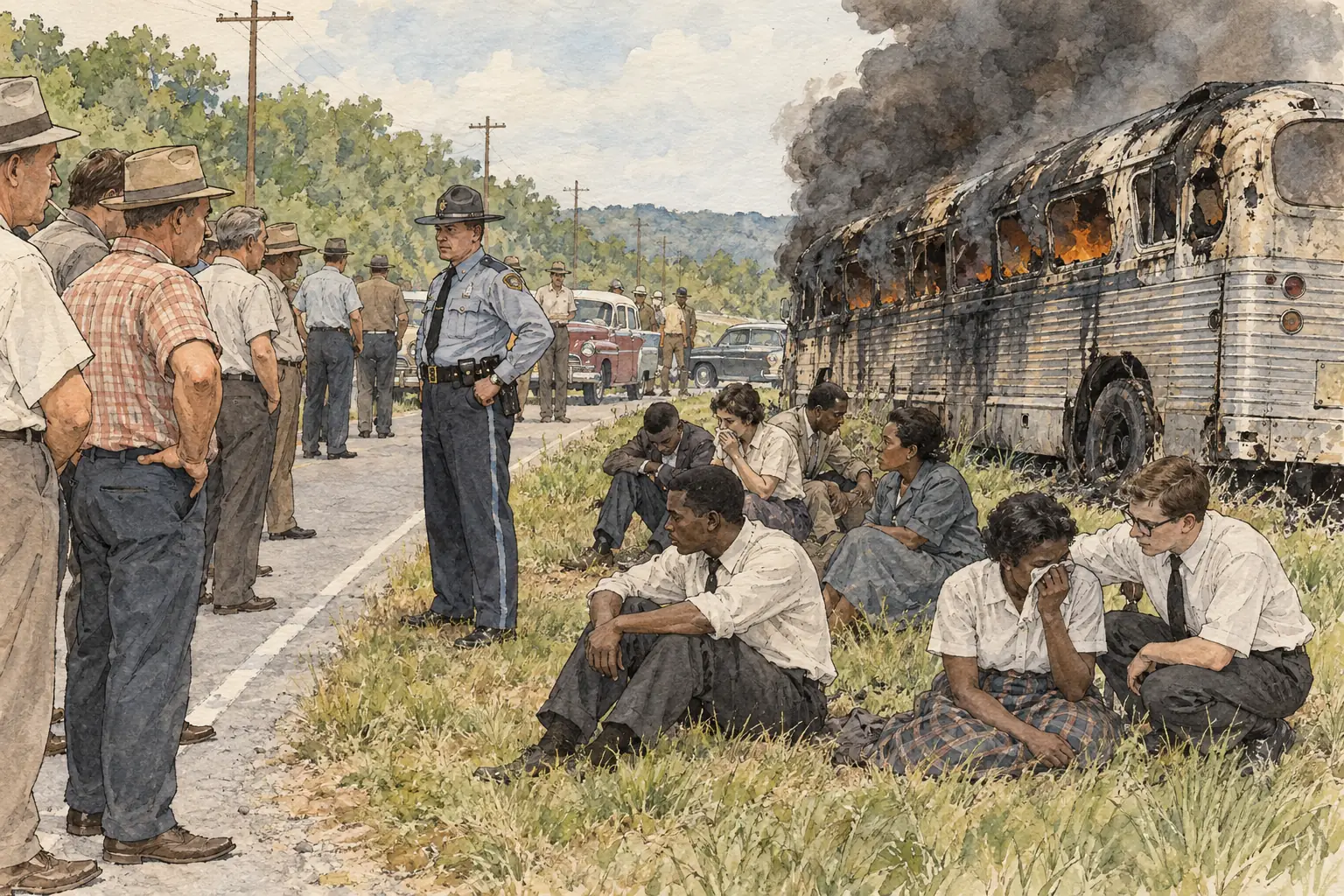
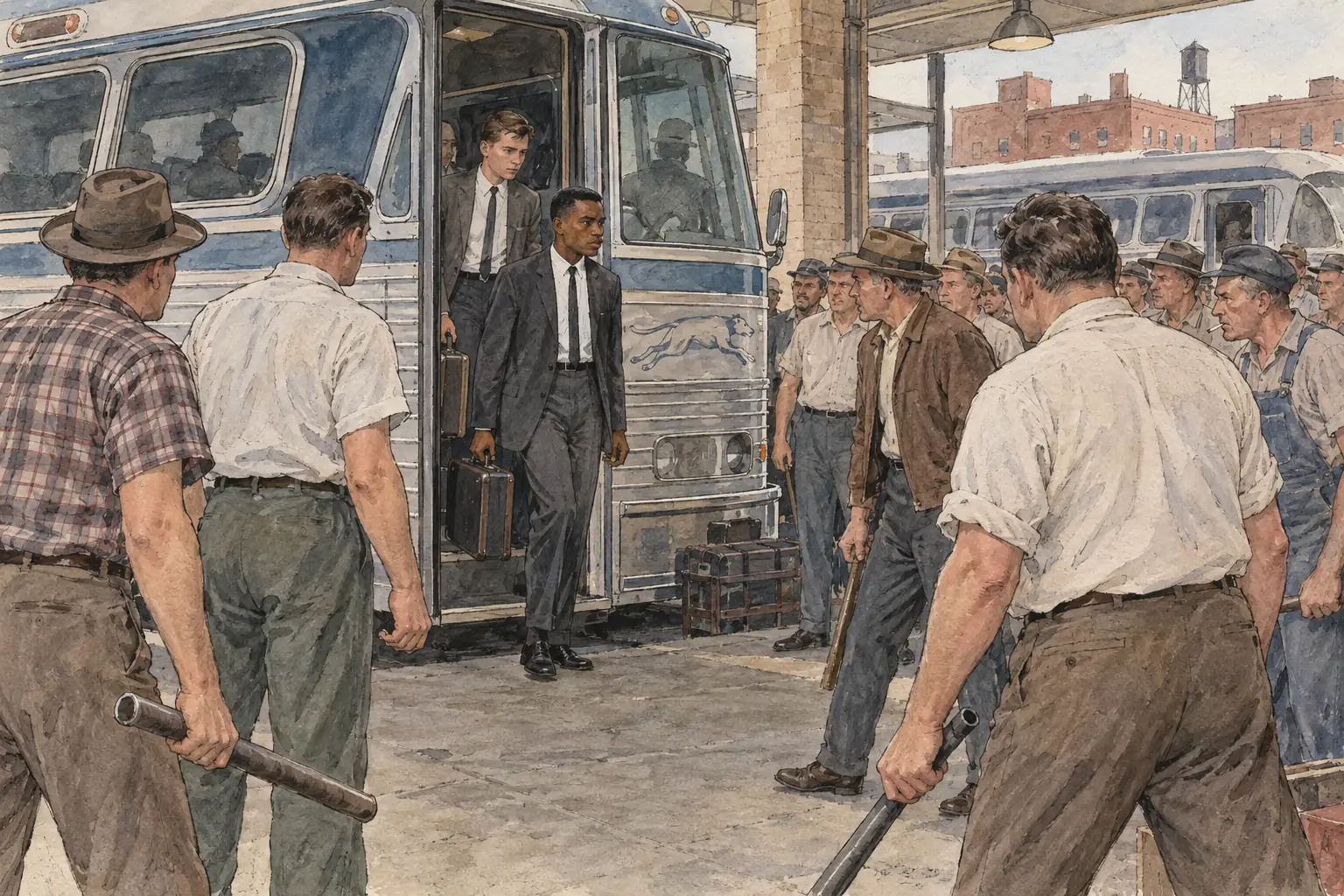
The Freedom Rides involved groups of interracial activists boarding buses to travel across Southern states, deliberately violating segregation norms. These journeys encountered fierce opposition, escalating into violent confrontations that captured widespread media coverage.
Major incidents and challenges
- Initial journeys and organisation - Starting in May 1961, riders departed from Washington, D.C., with plans to reach New Orleans. They included both black and white participants who sat together and used facilities designated for the opposite race.
- Violence in Alabama - In Anniston, a mob surrounded one bus, slashed its tyres, and threw a firebomb inside, forcing passengers to escape as the vehicle burned. Local authorities offered little protection.
- Attacks in Birmingham - Upon arrival, riders were assaulted by crowds, including members of the Ku Klux Klan (KKK), who used pipes and chains. Police delayed intervention, allowing the beatings to continue unchecked.
- Broader confrontations - Similar mob violence occurred in Montgomery and other stops, with riders facing arrests and injuries. Despite setbacks, new groups of activists continued the rides, maintaining momentum through arrests and hospitalisations.
Federal government response to the Freedom Rides
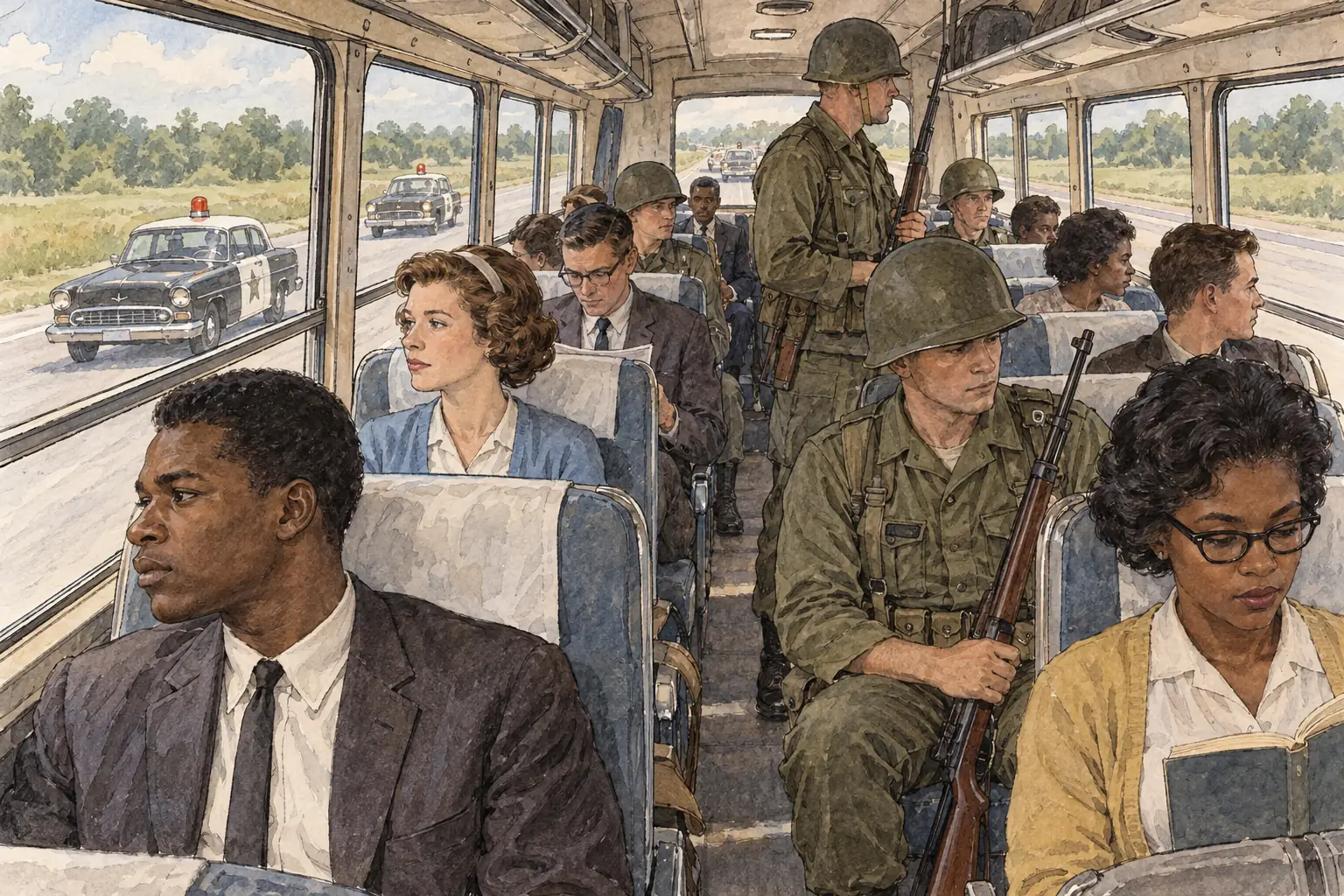
The escalating violence during the Freedom Rides compelled the federal government to act, though initial responses were hesitant. President John F. Kennedy's administration faced mounting pressure from public outrage and media exposure.
Actions taken by federal authorities
- Initial reluctance - Early on, federal officials urged riders to halt their protests to avoid further conflict, prioritising state-level enforcement over direct intervention.
- Pressure on regulatory bodies - As televised images of attacks spread, the Kennedy administration lobbied the Interstate Commerce Commission (ICC) to issue clearer rules banning segregation on interstate buses and terminals.
- Enforcement measures - By September 1961, the ICC mandated desegregation, with implementation starting in November. This included requirements for integrated seating and facilities, backed by federal oversight.
- Role of national attention - The administration's involvement was spurred by the need to protect riders and maintain international credibility during the Cold War, highlighting the impact of sustained protest.
Outcomes and significance of the Freedom Rides
The Freedom Rides achieved notable successes in advancing civil rights, despite the immediate dangers faced by participants. Their legacy extended beyond transport desegregation, influencing broader movement strategies.
Achievements and lasting impact
- Desegregation victories - The campaign led to enforceable federal regulations that ended legal segregation in interstate travel, making bus journeys safer and more equal for African Americans.
- Demonstration of nonviolent power - Through televised coverage of peaceful protesters enduring violence, the rides showcased the effectiveness of nonviolent tactics in gaining sympathy and forcing federal action.
- Strengthening civil rights alliances - The involvement of CORE, SNCC, and figures like Martin Luther King Jr. bolstered unity among activists, inspiring future campaigns such as voter registration drives.
- Exposure of systemic issues - The rides revealed collusion between local police, the KKK, and segregationists, underscoring the need for stronger federal protection and contributing to later legislation like the Civil Rights Act of 1964.