1.7 - Lawlessness in Early Towns & Trails
Key facts and dates
The rapid expansion of settlements in the American West during the 19th century led to widespread lawlessness, driven by economic booms and social instability. Early attempts at maintaining order relied on informal methods, which often proved inadequate and sometimes exacerbated conflicts.
Key facts to remember
- Transient populations – Constant movement of settlers created unstable communities with little social cohesion.
- Gold rush booms – Sudden influxes of fortune-seekers led to overcrowded, chaotic towns.
- Claim-jumping – Disputes over mining claims often escalated into violence without formal legal systems.
- Miners' courts – Informal tribunals set up by miners to resolve local disputes quickly.
- Vigilance committees – Citizen groups that enforced 'justice' through extralegal means, sometimes leading to abuses.
- Sheriffs and marshals – Early appointed law officers who struggled with limited resources and authority.
- Conflicts with Indigenous bands – Weak institutions heightened tensions between migrants, freighters, and native groups.
Causes of disorder in early towns and trails
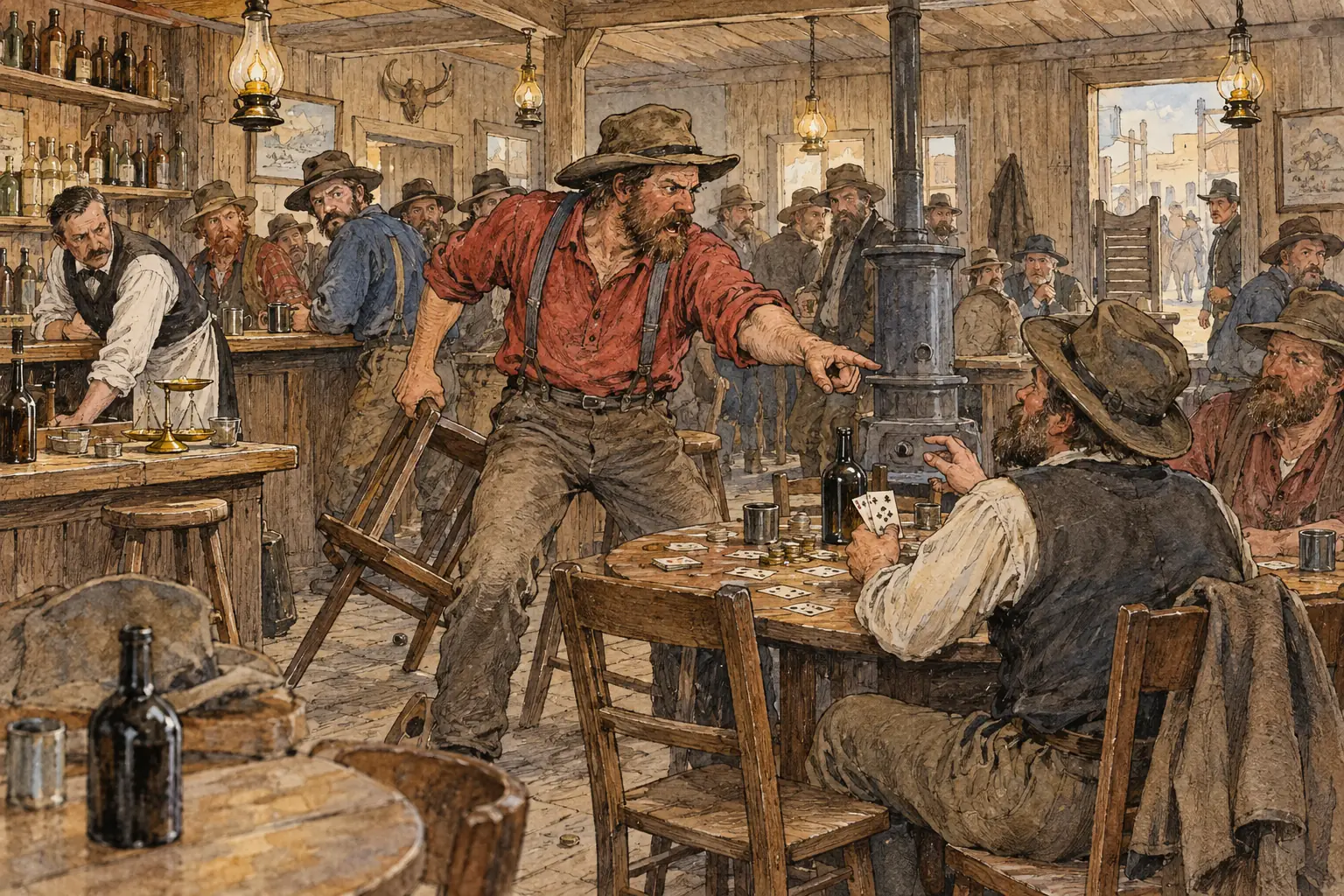
Image 1 of 2: Saloons and gambling in mining boomtowns often led to fights and accusations of cheating
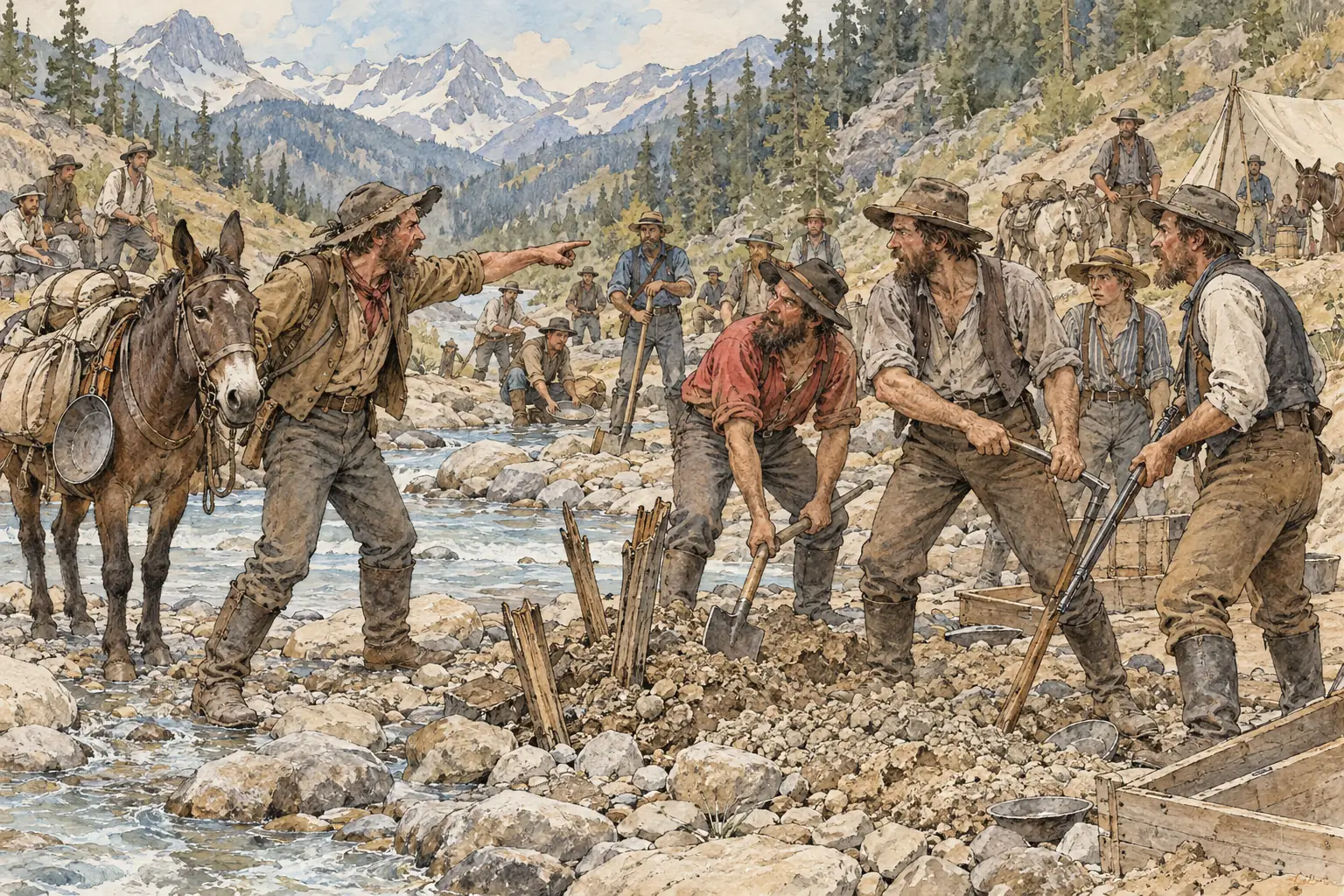
The early settlements and trails of the American West were marked by significant disorder, stemming from a mix of social, economic, and structural factors. These issues arose as people flocked to new territories in search of opportunity, often outpacing the development of stable communities.
Factors contributing to lawlessness
- Transient populations - Many settlers were temporary residents, moving frequently in pursuit of work or wealth, which weakened community ties and made it hard to establish lasting order.
- Gold rush booms - Sudden discoveries of gold triggered massive population surges, turning quiet areas into bustling, overcrowded towns where competition for resources bred conflict.
- Alcohol and gambling - Saloons and gaming establishments were common hubs for socialising, but they frequently led to drunken brawls, cheating accusations, and other disruptions.
- Claim-jumping - Miners often illegally seized others' mining claims, sparking violent disputes in the absence of clear property rights or enforcement mechanisms.
- Lack of formal law and courts - Remote locations meant no established police, judges, or legal systems, allowing crimes like theft and assault to go unpunished and encouraging a culture of self-reliance.
Early solutions to lawlessness
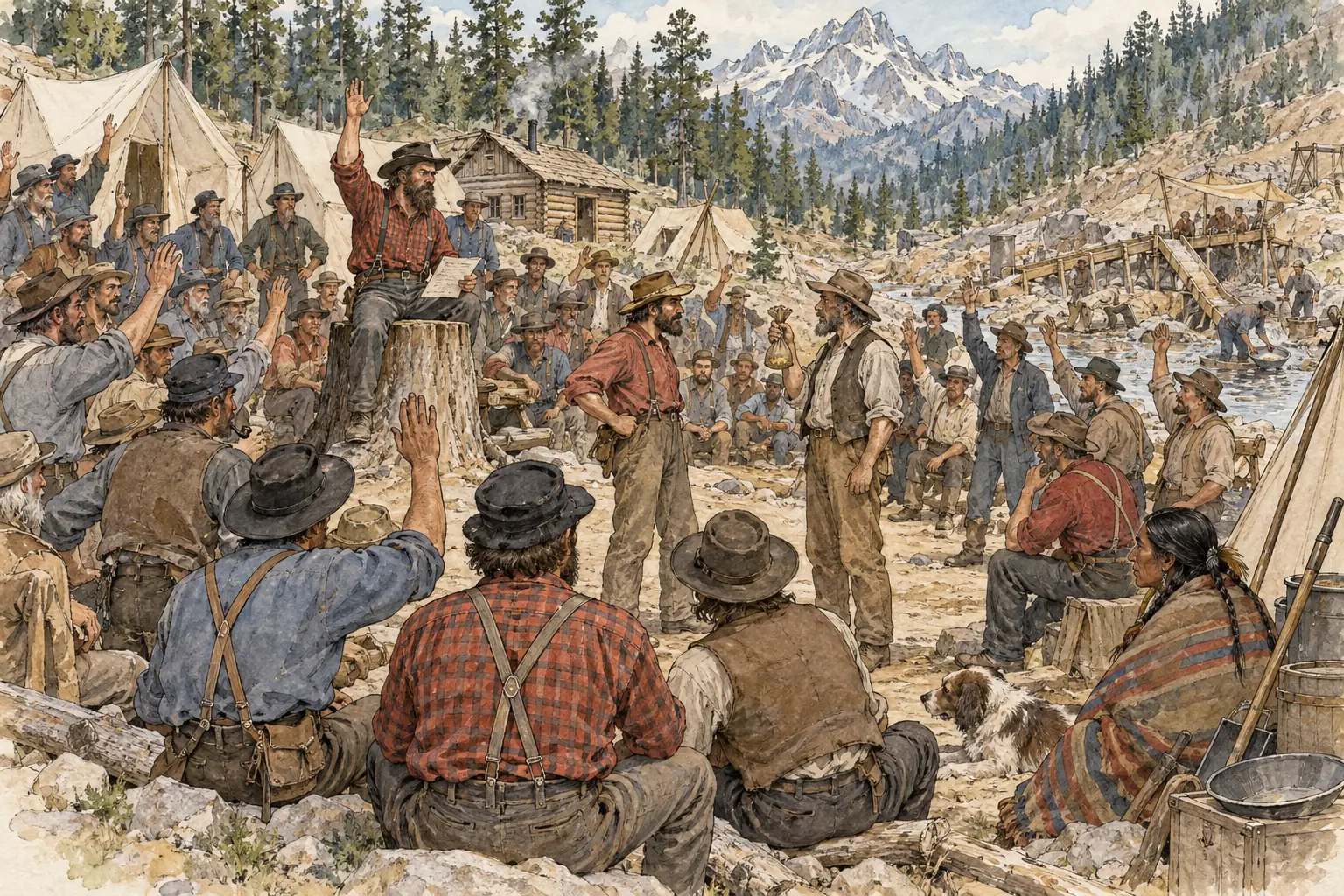
In the absence of official government structures, communities in early Western towns and along trails developed makeshift methods to address crime and maintain some semblance of order. These approaches varied by location but aimed to fill the gap left by distant or non-existent authorities.
Methods used to tackle disorder
- Miners' courts - Groups of miners would convene informal hearings to settle disputes over claims or minor crimes, using majority votes to decide outcomes and enforce penalties like fines or banishment.
- Vigilance committees - Local residents formed these groups to identify and punish suspected criminals, often through swift actions like trials or executions, bypassing traditional legal processes.
- Town meetings - Communities held gatherings to discuss problems and agree on rules, sometimes electing temporary leaders to oversee basic governance and mediate conflicts.
- Appointment of sheriffs and marshals - Where possible, towns selected or hired law officers to patrol areas, make arrests, and uphold rudimentary laws, though their effectiveness depended on community support and available resources.
Limitations of vigilante justice
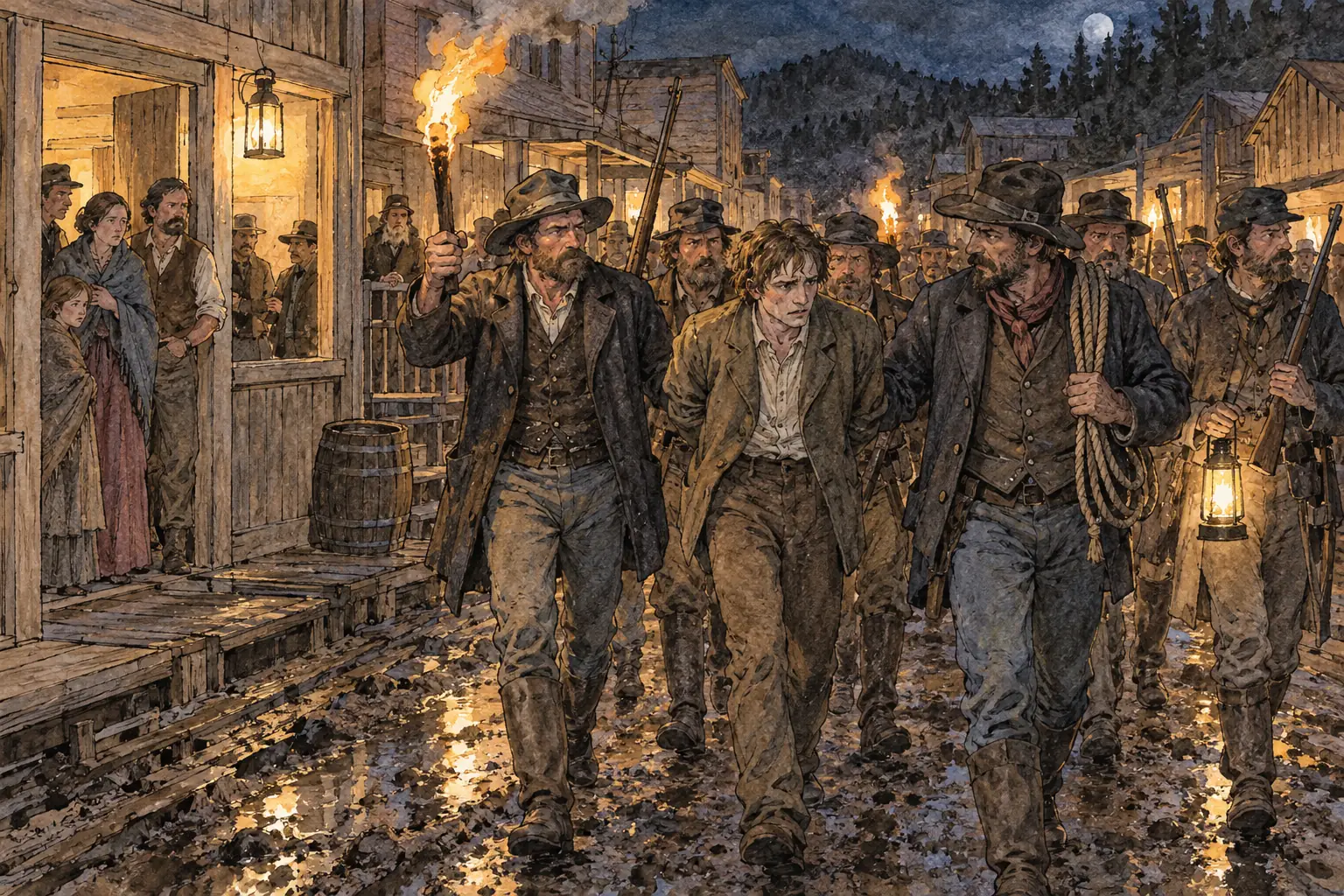
While vigilante methods provided quick responses to crime, they had significant drawbacks that often undermined true justice. These informal systems could be biased, excessive, or counterproductive, highlighting the need for more structured law enforcement.
Drawbacks of vigilante approaches
- Lack of fairness - Vigilance committees sometimes acted on rumours or personal grudges, leading to wrongful accusations, mob violence, or lynchings without proper evidence or trials.
- Potential for abuse - Without oversight, these groups could target innocent people or use their power to settle scores, eroding trust and creating cycles of retaliation.
- Temporary nature - Such justice was inconsistent and short-lived, as committees disbanded after addressing immediate threats, leaving communities vulnerable to recurring disorder.
- Legal and moral issues - Extralegal punishments often violated emerging territorial laws, fostering a reputation for the West as a lawless frontier and deterring stable settlement.
Conflicts arising from weak institutions
The fragility of early law enforcement institutions not only perpetuated disorder but also intensified fears and clashes among diverse groups in the West. This weakness created an environment where misunderstandings and rivalries easily escalated into violence.
Impacts of institutional weaknesses
- Heightened fear among settlers - Without reliable protection, migrants lived in constant anxiety about theft, raids, or attacks, leading to overreactions and pre-emptive violence.
- Tensions between migrants and freighters - Disputes over trail access, supplies, or trade often turned hostile due to the lack of neutral authorities to mediate, resulting in ambushes or blockades.
- Conflicts with Indigenous bands - Weak institutions failed to regulate interactions, allowing encroachments on native lands and retaliatory actions, which fueled ongoing warfare and mutual distrust.
- Broader consequences - These conflicts slowed economic development, as fear discouraged investment and migration, while also contributing to a legacy of racial and cultural divisions in the region.