2.1 - Railroads & Transformation of the West
Key facts and dates
The construction of railroads in the 19th century revolutionised the American West, facilitating migration, economic growth, and environmental change. Driven by federal support, these developments connected distant regions but also intensified conflicts with indigenous peoples and wildlife. The following timeline captures the essential milestones in this transformation.
Timeline of key events
| Date | Event |
|---|---|
| 1862 | Pacific Railroad Act passed, providing federal loans and land grants to support transcontinental railroad construction. |
| 1863–1869 | Building of the First Transcontinental Railroad by Union Pacific and Central Pacific companies. |
| 1869 | Completion of the First Transcontinental Railroad at Promontory Summit, Utah, linking the Atlantic and Pacific coasts. |
| 1870s–1880s | Rapid expansion of railroad networks, reaching over 100,000 miles by 1890 and enabling mass settlement. |
| 1883 | Standardisation of time zones across the United States, prompted by railroad scheduling needs. |
The Pacific Railroad Act of 1862
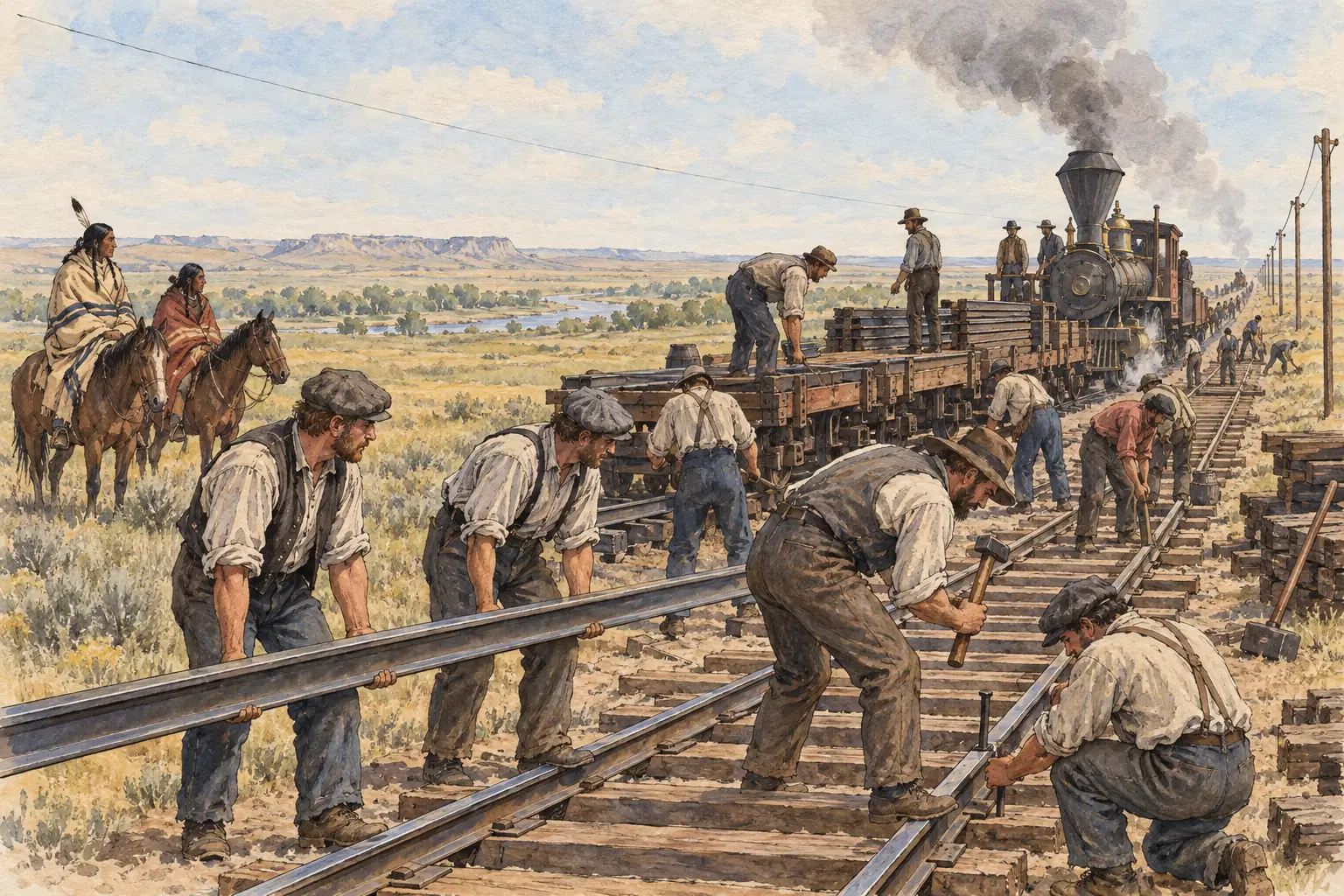
The Pacific Railroad Act, enacted during the American Civil War, represented a major federal initiative to connect the eastern United States with the Pacific coast. This legislation aimed to promote national unity, economic expansion, and military efficiency by authorising the construction of a transcontinental railroad.
Provisions and incentives in the Pacific Railroad Act
- Federal loans - The government provided substantial loans to railroad companies, totalling millions of dollars per mile of track laid, to cover construction costs in challenging terrains.
- Land grants - Companies received vast areas of public land along the proposed routes, which they could sell to settlers or use as collateral, encouraging private investment.
- Assigned companies - The act designated the Union Pacific Railroad to build westward from Omaha, Nebraska, and the Central Pacific Railroad to build eastward from Sacramento, California, with the lines meeting in the middle.
- Strategic motivations - Beyond economic benefits, the act supported wartime logistics by improving transport links, though construction faced delays due to labour shortages and harsh conditions.
Completion of the First Transcontinental Railroad
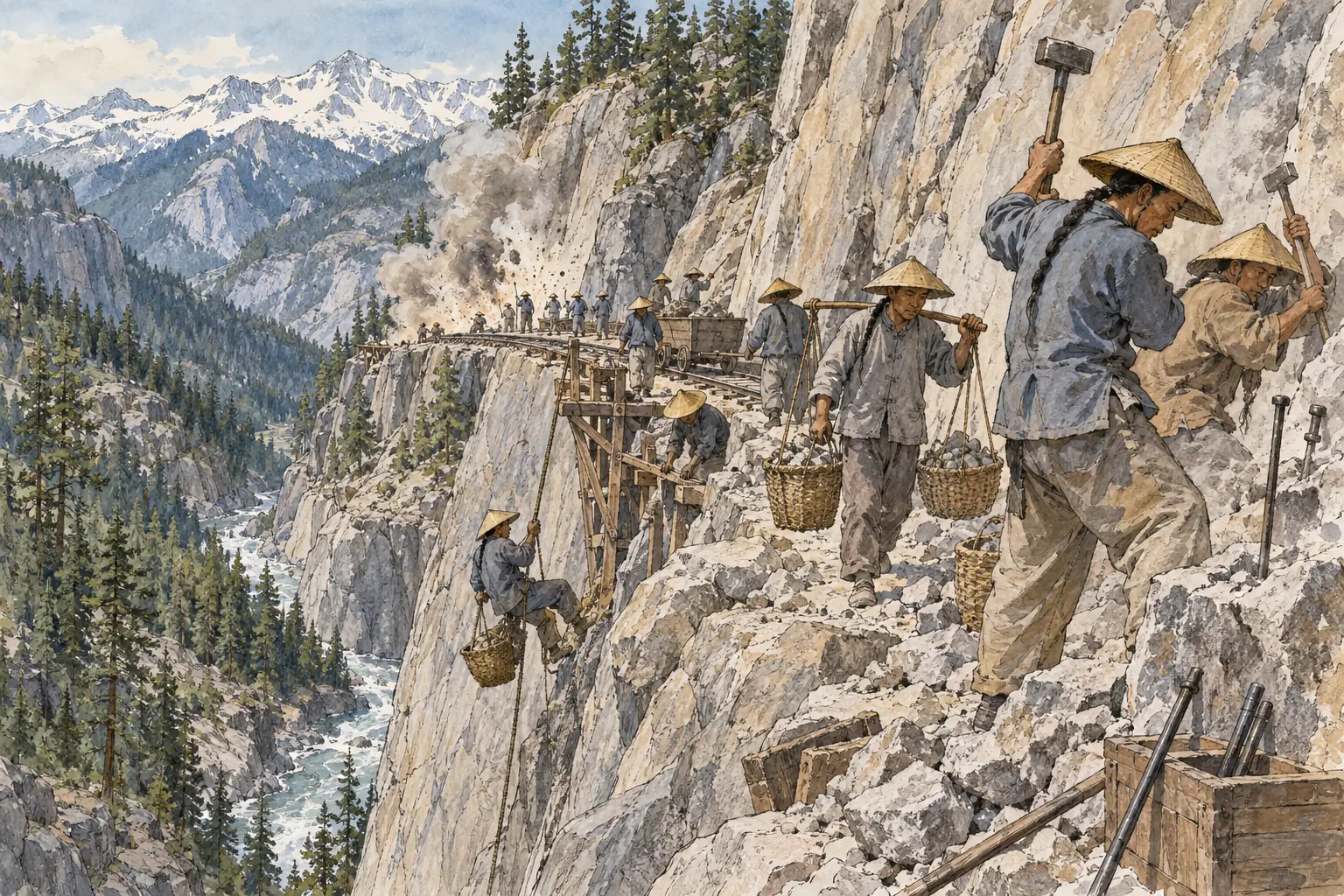
Image 1 of 2: Chinese workers on the Central Pacific cut a path for the line through the Sierra Nevada
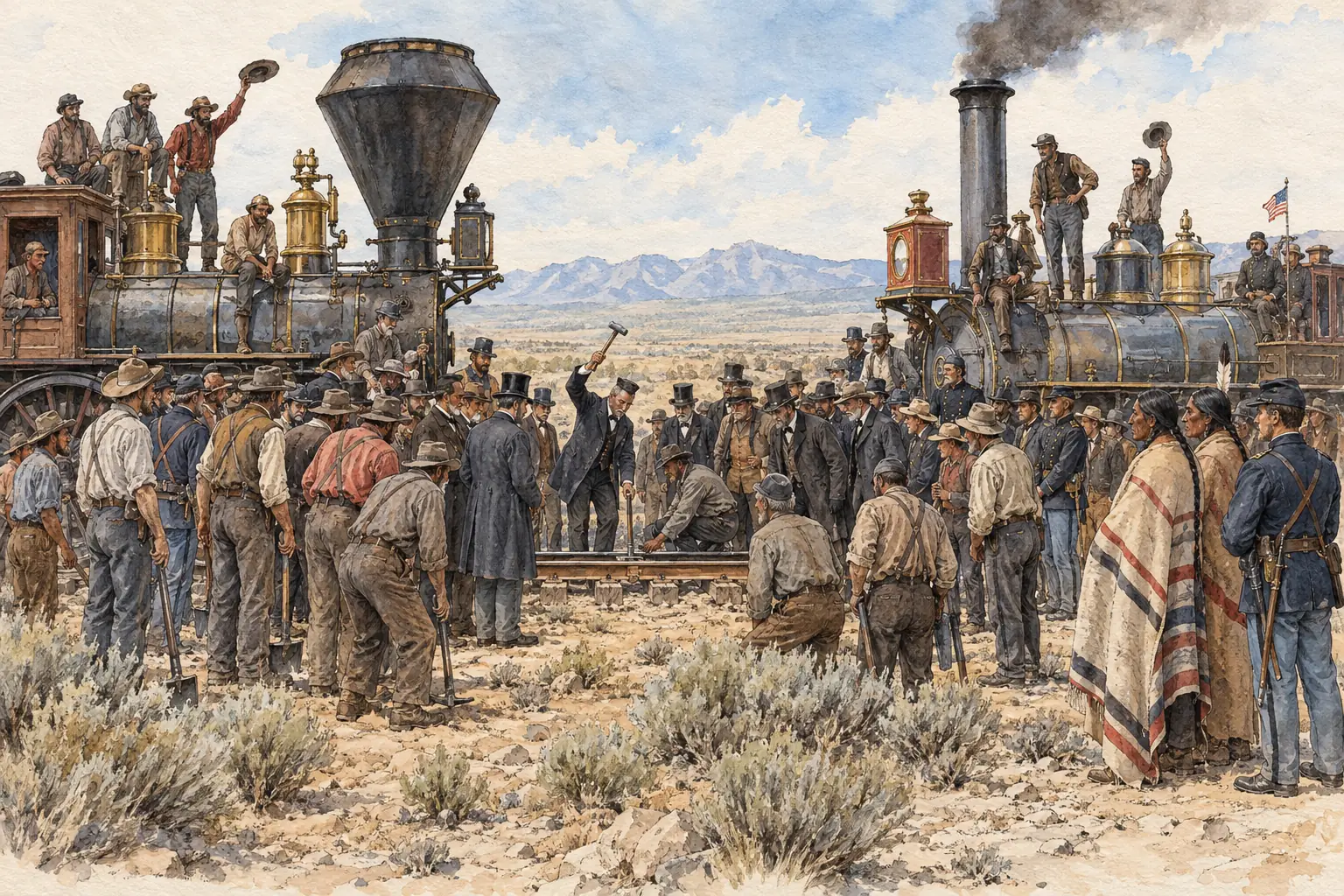
After years of intensive labour, the First Transcontinental Railroad was finished in 1869, marking a pivotal achievement in American infrastructure. This event symbolised technological progress and opened the West to unprecedented development.
Key details of the railroad's completion
- Meeting point at Promontory Summit - On 10 May 1869, the Union Pacific and Central Pacific lines joined at Promontory Summit in Utah Territory, celebrated with a golden spike ceremony attended by dignitaries and workers.
- Labour force - Construction relied on diverse workers, including Irish immigrants for the Union Pacific and Chinese labourers for the Central Pacific, who endured dangerous conditions like blasting through mountains and crossing deserts.
- Immediate significance - The railroad reduced cross-country travel time from months to days, transforming trade and migration patterns by linking the industrial East with the resource-rich West.
Rapid expansion of the railroad network
Following the 1869 completion, the railroad system in the United States grew exponentially, spurred by further government incentives and private enterprise. This expansion integrated remote western territories into the national economy.
Factors driving railroad growth
- Additional land grants and subsidies - Building on the 1862 act, companies received over 200 million acres of land by the 1880s, funding further lines through sales to farmers and towns.
- Network mileage increase - From around 35,000 miles in 1865, the total track length surged to nearly 200,000 miles by 1900, creating a web of branch lines connecting rural areas to main routes.
- Technological improvements - Innovations such as steel rails and standardised gauges enhanced efficiency, while competition among companies accelerated construction across the Plains and Rocky Mountains.
Economic and social impacts on western development
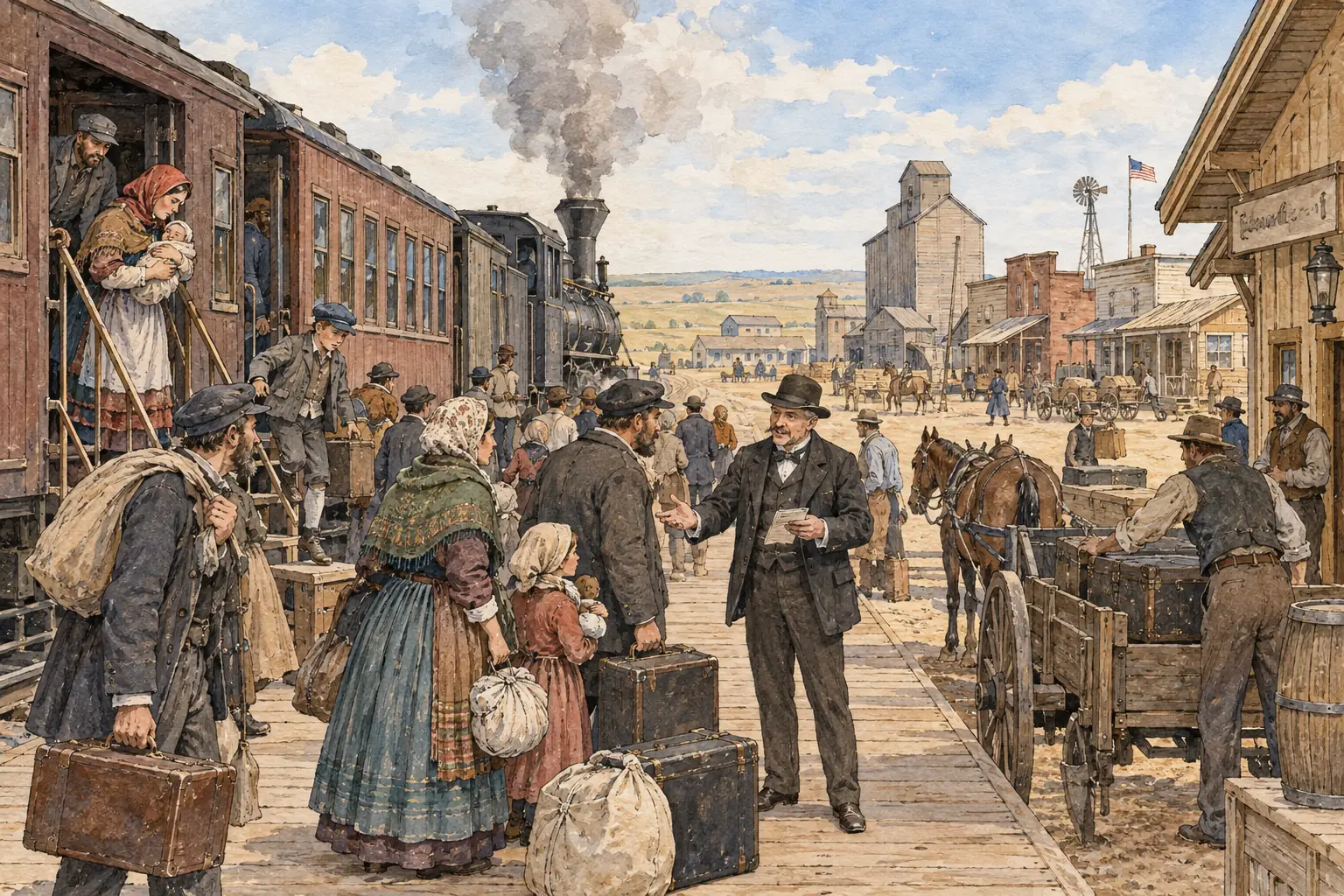
Railroads profoundly altered the economic landscape of the West, enabling faster movement of people and goods while fostering new communities. These changes accelerated settlement and commercial activity in previously isolated regions.
Economic benefits from railroad development
- Access to markets for farm produce - Farmers could transport crops like wheat and corn to distant cities quickly and affordably, boosting agricultural output and integrating the West into national trade networks.
- Cheaper transport of cattle - Ranchers benefited from low-cost shipping to eastern stockyards, leading to the rise of large-scale cattle drives and industries in places like Chicago.
- Growth of railhead towns - Settlements emerged at key railroad junctions, evolving into bustling centres like Cheyenne and Dodge City, which served as hubs for trade, supplies, and entertainment.
Social and military transformations
- Faster mass migration - Railroads facilitated the influx of millions of settlers, including European immigrants, who could travel westward cheaply, contributing to a population boom in states like Kansas and Nebraska.
- Increased army mobility - The U.S. military used railroads to deploy troops rapidly, aiding in conflicts with Native American tribes and securing frontier territories.
Environmental pressures on the Plains and buffalo
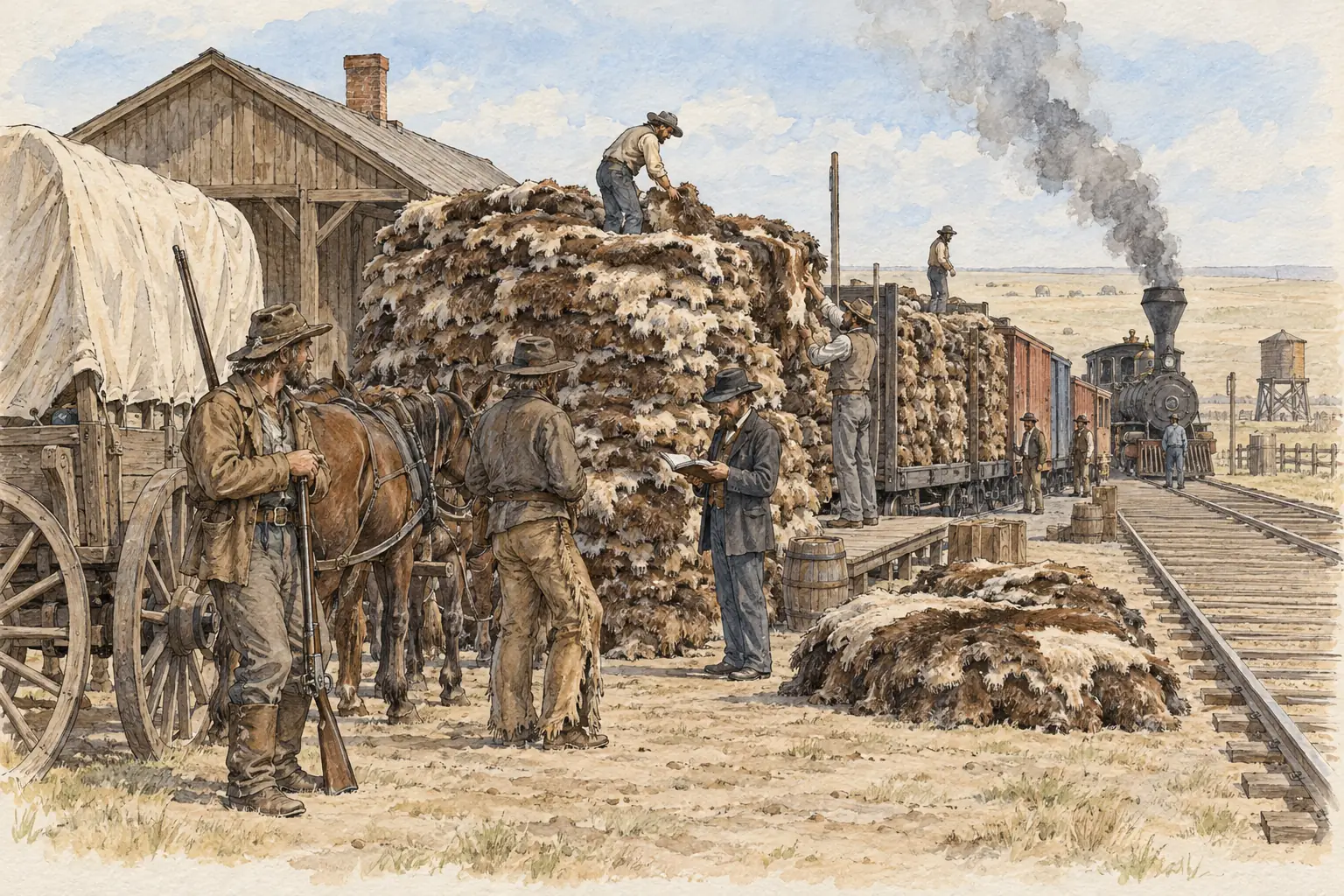
The railroad expansion exerted significant strain on the Great Plains ecosystem, disrupting traditional ways of life and accelerating environmental degradation. These changes had lasting consequences for wildlife and indigenous communities.
Consequences of railroads for the Plains environment
- Intensified pressure on buffalo herds - Railroads enabled large-scale hunting by providing easy access and transport for hides, reducing buffalo numbers from millions to near extinction by the 1880s and undermining Native American economies.
- Habitat fragmentation - Tracks divided grazing lands, while associated settlement led to overhunting, fencing, and conversion of prairies to farmland, altering natural water flows and soil quality.
- Broader ecological impact - Increased human activity introduced invasive species and pollution, while the demand for timber ties contributed to deforestation in nearby regions, exacerbating erosion and biodiversity loss.