1.3 - Versailles & Stab-in-the-Back Myth
Key facts and dates
The Treaty of Versailles, signed in 1919, imposed harsh penalties on Germany following the First World War, fuelling widespread resentment and political myths that undermined the new democratic government. These elements contributed to the instability of the Weimar Republic and the rise of extremist groups.
Key facts to remember
- Article 231 – The 'war guilt' clause that blamed Germany entirely for causing the war.
- Reparations – Germany required to pay £6.6 billion in compensation to the Allies, spread over annual instalments.
- Military restrictions – Army limited to 100,000 soldiers, with bans on tanks, aircraft, and submarines; navy restricted to six battleships.
- Territorial losses – Alsace-Lorraine returned to France; Polish Corridor given to Poland; Saar region placed under League of Nations control for 15 years.
- Colonial forfeitures – All overseas colonies transferred to Allied control or mandates.
- 'Stab-in-the-back' myth – Claim that Germany was betrayed by internal enemies, promoted by military leaders like Hindenburg and Ludendorff.
- 'November Criminals' – Term used to denounce politicians who signed the armistice in November 1918.
Key terms of the Treaty of Versailles
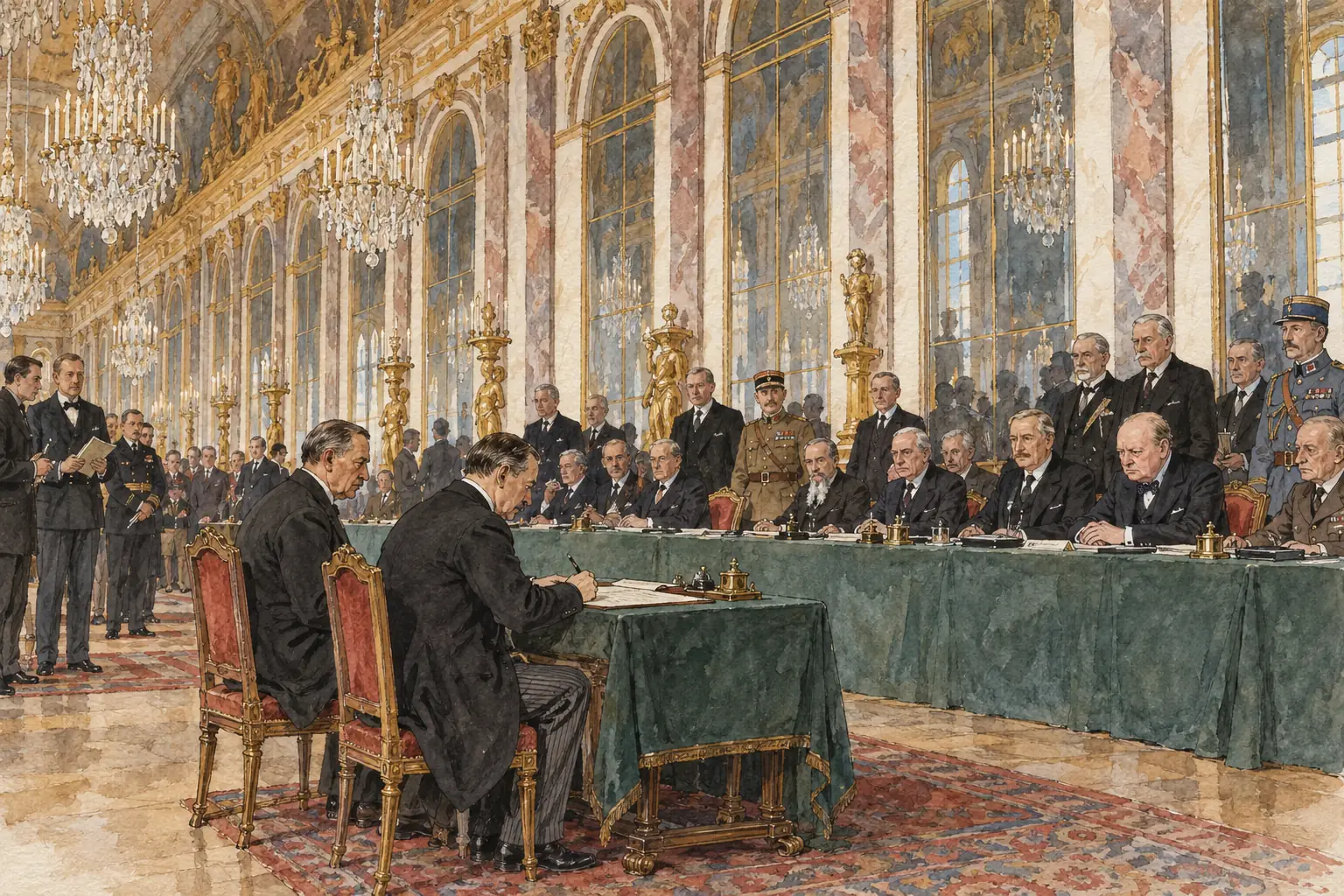
The Treaty of Versailles, agreed upon in June 1919, was one of several peace settlements ending the First World War. It placed significant blame and penalties on Germany, aiming to weaken its military and economic power while compensating the victorious Allies.
Main provisions of the treaty
- War guilt clause (Article 231) - This article held Germany solely responsible for starting the war, justifying the imposition of penalties and reparations.
- Reparations - Germany was ordered to pay substantial financial compensation to the Allies for war damages, initially set at £6.6 billion, to be paid in yearly amounts.
- Military limitations - The German army was capped at 100,000 troops, with prohibitions on possessing tanks, an air force, or submarines; the navy was confined to a small fleet of six battleships and no larger vessels.
- Territorial concessions - Key areas were ceded, including Alsace-Lorraine to France, the Polish Corridor to provide Poland with sea access (separating East Prussia from the rest of Germany), and the Saar coal-mining region under temporary League of Nations administration.
- Loss of colonies - Germany's overseas territories were redistributed among the Allies as mandates, stripping the nation of its imperial holdings.
German reactions to the treaty
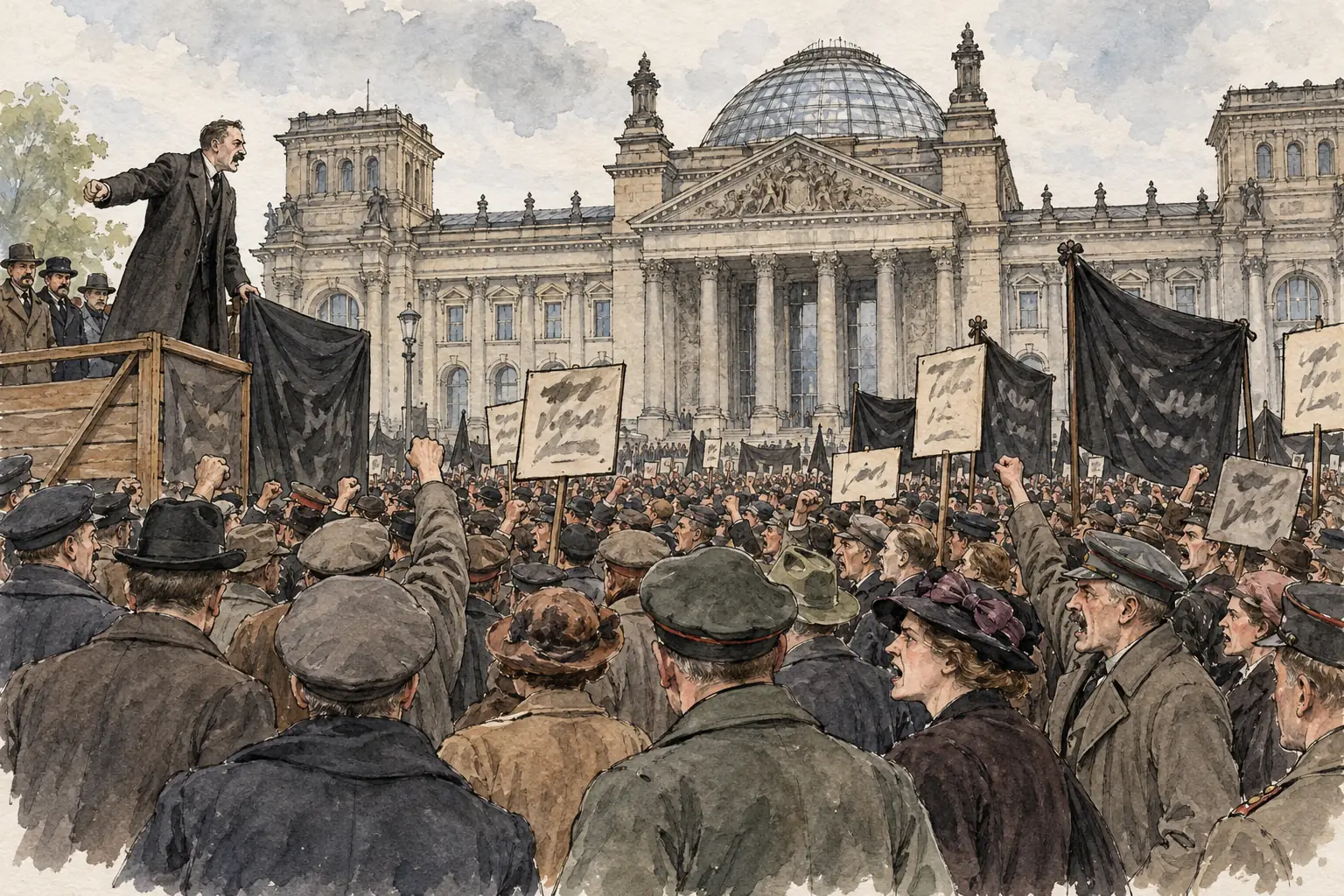
The treaty provoked intense anger and despair across German society, seen as an unjust dictate that humiliated the nation and threatened its future stability. Many viewed it as a symbol of defeat imposed without negotiation.
Sources of resentment and fear
- National humiliation - The war guilt clause and territorial losses were perceived as insults to German pride, fostering a sense of injustice and betrayal by the Allies.
- Economic concerns - Reparations were feared to cripple Germany's economy, potentially leading to inflation, unemployment, and poverty, as the payments strained national resources.
- Label of 'November Criminals' - Politicians who agreed to the armistice in November 1918 were branded traitors, accused of surrendering prematurely and paving the way for the treaty's harsh terms.
The 'stab-in-the-back' myth and its promoters
Image 1 of 2: German troops marched home in good order in December 1918, which made the claim that the army had never been beaten easier to believe
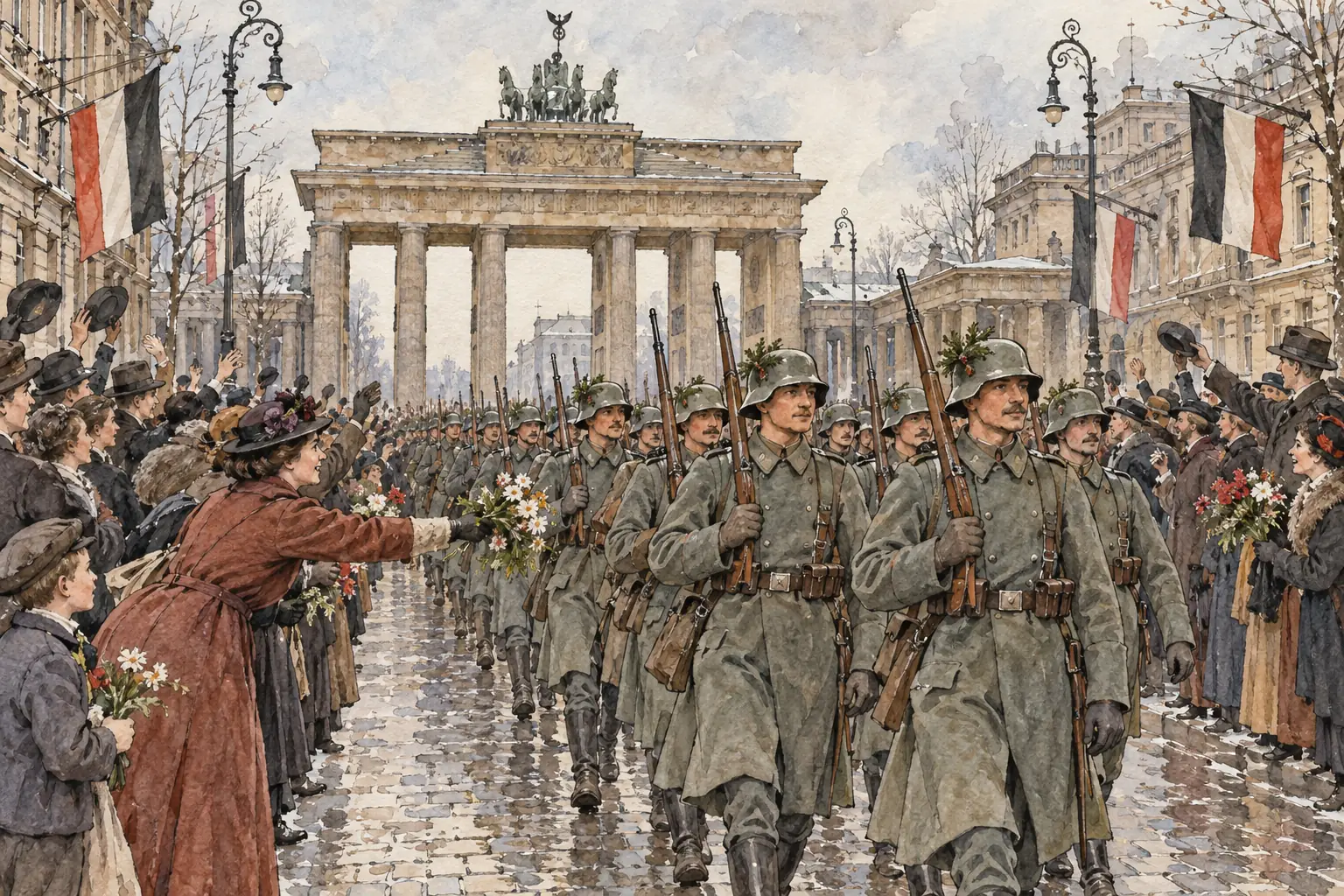
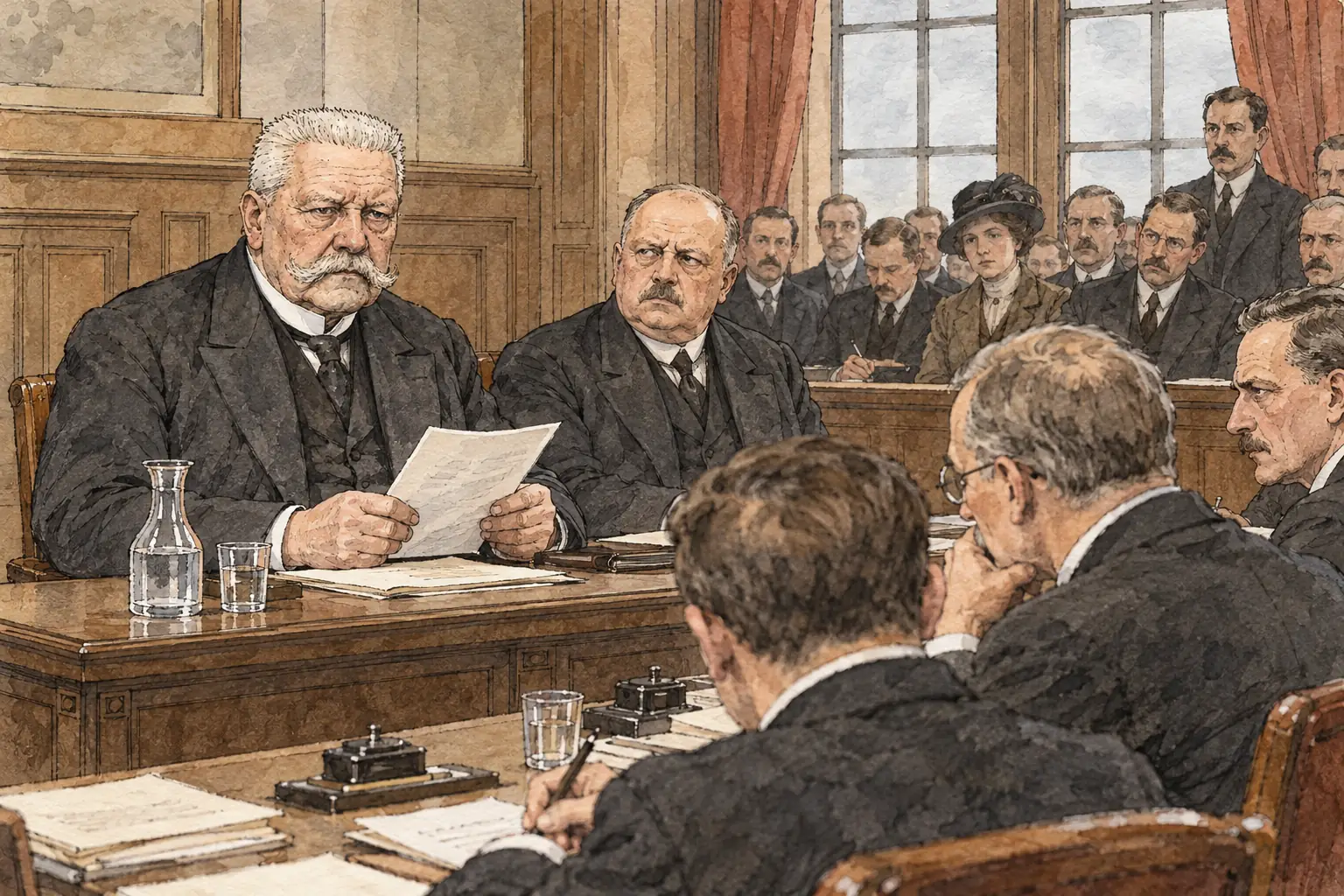
The 'stab-in-the-back' myth, known in German as the Dolchstosslegende, claimed that Germany had not been defeated militarily in the First World War but was undermined by internal treachery. This narrative gained traction in the post-war years as a way to deflect blame from military failures.
Origins and promotion of the myth
- Core claim - It alleged that revolutionary socialists, Jews, and democratic politicians had sabotaged the war effort from within, forcing an unnecessary surrender while the army remained capable of fighting.
- Key promoters - Military leaders such as Paul von Hindenburg and Erich Ludendorff spread the idea to preserve their reputations, testifying before parliamentary committees that the army was 'stabbed in the back' by civilians.
- Political exploitation - Right-wing groups and nationalists amplified the myth through speeches and publications, using it to attack the new democratic government and rally support against perceived enemies.
Damage to the Weimar Republic's legitimacy
The Treaty of Versailles became a focal point for criticism of the Weimar Republic, associating the new democracy with national weakness and betrayal. This eroded public trust and empowered extremist movements on both the left and right.
Impacts on the republic's stability
- Association with defeat - The republic's leaders, who signed the treaty, were linked to its unpopular terms, making the government appear weak and complicit in Germany's humiliation.
- Fuel for the 'stab-in-the-back' myth - The myth portrayed the republic as the product of internal betrayal, damaging its legitimacy by suggesting it was founded on treason rather than genuine reform.
- Rallying point for extremists - Groups like the Nazis and communists exploited resentment over the treaty to gain followers, promising to overturn its provisions and restore German strength, which contributed to political violence and instability.