3.2 - Law Enforcement & Punishment
Key facts and dates
The period from 1700 to 1900 witnessed significant transformations in British law enforcement and punishment, shifting from community-based systems and harsh public deterrents to professional policing and rehabilitative imprisonment. These changes reflected evolving societal attitudes towards crime, justice, and humanitarian concerns.
Timeline of key events
- 1740s–1750s – Henry and John Fielding establish the Bow Street Runners, an early paid force for crime detection in London.
- 1774 – Gaol Act introduces suggestions for health improvements in prisons.
- 1777 – John Howard's report exposes poor prison conditions, inspiring reform.
- 1813 – Elizabeth Fry begins advocating for better treatment of female prisoners at Newgate.
- 1823 – Gaols Act mandates inspections, proper food, and prisoner separation.
- 1829 – Sir Robert Peel founds the Metropolitan Police, the first professional force.
- 1835 – Municipal Corporations Act allows towns to establish their own police forces.
- 1856 – County Police Act makes police forces compulsory in all counties.
- 1868 – Transportation to Australia ends, and public executions are abolished.
- 1878 – Creation of the Criminal Investigation Department (CID) for detective work.
Early law enforcement in the 18th century
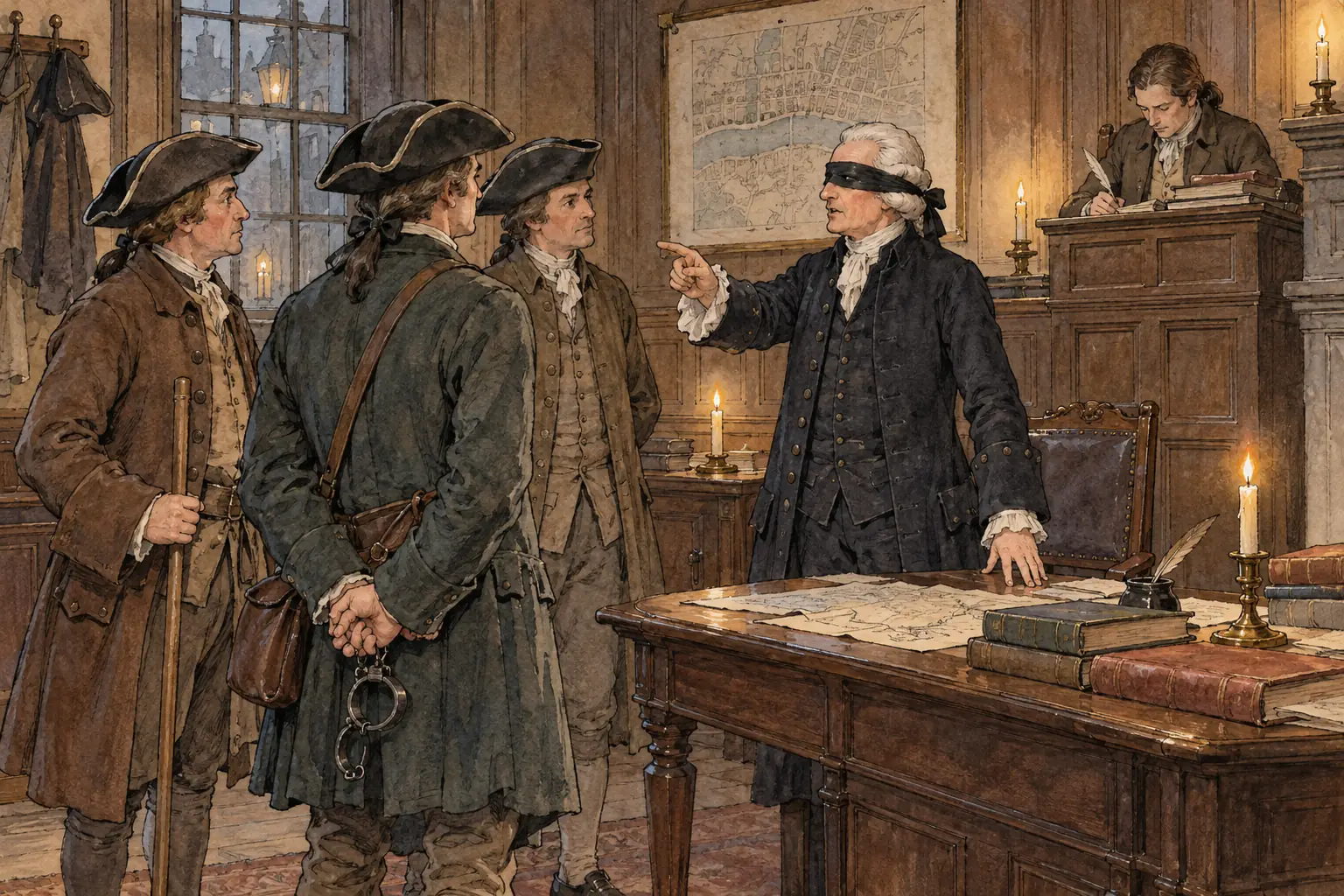
Image 1 of 2: Eighteenth-century watchmen were untrained and often mocked
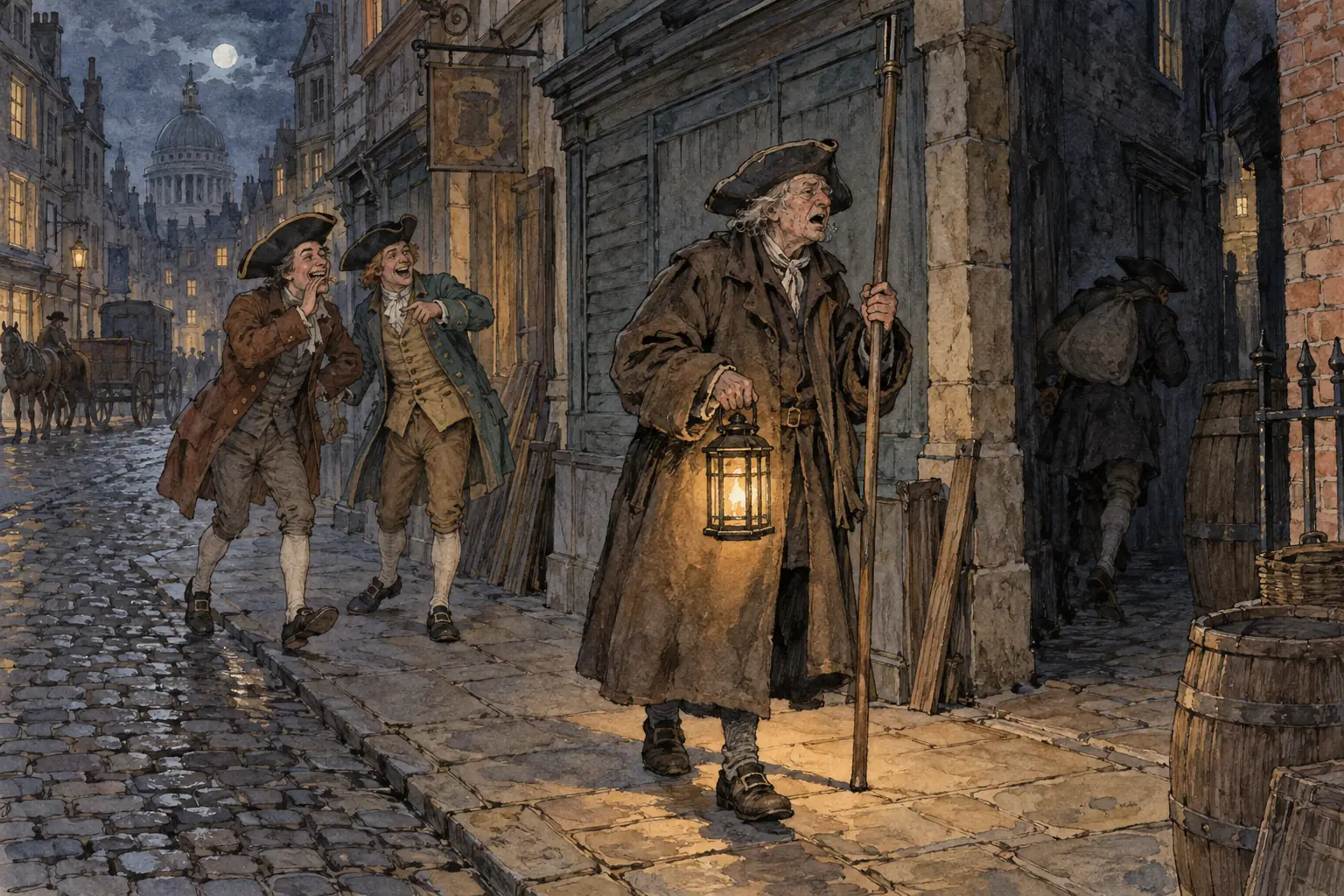
In the early 1700s, maintaining law and order relied heavily on local community involvement rather than centralised authority. Systems were informal and often ineffective, placing much responsibility on individuals affected by crime.
Traditional roles in community policing
- Constables and watchmen - Local volunteers or appointed officials patrolled areas at night and responded to disturbances, but they lacked training and were unpaid, leading to inconsistent enforcement.
- Victim-led prosecutions - Those who suffered crimes had to gather evidence and pursue cases themselves through courts, which could be costly and deter many from seeking justice.
Contributions of the Fielding brothers
Henry Fielding, and later his half-brother John, served as magistrates at Bow Street in London during the 1740s and 1750s. They introduced innovative measures to combat rising urban crime.
- Bow Street Runners - A small group of paid officers focused on detecting and preventing offences, marking an early step towards professional policing.
- Horse patrols - Organised riders monitored highways to reduce robberies and improve safety for travellers.
- Hue and Cry newspaper - This publication shared details of wanted criminals and stolen goods, helping to coordinate efforts across regions and foreshadow modern crime reporting.
These initiatives by the Fieldings laid groundwork for more structured law enforcement, addressing the limitations of earlier community methods.
Professional policing in the 19th century
The 1800s saw a gradual acceptance of organised, government-funded policing as urban growth and industrialisation increased crime rates. This era transitioned from voluntary systems to nationwide professional forces.
Establishment of the Metropolitan Police
- Founding in 1829 - Home Secretary Sir Robert Peel created the first full-time, uniformed police force in London, known as "Bobbies" after his name, with an emphasis on crime prevention through visible patrols.
- Key principles - Officers were trained to be impartial, accountable to the public, and focused on maintaining order without military-style aggression.
Expansion of police forces nationally
- Municipal Corporations Act 1835 - Permitted towns and boroughs to set up their own local police, extending professional policing beyond the capital.
- County Police Act 1856 - Required all counties to establish forces, ensuring comprehensive coverage across England and Wales by the mid-century.
Advancements in investigative methods
- Criminal Investigation Department (CID) 1878 - Formed to handle complex cases, introducing specialist detectives who used evidence gathering and undercover work to solve crimes, enhancing the effectiveness of policing.
By the end of the century, these developments had created a unified system that prioritised prevention and detection over reactive community efforts.
Shift from the Bloody Code to reform
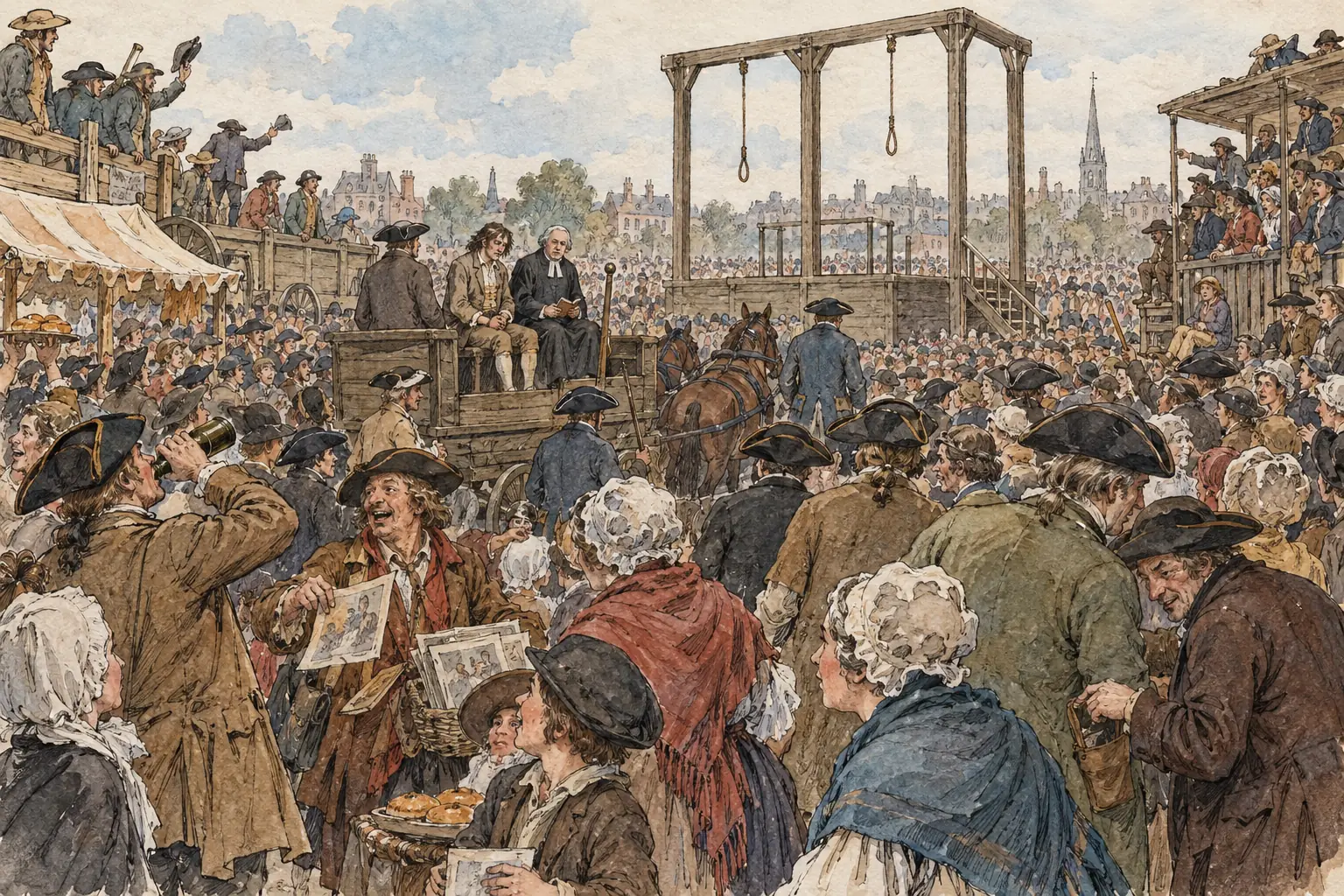
Punishment in the early 1700s was severe and public, aimed at deterrence through fear. By the mid-1800s, humanitarian influences shifted the emphasis towards rehabilitation and less visible penalties.
The Bloody Code and its features
- Height of capital punishment - By the early 1800s, over 200 offences, including minor thefts, carried the death penalty under this harsh legal framework.
- Public executions - Hangings were spectacles intended to warn others, but they often attracted unruly crowds and failed to reduce crime effectively.
Shift towards reform
Attitudes evolved due to campaigns highlighting the inhumanity and ineffectiveness of brutal punishments. Reformers argued for methods that could change offenders' behaviour rather than merely punish.
- Reduction in death penalties - During the 1820s and 1830s, many lesser crimes were removed from capital punishment lists, dismantling the Bloody Code and favouring alternatives like imprisonment.
- Focus on rehabilitation - Punishments increasingly incorporated elements such as work, education, and religious guidance to reform inmates and prepare them for reintegration into society.
Decline of transportation and public executions
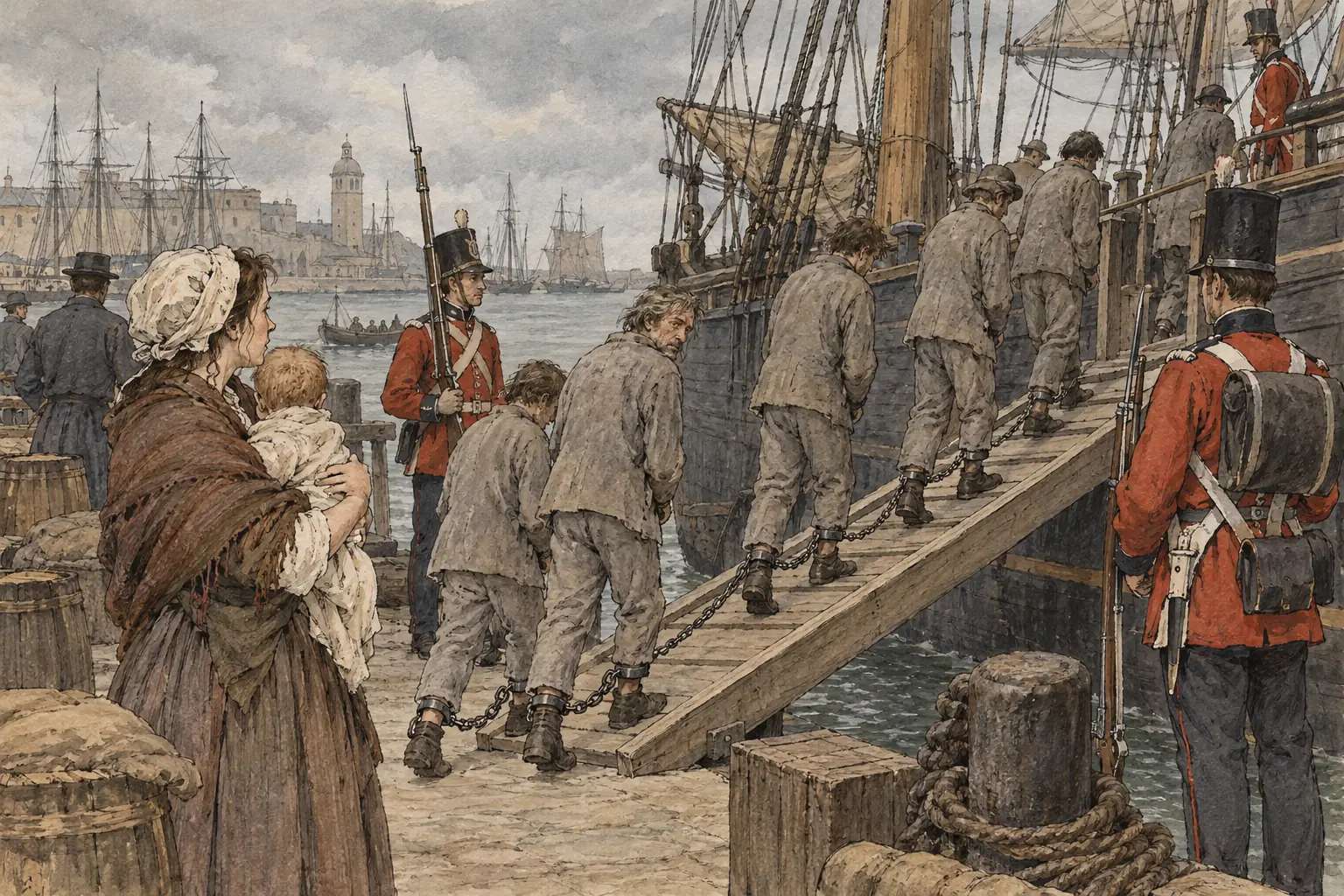
Transportation and public hangings served as key punishments in the early 1800s, but both faced growing criticism for their cruelty and limited deterrent value, leading to their abolition by the late 1860s.
Transportation to Australia
- Purpose and peak usage - After losing American colonies in the late 1700s, convicts were sent to Australia to ease prison overcrowding and avoid executions; it reached its height in the early 1800s as a secondary penalty for serious crimes.
- Decline and end in 1868 - Criticisms mounted that it was inhumane, expensive, and ineffective at preventing reoffending, prompting its gradual phase-out from the 1840s.
Abolition of public executions
- Shift to private hangings - Public spectacles ended in 1868, with executions moved inside prison walls to avoid unseemly crowds and reflect changing views that such displays were barbaric and counterproductive.
These changes marked a broader move away from visible, retributive justice towards more discreet and corrective measures.
Key prison reform movements and legislation
Image 1 of 2: John Howard's 1777 report exposed filthy, overcrowded gaols where prisoners of every kind were held together
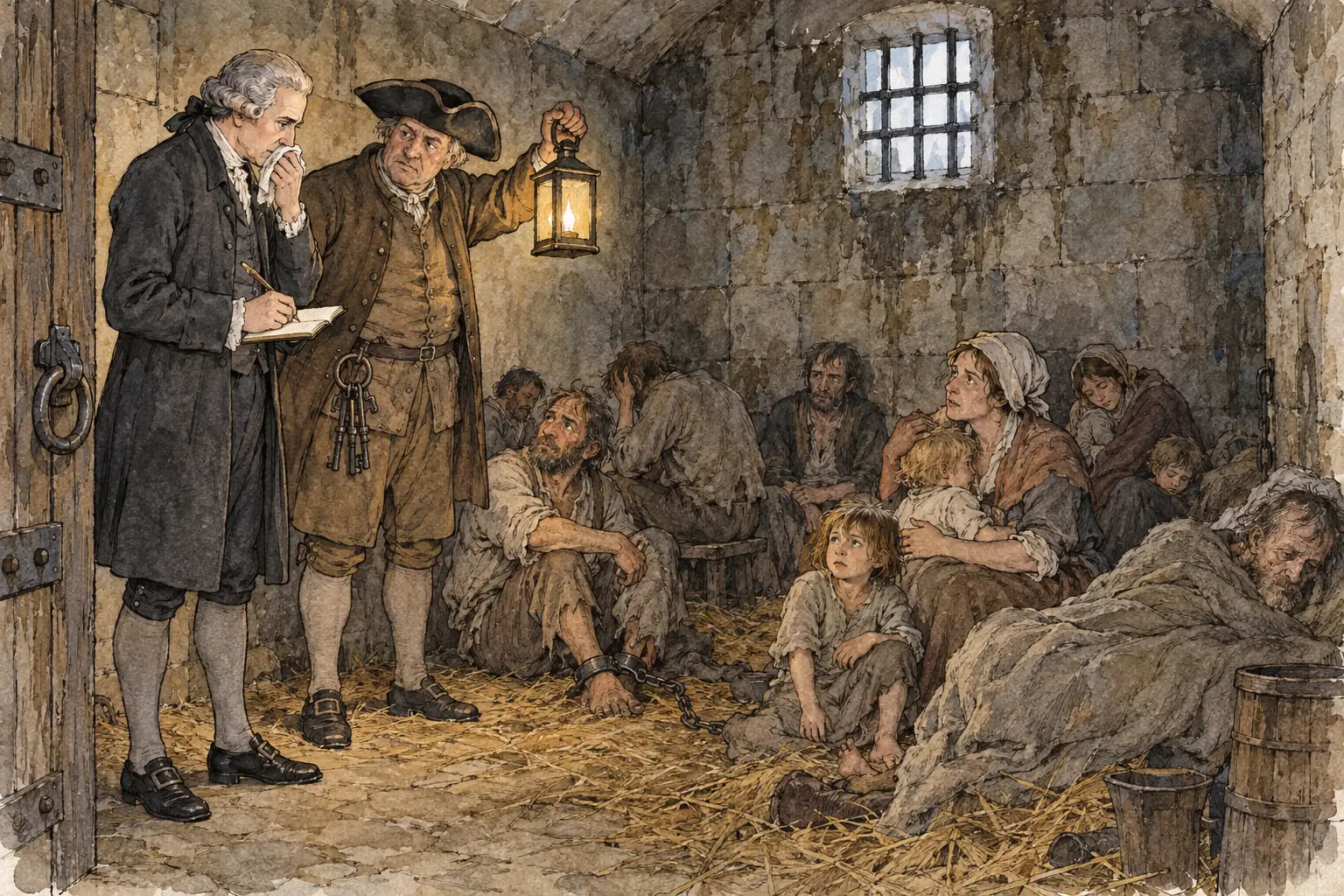
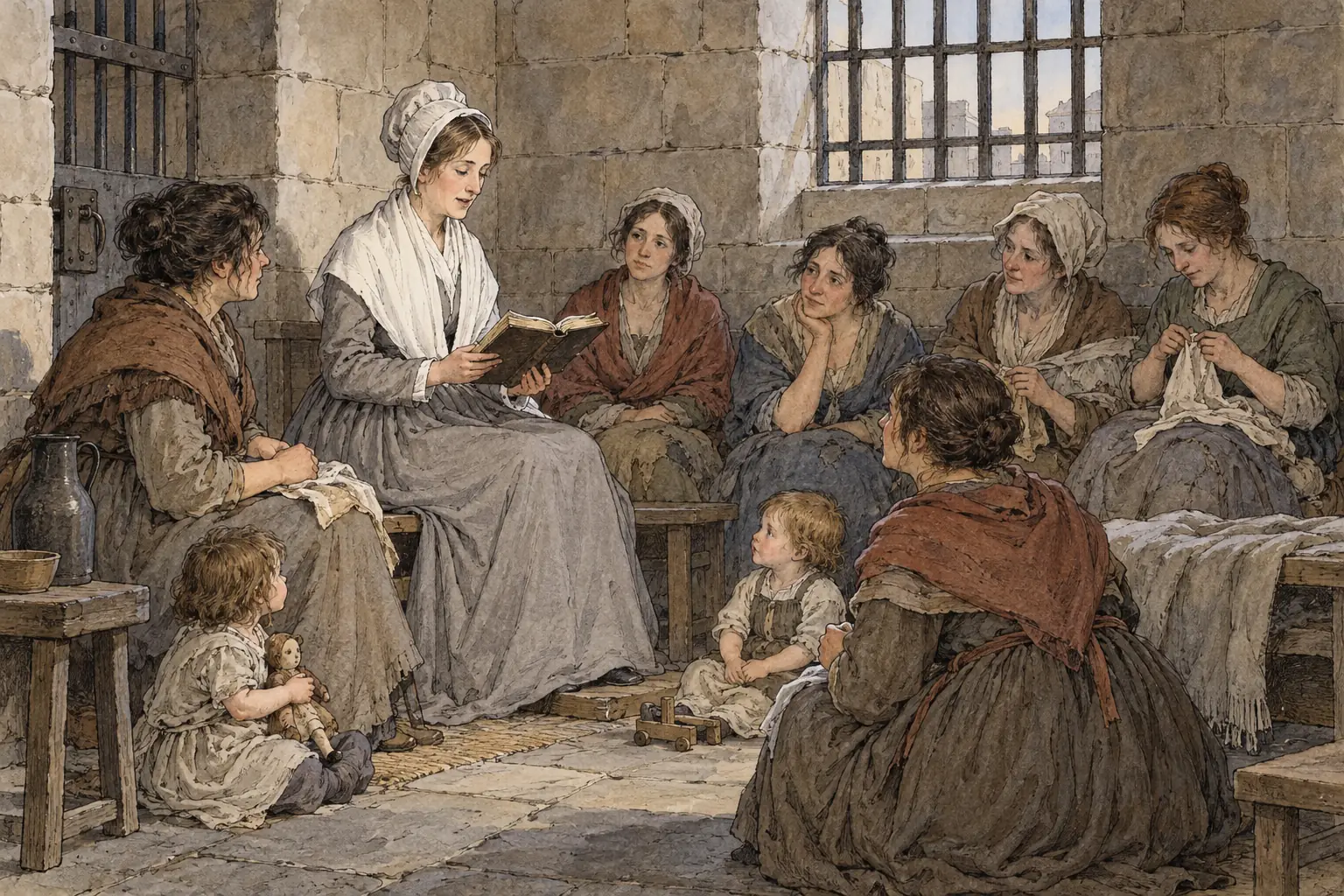
Prisons in the 1700s were often overcrowded and disease-ridden, prompting reformers to advocate for improvements. Their efforts led to laws and redesigns that prioritised health, order, and reform.
Influences of major reformers
- John Howard - His 1777 report on prison conditions exposed issues like poor sanitation and mixing of inmates, inspiring calls for change.
- Elizabeth Fry - From 1813, she campaigned for female prisoners at Newgate, promoting education, separate facilities, and humane treatment to aid rehabilitation.
Significant legislation for prison improvements
- Gaol Act 1774 - Recommended better health standards, such as cleaner environments and medical care, though implementation was uneven.
- Gaols Act 1823 - Required regular inspections, adequate food supplies, and segregation of prisoners by gender, age, and offence type to prevent corruption and promote order.
By the mid-1800s, many prisons were rebuilt with secure, structured designs that incorporated routines for work and instruction, embodying the era's emphasis on reforming offenders rather than just punishing them.