4.1 - Women & the Family
Key facts and dates
Nazi policies towards women and family life emphasised traditional roles to boost population growth and support racial ideology, though economic demands later created contradictions. These measures reflected a mix of incentives and restrictions aimed at aligning women's lives with state goals.
Key facts to remember
- Kinder, Küche, Kirche – Core Nazi ideal promoting women's roles in children, kitchen, and church.
- Marriage loans – Financial incentives for couples to marry and have children, with repayments reduced per child.
- Mother's Cross – Awards honouring mothers with multiple children to celebrate large families.
- Employment restrictions – Women barred from certain professions and encouraged to leave jobs for domestic duties.
- Appearance guidelines – Emphasis on natural looks, modest clothing, and avoidance of modern fashions.
- Rearmament shift – From 1936, labour needs pulled women into workforce despite ideological opposition.
Nazi ideals for women and the family
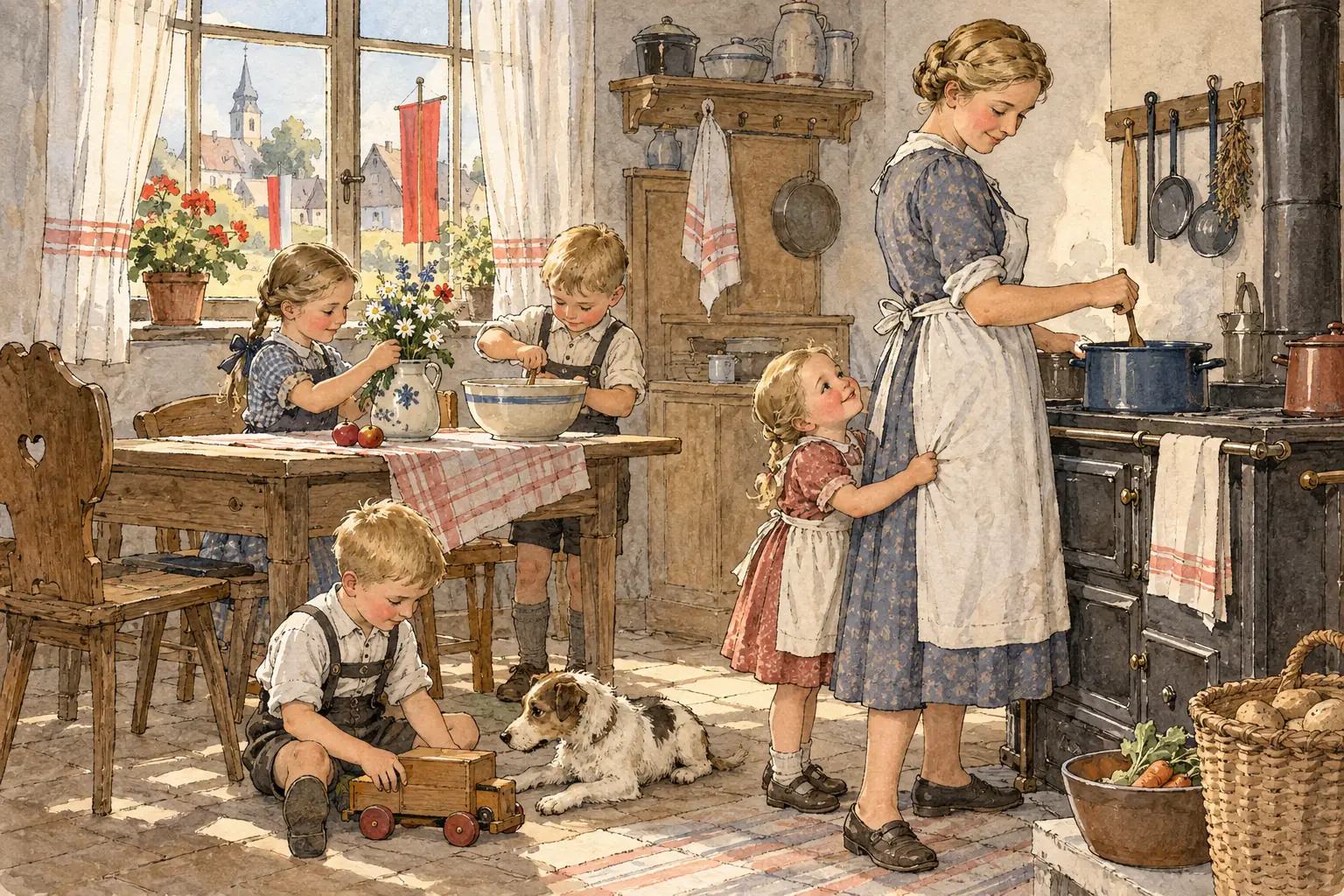
Nazi ideology placed women at the heart of family life, viewing them primarily as mothers and homemakers to strengthen the Aryan race and support national goals. This approach sought to reverse declining birth rates and promote traditional values, often summarised by the phrase "Kinder, Küche, Kirche" (children, kitchen, church).
Core elements of Nazi ideals
- Focus on motherhood - Women were expected to prioritise bearing and raising children to increase the population and ensure racial purity, with large families seen as a service to the state.
- Domestic role - Emphasis was placed on managing the household, supporting the husband, and instilling Nazi values in children, reinforcing the idea that women's fulfilment came from family duties.
- Racial and societal purpose - These ideals aligned with broader Nazi aims of creating a strong, unified Volksgemeinschaft (people's community), where women's contributions were essential for national strength but confined to the private sphere.
Policies to encourage marriage and childbirth
Image 1 of 2: Couples could get an interest-free marriage loan of up to 1,000 Reichsmarks, paid in vouchers for furniture and household goods, if the wife gave up her job
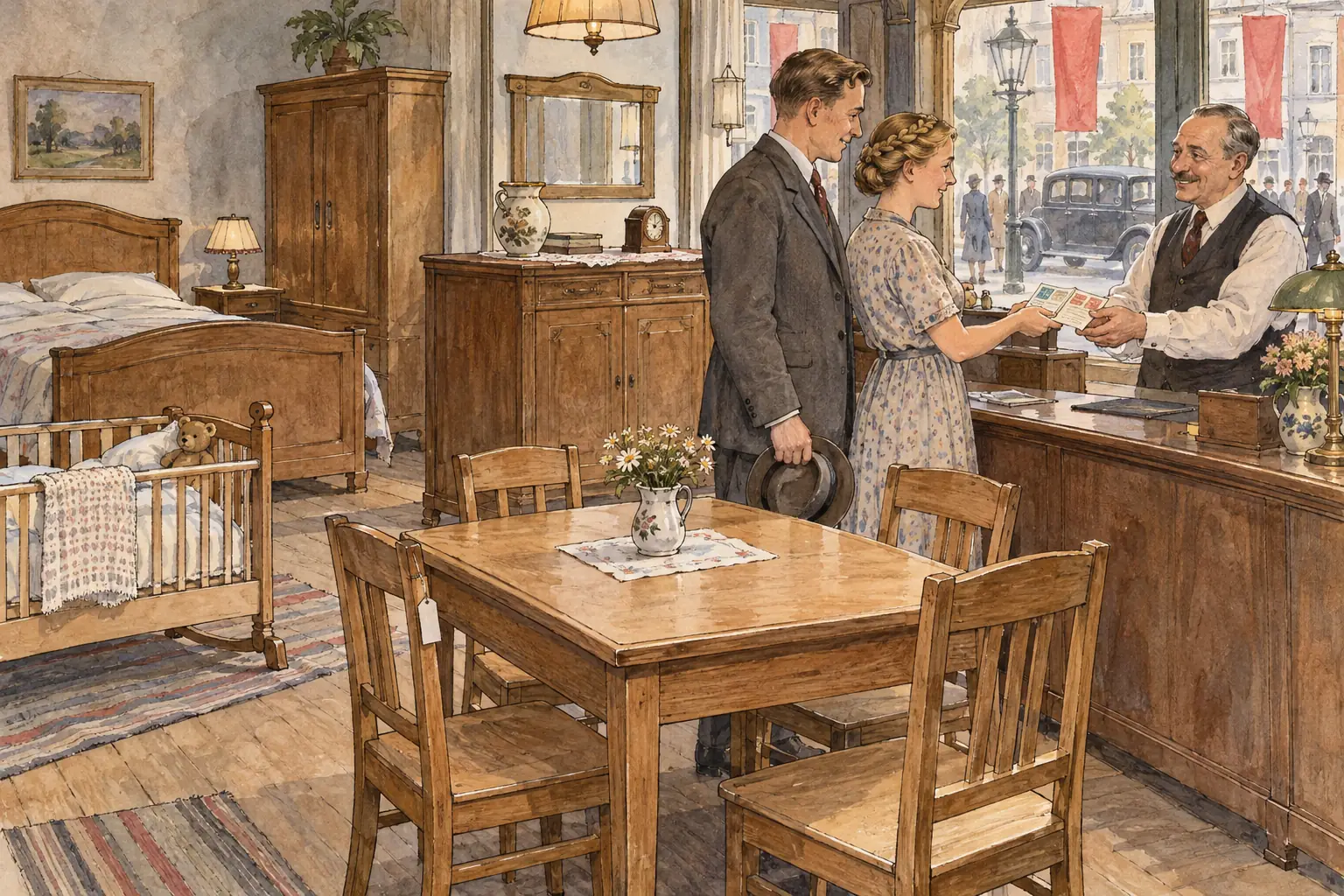
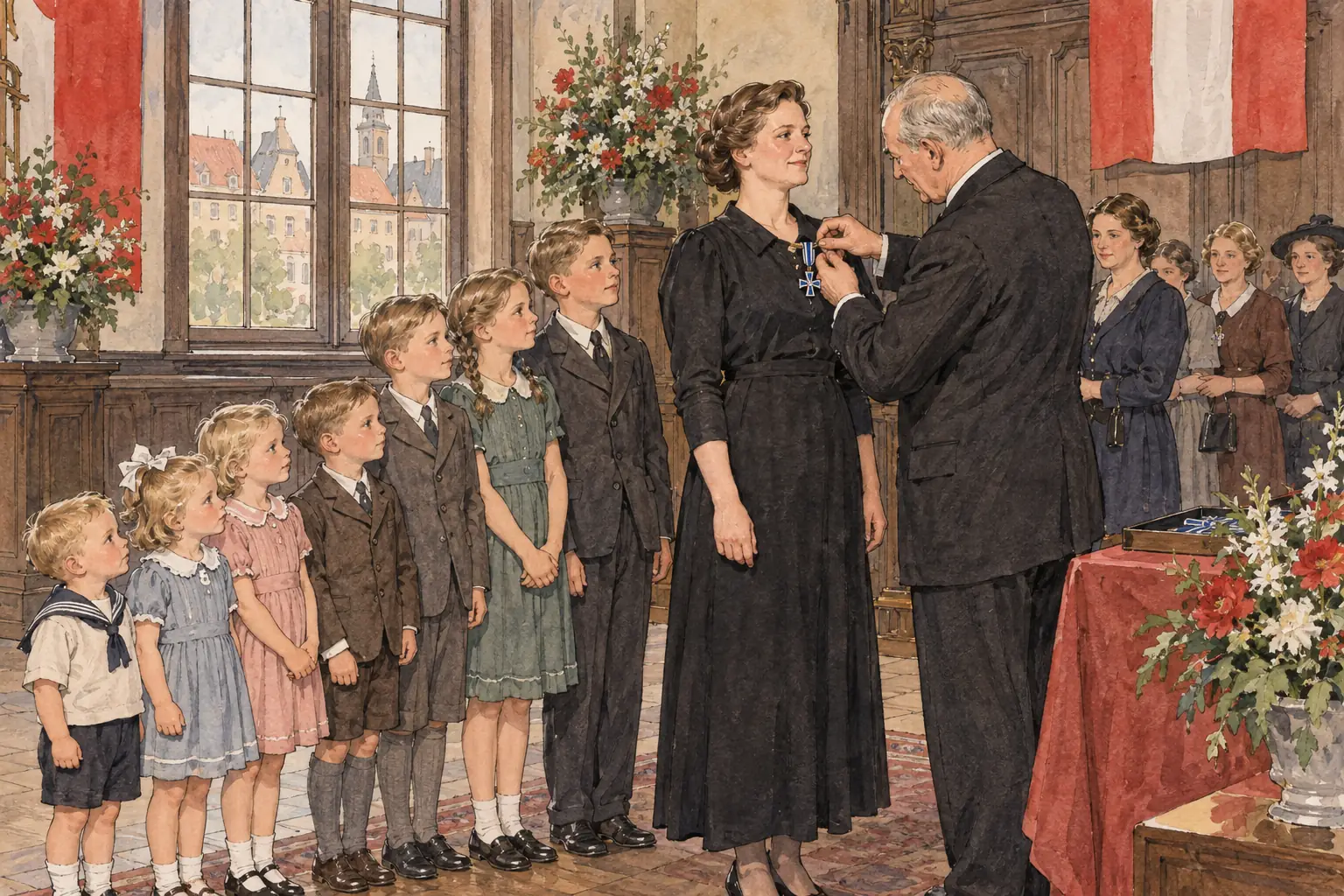
The Nazi regime introduced a range of measures to promote marriage and larger families, using financial and symbolic incentives to shape family life. These policies aimed to boost the birth rate while discouraging women from pursuing careers outside the home.
Key policies supporting family growth
- Marriage loans - Newlywed couples could receive interest-free loans of up to 1,000 Reichsmarks, with the amount repayable reduced by 25% for each child born, encouraging early marriage and multiple births.
- Mother's Cross awards - Mothers were honoured with medals based on the number of children they had: bronze for four or five, silver for six or seven, and gold for eight or more, publicly recognising their contribution to the nation.
- Tax incentives - Families with more children benefited from reduced taxes and child allowances, while childless couples faced higher tax rates to penalise smaller households.
- Pressure on motherhood - Propaganda and social campaigns urged women to focus on family over professional ambitions, portraying career women as selfish and detrimental to society.
Restrictions on women's employment and roles
In the early years of Nazi rule, policies actively limited women's participation in the workforce and public life to align with ideological views on gender roles. These restrictions aimed to free up jobs for men and reinforce women's domestic focus.
Limitations imposed on women
- Employment barriers - Women were dismissed from civil service positions, teaching roles, and professions like medicine and law, with quotas capping female university students at 10% to prioritise male employment.
- Public role reductions - Women were excluded from political positions, juries, and leadership in organisations, with the regime promoting the idea that their influence should remain within the family.
- Shift from careers - Unmarried women were encouraged to leave jobs upon marriage, supported by campaigns that glorified homemaking and viewed working mothers as neglecting their primary duties.
Expectations regarding appearance and domesticity
Nazi ideology extended to women's personal presentation and daily lives, promoting a specific image of femininity that emphasised natural beauty and traditional domestic skills. These expectations were enforced through propaganda and social pressure to embody Aryan ideals.
Guidelines for women's appearance and behaviour
- Natural and modest style - Women were discouraged from using makeup, smoking, or wearing trousers, instead favouring simple dresses, long hair in braids, and an overall wholesome, healthy appearance to reflect racial purity.
- Domestic skills emphasis - Education and youth groups taught cooking, sewing, and childcare, preparing girls for roles as efficient homemakers who could manage resources frugally.
- Social conformity - Propaganda portrayed the ideal woman as supportive, fertile, and devoted to family, with deviations seen as unpatriotic or harmful to the community's moral fabric.
Changes due to rearmament and labour shortages
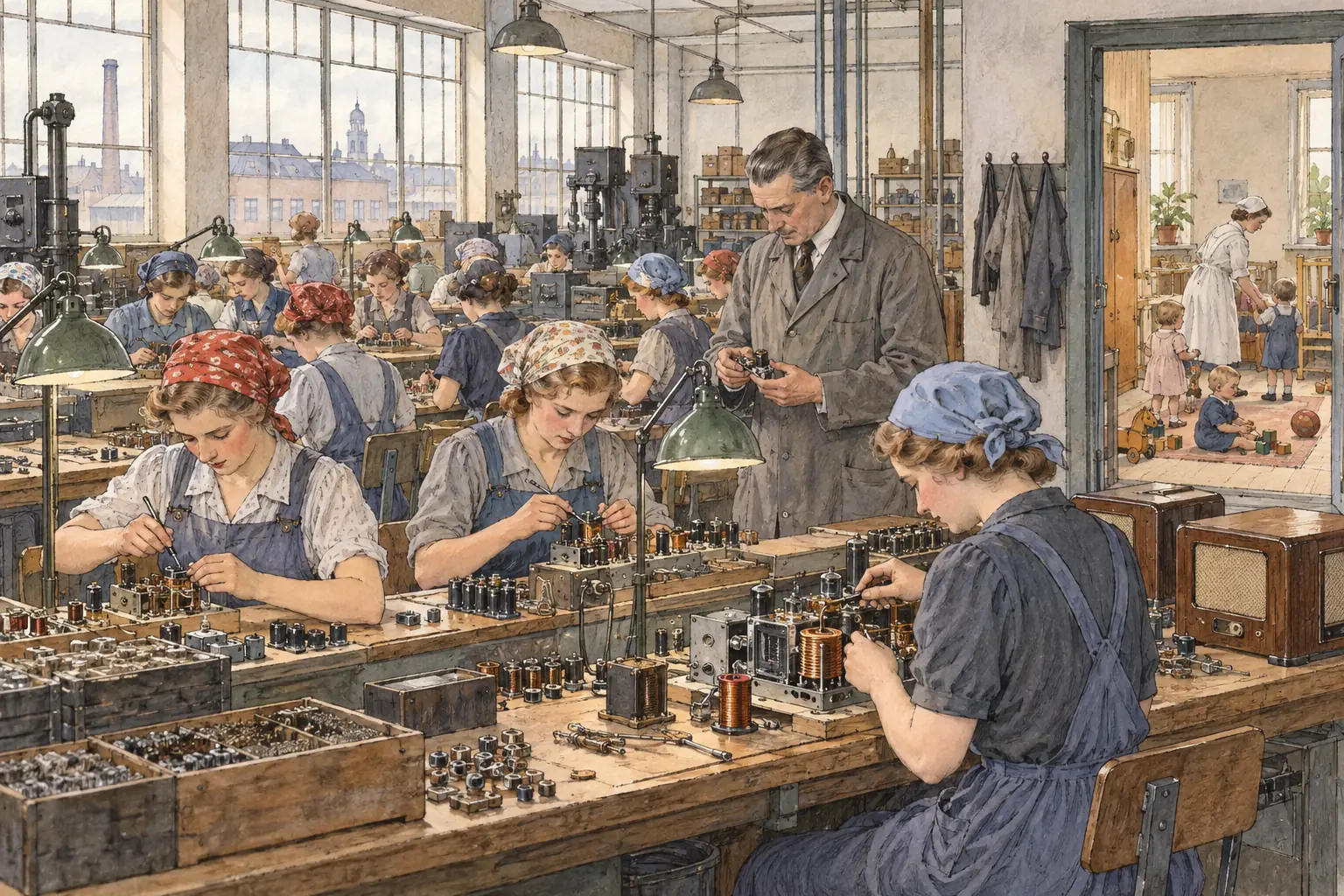
As Nazi Germany pursued rearmament and entered war, economic necessities conflicted with ideological principles, leading to a pragmatic shift in policies towards women. This created tensions between the regime's traditional views and the demands of total mobilisation.
Impact of economic needs on women's roles
- Pull back into workforce - From the mid-1930s, labour shortages in factories and agriculture forced the recruitment of women, with millions employed in munitions production and other essential industries by the 1940s.
- Ideological contradictions - While propaganda continued to promote motherhood, practical measures like compulsory work registration for women aged 17-45 were introduced, highlighting the gap between rhetoric and reality.
- Balancing family and work - Efforts were made to reconcile this shift, such as providing childcare facilities in factories, but the regime's core ideals remained, often resulting in women facing double burdens of employment and domestic responsibilities.