2.3 - Nazi Reorganisation & Limited Support
Key facts and dates
The mid-1920s represented a phase of relative stability in Germany, allowing the Nazi Party to rebuild after the failed Munich Putsch. This period focused on internal restructuring and consolidation under Hitler's leadership, though the party's appeal remained narrow amid economic recovery.
Timeline of key events
- 1924 – Hitler released from prison, begins reorganising the Nazi Party with regional Gau structures.
- 1925 – Founding of the SS as an elite bodyguard unit loyal to Hitler.
- 1925 – Joseph Goebbels appointed to oversee modernised propaganda efforts.
- 1926 – Bamberg Conference reinforces Hitler's authority and unifies party ideology.
- 1926 – Introduction of the Führerprinzip, emphasising absolute loyalty to the leader.
- 1928 – Nazi Party secures only 12 seats in Reichstag elections amid prosperity.
Reorganisation of the Nazi Party structure
Following Hitler's release from prison in 1924, the Nazi Party underwent significant restructuring to strengthen its organisation and expand its reach. This involved creating a network of regional divisions to improve coordination and local influence across Germany.
Creation of Gau structures and Gauleiters
- Gau system - The party divided Germany into administrative regions called Gaue, each managed by a Gauleiter appointed directly by Hitler to ensure central control.
- Role of Gauleiters - These leaders handled local recruitment, propaganda, and party activities, reporting back to national headquarters to maintain uniformity.
- Purpose of reorganisation - This structure replaced the looser pre-1923 setup, allowing the party to operate more efficiently and respond to regional needs while preventing fragmentation.
Key organisations and leadership principles
To consolidate power and loyalty, the Nazi Party introduced new groups and principles during this time. These changes aimed to create a disciplined, elite core while enhancing the party's public image through sophisticated messaging.
Founding of the SS and modernised propaganda
- SS creation in 1925 - The Schutzstaffel (SS) was established as a small, dedicated bodyguard unit for Hitler, emphasising unwavering obedience and ideological purity to distinguish it from the larger SA.
- Goebbels' propaganda role - Appointed in 1925, Joseph Goebbels transformed party communications using newspapers, posters, and rallies to target specific audiences with anti-democratic and nationalist themes.
- Führerprinzip introduction - Adopted in 1926, this leadership principle demanded absolute allegiance to Hitler as the supreme authority, eliminating democratic decision-making within the party.
The Bamberg Conference and internal unification
The Bamberg Conference of 1926 was a pivotal meeting that addressed divisions within the Nazi Party. It allowed Hitler to assert dominance over rival factions and standardise the party's direction.
Outcomes of the Bamberg Conference
- Marginalisation of rivals - Hitler confronted the northern 'socialist' wing, led by figures like Gregor Strasser, who favoured more working-class policies, by rejecting their ideas and enforcing his vision.
- Unification of message - The conference produced a single party programme emphasising nationalism over socialism, reducing internal debates and aligning all members behind Hitler's strategy.
- Strengthened leadership - By sidelining critics and promoting loyalty, Hitler prevented splits, ensuring the party presented a cohesive front during a time of political calm.
Reasons for limited electoral support
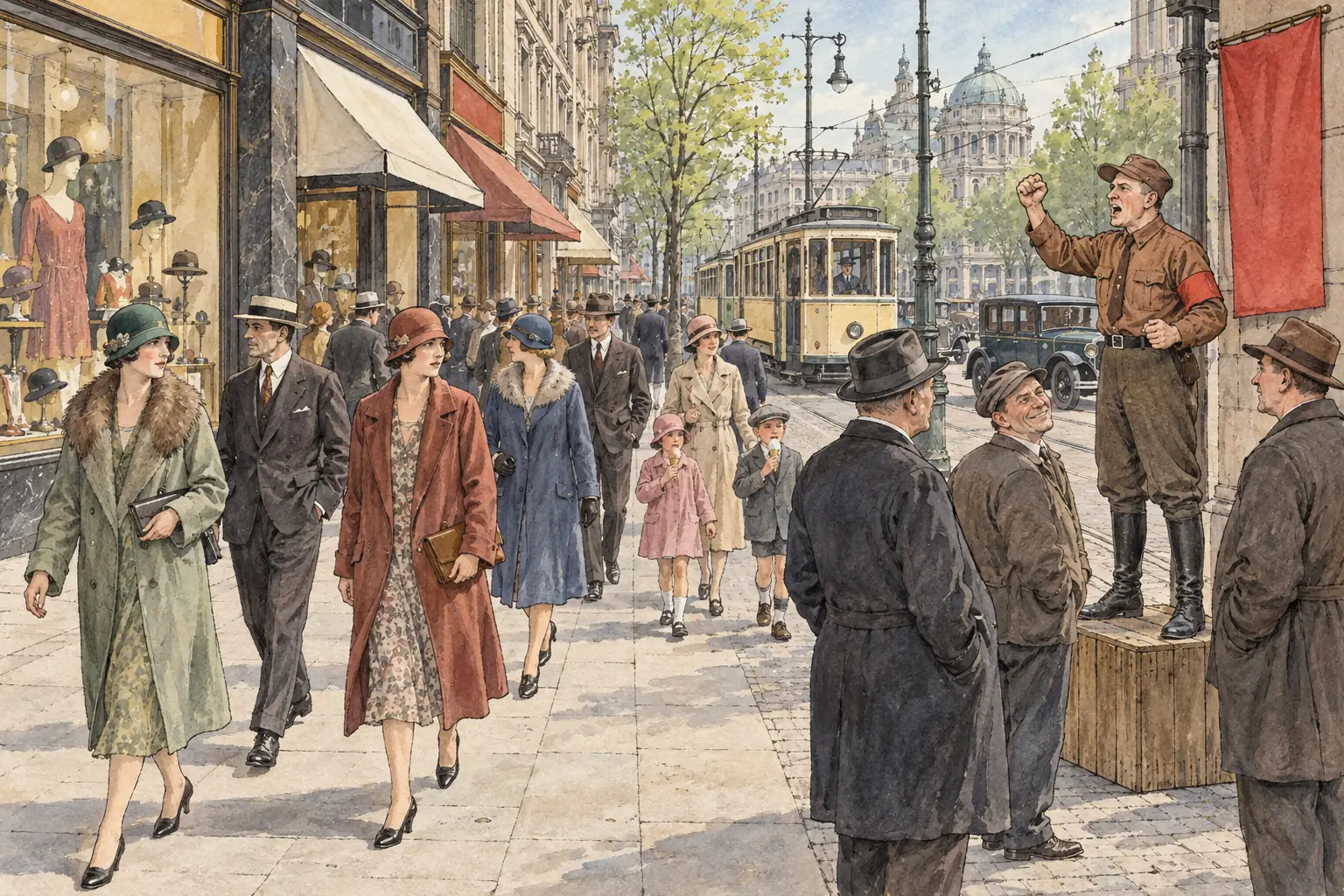
Despite reorganisation efforts, the Nazi Party struggled to gain widespread backing in the mid-1920s. Economic improvements and stable governance under the Weimar Republic diminished the appeal of extremist politics.
Factors limiting Nazi support
- Economic prosperity - The 'Golden Years' from 1924 to 1929 brought recovery through U.S. loans and industrial growth, reducing public discontent and the desire for radical change.
- Political stability - Moderate parties dominated the Weimar system, with effective coalitions addressing issues like inflation, leaving little room for Nazi anti-democratic rhetoric.
- Electoral performance - In the 1928 Reichstag elections, the Nazis won just 12 seats (2.6% of the vote), reflecting their marginal status among voters who preferred established options.
- Narrow appeal - The party's focus on rural and middle-class grievances failed to attract urban workers or those benefiting from the era's calm, limiting its national influence.