2.1 - Increased East–West Tension
Key facts and dates
The period from the late 1950s to the late 1960s saw escalating tensions between the Eastern and Western blocs, driven by crises in Berlin, revolutionary changes in Cuba, and reform movements in Eastern Europe. These events highlighted the deepening divide in the Cold War and the fragility of Soviet control over its sphere of influence.
Timeline of key events
- 1958 – Soviet leader Nikita Khrushchev issues an ultimatum demanding Western withdrawal from West Berlin.
- 1959 – Geneva and Camp David summits attempt to resolve Berlin's status but achieve no lasting agreement.
- 1959 – Fidel Castro's revolution establishes a socialist government in Cuba, nationalising US businesses.
- 1960 – Paris summit collapses over U-2 spy plane incident.
- 1961 – Vienna summit fails to settle Berlin issues; failed Bay of Pigs invasion pushes Cuba towards the USSR.
- 1968 – Prague Spring in Czechoslovakia introduces liberal reforms under Alexander Dubček.
Berlin as a renewed flashpoint by 1958
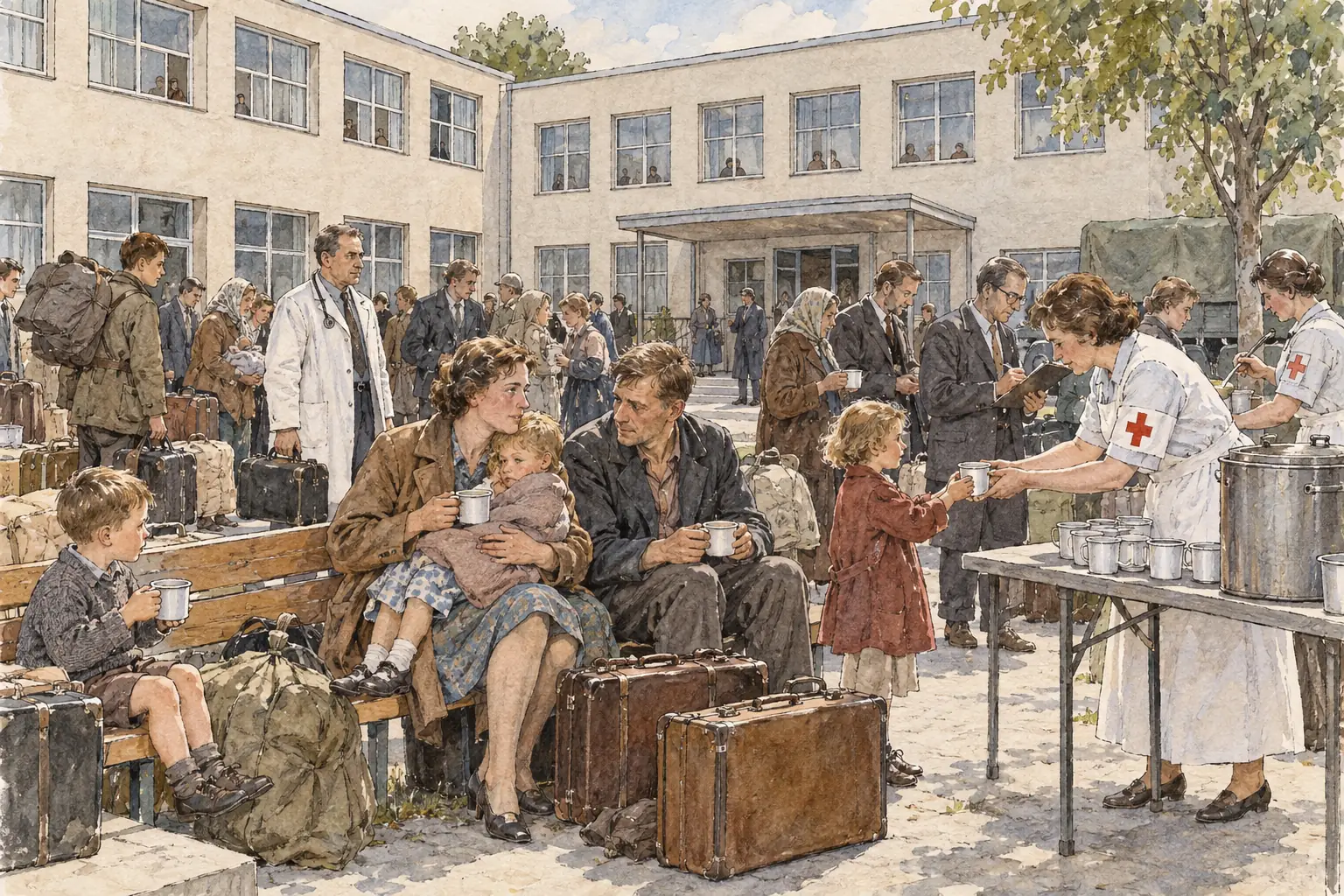
By the late 1950s, Berlin had re-emerged as a major point of conflict between the Soviet Union and the Western powers. The city's divided status allowed for significant movement between East and West, which created economic and political problems for the communist regime in East Germany.
Factors making Berlin a source of tension
- Mass exodus from East Germany - Approximately 2-3 million people escaped to West Germany through the open border in West Berlin, draining skilled workers and weakening the East German economy.
- Undermining of communist authority - This migration highlighted the unpopularity of the Soviet-backed system, embarrassing East German leaders and prompting action to stem the flow.
- Khrushchev's ultimatum - In 1958, Soviet premier Nikita Khrushchev demanded that the Western Allies (USA, Britain, and France) leave West Berlin within six months, proposing to make it a neutral city under East German control to prevent further defections.
East-West summit meetings from 1959 to 1961
Image 1 of 3: Khrushchev and Eisenhower held friendly talks at Camp David in September 1959
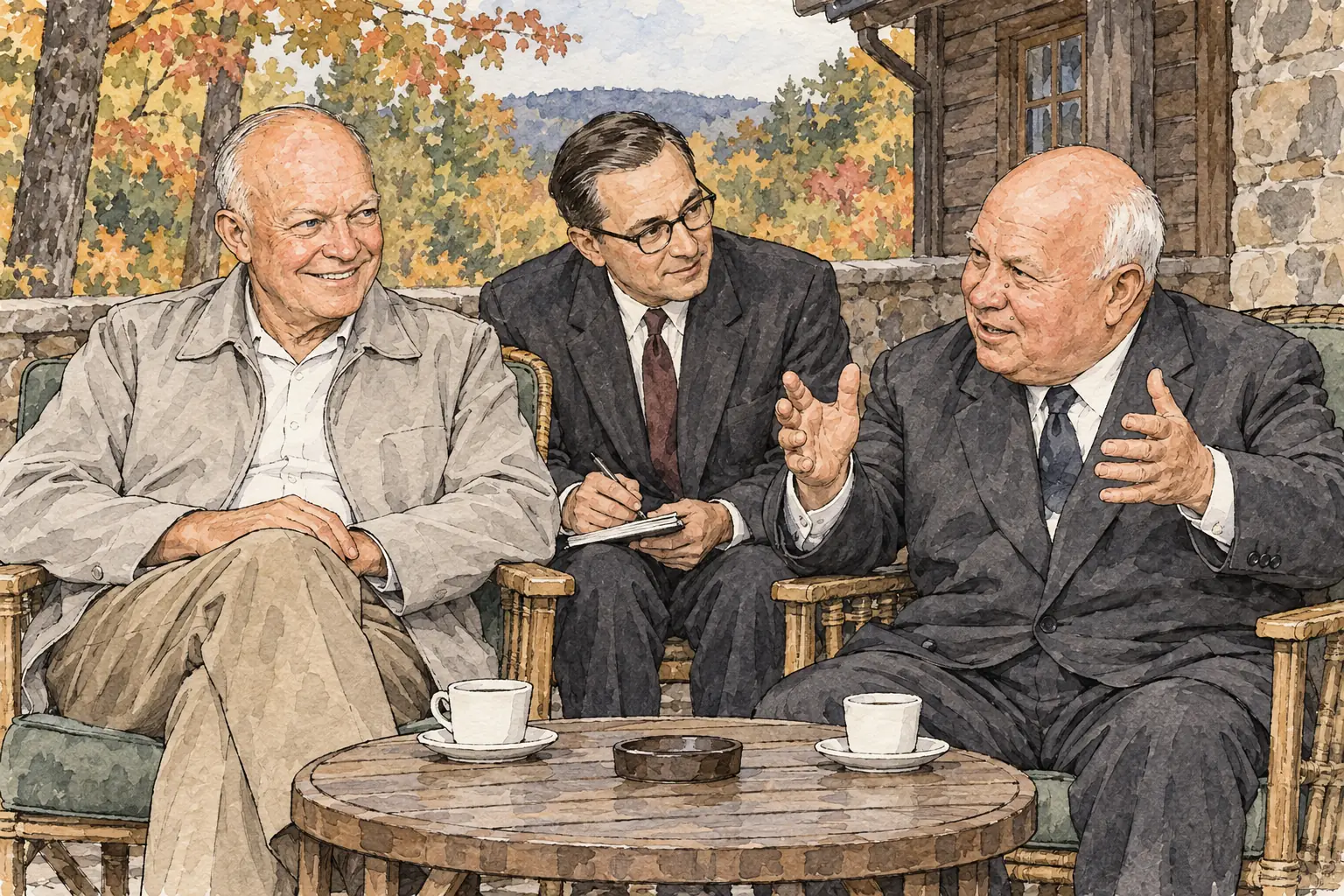
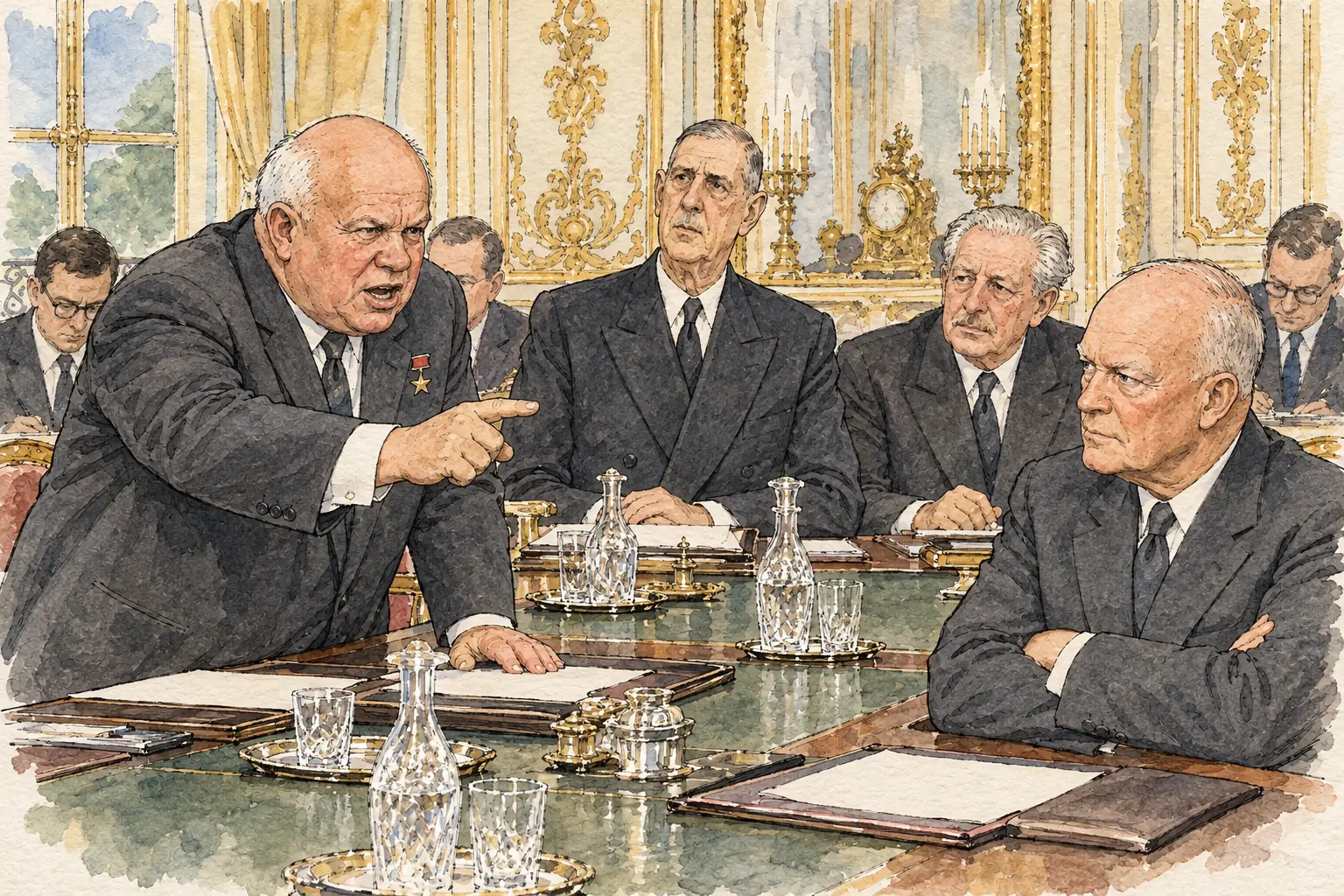
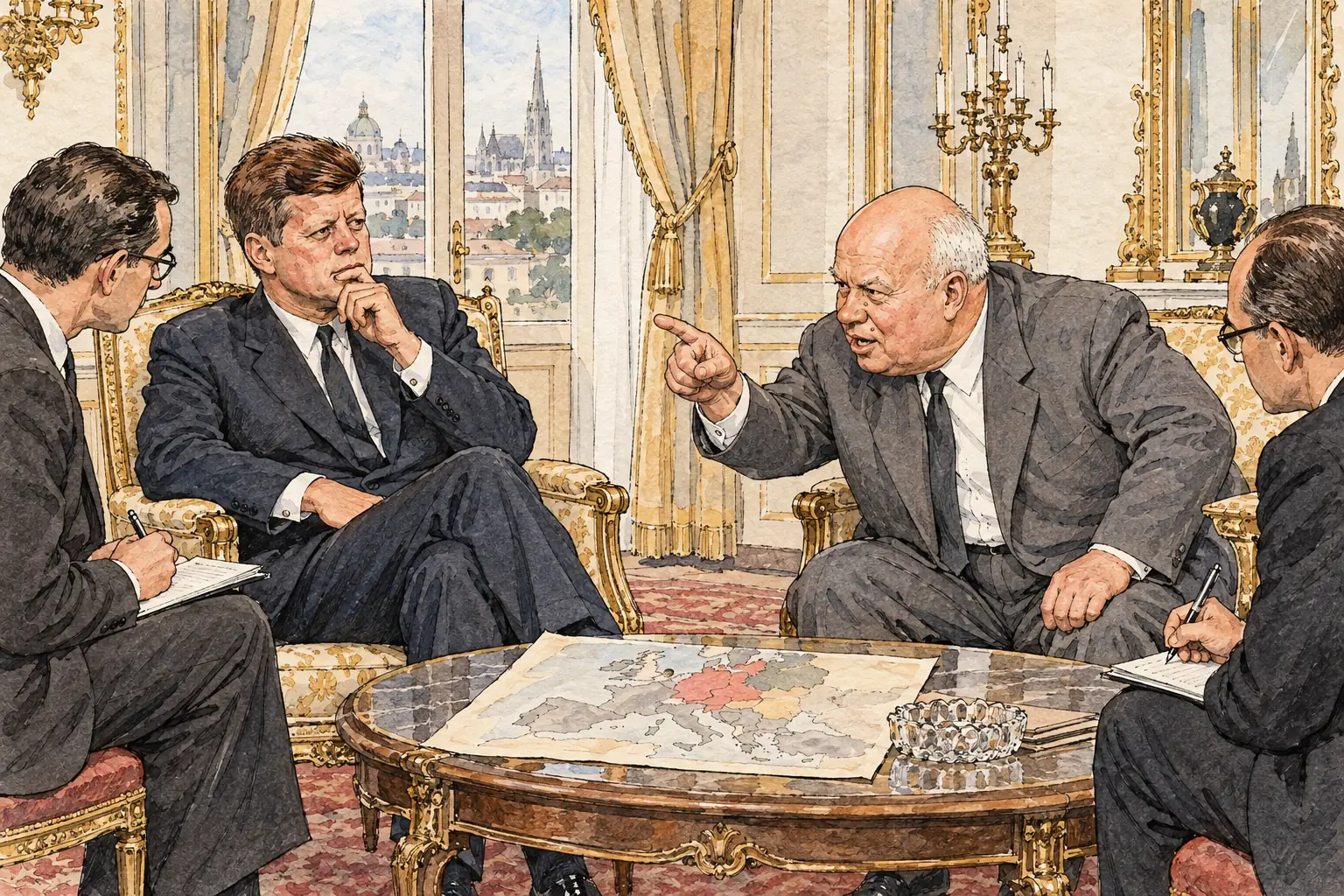
In response to the Berlin crisis, a sequence of diplomatic summits was held between Soviet and Western leaders to negotiate the city's future and broader Cold War issues. These talks, however, exposed deep divisions and ultimately failed to produce a resolution.
Key summits and their outcomes
| Summit | Outcome |
|---|---|
| Geneva summit (1959) | Focused on Berlin's status and arms control, but no concrete agreements were reached amid mutual suspicions. |
| Camp David summit (1959) | US President Eisenhower and Khrushchev discussed reducing tensions, achieving a temporary thaw but no firm deal on Berlin. |
| Paris summit (1960) | Collapsed before substantive talks due to the downing of a US U-2 spy plane over Soviet territory, escalating distrust. |
| Vienna summit (1961) | New US President Kennedy met Khrushchev, but disagreements over Berlin persisted, with Khrushchev renewing his ultimatum and heightening the risk of confrontation. |
The failure of these meetings intensified the Berlin standoff, pushing tensions to a critical level without any permanent solution.
The Cuban Revolution of 1959 and its impact
Image 1 of 2: Castro's rebel army entered Havana in triumph on 8 January 1959
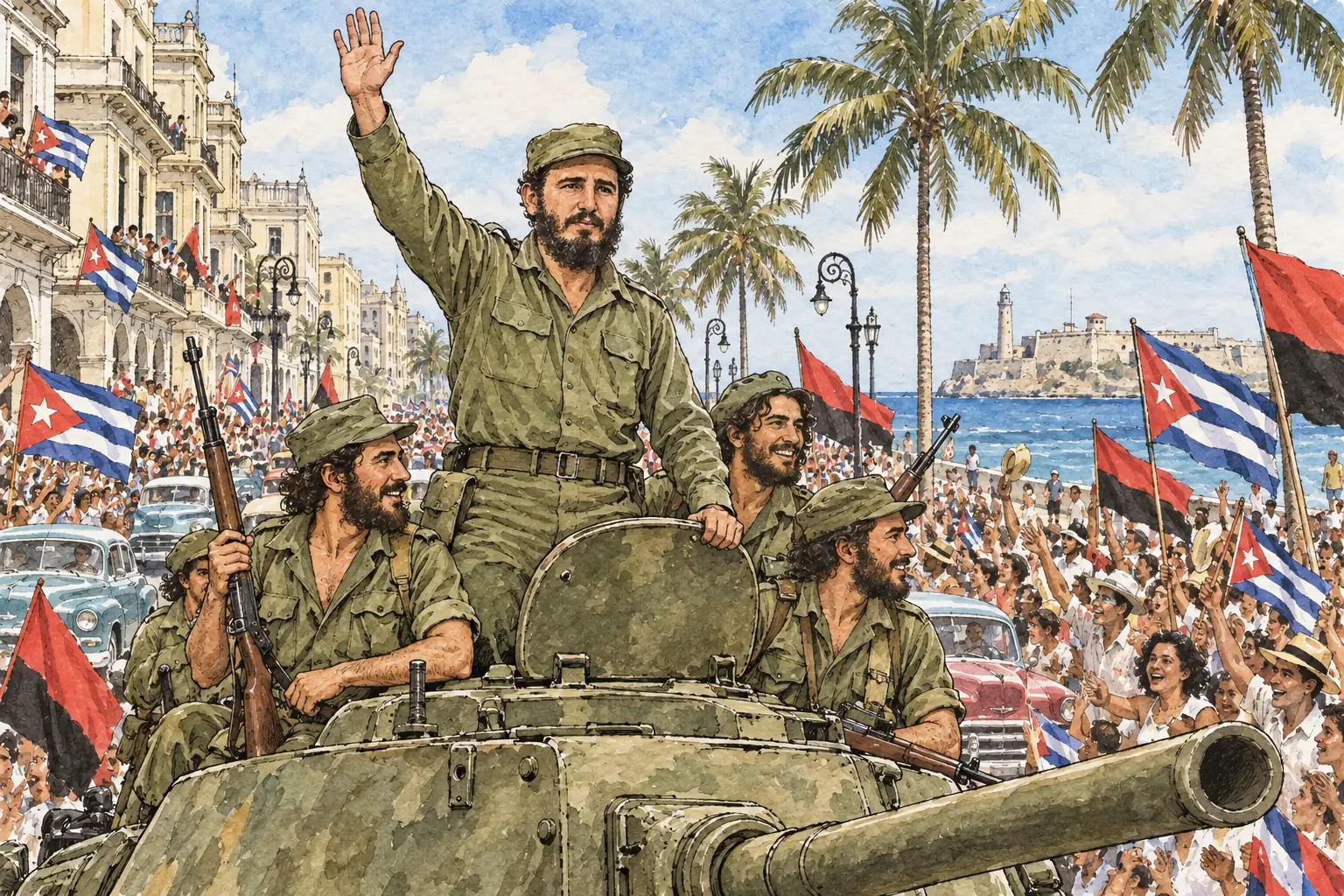
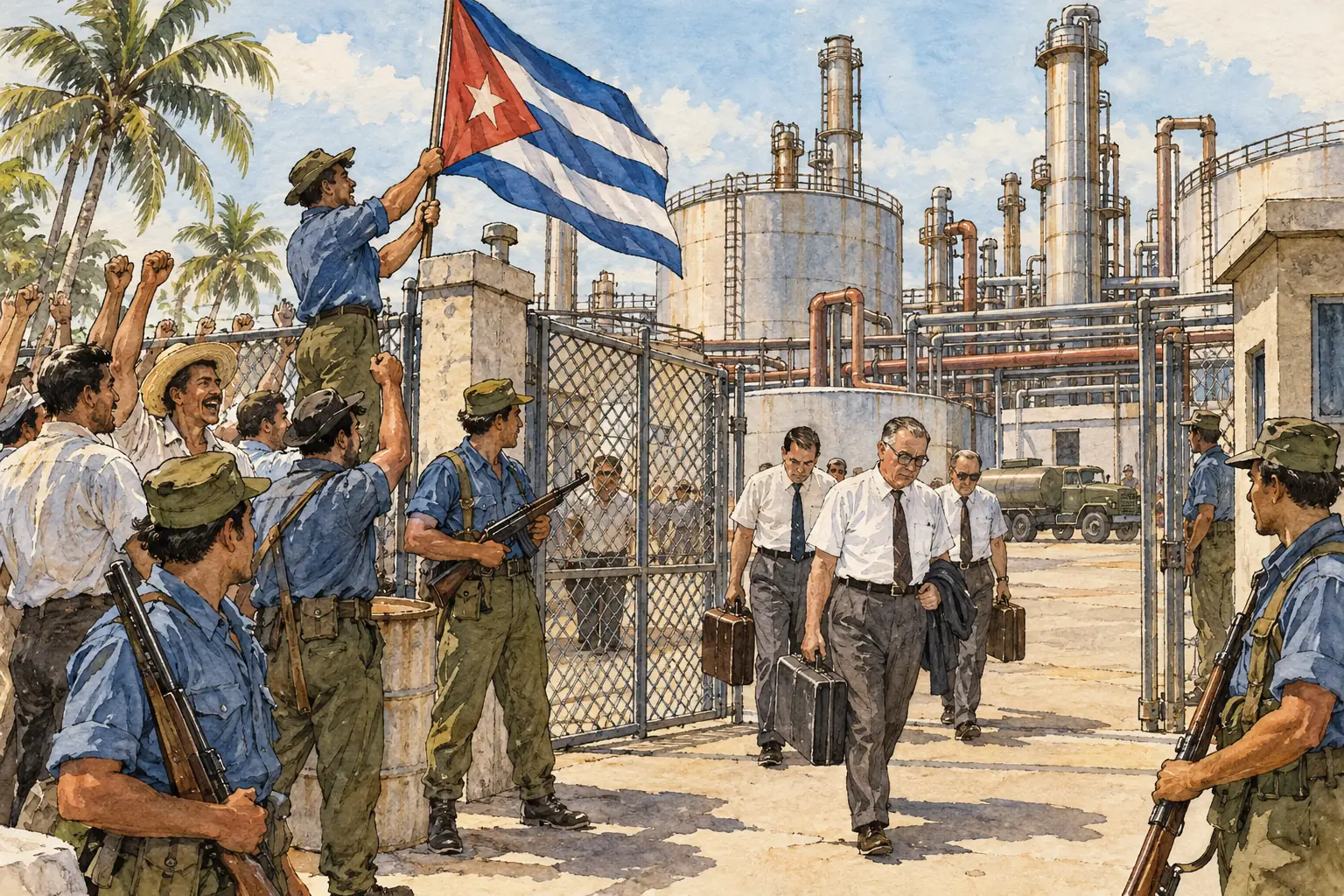
The overthrow of Cuba's government in 1959 marked a significant shift in Latin America, bringing communism close to US shores and amplifying superpower rivalry. This event transformed Cuba into a Soviet ally, directly challenging American influence in the region.
Events and consequences of the revolution
- Castro's rise to power - Rebel leader Fidel Castro deposed the US-supported dictator Fulgencio Batista, installing a socialist regime that nationalised American-owned industries and land.
- US response and failed invasion - The USA cut diplomatic ties and, in 1961, supported a botched invasion by Cuban exiles at the Bay of Pigs, aiming to topple Castro but resulting in a humiliating defeat.
- Alignment with the Soviet Union - The invasion drove Castro to seek Soviet protection, forging a close alliance that positioned a communist state just 90 miles from Florida and worsening US-Soviet relations.
Challenges to Soviet authority: the Prague Spring

By the late 1960s, dissatisfaction with rigid Soviet control grew in Eastern Europe, culminating in a major reform movement in Czechoslovakia. Economic stagnation and calls for more personal freedoms challenged the communist model imposed by Moscow.
Key elements of the Prague Spring
- Economic and social pressures - Widespread discontent arose from poor economic performance and restrictions on individual rights, prompting demands for change within the communist framework.
- Dubček's reforms - In 1968, reformist leader Alexander Dubček took power and implemented the Prague Spring, promoting "socialism with a human face" through measures like greater press freedom, reduced censorship, and steps towards limited democratic participation.
- Soviet concerns - These changes alarmed the USSR, as they threatened to pull Czechoslovakia away from strict Soviet influence and inspired similar unrest in other satellite states.