2.2 - The Homestead Act & Homesteaders
Key facts and dates
The Homestead Act of 1862 aimed to encourage settlement of the American West by offering land to small farmers, but homesteaders encountered significant environmental and practical challenges on the Great Plains. Innovations and additional legislation emerged to address these issues, though fraud and limited success marked the era.
Timeline of key events
- 1862 – Homestead Act passed, granting 160 acres of public land for a small fee after five years of residence and improvement.
- 1860s–1870s – Homesteaders develop solutions like steel ploughs and dry farming to combat Plains conditions.
- 1873 – Timber Culture Act introduced, offering extra land for tree planting to promote reforestation.
- 1874 – Invention of barbed wire revolutionises fencing on the open Plains.
Terms and aims of the Homestead Act (1862)
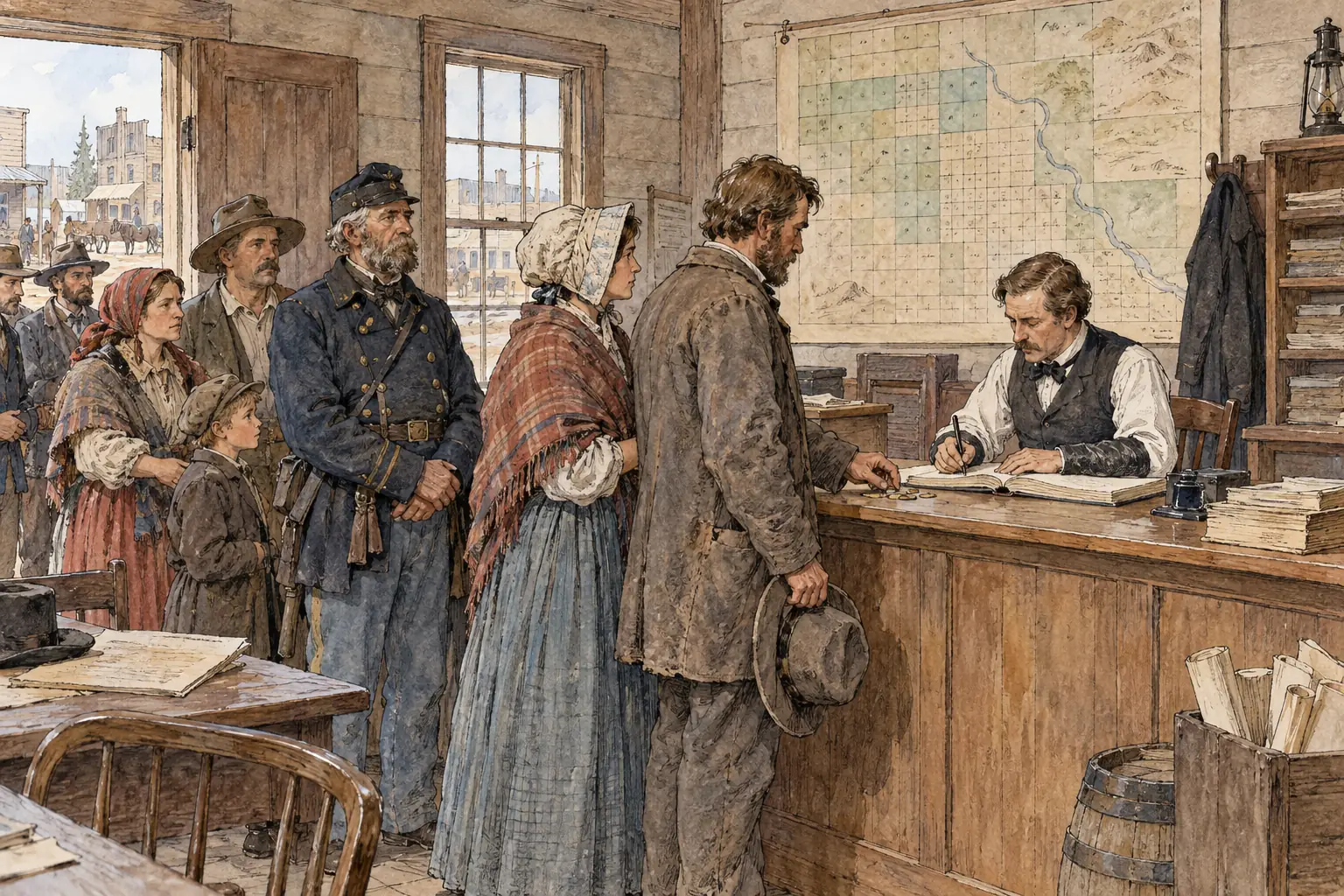
The Homestead Act, enacted during the American Civil War, sought to promote westward expansion by making land accessible to ordinary citizens. It represented a key policy in the 'free-soil' movement, which opposed the expansion of slavery and favoured small-scale agriculture.
Key provisions of the Homestead Act
- Land allocation - Eligible individuals could claim up to 160 acres of surveyed public land, paying only a small registration fee.
- Requirements for ownership - Claimants had to live on the land continuously for five years, build a dwelling, and make improvements such as cultivating crops or constructing fences.
- Eligibility criteria - Open to U.S. citizens or immigrants intending to become citizens, aged 21 or older, including heads of households; it excluded those who had borne arms against the government.
Primary objectives of the Act
- Encouraging small farming - The legislation aimed to create a society of independent 'free-soil' farmers, countering large plantations and promoting democratic land ownership.
- Populating the West - By distributing federal land, the Act intended to accelerate settlement of the Great Plains and other western territories, strengthening Union control during the Civil War.
- Economic and social benefits - It was designed to provide opportunities for the landless, including former slaves and immigrants, fostering self-sufficiency and national growth.
Outcomes and challenges of the Homestead Act
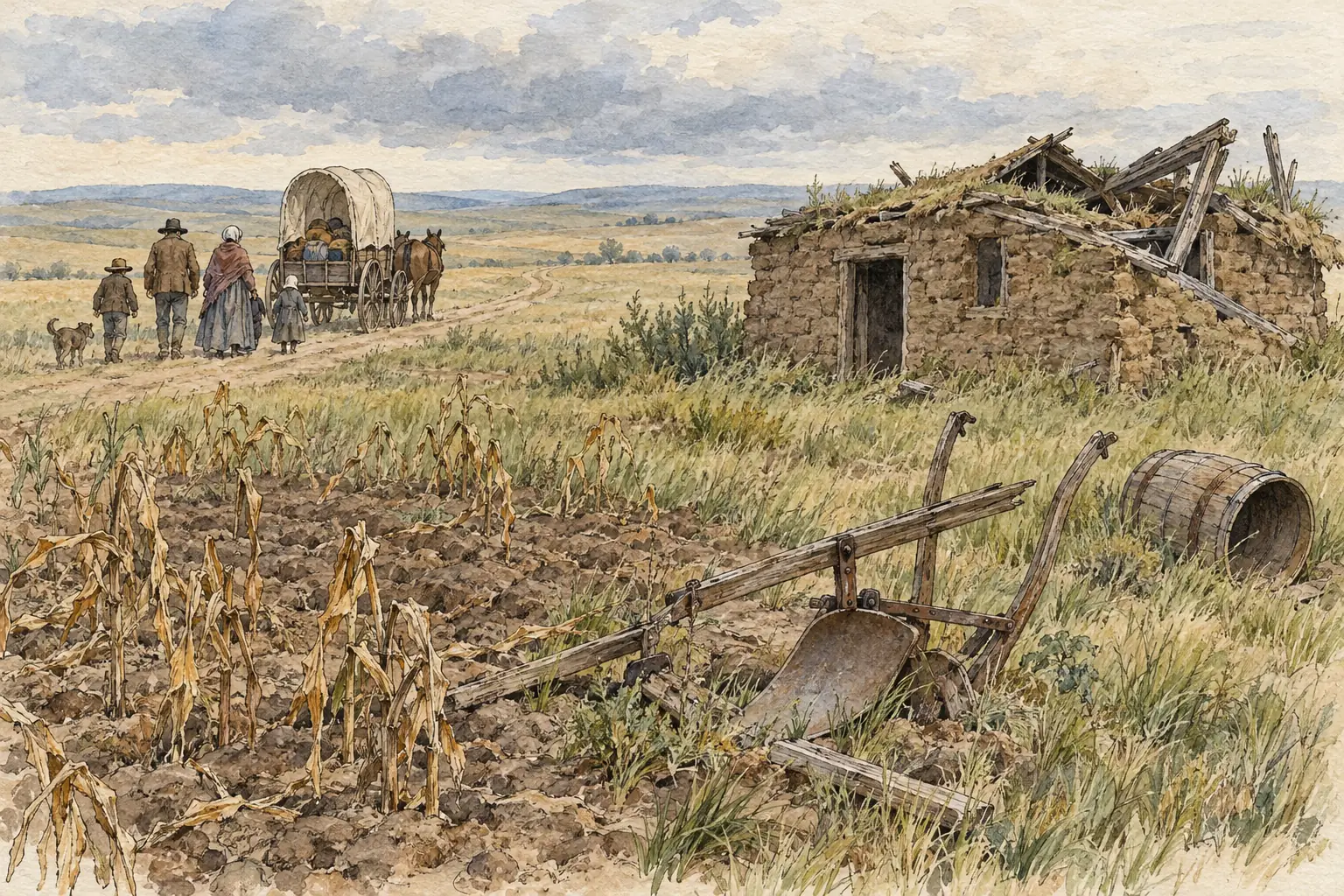
While the Homestead Act facilitated the settlement of millions of acres, its implementation revealed significant flaws. Genuine settlers benefited, but the system was rife with exploitation, leading to mixed results in achieving widespread small-farm prosperity.
Positive outcomes for settlers
- Land distribution - Over 1.6 million claims were filed by the early 20th century, resulting in the transfer of approximately 270 million acres to private ownership.
- Community building - Many families established viable farms, contributing to the growth of towns and agricultural economies in the West.
Challenges and abuses
- Speculation and fraud - Land speculators often filed false claims or hired proxies to acquire plots cheaply, then resold them at higher prices, undermining the Act's goal of aiding small farmers.
- Inadequate land size - The 160-acre allotment proved too small for profitable farming on the arid Plains, where larger tracts were needed for grazing or dryland crops.
- High failure rates - Environmental hardships led to many claims being abandoned, with only about 40% of homesteaders successfully proving up their land after five years.
Problems faced by homesteaders on the Plains
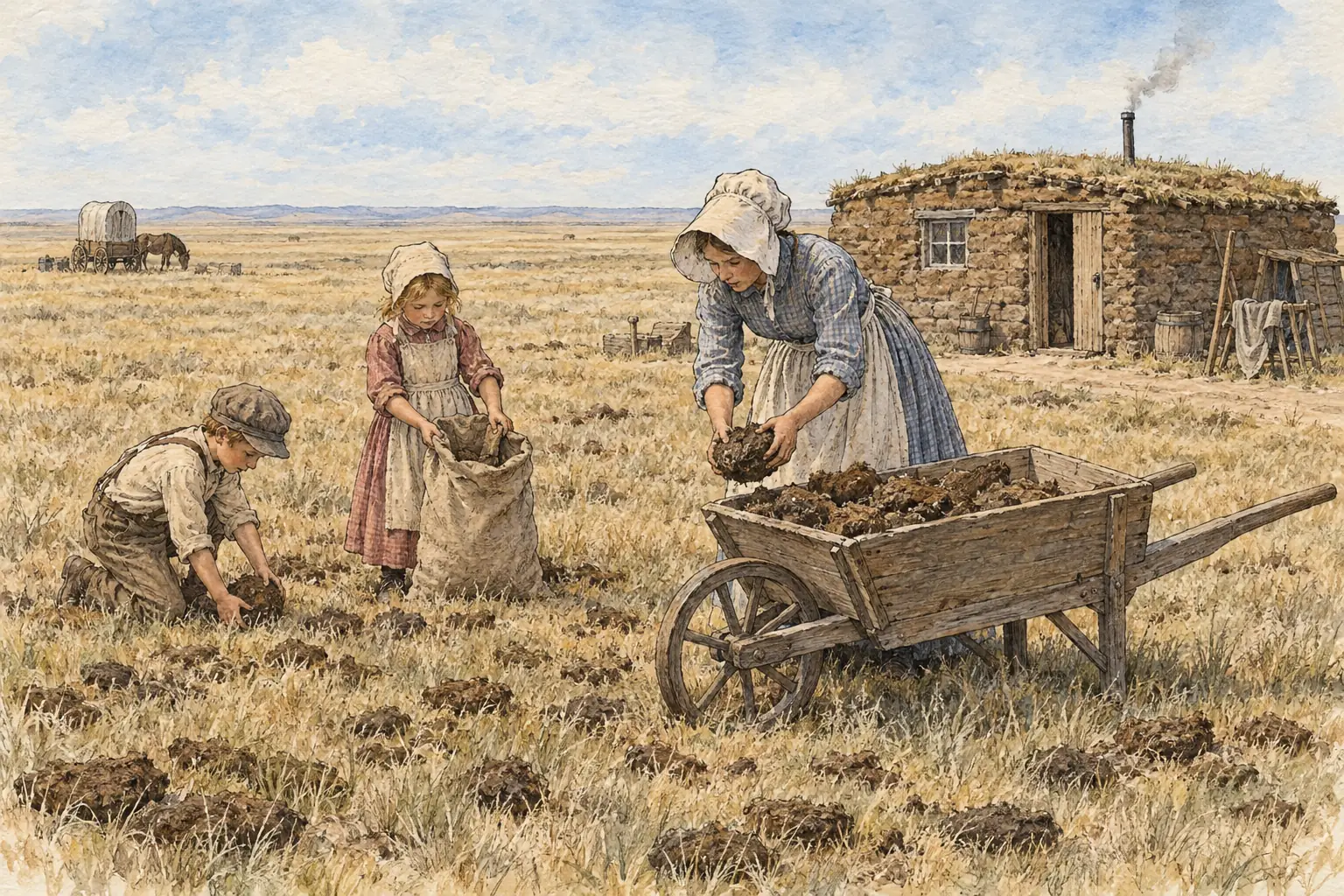
Homesteaders on the Great Plains encountered harsh environmental conditions that made traditional farming methods ineffective. These challenges stemmed from the region's semi-arid climate, tough terrain, and lack of resources, often leading to hardship and abandonment.
Major difficulties for Plains homesteaders
- Water scarcity - Limited rainfall and few natural water sources made irrigation difficult, restricting crop growth and livestock watering.
- Fencing issues - The open landscape lacked natural barriers, allowing animals to wander and damage crops, while traditional wooden fences were impractical due to timber shortages.
- Sod breaking - The dense, root-filled prairie sod was hard to plough with conventional tools, slowing land preparation and exhausting both farmers and animals.
- Fuel shortages - With little wood available, homesteaders struggled to find materials for heating, cooking, and construction, relying on alternatives like dried buffalo dung.
Solutions developed by homesteaders
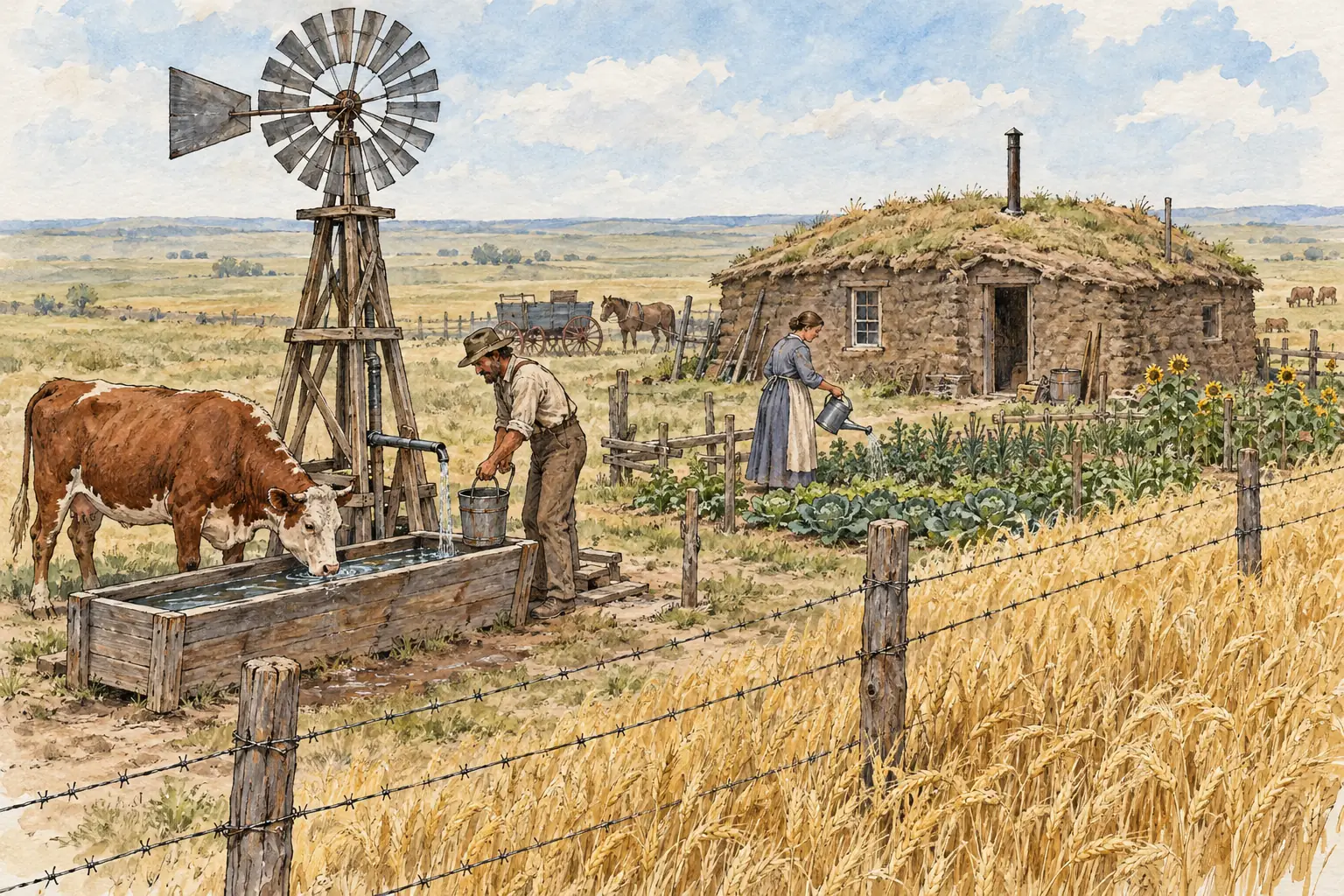
In response to the Plains' challenges, homesteaders in the 1860s and 1870s adopted innovative technologies and techniques. These adaptations improved survival rates and productivity, transforming the region into viable farmland.
Innovations addressing key problems
| Problem | Solution | Description and impact |
|---|---|---|
| Water scarcity | Community wells and wind pumps | Groups dug shared wells initially; by the 1870s, wind-powered pumps extracted groundwater, enabling reliable access for irrigation and daily needs. |
| Fencing issues | Barbed wire (invented 1874) | Affordable steel wire with barbs created effective, low-cost enclosures, preventing livestock intrusion and defining property boundaries. |
| Sod breaking | Steel ploughs ('sodbusters') | Stronger steel-bladed ploughs cut through tough sod efficiently, allowing faster land clearance and reducing physical strain. |
| Fuel shortages | Crop choices suited to the Plains | Farmers shifted to drought-resistant crops like wheat and sorghum, which required less water and provided residues for fuel. |
| General aridity | Dry farming techniques | Methods such as deep ploughing and soil packing conserved moisture, maximising yields in low-rainfall areas without irrigation. |
These solutions fostered resilience, though they required initial investment and community cooperation.
The Timber Culture Act (1873) and its impact
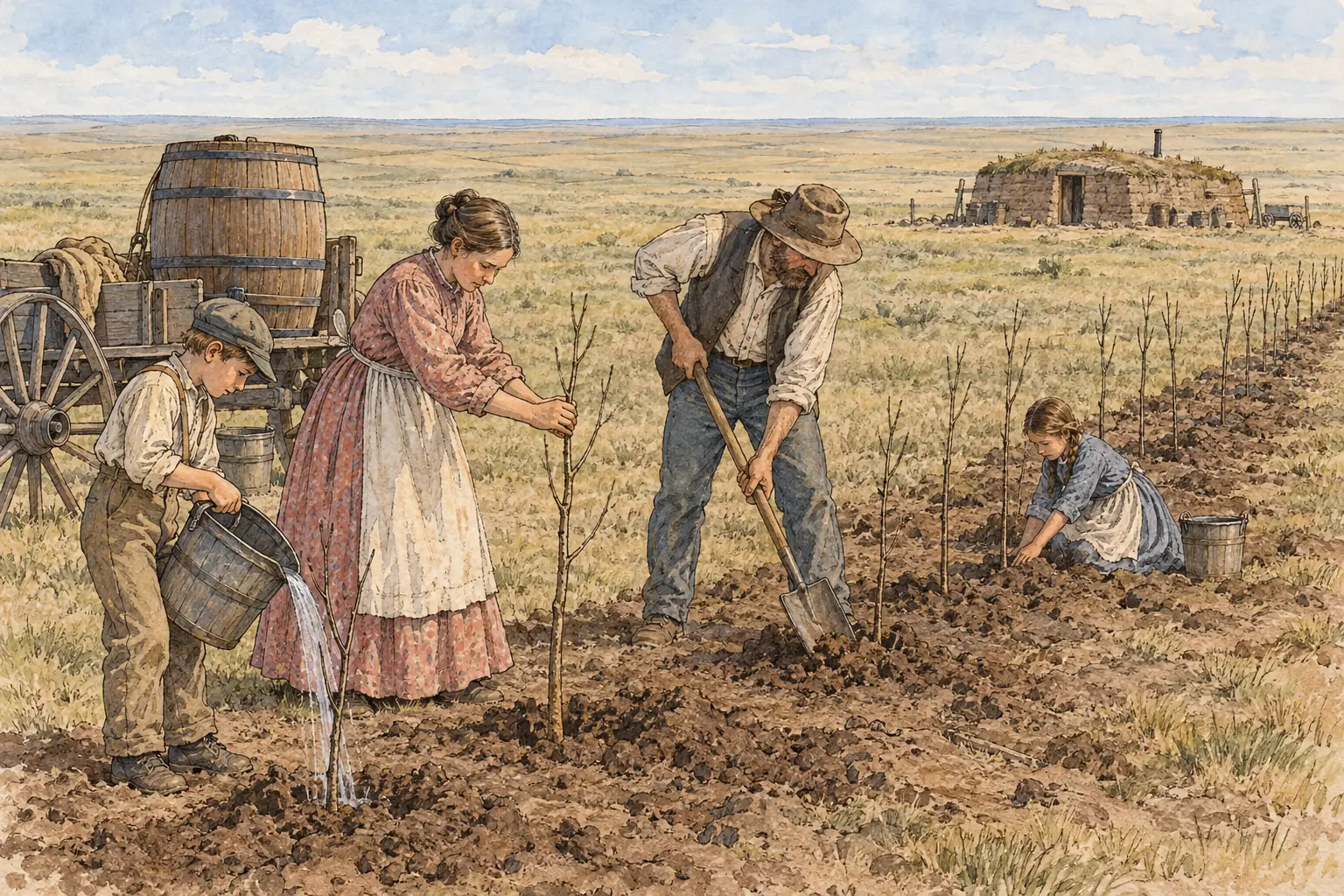
The Timber Culture Act was introduced as a supplement to the Homestead Act to address the Plains' deforestation and promote sustainable land use. It encouraged tree planting to combat erosion and provide resources, but its execution fell short of expectations.
Provisions and intentions of the Act
- Additional land grants - Homesteaders could claim an extra 160 acres by planting and maintaining trees on at least 40 acres of their original or new plot for a set period.
- Environmental goals - The Act aimed to reforest the treeless Plains, improving soil quality, reducing wind erosion, and creating windbreaks for crops.
- Support for settlers - It sought to make homesteading more viable by supplying timber for fuel, building, and fencing in resource-scarce areas.
Limitations and abuses
- Limited success - Harsh climate and poor soil often caused tree failures, with survival rates low; many claimants struggled to meet planting requirements.
- Widespread fraud - Speculators exploited loopholes by filing claims without genuine intent to plant, leading to land grabs and minimal actual reforestation.
- Overall impact - While some areas saw modest tree growth, the Act was largely ineffective and was repealed in 1891, highlighting the challenges of legislating environmental change in the West.