2.3 - Law & Order, 1860s–70s
Key facts and dates
The 1860s and 1870s marked a critical period in the American West when efforts to impose law and order on the frontier evolved amid rapid settlement and resource disputes. While formal government structures expanded, informal groups and federal interventions played key roles in addressing lawlessness, though not without controversy.
Key facts to remember
- US marshals – Federal officers appointed to enforce national laws across territories.
- County sheriffs – Locally elected officials responsible for maintaining order within counties.
- Judges and circuits – Travelling courts that brought justice to remote areas.
- Town ordinances – Local rules in cattle towns banning weapons and imposing curfews.
- Vigilance committees – Citizen groups that took law into their own hands, often controversially.
- Railroad detectives – Private agents hired to protect company interests.
- Posses – Groups assembled by sheriffs to pursue outlaws.
- Federal presence – Army posts and Indian agencies that helped curb frontier violence.
- Growing populations – Increased settlement that gradually reduced lawlessness but sparked resource conflicts.
Territorial government and law enforcement
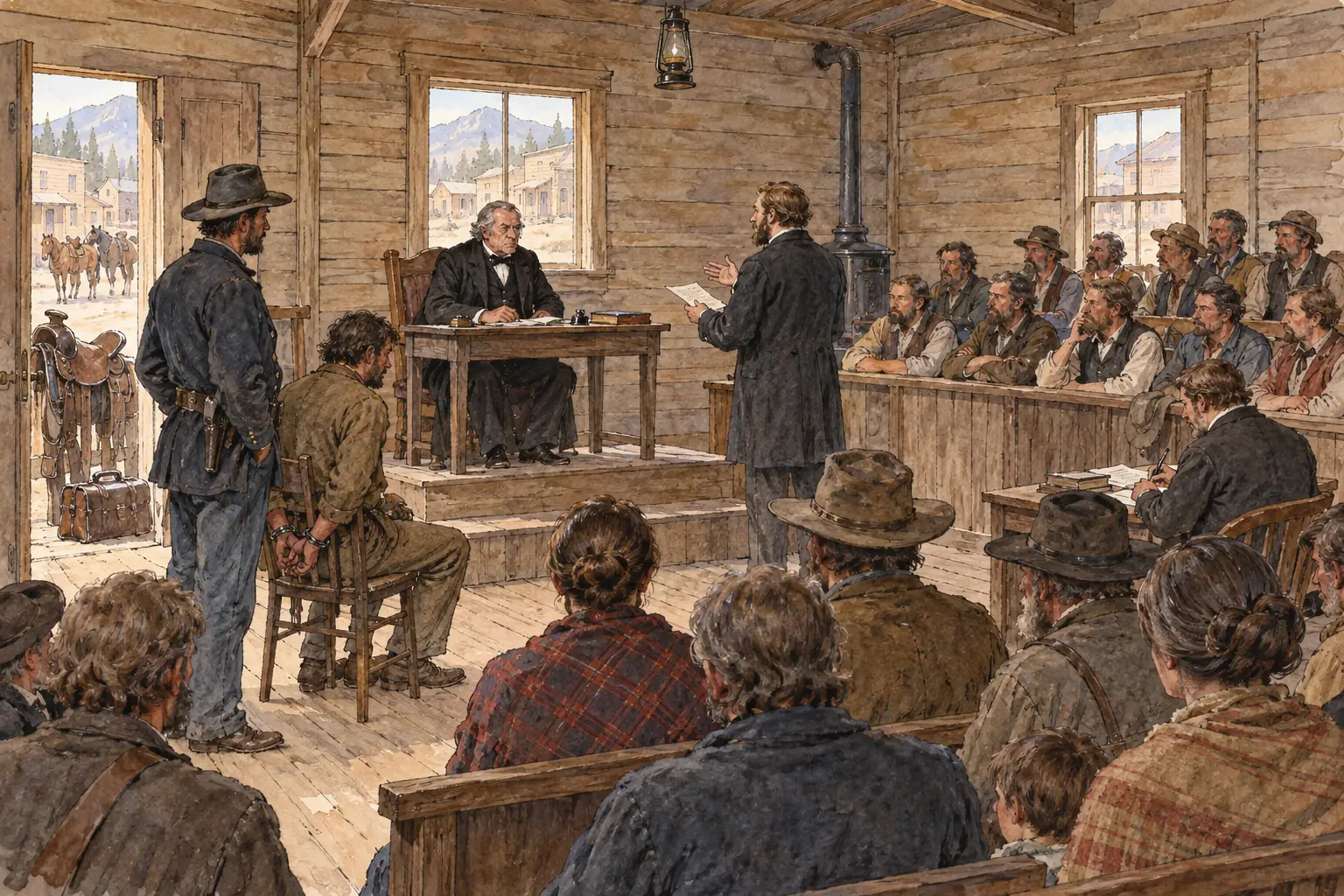
During the 1860s and 1870s, the US government sought to extend its authority over the western territories by establishing formal law enforcement structures. This expansion aimed to bring stability to areas previously characterised by informal or absent governance, supporting the influx of settlers and economic development.
Key roles in territorial law enforcement
- US marshals - These federally appointed officers enforced national laws, arrested fugitives, and served court orders across vast territories, often operating in regions without local police.
- County sheriffs - Elected by local residents, sheriffs maintained peace within counties, collected taxes, and oversaw jails, providing a grassroots level of order.
- Judges and circuits - Travelling judges moved between settlements on circuit routes to hold court sessions, ensuring legal proceedings could occur in isolated areas without permanent courthouses.
Town ordinances in cattle towns
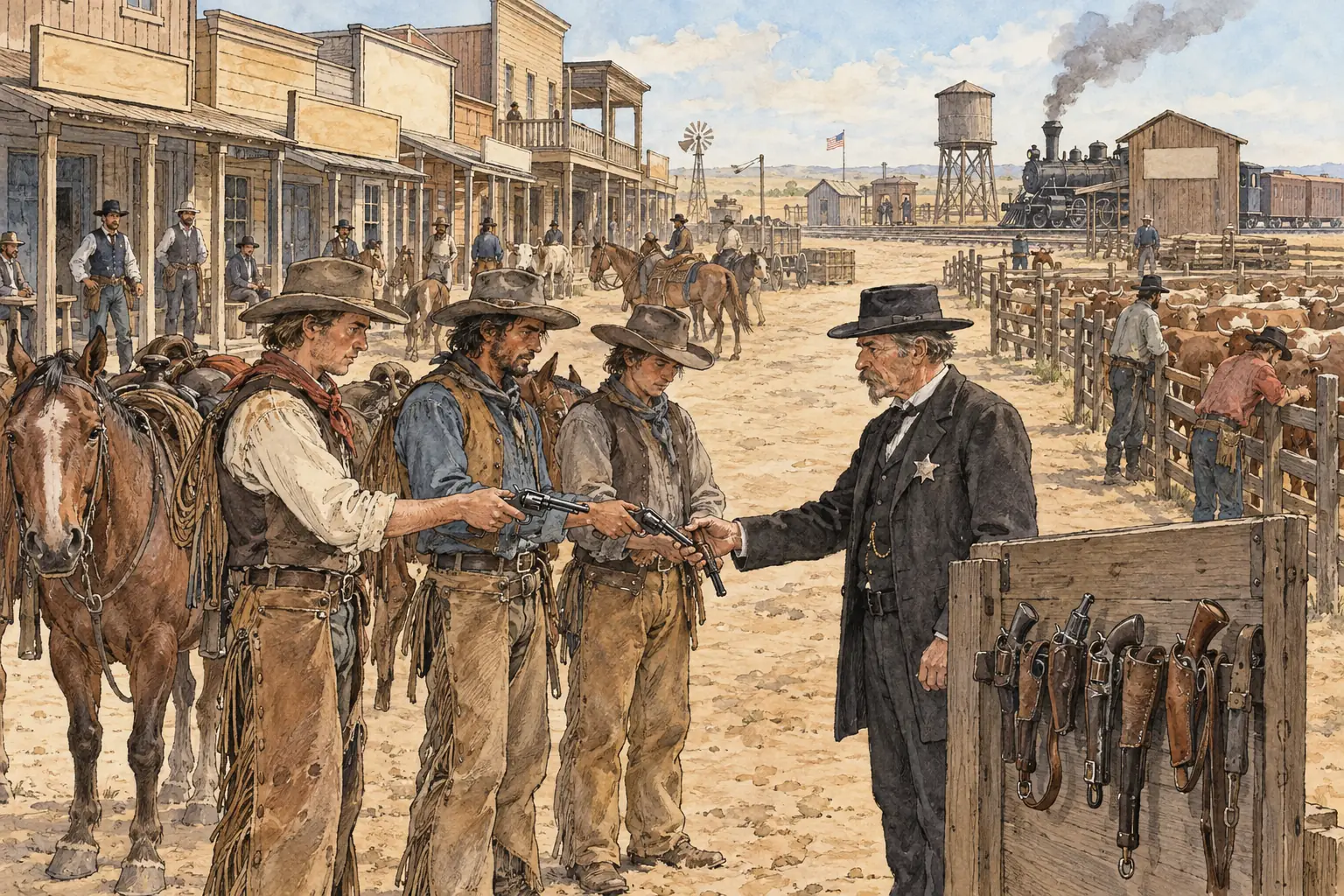
Cattle towns, which emerged as hubs for the livestock trade in the 1860s and 1870s, introduced local regulations to manage the rowdy behaviour associated with cowboys and transients. These ordinances helped transform chaotic settlements into more orderly communities.
Common regulations in cattle towns
- Weapons bans - Many towns prohibited carrying guns within limits to prevent shootings and brawls, requiring visitors to check firearms at designated points.
- Curfews - Night-time restrictions limited public gatherings and saloon operations, reducing disturbances during peak seasons when herds arrived.
- Other measures - Rules often extended to banning gambling or public drunkenness, enforced by town marshals to maintain safety and attract permanent residents.
Vigilance committees, railroad detectives, posses
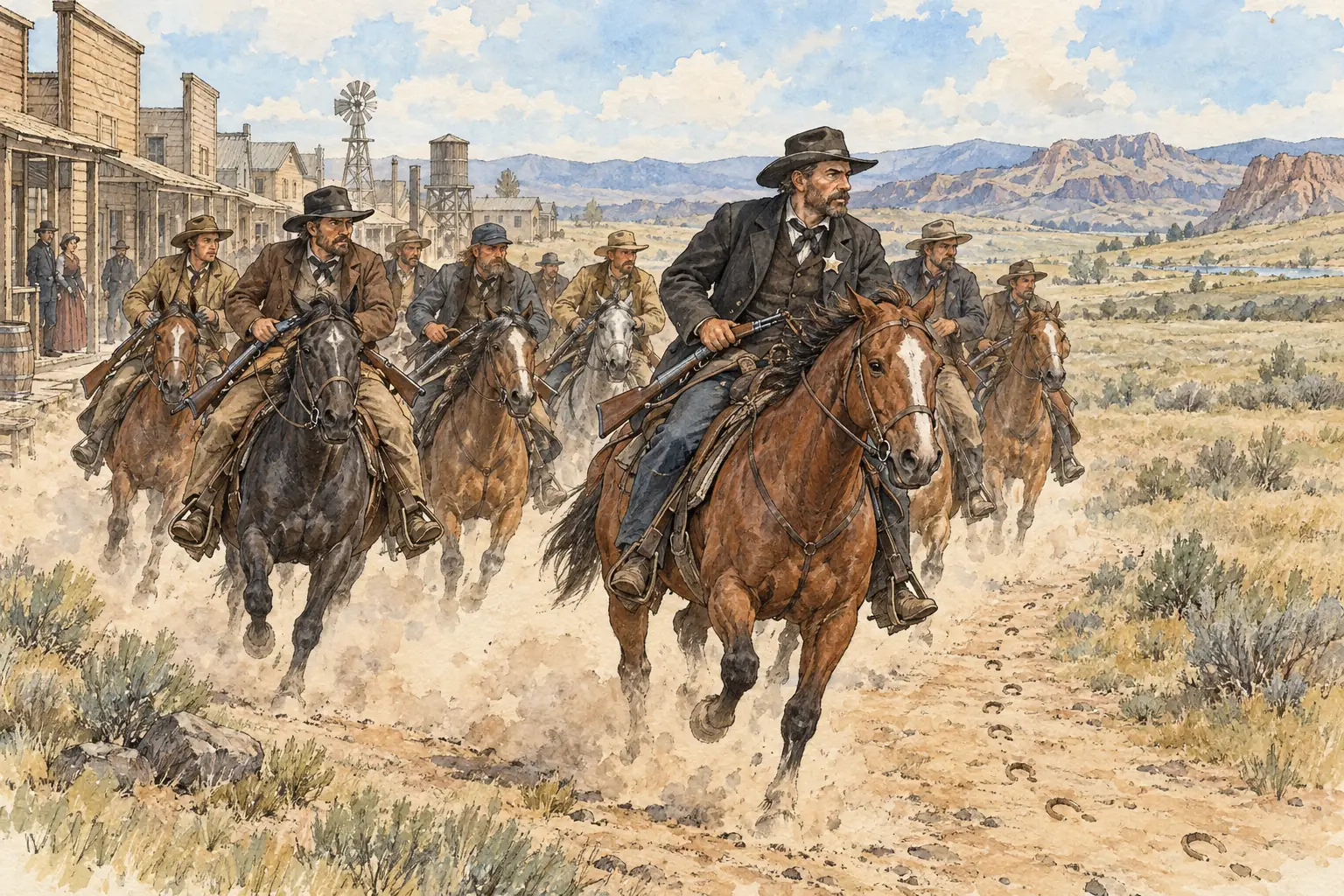
In the absence of strong official law enforcement, informal groups stepped in to address crime during the 1860s and 1870s. While they filled gaps in authority, their methods often sparked debates over justice and overreach.
Functions and issues with informal enforcement
- Vigilance committees - Formed by citizens to combat theft and violence, these groups conducted trials and executions outside formal law, leading to controversies over mob justice and wrongful punishments.
- Railroad detectives - Employed by companies to protect tracks and cargo from sabotage or robbery, they wielded significant power but faced criticism for prioritising corporate interests over fair treatment.
- Posses - Temporary groups organised by sheriffs to track down criminals, they provided quick responses to threats but sometimes escalated violence or targeted innocent people.
Federal presence and growing populations
The federal government and demographic shifts played pivotal roles in taming the frontier during the 1860s and 1870s. These factors gradually diminished widespread disorder by providing oversight and fostering community stability.
Contributions to reducing frontier lawlessness
- Army posts - Military outposts enforced treaties, protected settlers from raids, and intervened in disputes, creating zones of relative security.
- Indian agencies - Federal offices managed relations with Native American tribes, distributing resources and mediating conflicts to prevent escalations.
- Impact of growing populations - As more families settled, communities built schools, churches, and businesses, promoting social norms that discouraged crime and encouraged self-regulation.
Intensifying conflicts over land and resources
Even as law and order improved in the 1860s and 1870s, disputes over scarce resources heightened tensions in the West. These conflicts often pitted settlers against each other or against Native Americans, challenging the emerging legal frameworks.
Sources of escalating disputes
- Land ownership clashes - Homesteaders, ranchers, and miners competed for territory, leading to violent range wars and legal battles over claims.
- Resource competition - Water rights and grazing lands became flashpoints, with overgrazing and fencing disputes fueling feuds that sometimes overwhelmed local authorities.
- Impact on Native Americans - Encroachment on tribal lands intensified resistance, resulting in skirmishes that required federal intervention to resolve.