3.5 - Culture & Arts Under Nazism
Key facts and dates
Under the Nazi regime, culture and the arts were strictly controlled to promote Aryan ideals, suppress dissent, and glorify the state. This involved purging works deemed incompatible with Nazi values while elevating those that reinforced themes of strength, tradition, and racial purity.
Timeline of key events
- 1933 – Public book burnings organised by Nazi students, targeting works by Jewish, communist, and pacifist authors.
- 1933 – Establishment of the Reich Chamber of Culture under Joseph Goebbels to oversee all artistic fields.
- 1934 – Albert Speer appointed as chief architect, beginning designs for grandiose projects like the Nuremberg rally grounds.
- 1937 – Degenerate Art Exhibition in Munich mocks modern art, leading to the confiscation and sale of thousands of works.
- 1937 – Premiere of Leni Riefenstahl's film Triumph of the Will, showcasing Nazi propaganda through documentary-style glorification.
- Throughout 1930s – Folk music and classical realism promoted, while jazz and other 'degenerate' forms banned.
Purging of 'degenerate' art and music
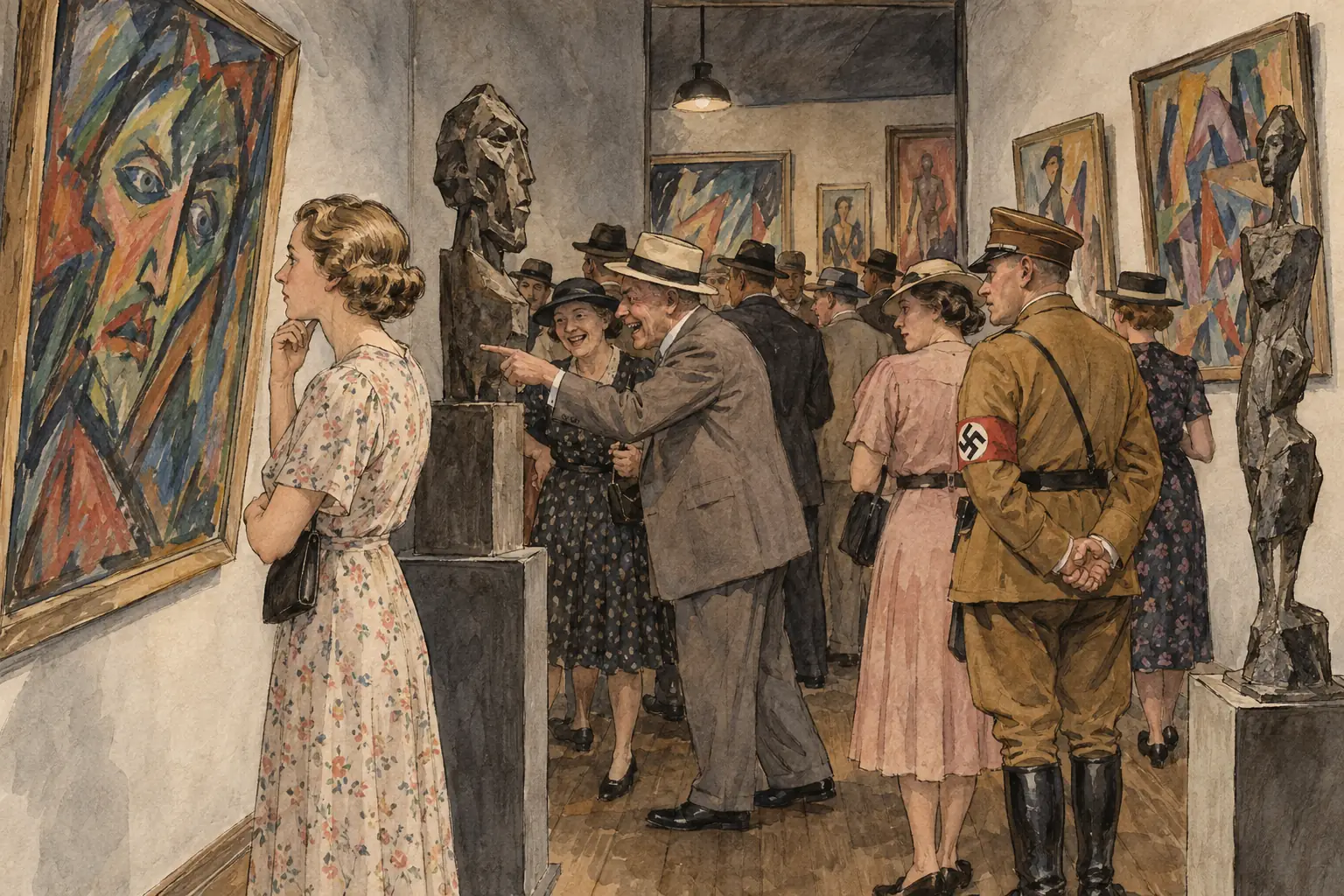
The Nazis sought to cleanse German culture of influences they viewed as corrupting or non-Aryan. This involved systematic removal of modern and foreign elements from art and music, labelling them as 'degenerate' to align cultural output with regime ideology.
Types of art and music targeted for purging
- Modern art styles - Abstract, expressionist, and cubist works by artists like Pablo Picasso and Wassily Kandinsky were condemned as chaotic and un-German, with over 16,000 pieces confiscated from museums.
- Jewish and leftist influences - Creations by Jewish artists or those with communist leanings, such as those from the Bauhaus school, were seized and often destroyed or sold abroad to fund the regime.
- Jazz and swing music - Seen as 'degenerate' due to African American origins, these genres were banned from radio and performances, with musicians facing persecution or exile.
- Public exhibitions of ridicule - Events like the 1937 Degenerate Art Exhibition displayed confiscated works alongside mocking captions to educate the public on what to reject, attracting millions of visitors.
Promotion of classical realism and folk traditions
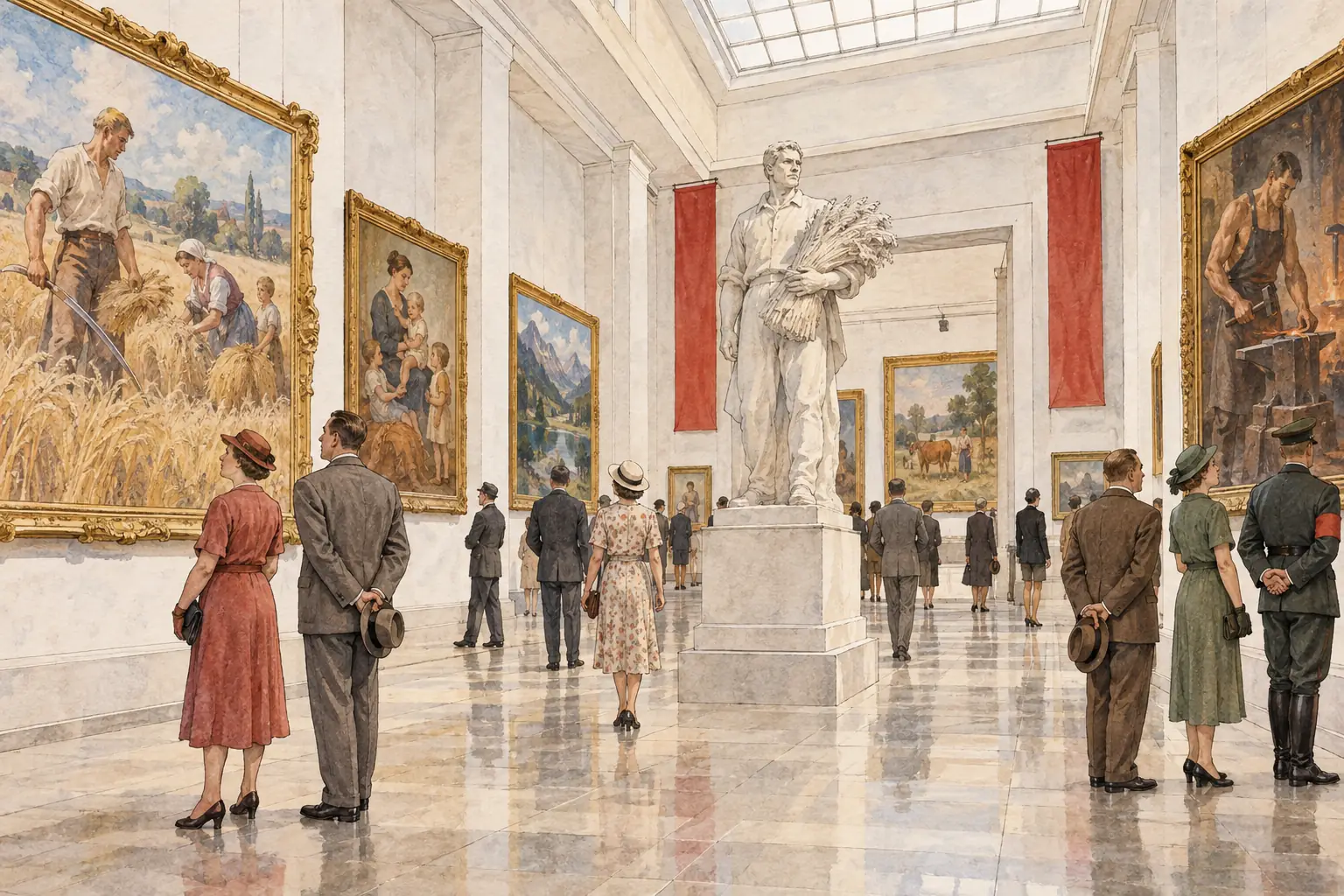
In place of purged elements, the Nazis encouraged art forms that celebrated traditional German values, heroism, and rural life. This shift aimed to foster national pride and conformity by idealising the Aryan race and volk (people) culture.
Encouraged artistic styles and traditions
- Classical realism - Paintings and sculptures depicted idealised human forms, heroic figures, and everyday scenes of strength and purity, drawing from ancient Greek and Roman influences to symbolise eternal power.
- Folk traditions - Emphasis on rural motifs, peasant life, and Germanic myths through art, music, and festivals, promoting a sense of community and historical continuity.
- State-sponsored works - Artists were required to join official chambers and produce pieces that glorified Nazi themes, such as muscular workers or idyllic family scenes, with competitions and exhibitions rewarding compliant creators.
Monumental architecture symbolising Nazi power
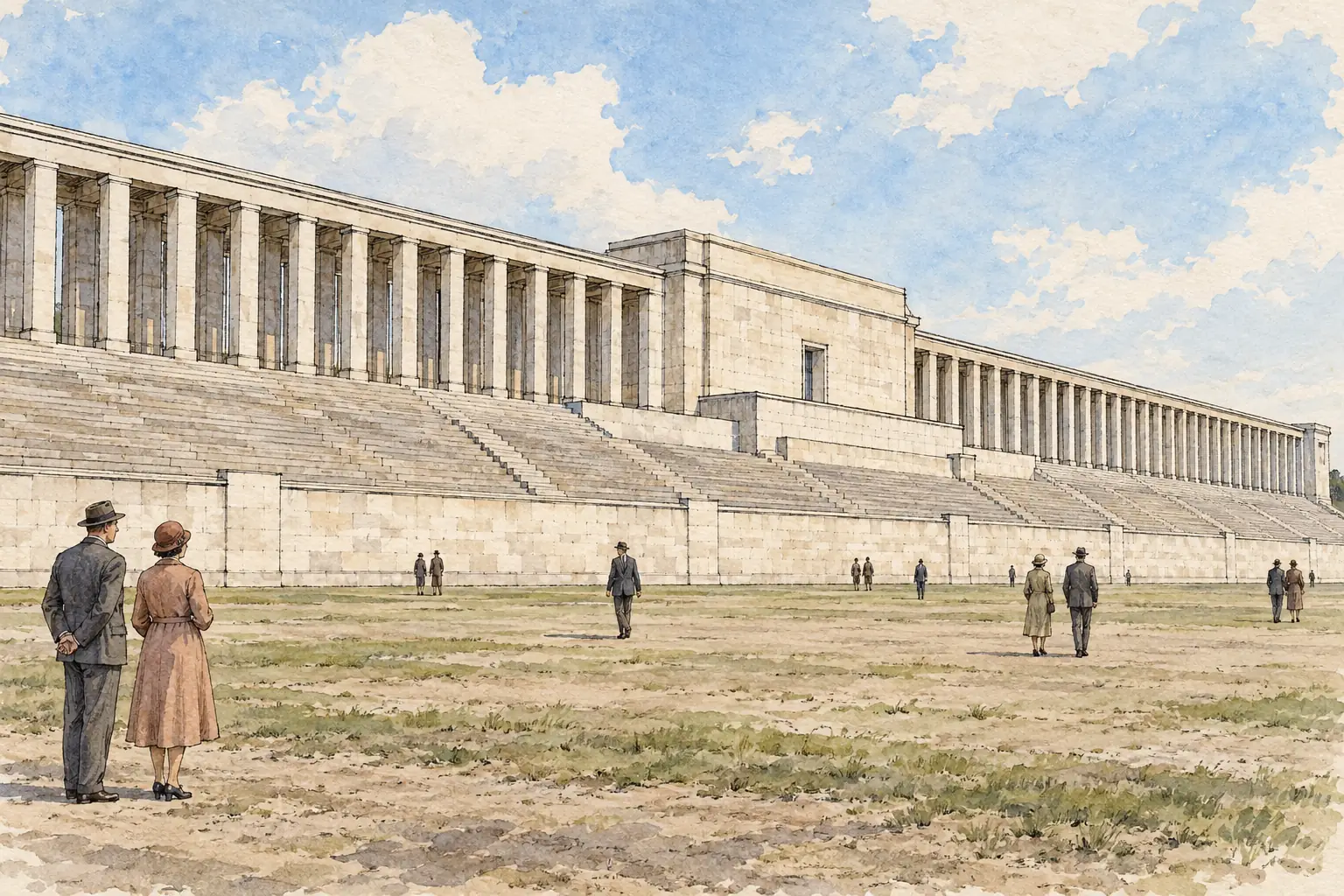
Architecture under Nazism was used to project permanence and dominance, with designs that evoked the grandeur of ancient empires. This form of cultural expression served to intimidate and inspire, reinforcing the regime's authority.
Key features of Nazi architecture
- Monumental scale - Structures were oversized to dwarf individuals, symbolising the supremacy of the state over the person, often incorporating neoclassical elements like columns and domes.
- Albert Speer's contributions - As Hitler's chief architect, Speer designed projects such as the Nuremberg rally grounds and the planned redesign of Berlin as 'Germania', featuring vast avenues and a massive domed hall to host rallies and ceremonies.
- Symbolic elements - Use of durable materials like stone to convey timelessness, with designs incorporating swastikas and eagles to embed Nazi iconography into public spaces.
Book burnings and control of literature and theatre
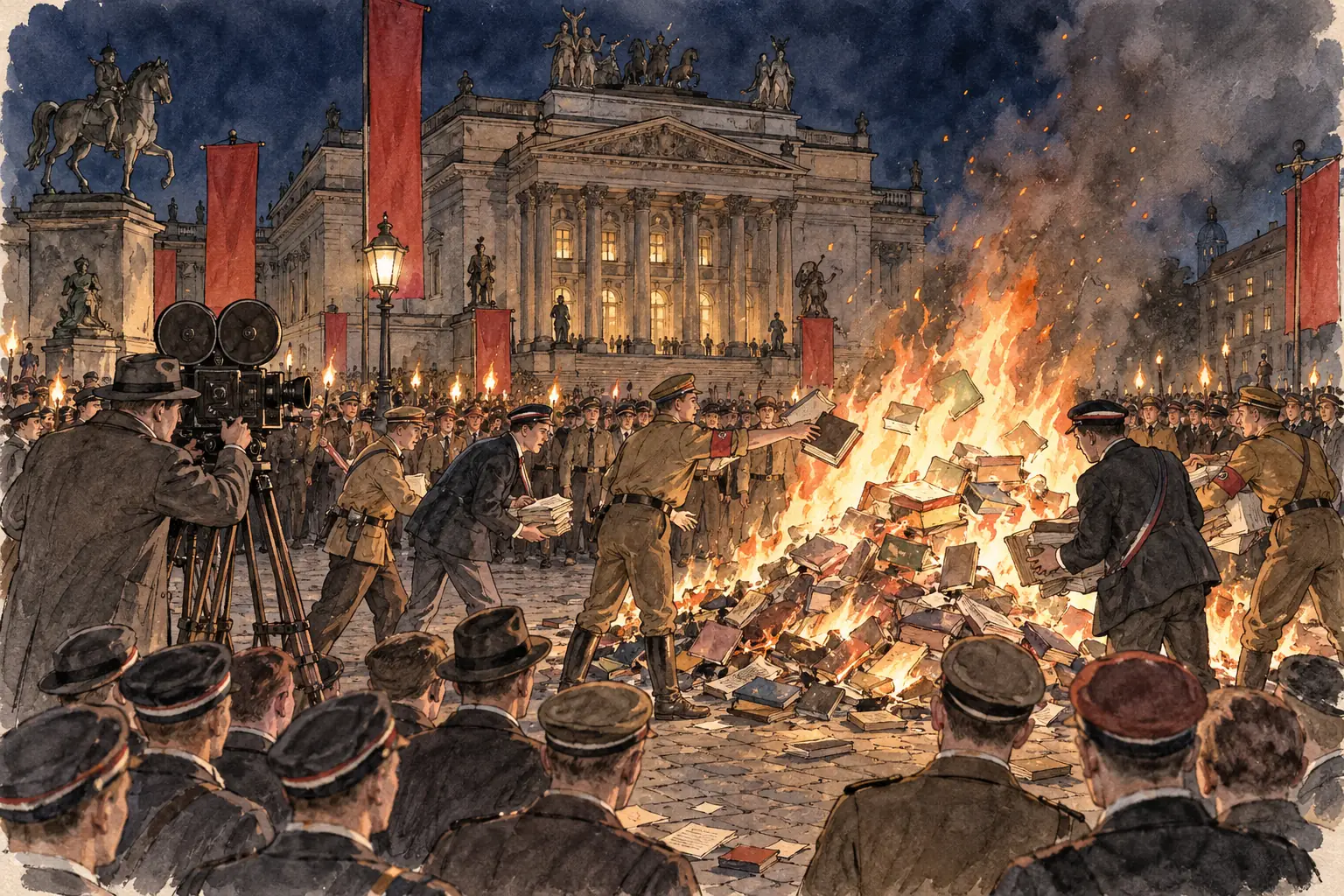
Literature and theatre were tightly regulated to eliminate dissenting voices and promote propaganda. The regime orchestrated public spectacles to destroy unacceptable works while censoring new creations to ensure they aligned with Nazi narratives.
Methods of control over literature and theatre
- Book burnings - In May 1933, Nazi supporters publicly burned thousands of books by authors like Sigmund Freud, Bertolt Brecht, and Thomas Mann, targeting Jewish, socialist, and anti-war writings as threats to German spirit.
- Censorship and blacklisting - The Reich Chamber of Literature required writers to obtain approval, banning foreign and 'undesirable' books while promoting works that exalted militarism, racial purity, and loyalty to Hitler.
- Theatre regulation - Plays had to reflect Nazi values, with classical German works like those by Goethe prioritised; modern or critical productions were forbidden, and Jewish playwrights and actors were excluded.
Film as propaganda and restricted creative freedom
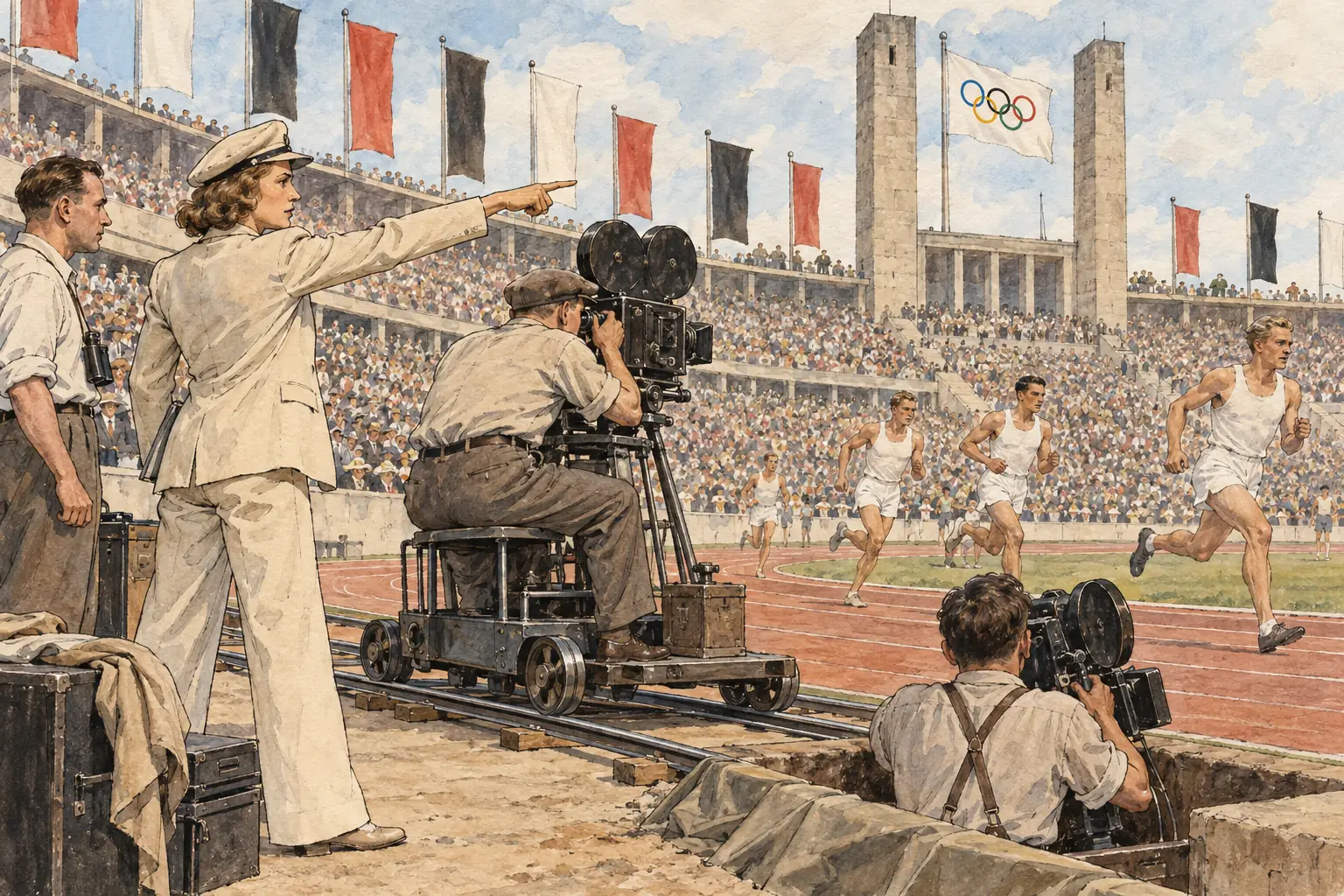
Film became a powerful tool for spreading Nazi ideology, with the regime controlling production to shape public opinion. Overall, these measures drastically reduced artistic independence, forcing creators to conform or face persecution.
Use of film for propaganda purposes
- Documentaries glorifying the regime - Films like Leni Riefenstahl's Triumph of the Will (1935) and Olympia (1938) used innovative techniques to portray Hitler as a messianic leader and showcase Aryan athletic prowess.
- Feature films and newsreels - Productions embedded anti-Semitic messages or heroic war stories, with mandatory newsreels in cinemas promoting regime achievements and vilifying enemies.
- Control mechanisms - The Reich Film Chamber oversaw all aspects, from scripts to distribution, ensuring content supported Nazi goals like eugenics and expansionism.
Impact on creative freedom
- From diversity to conformity - Pre-Nazi Germany had a vibrant cultural scene, but under the regime, artists faced arrest, exile, or concentration camps if they deviated, leading to a homogenised output that stifled innovation.
- Broader cultural effects - This narrowing extended to all arts, creating a totalitarian environment where creativity served the state, ultimately impoverishing German cultural life.