1.3 - Why People Moved West
Key facts and dates
Westward migration in the United States during the early to mid-19th century was driven by a mix of economic pressures, opportunities, and ideological beliefs. This expansion reshaped the continent but involved significant risks and hardships for settlers. The following timeline outlines the major events and developments that influenced this movement.
Timeline of key events
- 1836 – The Oregon Trail opens as a major route for westward migration, starting from Independence, Missouri.
- 1837 – The Panic of 1837 triggers economic depression, causing widespread unemployment and farm failures in the East.
- 1840s – Missionary expeditions promote settlement in the West, emphasising religious conversion and healthier living conditions.
- 1845 – The term "Manifest Destiny" is coined by journalist John O'Sullivan, justifying American expansion across the continent.
- c1840s – Guidebooks and scouts become essential for navigating trails, providing advice on routes and hazards.
- c1850 – Peak use of the Oregon Trail, with thousands of settlers facing diseases like cholera and treacherous river crossings.
Push factors driving migration west
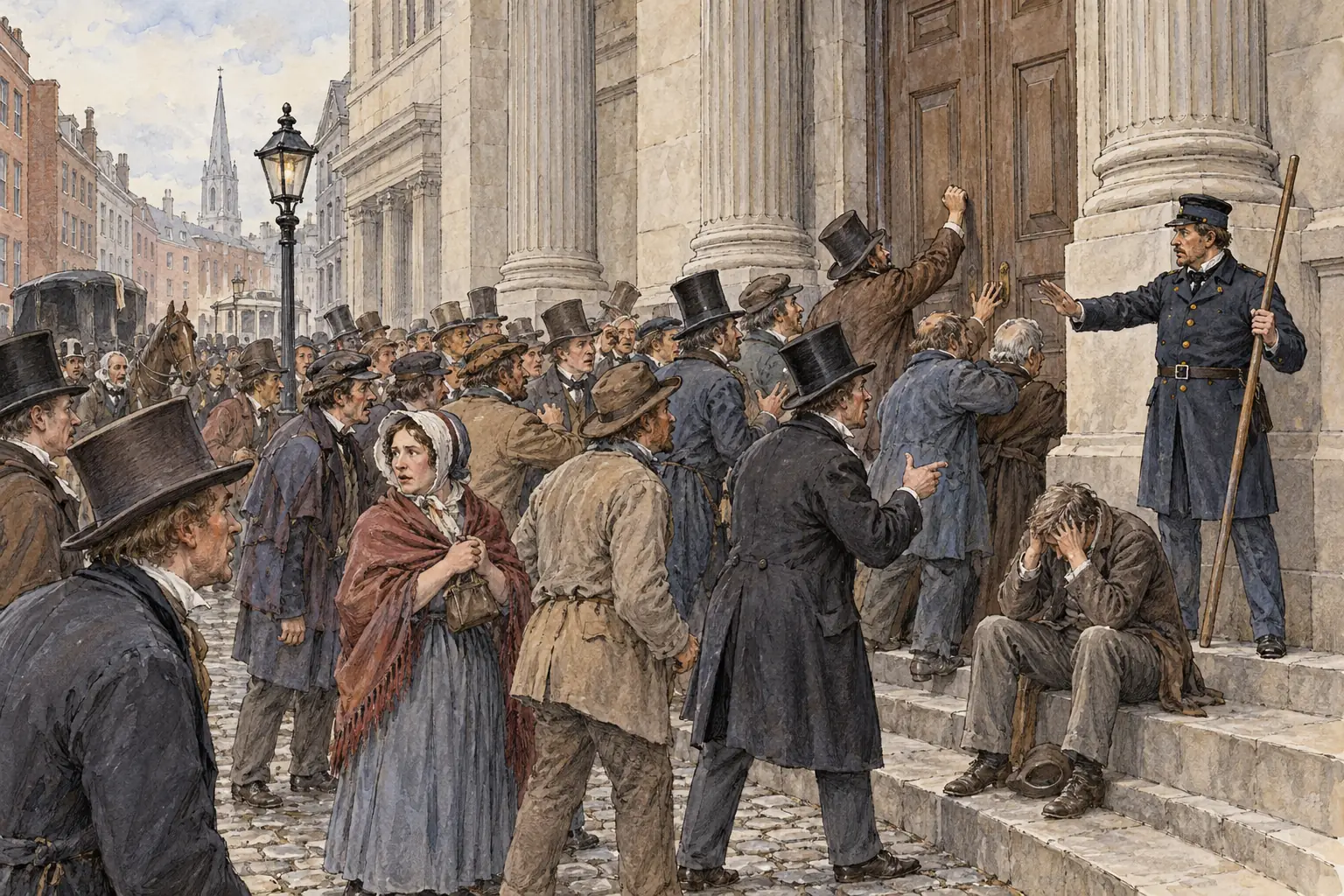
Image 1 of 2: Savers outside a closed New York bank in the Panic of 1837, which left many people bankrupt or out of work
In the early 19th century, many Americans in the eastern states faced difficult circumstances that encouraged them to seek new lives further west. These push factors stemmed largely from economic and environmental challenges that made staying in the East increasingly untenable.
Economic and environmental pressures in the East
- Financial crisis - The Panic of 1837 led to a severe economic downturn, with banks failing and land values plummeting, leaving many in debt or without savings.
- Job shortages - High unemployment rates, especially in urban areas, meant limited opportunities for work, pushing people to look for alternatives elsewhere.
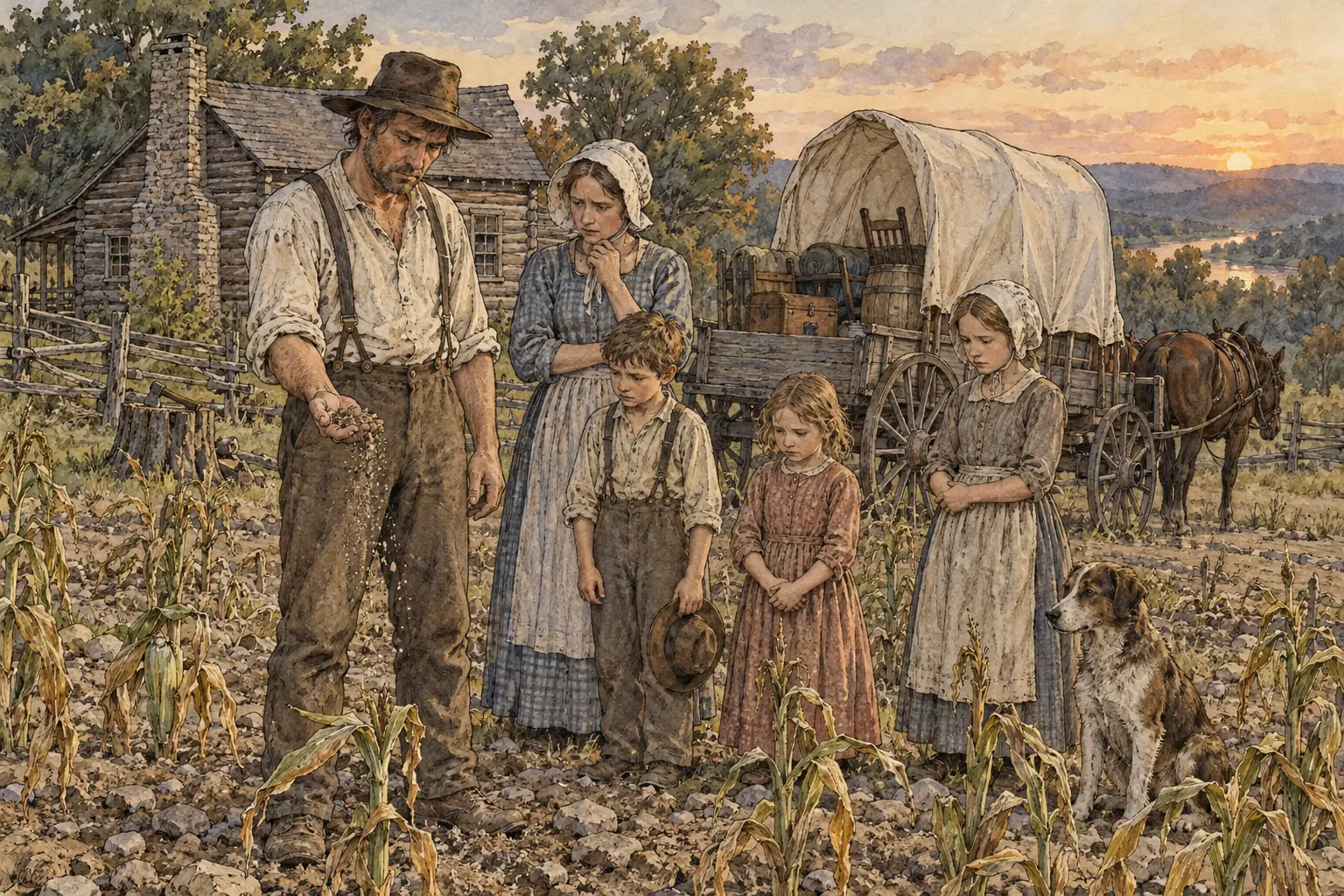
- Depleted farmland - Intensive agriculture had worn out soils in eastern regions, reducing crop yields and making farming less viable for smallholders.
Pull factors attracting settlers to the west
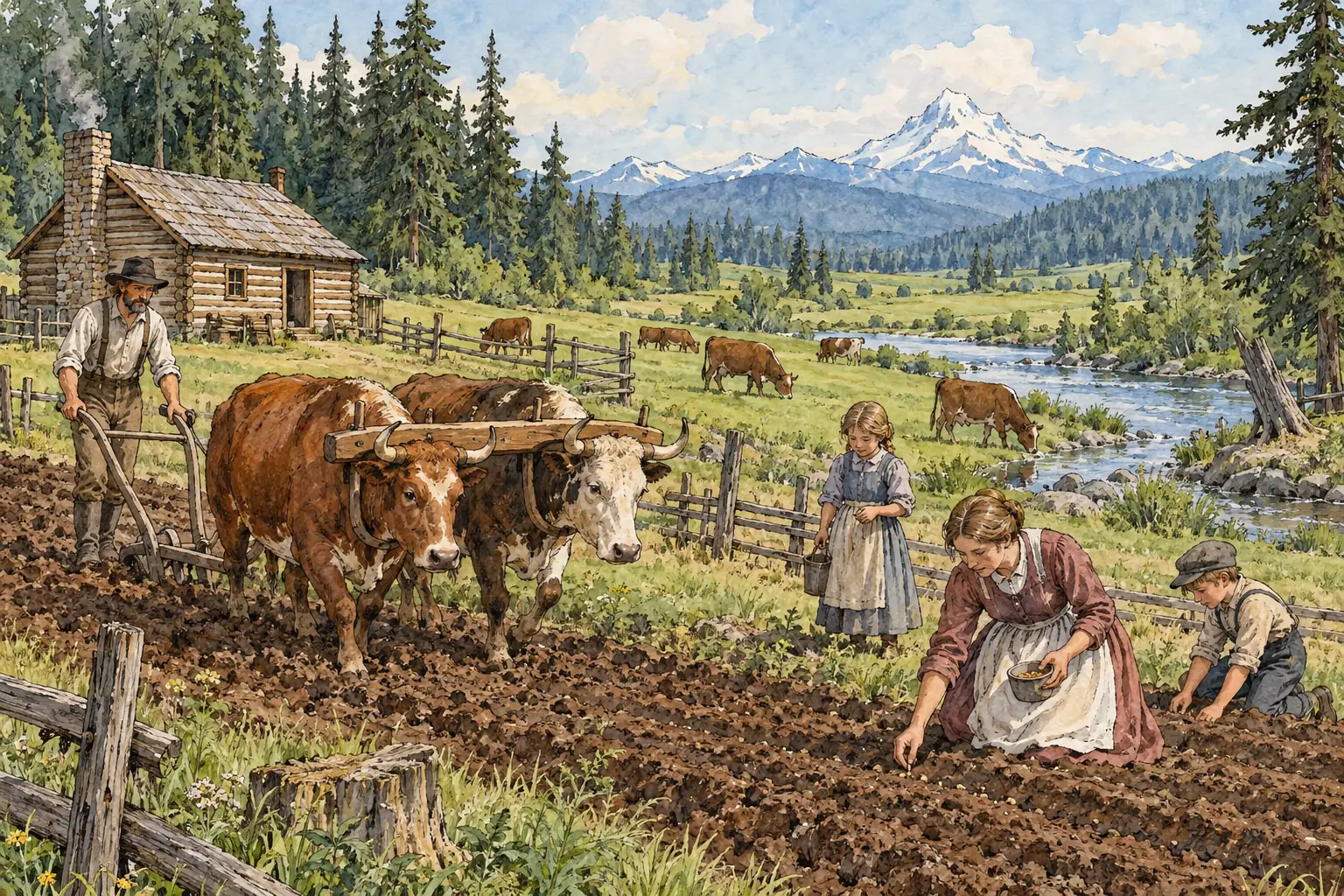
Beyond the problems in the East, the western territories offered appealing prospects that drew migrants. These pull factors included abundant resources and the promise of improved circumstances, motivating families and individuals to undertake the journey.
Opportunities and incentives in the West
- Affordable and productive land - Vast areas of fertile soil were available at low prices, allowing settlers to establish farms and build wealth through agriculture.
- Chance for renewal - The West represented an opportunity for fresh beginnings, free from past failures or social constraints, appealing to those seeking independence.
- Religious motivations - Missionaries spread the word of healthier climates and the duty to convert indigenous peoples, inspiring groups to settle and establish communities.
- Commercial prospects - Trade routes and resources like furs or minerals promised economic gains, attracting merchants and entrepreneurs.
The concept of manifest destiny
Manifest Destiny emerged as a powerful ideological force in the 1840s, shaping American attitudes towards westward expansion. It portrayed the settlement of the continent as both inevitable and divinely ordained.
Beliefs and justifications of Manifest Destiny
- Core idea - This belief held that white Americans had a God-given right and destiny to expand across North America, spreading their culture and institutions from coast to coast.
- Origins and promotion - Coined in 1845 by journalist John O'Sullivan, the term was used in newspapers and political speeches to rally support for territorial growth.
- Role in expansion - It provided a moral rationale for displacing indigenous populations and acquiring lands, framing migration as a national mission rather than mere opportunism.
The oregon trail and its challenges
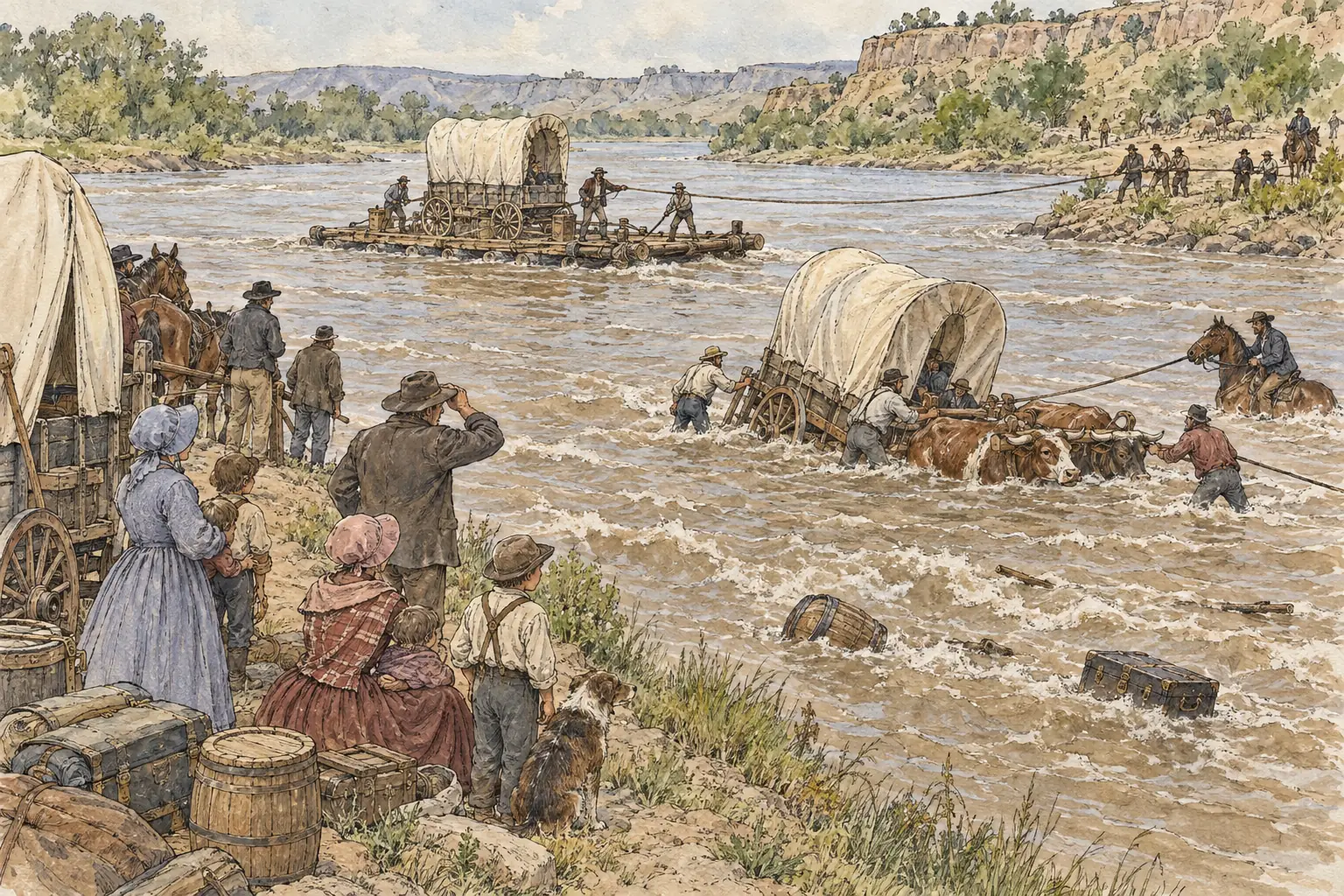
Image 1 of 2: Emigrants floating their wagons across a swollen river, one of the most dangerous parts of the journey
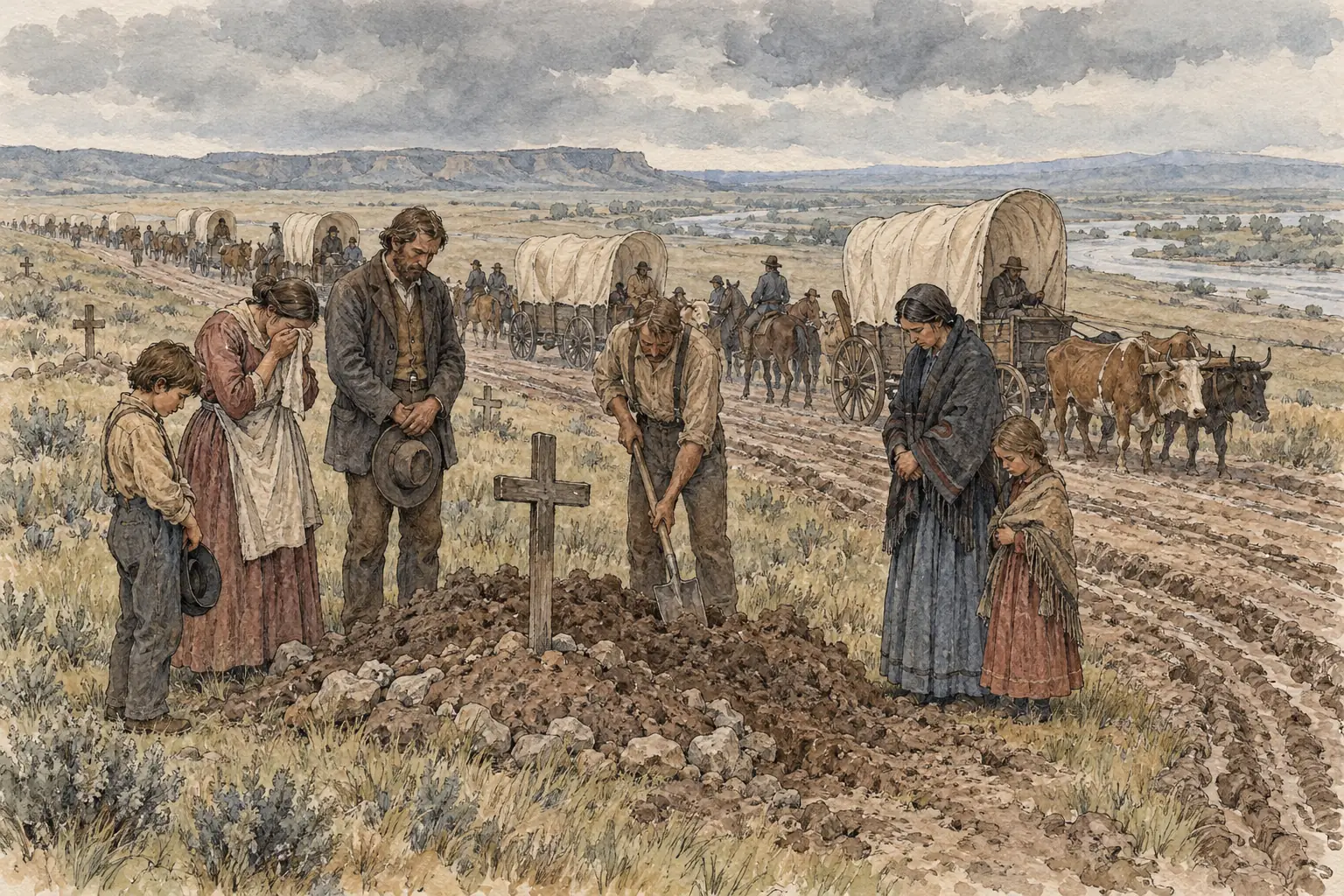
The Oregon Trail served as the primary overland route for migrants heading to the Pacific Northwest from the 1830s onwards. Spanning approximately 3,200 kilometres from Missouri to Oregon, the journey typically lasted four to six months and required careful preparation.
Organisation and features of wagon trains
- Group structure - Travellers formed wagon trains of 20-50 covered wagons for mutual support, electing leaders to manage decisions and share tasks like guarding livestock.
- Guidance resources - Guidebooks offered detailed maps and advice on supplies, while experienced scouts helped navigate unfamiliar terrain and negotiate with local tribes.
Hazards encountered on the trail
- Natural obstacles - Steep mountains, arid plains, and unpredictable weather, including storms or early snows, slowed progress and damaged equipment.
- River crossings - Forcing wagons across swollen rivers often resulted in drownings or lost belongings, with makeshift ferries providing limited safety.
- Health risks - Diseases such as cholera spread rapidly in crowded camps, exacerbated by poor sanitation and contaminated water sources.