1.2 - Indigenous Peoples: Beliefs
Key facts and dates
The indigenous peoples of the Plains held deeply spiritual beliefs that shaped their relationship with the land, nature, and society, emphasising harmony and communal living. These views often conflicted with European-American concepts of individual ownership and expansion, leading to significant tensions during the 19th century.
Key facts to remember
- Great Spirit – A supreme being that connected all life, central to spiritual practices and visions.
- Sacred land – Places like the Black Hills held ceremonial importance for burials and rituals.
- Sun Dance – A key ceremony involving sacrifice and renewal, reinforcing community bonds.
- Circular worldview – Life seen as cyclical, promoting respect for nature, elders, and ancestral traditions.
- Communal property – No concept of private land ownership; resources shared among the tribe.
- Counting coup – Touching an enemy in battle to gain prestige without necessarily killing.
- Scalping significance – Taking scalps symbolised victory and spiritual power, not mere brutality.
Spiritual beliefs and practices
Image 1 of 2: A young man fasting alone on a hilltop to seek a vision
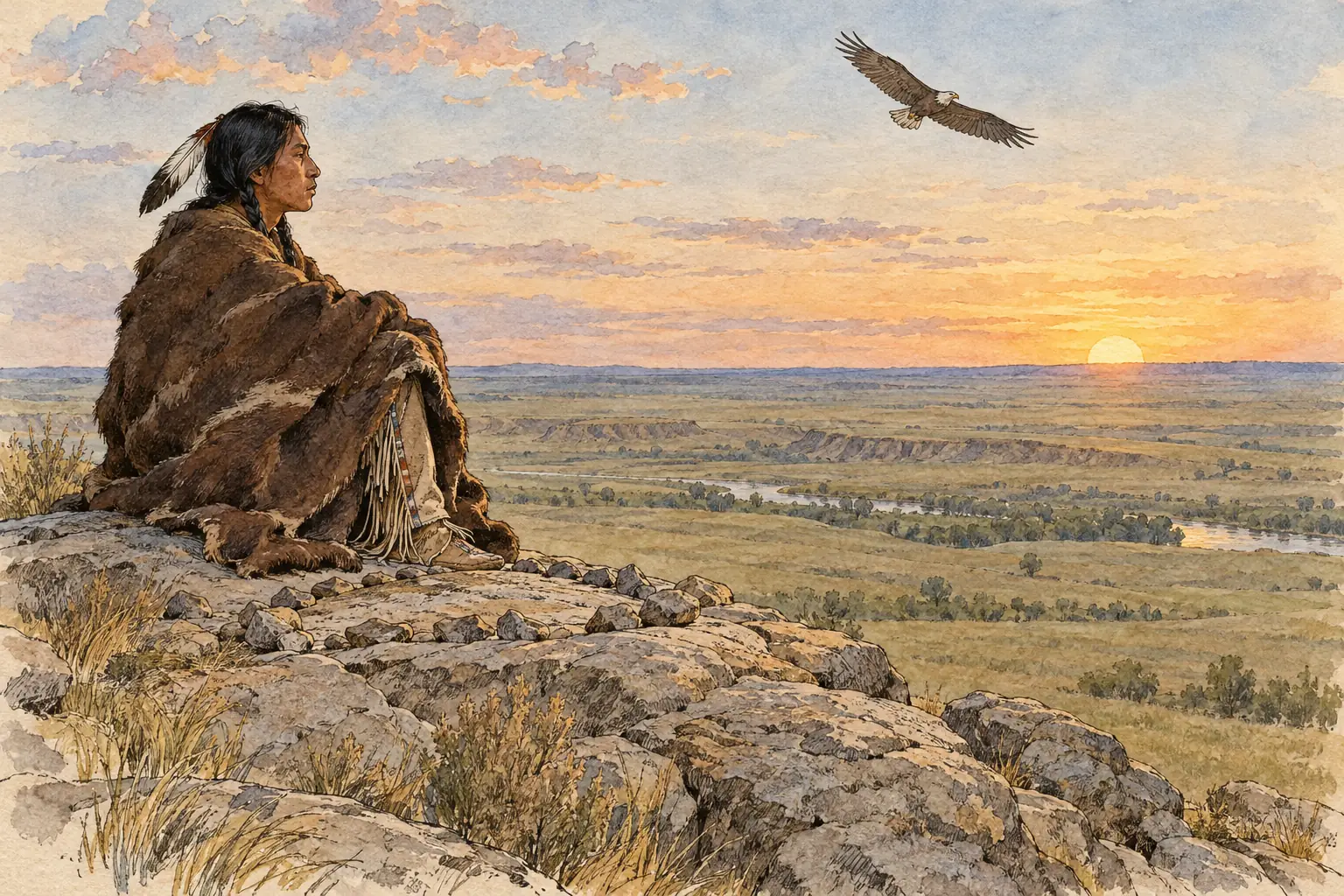
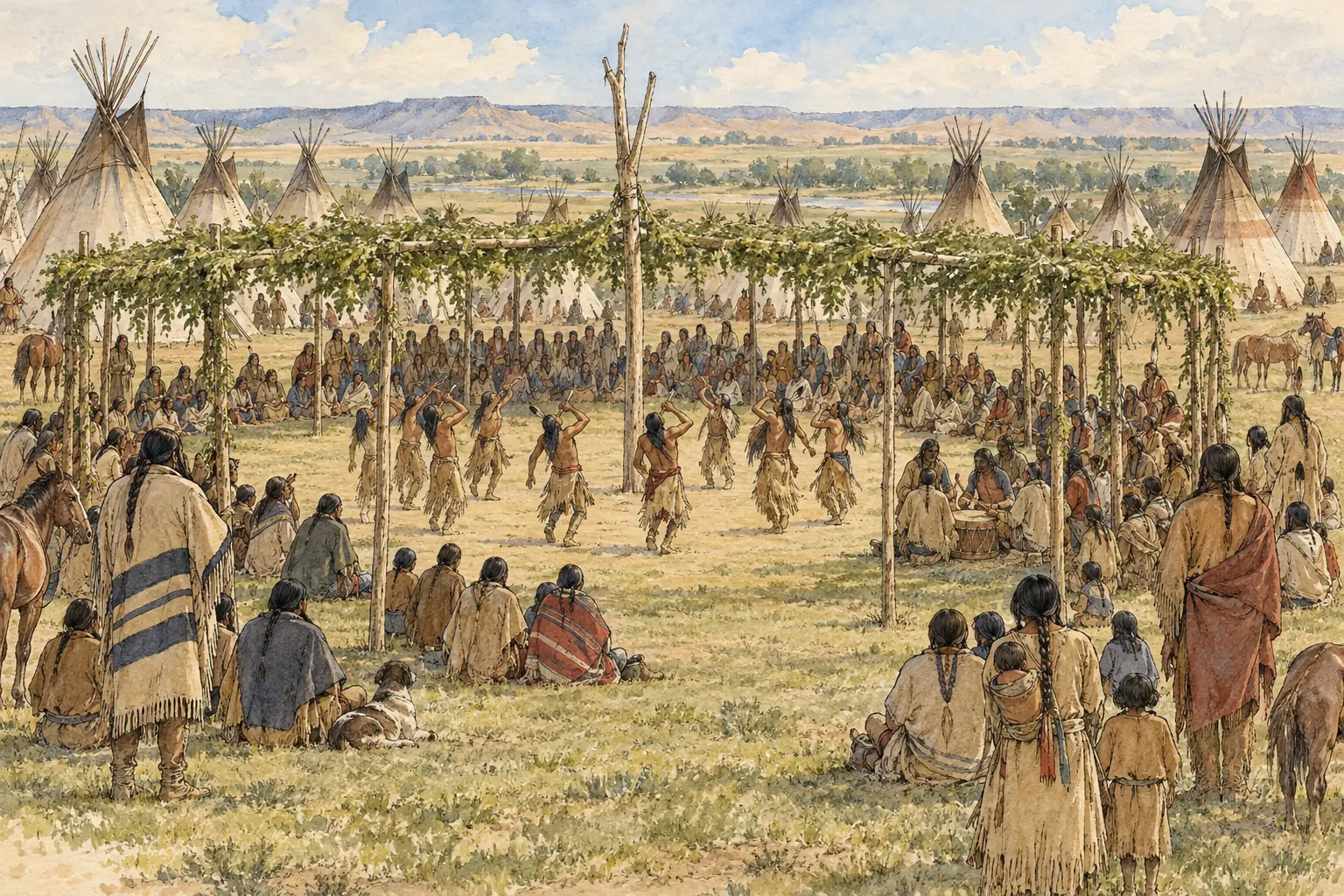
Plains indigenous peoples maintained a rich spiritual framework that integrated daily life with the supernatural, viewing the world as interconnected and guided by higher powers. These beliefs influenced rituals, healing, and community decisions, fostering a sense of unity with the environment.
Core elements of spiritual worldview
- The Great Spirit - Regarded as an all-encompassing force that unified humans, animals, and nature, often invoked in prayers and ceremonies to seek guidance or blessings.
- Visions and medicine practices - Individuals sought personal visions through fasting or isolation to gain wisdom or power; medicine men used herbs, rituals, and spiritual knowledge to heal illnesses or interpret signs from the spirit world.
- Sun Dance ceremony - A communal ritual involving dancing, fasting, and physical endurance to honour the sun, renew life, and strengthen tribal bonds, often performed annually in summer gatherings.
- Circular views of life - Existence was perceived as a continuous cycle, with death leading to renewal, emphasising respect for elders as keepers of knowledge and for nature as a living entity deserving protection.
Views on land, nature and communal property
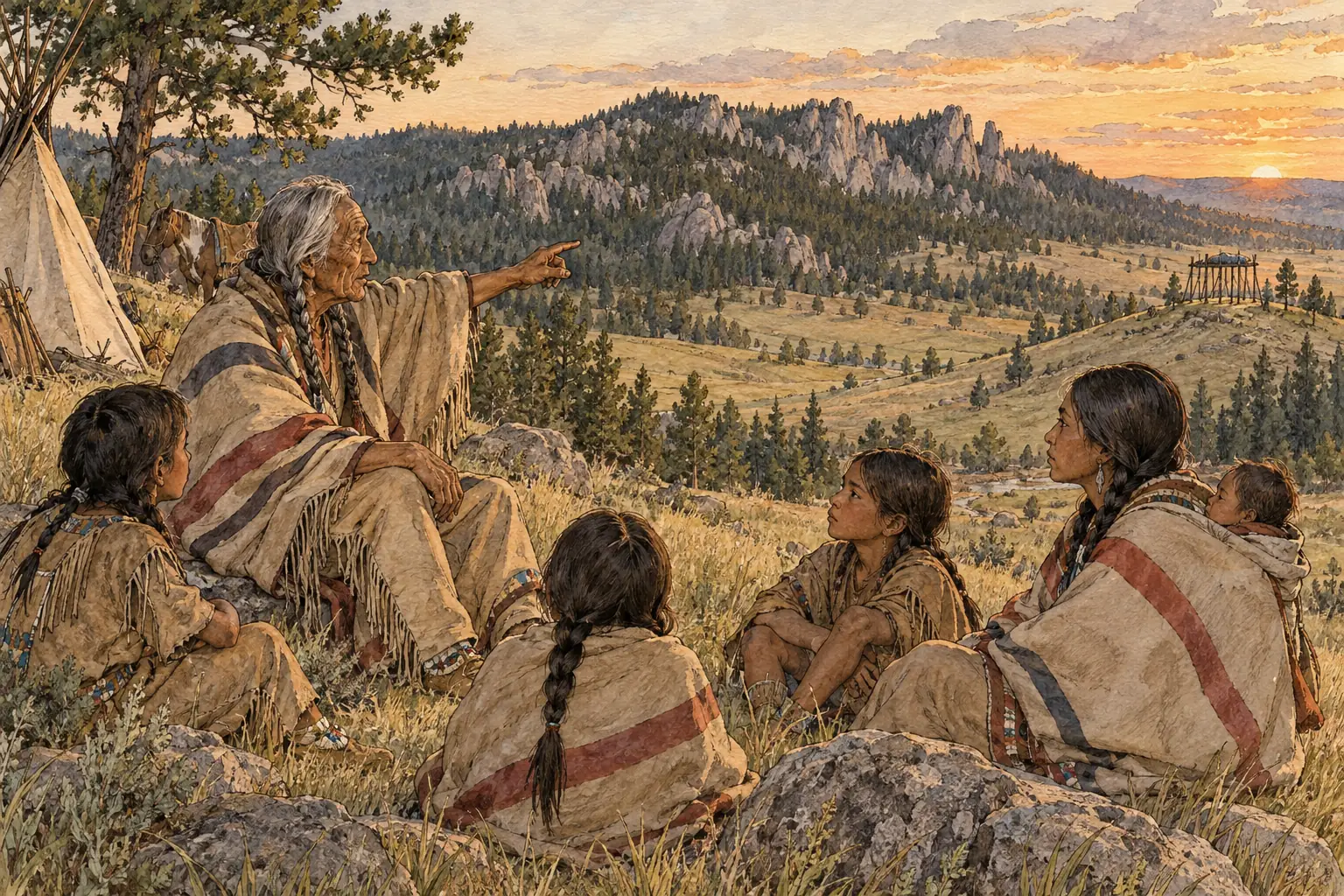
Land and nature were seen as sacred gifts to be shared rather than owned individually, reflecting a philosophy of stewardship and balance. This approach prioritised sustainability and communal benefit over personal gain.
Key aspects of land and nature beliefs
- Sacredness of the land - Specific sites, such as the Black Hills, were revered as holy grounds for burials, ceremonies, and spiritual connections, believed to house ancestral spirits.
- Respect for nature and elders - Animals and plants were treated with reverence, hunted or gathered only as needed to avoid waste; elders were honoured for their wisdom, passing down oral traditions that reinforced harmony with the environment.
- Communal use of resources - There was no idea of private property; land, water, and game were collectively managed by the tribe, allowing nomadic movement and equitable sharing to ensure survival.
Attitudes towards war and conflict
Image 1 of 2: Counting coup, touching an enemy without killing him, which won a warrior more honour than a kill
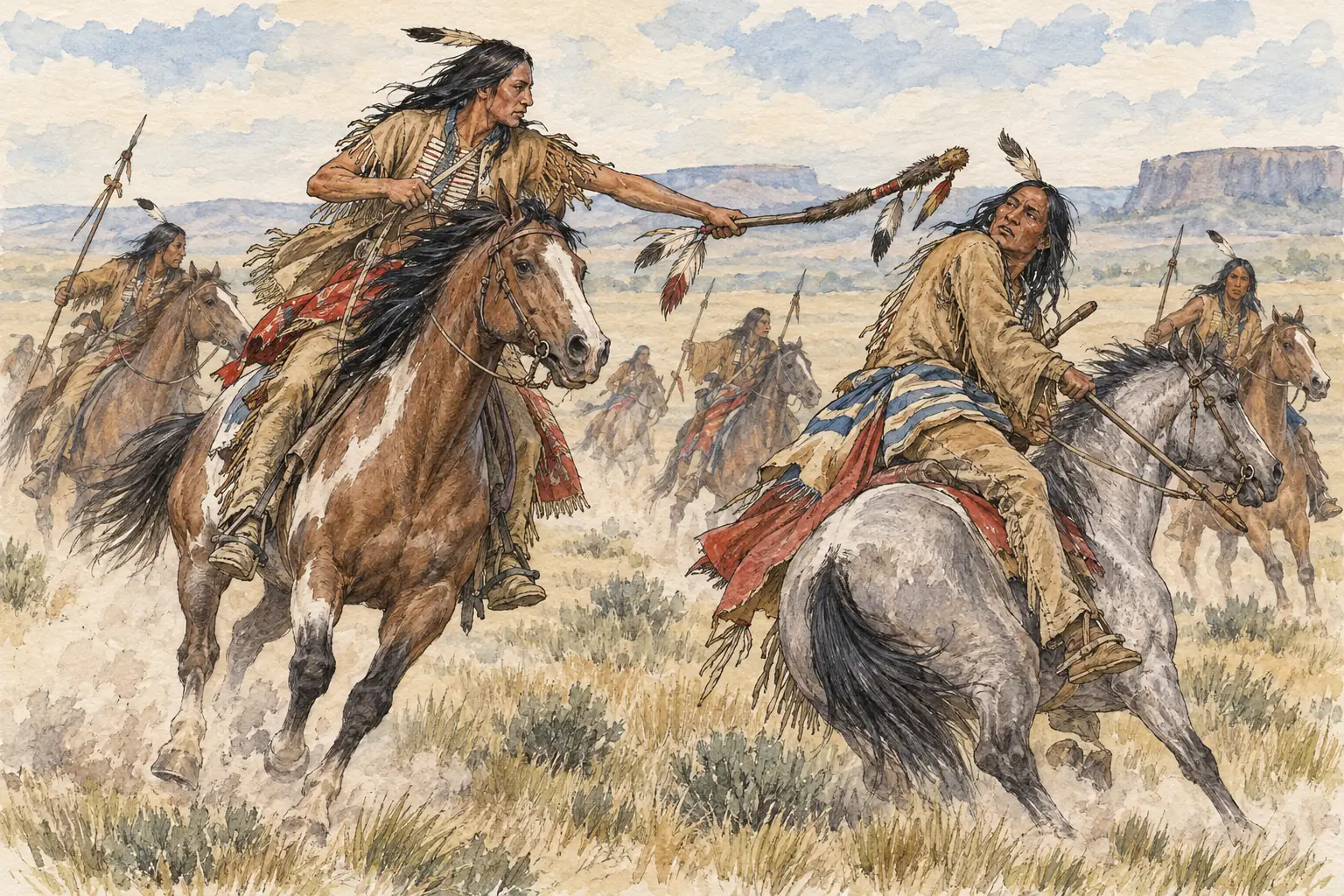
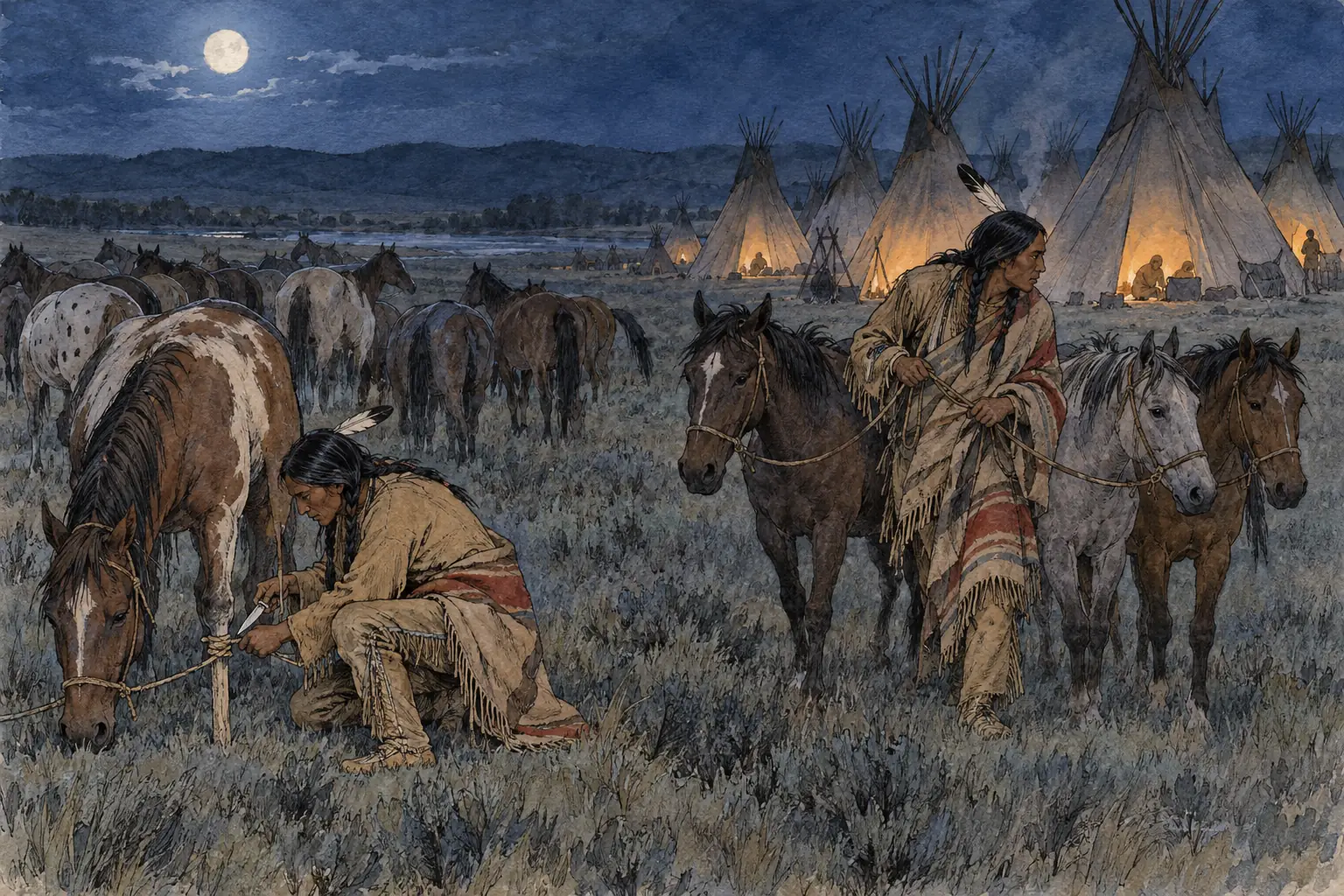
Warfare among Plains peoples was not aimed at total destruction but focused on demonstrating bravery and acquiring resources, with cultural rituals that valued honour over conquest. These practices were tied to social status and spiritual beliefs.
Characteristics of warfare practices
- Raiding for horses and prestige - Conflicts often involved stealing horses from rival tribes to build wealth and status, rather than seeking territorial expansion or mass casualties.
- Counting coup - Warriors gained respect by touching an enemy with a stick or hand during battle, proving courage without killing, which was considered a higher achievement than outright violence.
- Cultural meanings of scalps and prisoners - Taking a scalp symbolised triumph and absorbed the enemy's spiritual power; capturing prisoners could lead to adoption into the tribe or use in rituals, emphasising cultural integration over extermination.
Contrasts with white American beliefs
Plains beliefs clashed sharply with those of white American settlers, who emphasised individual ownership and economic development, leading to conflicts over territory and resources. These differences fuelled tensions as expansion intensified.
Key contrasts between indigenous and white American views
- Land ownership - Indigenous communal sharing contrasted with white concepts of private property, where land could be bought, sold, and fenced for personal use.
- Use of land - Plains peoples' nomadic lifestyle and respect for nature opposed white practices of permanent farming, town-building, and resource extraction for profit.
Impacts on relations with settlers and government
- Clashes with settlers - Farmers and ranchers encroached on sacred lands, disrupting hunting grounds and ceremonial sites, leading to disputes over access and usage.
- Conflicts with railroad companies - Railway construction through tribal territories ignored spiritual significance, fragmenting migration routes and provoking resistance.
- Tensions with US government - Policies promoting land division and assimilation clashed with indigenous values, resulting in treaties that were often broken and escalating into wars over sovereignty and cultural preservation.