3.4 - Attempted Colonisation of Virginia
Key facts and dates
The attempted colonisation of Virginia represented England's earliest efforts to establish a foothold in North America during the late Elizabethan era, motivated by economic and strategic goals. Although the ventures failed, they offered crucial insights for subsequent colonial projects, marking the beginning of English expansion overseas.
Timeline of key events
- 1584 – Sir Walter Raleigh secures a royal patent to explore and settle unclaimed territories in North America, naming the region Virginia.
- 1585 – Initial settlement established at Roanoke Island under Ralph Lane and Richard Grenville, but encounters early supply problems.
- 1586 – Roanoke settlers, facing starvation and native conflicts, evacuate with Sir Francis Drake's fleet.
- 1587 – Second settlement attempt at Roanoke, led by John White, includes families to promote sustainability.
- 1588 – Anglo-Spanish War, including the Armada, delays essential resupply missions.
- 1590 – Returning ships discover the second settlement abandoned, giving rise to the "Lost Colony" mystery.
- 1607 – Jamestown colony founded, applying lessons from Roanoke's shortcomings.
Reasons for attempting to colonise Virginia
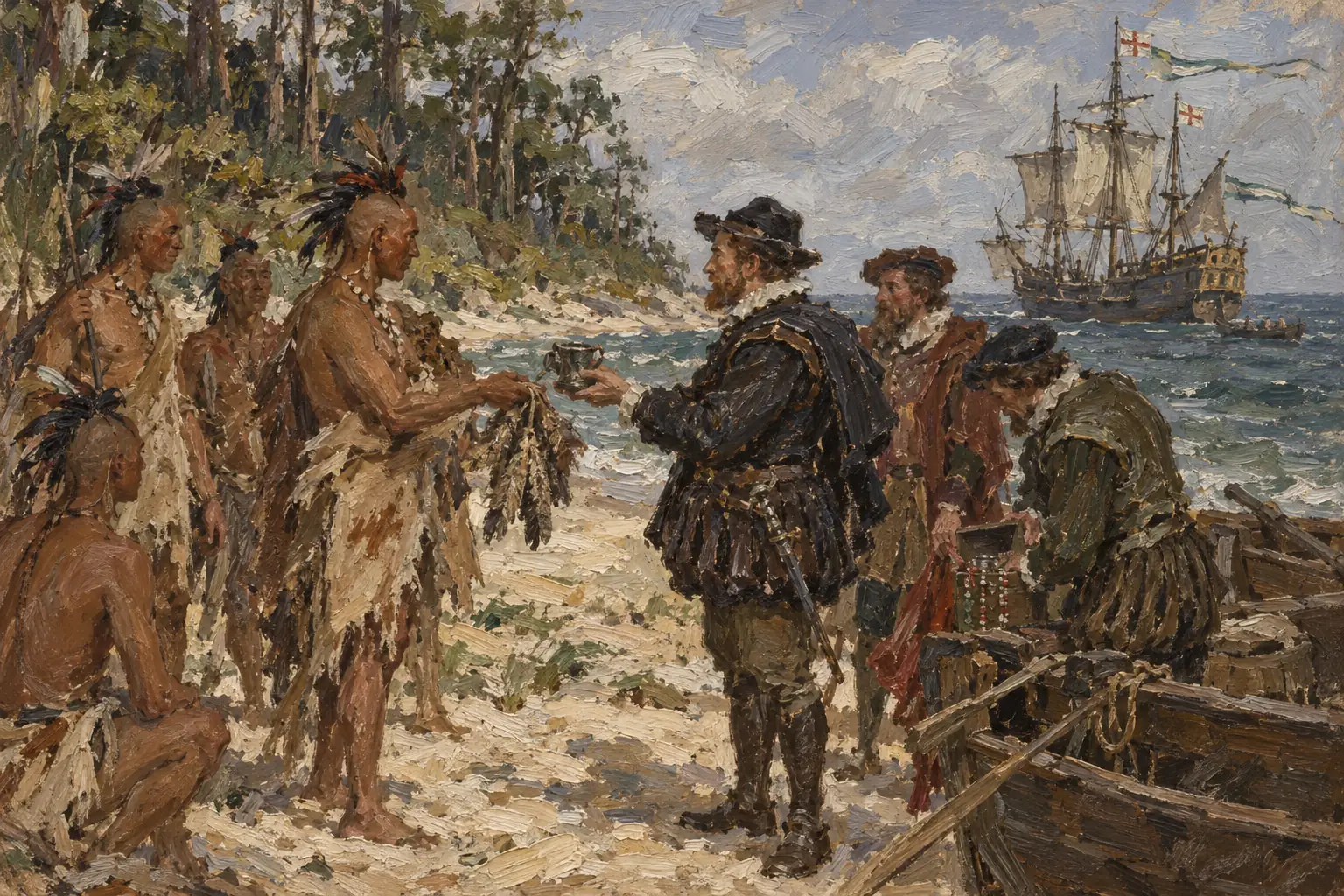
In the closing years of Elizabeth I's rule, England pursued its inaugural major effort to create a settlement in North America. The targeted area on the continent's eastern seaboard was dubbed Virginia in tribute to the monarch, known as the "Virgin Queen". A blend of financial, tactical, investigative, and societal drivers underpinned this initiative.
Key drivers for colonisation
- Economic growth and resource acquisition - Settlements were expected to yield essential materials like wood, pelts, and novel produce, diminishing dependence on foreign imports such as wine or sugar, while also offering prospects for unearthing precious ores or trade pathways.
- Tactical military edges - A base in North America could facilitate assaults on Spanish cargo vessels navigating nearby routes, diminishing Spain's supremacy and broadening English reach over the ocean.
- Quest for a Northwest Passage - Proponents viewed the outpost as a potential hub for seeking a direct route to Asia via North America, streamlining commerce with eastern markets.
- Tackling internal challenges - Although not fully matured at this point, colonies were seen as a remedy for England's overcrowding and job scarcity by offering prospects for the unemployed or those without land, an idea that evolved further in later decades.
- Individual aspirations and renown - Figures like Sir Walter Raleigh pursued personal acclaim and royal approval, committing substantial funds and disseminating enthusiastic accounts of the area's rich soils and hospitable locals based on preliminary explorations.
Significance of Sir Walter Raleigh
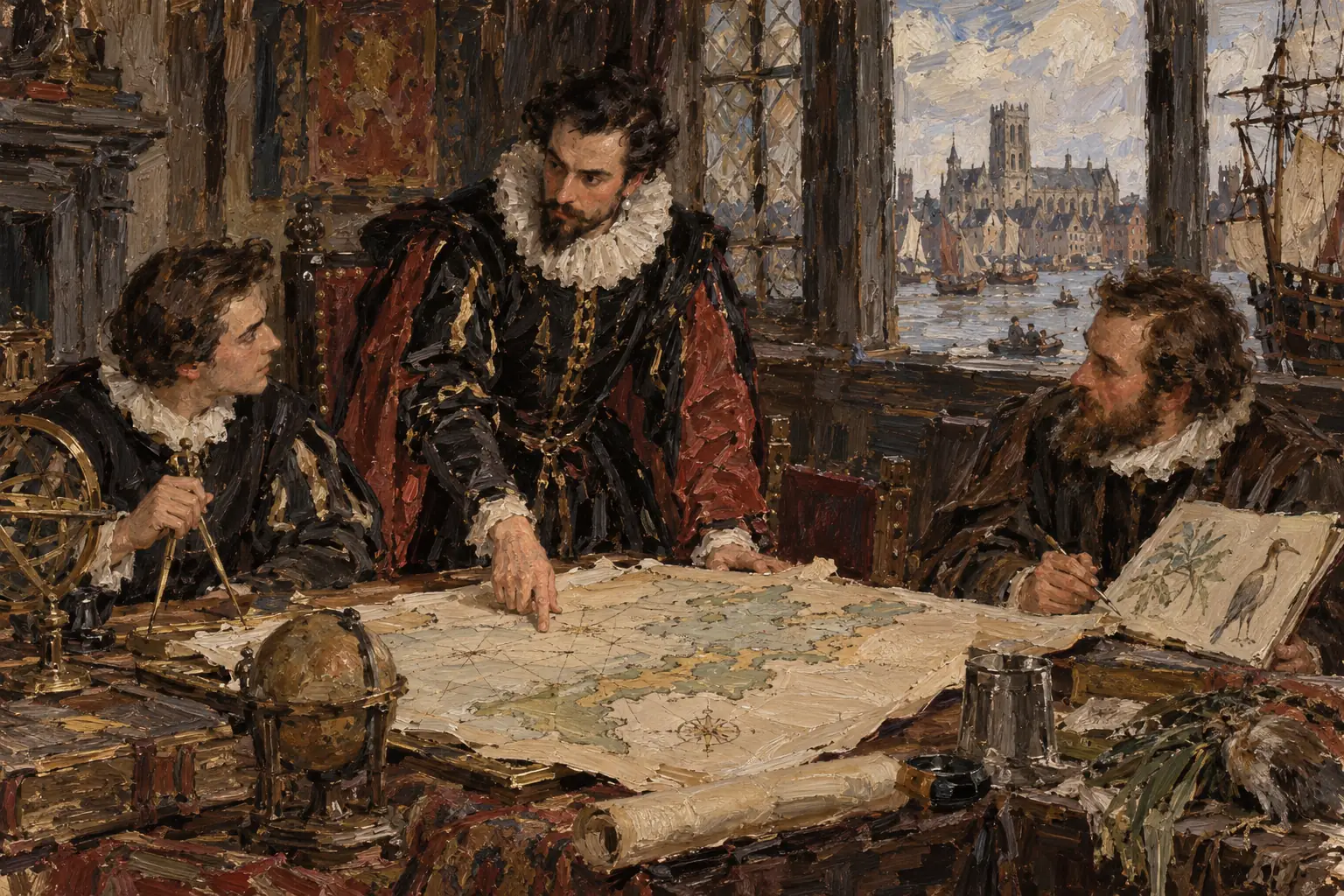
Sir Walter Raleigh, though he never set foot in Virginia, was instrumental in orchestrating England's early overseas settlement attempts. His involvement supplied the drive, resources, and royal backing essential for initiating the projects.
Raleigh's key roles in the Virginia initiative
- Planning and oversight - Raleigh obtained the 1584 royal charter, selected Roanoke Island as the base, and designated expedition commanders, bolstering the endeavour's legitimacy within Elizabeth's circle.
- Funding and advocacy - He channelled considerable personal wealth into the efforts and championed the projects through positive depictions of the region's promise, sustaining enthusiasm among backers and the crown.
- Enduring influence - Despite the setbacks, Raleigh's endeavours set precedents for English territorial expansion, informing triumphs like the 1607 Jamestown foundation and fostering the emergence of the British Empire.
Reasons for the failure of the Roanoke colonies
Image 1 of 2: When the Tiger ran aground in 1585, most of the colonists' food supplies were destroyed
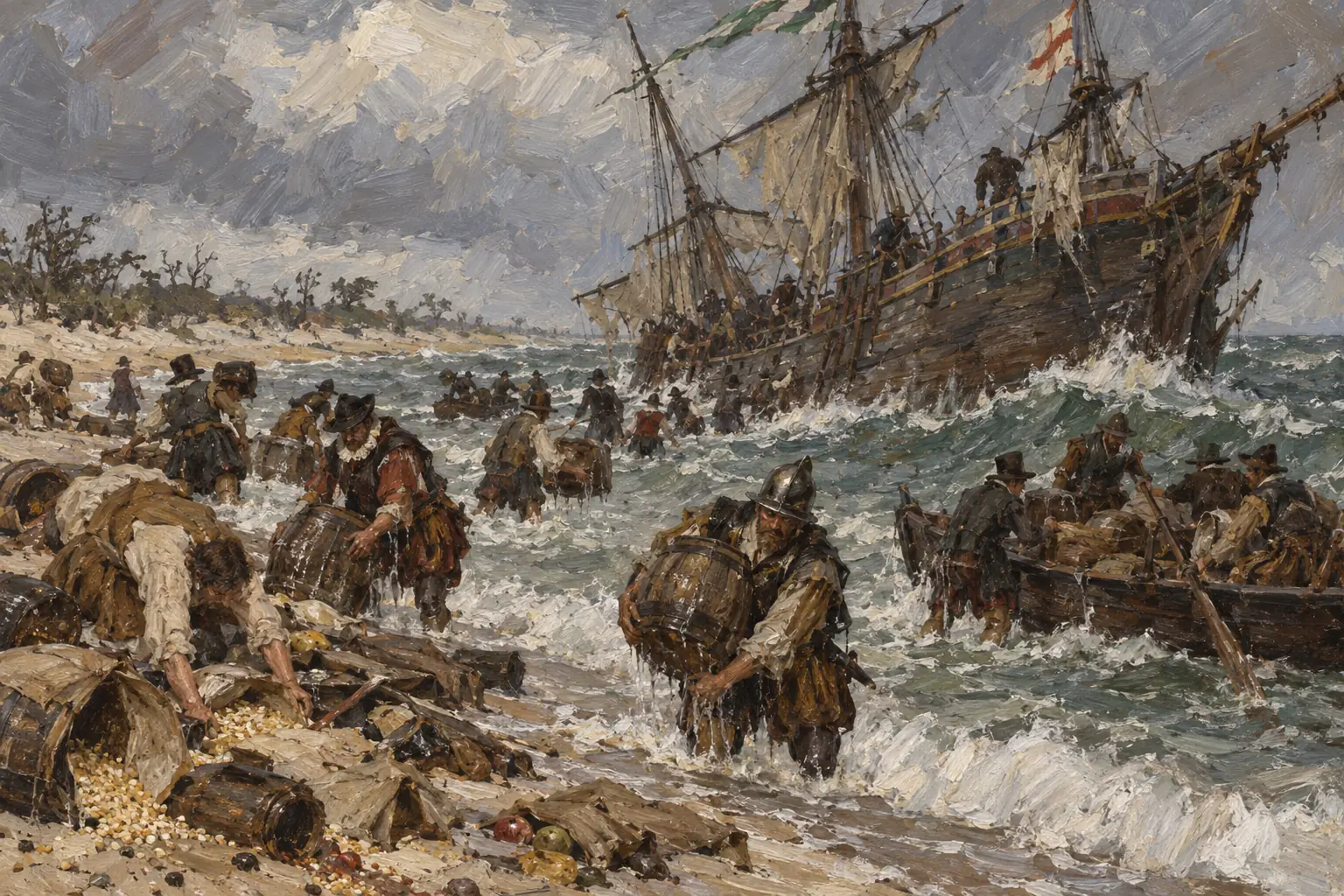
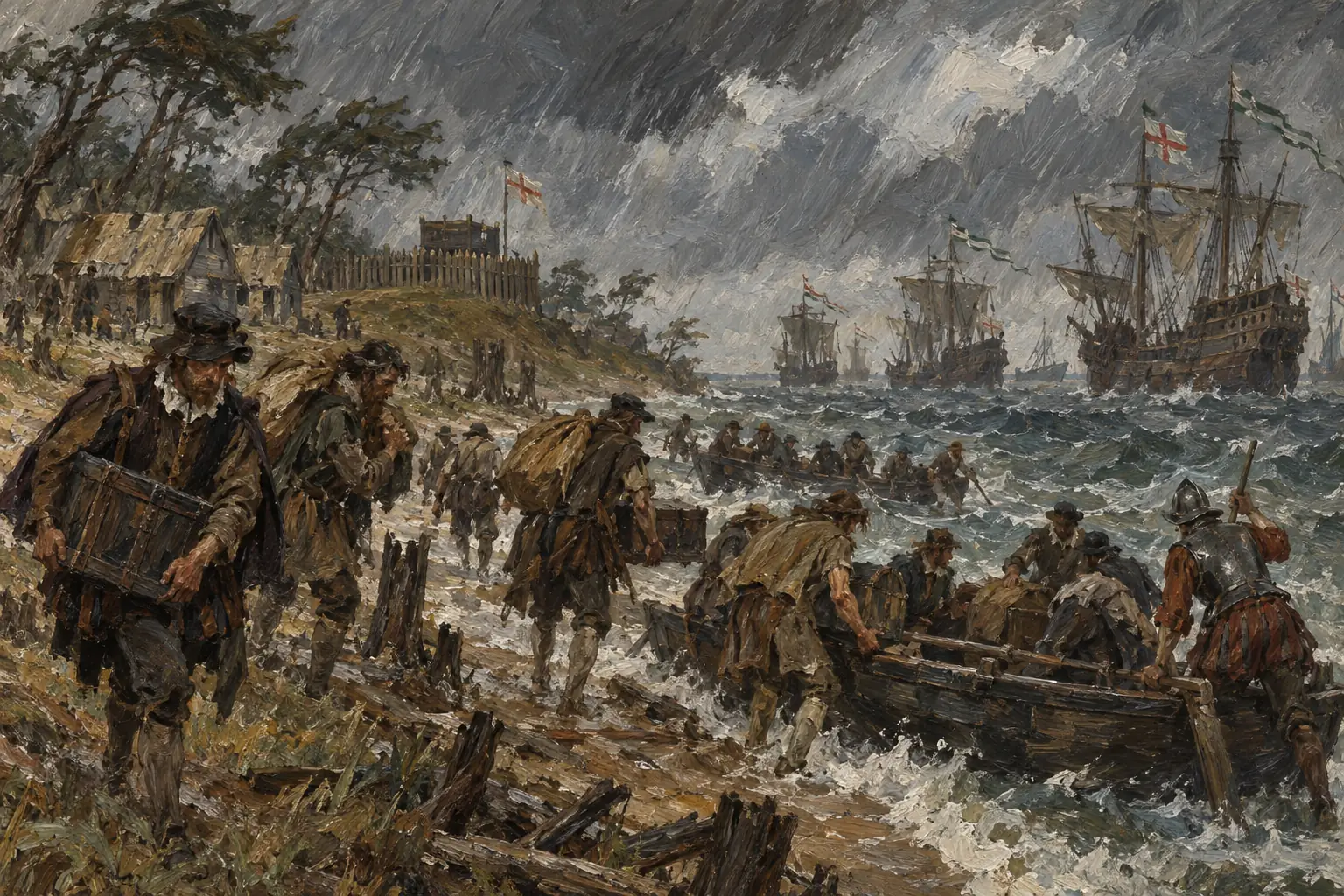
England's pioneering settlements at Roanoke Island in 1585 and 1587 both collapsed due to a series of organisational, ecological, and interpersonal obstacles. These mishaps underscored the complexities of founding transatlantic outposts.
Factors leading to the colonies' downfall
- Deficient preparation and resources - The 1585 group reached the site late in the season, hindering agriculture, while a key vessel suffered damage that spoiled provisions, compelling dependence on indigenous groups for sustenance.
- Lack of expertise and misguided hopes - Colonists largely comprised explorers ill-suited for essential tasks like farming or construction, anticipating rapid fortunes instead of the demands of forging homes, cultivating food, and adapting to untamed surroundings.
- Strained relations with Native Americans - Early alliances with Algonquian communities, under leaders like Wingina, deteriorated amid English demands for supplies and incidents such as the torching of native provisions, escalating to violence and the chief's demise in 1586.
- Delayed reinforcements - Conflicts with Spain, notably the 1588 Armada, impeded supply voyages; the first settlers departed with a passing fleet in 1586, while the 1587 group disappeared by 1590, possibly from famine, clashes, or integration with locals.
- Broad novice errors - As England's debut colonial venture, choices like an inadequate anchorage and internal disputes among leaders amplified difficulties, revealing the necessity for enhanced strategies.
Significance and legacy of attempted colonisation
Although the Roanoke ventures did not succeed, they carried profound historical weight in the Elizabethan period, embodying the era's adventurous ethos and delivering vital teachings for forthcoming endeavours.
Lasting effects of the Roanoke initiatives
- Insights for subsequent achievements - The failures emphasised needs like improved supplies, capable settlers, and native diplomacy, directly shaping the viable Jamestown settlement of 1607.
- Emblematic and territorial assertions - The efforts affirmed England's stake in the New World, contesting Spanish hegemony and bringing items like tobacco to England.
- Cultural and exploratory resonance - They captured the daring of the exploration age, though short-term disillusionment halted pursuits in the 1590s amid Spanish hostilities, ultimately aiding the rise of English colonies.