1.1 - Indigenous Peoples: Society & Survival
Key facts and dates
The indigenous peoples of the Plains, such as the Sioux and Cheyenne, developed unique social structures and survival methods adapted to their harsh environment. Key aspects of their societies included tribal organisation, reliance on natural resources, and a nomadic way of life that clashed with later European settlement practices.
Key facts to remember
- Plains nations – Included groups like the Sioux and Cheyenne, divided into tribes and bands.
- Leadership roles – Chiefs, councils, warrior societies, and medicine men guided decisions.
- Gender roles – Men focused on hunting and warfare; women managed tipis and food preparation.
- Key resources – Horses provided mobility and status; buffalo supplied food, clothing, and tools.
- Nomadic patterns – Seasonal movement following buffalo, using tipis and travois for transport.
- Environmental adaptations – Scarce resources like timber and water influenced diet, shelter, and rejection of fixed farming.
Social and tribal structures of Plains societies
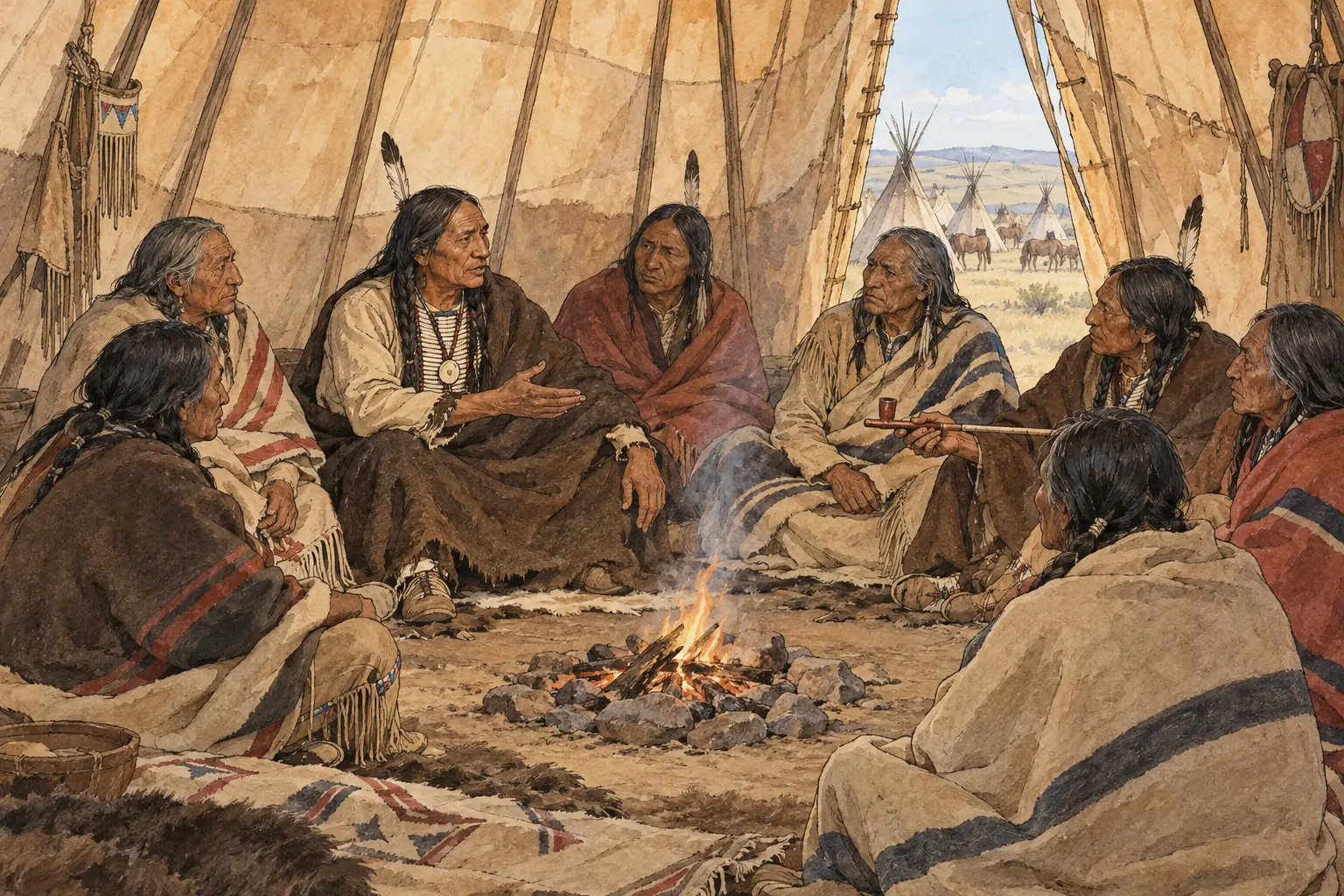
Plains societies were organised into large nations, which were further divided into smaller tribes and independent bands. This structure allowed for flexibility in decision-making and adaptation to the vast Plains landscape.
Organisation of Plains nations and tribes
- Nations and tribes - Larger groups, such as the Sioux or Cheyenne, formed nations that encompassed multiple tribes, each with its own identity and territory.
- Autonomous bands - Tribes split into smaller, self-governing bands that could operate independently, enabling mobility and resource sharing.
- Leadership and decision-making - Chiefs led bands, supported by councils of elders who discussed important matters. Warrior societies enforced rules and protected the group, while medicine men offered spiritual guidance and influenced choices through rituals and visions.
Gendered divisions of labour in Plains communities
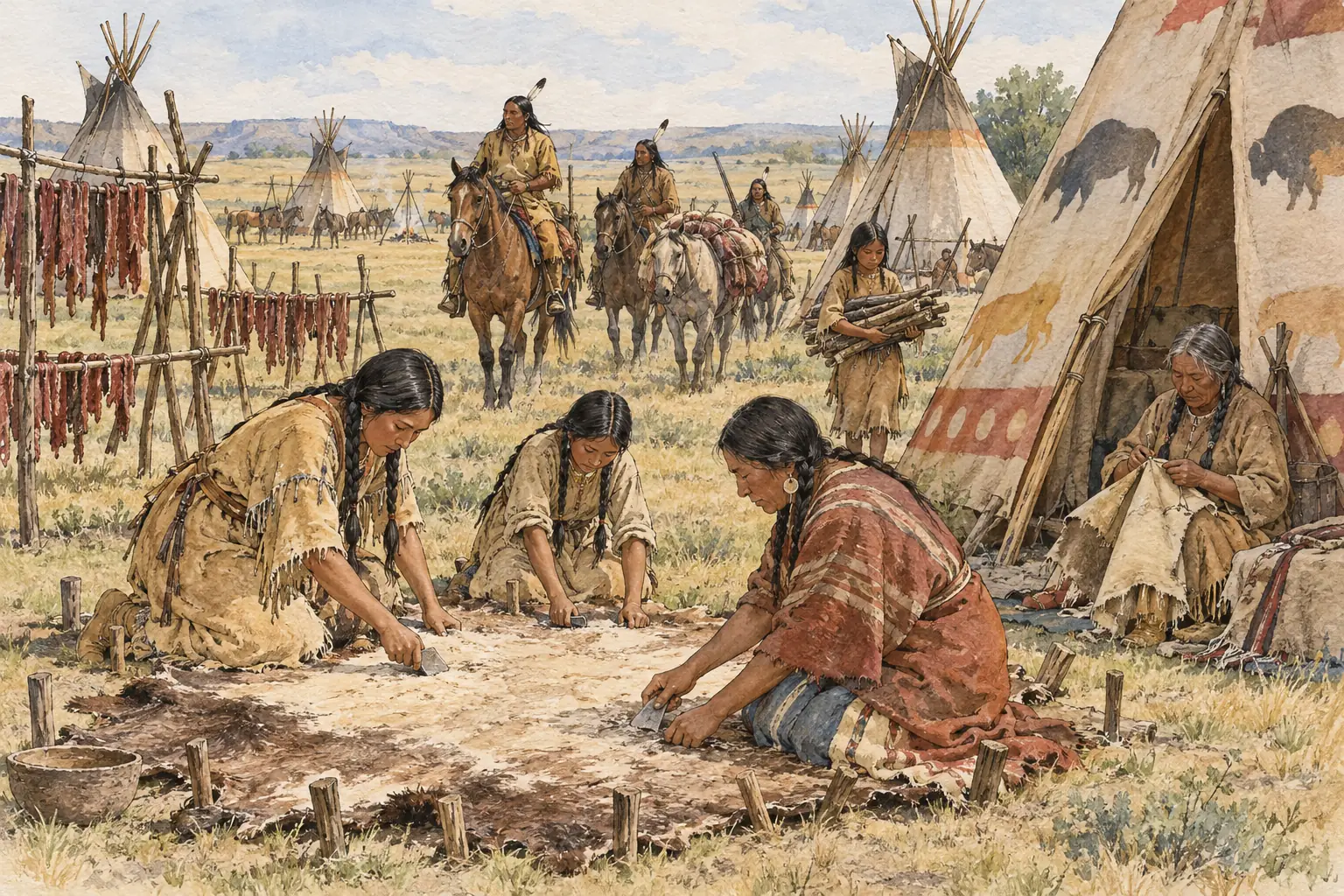
Roles in Plains societies were clearly divided between men and women, reflecting the demands of survival and cultural traditions. These divisions ensured efficient use of skills and resources within the community.
Responsibilities of men and women
- Men's roles - Focused on hunting animals like buffalo and engaging in warfare to defend territory or raid for resources. These activities required strength, mobility, and strategic skills.
- Women's roles - Included owning and maintaining tipis, preparing food through drying and preserving meat, and creating crafts such as clothing or tools from animal hides. Women also managed child-rearing and camp organisation.
- Cultural significance - This division promoted balance, with women's contributions to domestic stability complementing men's protective and provisioning duties, fostering community cohesion.
The importance of horses and buffalo in daily life
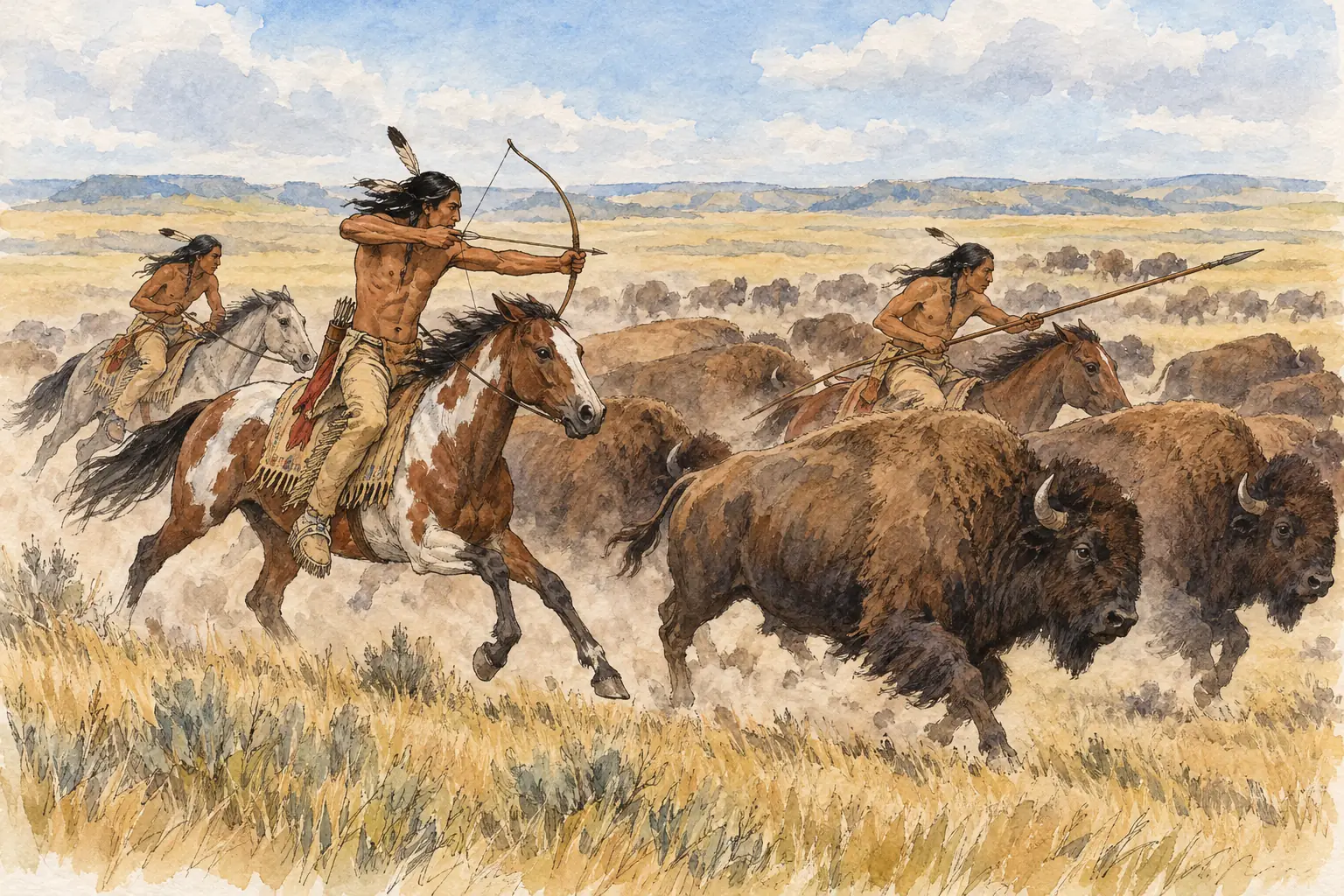
Horses and buffalo were central to Plains life, providing essential resources that influenced mobility, economy, and social status. Their significance extended beyond survival to shape cultural practices.
Key roles of horses and buffalo in Plains societies
| Resource | Mobility and warfare | Economic and social value | Daily survival needs |
|---|---|---|---|
| Horses | Enabled quick movement across Plains; enhanced success in battles and raids through speed and distance | Ownership signified wealth and prestige; used in trade and ceremonial gifts | Allowed bands to follow migratory animals and relocate camps efficiently |
| Buffalo | Hunting required coordination and planning; seasonal migrations determined band movements | Communal hunts reinforced social bonds; every part utilised to minimise waste | Provided meat for nutrition; hides for clothing and shelter; bones and horns for tools and containers |
Nomadic lifestyle and survival strategies
Image 1 of 2: A band on the move, with tipis and belongings carried on travois pulled by horses and dogs
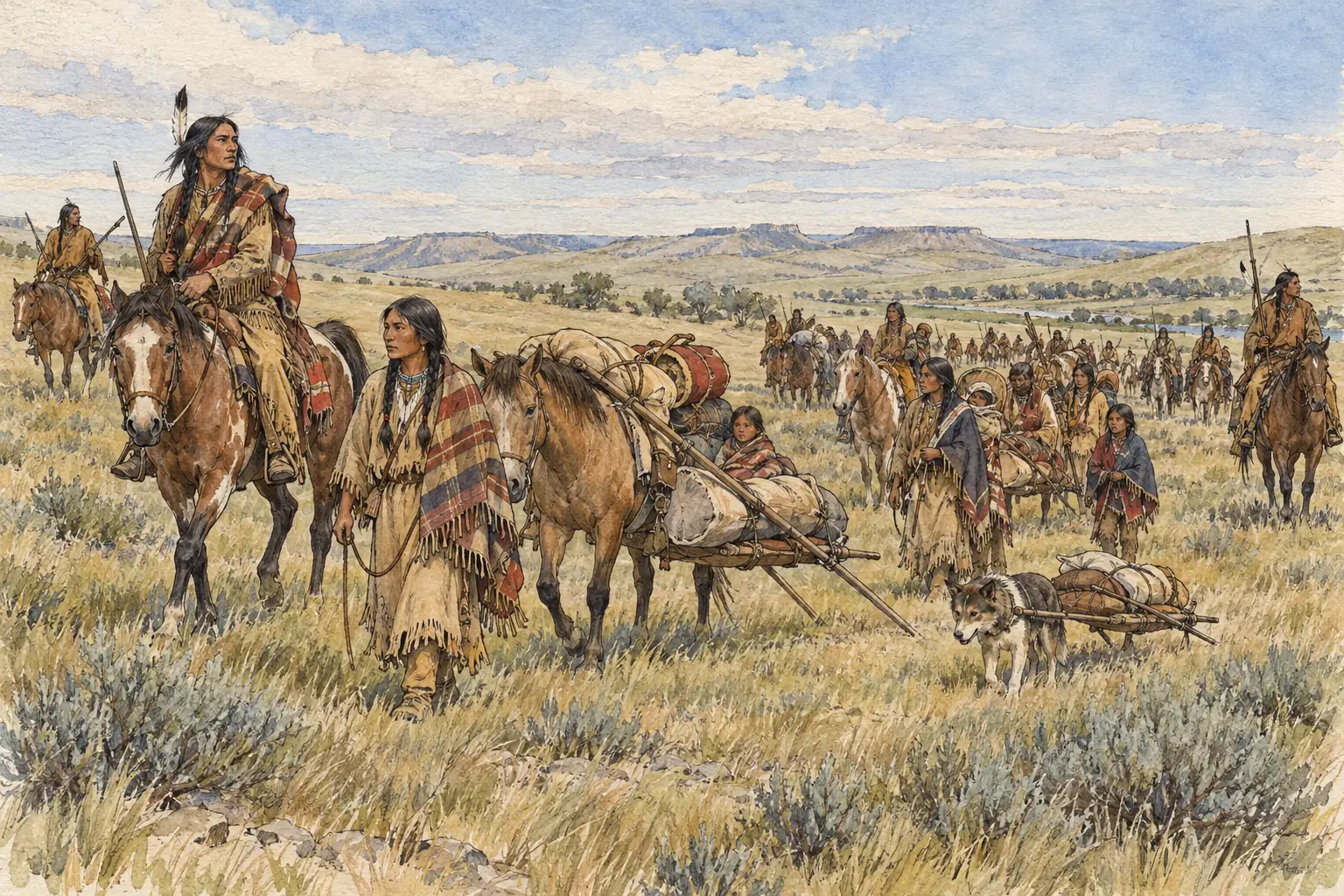
Plains peoples led a nomadic existence, constantly moving to follow resources and adapt to seasonal changes. This lifestyle relied on portable solutions and strategic planning for survival.
Features of nomadic patterns
- Following buffalo herds - Bands migrated seasonally to track buffalo migrations, ensuring a steady food supply throughout the year.
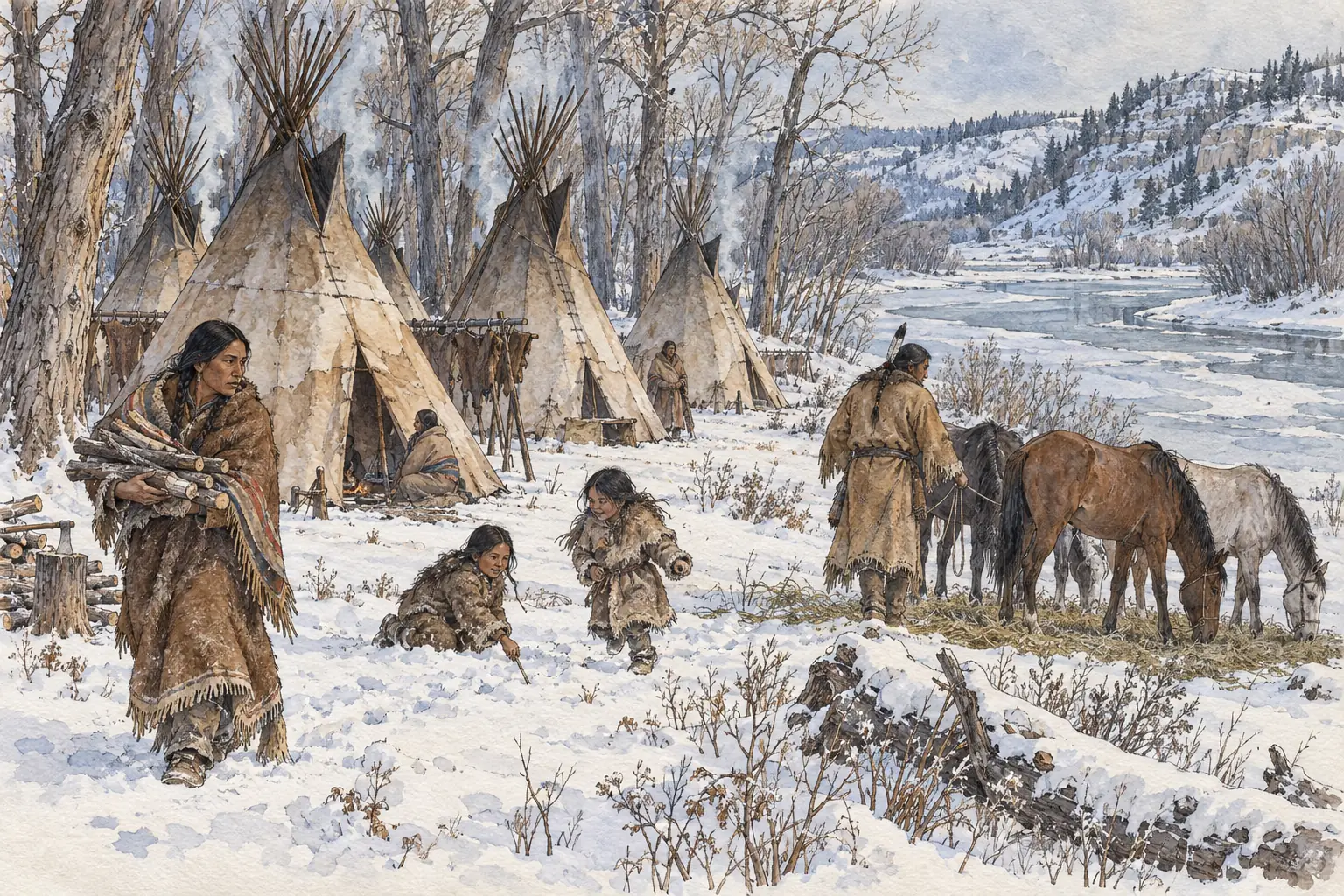
- Portable housing - Tipis, made from buffalo hides stretched over wooden poles, served as easily dismantled and transportable homes.
- Transport methods - Travois, sled-like devices pulled by horses or dogs, carried belongings, tipis, and people during moves.
- Seasonal cycles - Summer involved large gatherings for hunts and ceremonies, while winter focused on smaller camps in sheltered areas to endure harsh weather.
Environmental influences on Plains cultures
The Plains environment, with its challenges like limited resources and extreme conditions, profoundly shaped indigenous ways of life. These factors dictated adaptations in diet, shelter, and movement, making certain European practices incompatible.
Adaptations to environmental challenges
- Scarce resources - Limited timber and water sources led to reliance on buffalo for building materials and portable water storage, discouraging permanent structures.
- Extreme weather - Hot summers and cold winters influenced clothing from animal skins for insulation and seasonal migrations to avoid harsh conditions.
- Impact on diet and movement - A meat-based diet from hunting suited the grassland ecosystem, while constant mobility prevented soil depletion from farming.
- Contrast with fixed practices - The nomadic, resource-driven lifestyle made concepts like permanent farming and fencing foreign, as they restricted movement and clashed with communal land use traditions..