3.4 - Law & Order in the Wild West
Key facts and dates
Law and order in the American West during the late 19th century evolved from informal systems to more structured institutions, though challenges like corruption and violence persisted. Famous cases involving outlaws and lawmen highlighted these tensions and contributed to the mythic image of the 'Wild West'.
Timeline of key events
- 1850s–1860s – Establishment of federal courts and appointment of US marshals to enforce national laws in western territories.
- 1870s – Rise of elected sheriffs and town ordinances to maintain local order in growing settlements.
- 1878 – Lincoln County War in New Mexico escalates, involving cattle rustling and factional violence.
- 1879 – Billy the Kid's involvement in rustling and murders begins, leading to his notoriety.
- 1881 – Gunfight at the OK Corral in Tombstone, Arizona, between lawmen and outlaws.
- 1882 – Billy the Kid killed by Sheriff Pat Garrett, ending his crime spree.
- Post-1881 – Media sensationalism, including dime novels, shapes the romanticised 'Wild West' image.
The maturing justice system
As settlements expanded in the American West during the 19th century, the justice system gradually developed from rudimentary arrangements to more organised structures. This evolution aimed to address rising crime in frontier areas, though implementation varied by region.
Key components of the developing justice system
- Elected sheriffs - Local communities elected sheriffs to enforce laws within counties, handle arrests, and maintain peace; their authority depended on community support and could be undermined by corruption or limited resources.
- US marshals - Appointed by the federal government, these officers enforced national laws across territories, pursued fugitives over state lines, and provided oversight in areas lacking local governance.
- Federal courts - Established to handle serious crimes and disputes involving federal matters, such as land claims or interstate issues, bringing a layer of central authority to remote regions.
- Town ordinances - Local rules regulated behaviour in growing towns, prohibiting activities like carrying firearms or public drunkenness to promote order and safety.
The case of Billy the Kid and youth crime
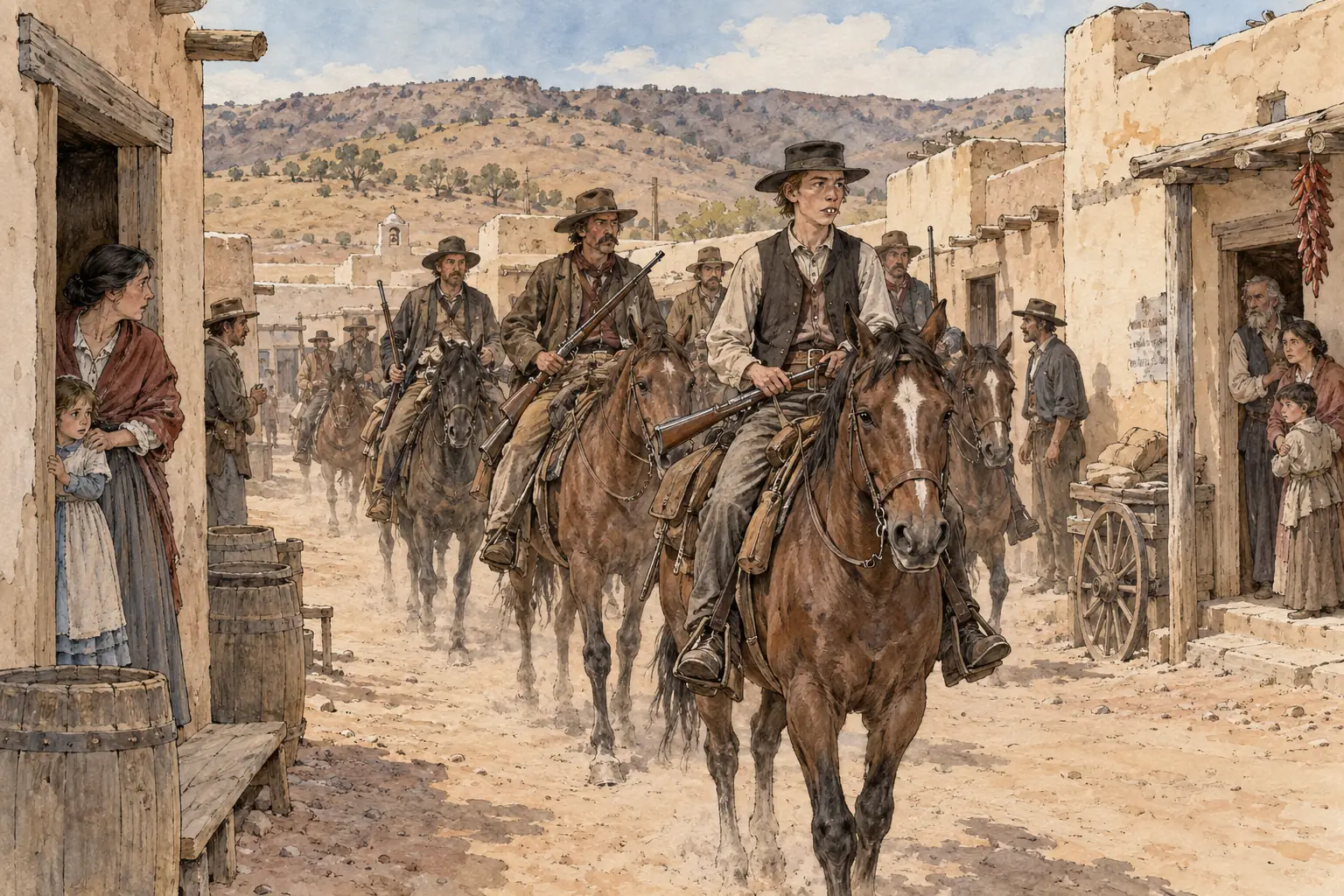
Billy the Kid, born Henry McCarty in 1859, became a symbol of youthful lawlessness in the West. His short life involved cattle rustling, murders, and evasion of authorities, reflecting broader issues of youth involvement in crime amid economic hardship and weak law enforcement.
Aspects of Billy the Kid's criminal activities
- Youth crime and rustling - Starting as a teenager, Billy engaged in stealing livestock, a common crime in ranching areas where young men, often orphaned or impoverished, turned to rustling for survival or profit.
- Involvement in factional violence - During the Lincoln County War, Billy aligned with one side in a dispute over cattle and business control, leading to shootings and escalating feuds that overwhelmed local law.
- Vigilante justice - Frustrated communities formed vigilante groups to capture or kill outlaws like Billy when official systems failed, highlighting a reliance on extralegal measures.
Wyatt Earp and the Gunfight at the OK Corral
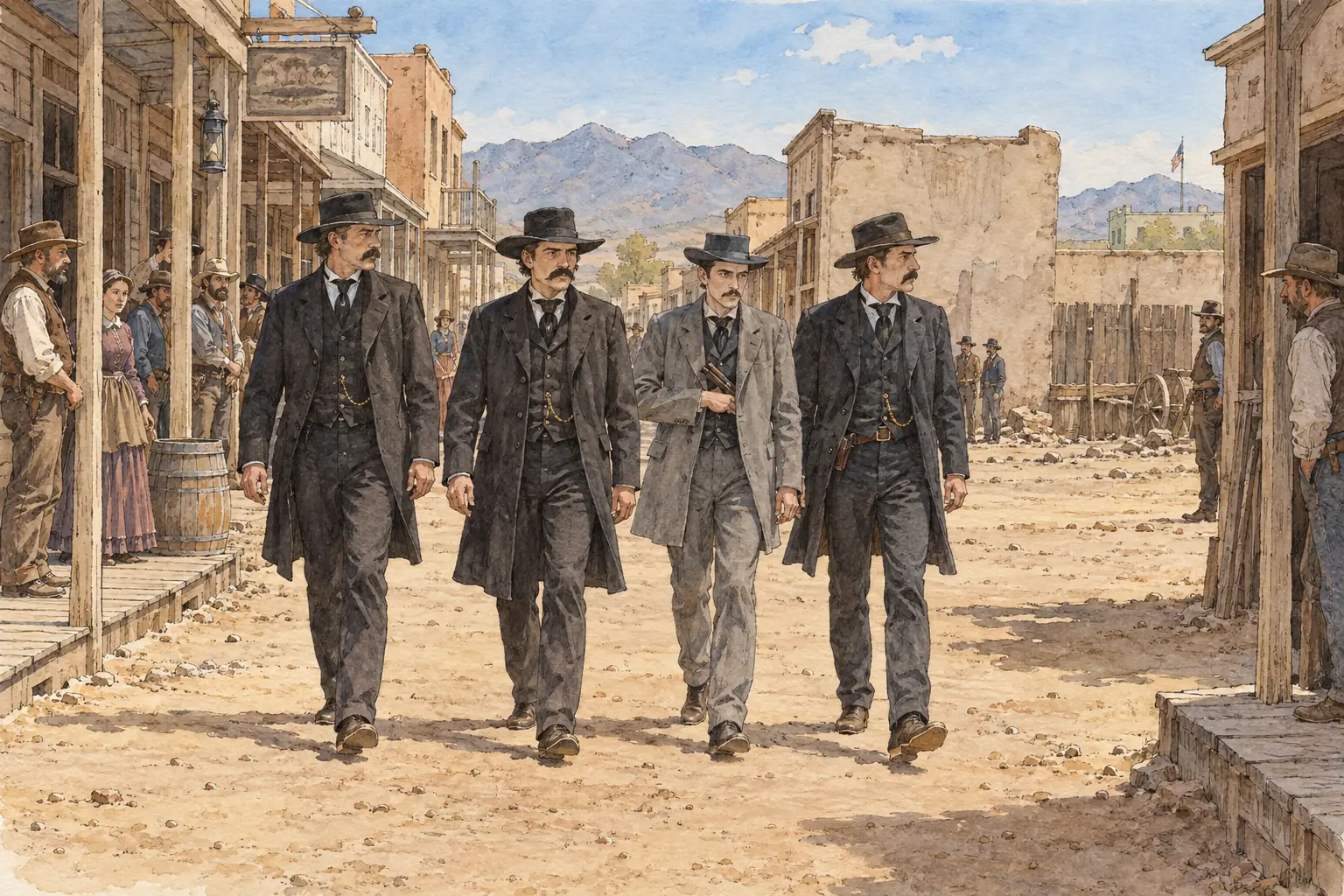
Wyatt Earp, a lawman and gambler, was central to the infamous Gunfight at the OK Corral in Tombstone, Arizona, on 26 October 1881. This brief shootout exemplified factional rivalries in booming mining towns and the blurred lines between law enforcement and personal vendettas.
Events surrounding the gunfight
- Factional violence in mining towns - Tombstone's silver boom attracted diverse groups, leading to conflicts between lawmen like the Earp brothers and outlaw factions such as the Cowboys, who clashed over gambling, rustling, and political control.
- The shootout - Earp, his brothers, and Doc Holliday confronted the Clanton and McLaury brothers in a 30-second exchange of gunfire, resulting in three deaths; it stemmed from efforts to disarm the outlaws under town ordinances.
- Myth and media influence - Newspapers and later dime novels exaggerated the event, portraying Earp as a heroic figure and shaping the 'Wild West' image through sensationalised stories of gunfights and frontier justice.
Limitations of law and order
The stories of Billy the Kid and Wyatt Earp illustrate the challenges of maintaining law in the West, where rapid growth outpaced institutional development. These examples expose systemic weaknesses and community adaptations.
Insights from famous cases
- Limits of law enforcement - Weak federal presence and under-resourced local officials often failed to prevent crimes like rustling or feuds, allowing outlaws to operate freely across vast territories.
- Corruption and conflicts of interest - Lawmen like Earp sometimes pursued personal gains through gambling or alliances, blurring the line between enforcers and opportunists, which eroded public trust.
- Community responses - In the absence of effective justice, residents turned to vigilantes or posses, as seen in pursuits of Billy the Kid, reflecting a pragmatic but often violent approach to order.
- Broader implications - These cases show how media myths romanticised violence, masking realities of corruption and inequality, while highlighting the gradual shift towards more stable legal systems as the frontier matured.