2.4 - The Cattle Industry
Key facts and dates
The cattle industry in the American West expanded rapidly after the Civil War, driven by eastern demand for beef and the availability of vast herds in Texas. Key individuals and infrastructure developments transformed cattle drives into a structured trade, with railroads eventually reshaping transportation methods.
Timeline of key events
| Year | Event |
|---|---|
| 1865 | End of the Civil War sparks increased beef demand in eastern cities, leading to the 'beef bonanza'. |
| 1866 | Charles Goodnight and Oliver Loving pioneer a trail to supply cattle to New Mexico and Colorado mining areas. |
| 1867 | Joseph McCoy establishes Abilene, Kansas, as the first major railhead for shipping cattle eastward. |
| 1868 | John Iliff begins large-scale open-range ranching in Colorado, focusing on wintering cattle near markets. |
| 1870s | Expansion of railroads reduces reliance on long trail drives, enabling ranching closer to rail lines. |
The post-Civil War beef bonanza and long drives
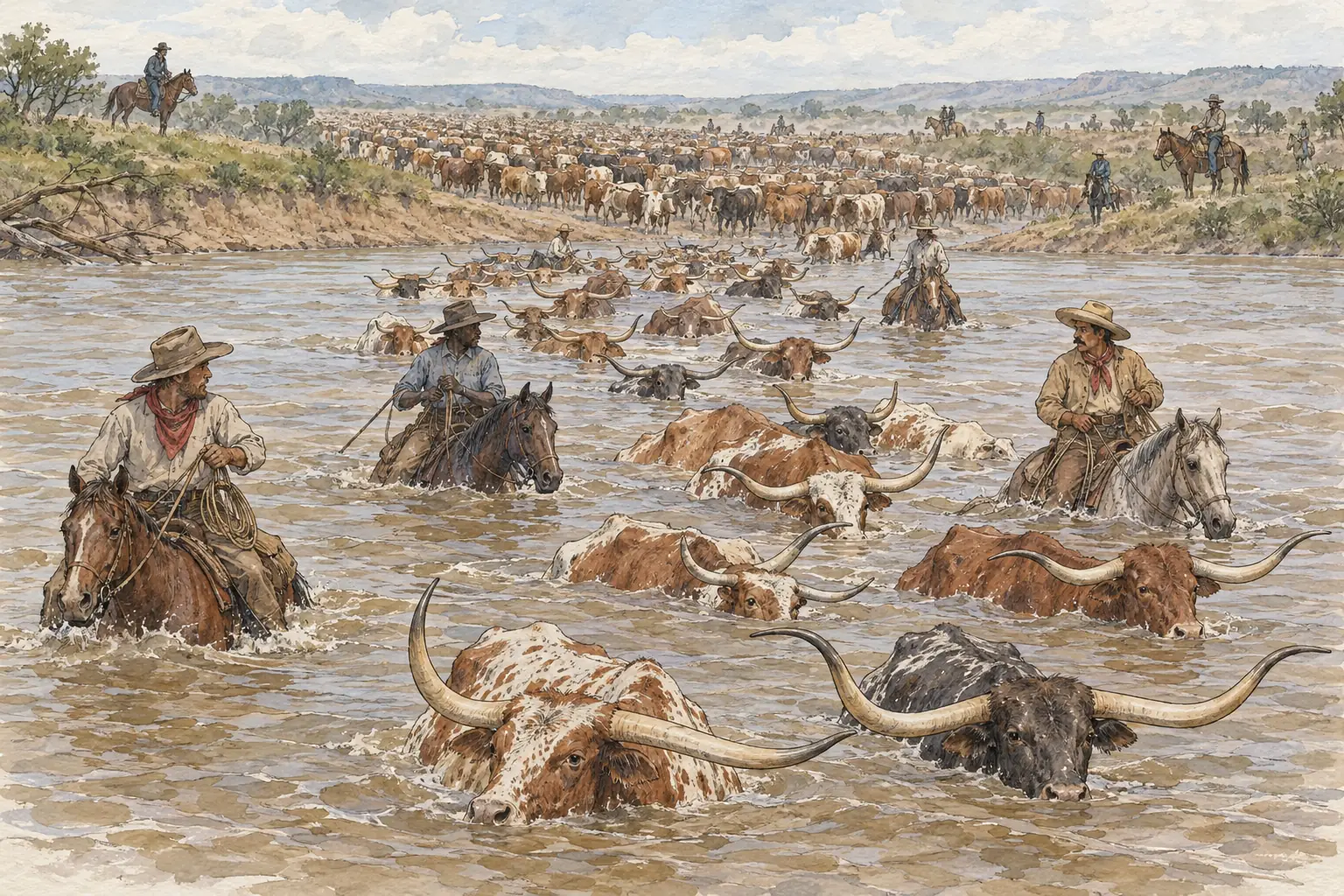
After the American Civil War ended in 1865, a surge in demand for beef in growing eastern cities created opportunities for cattle herders in the West. Texas had millions of hardy Texas Longhorn cattle, which were well-suited to the region's tough conditions, but transporting them to markets required innovative solutions.
Factors driving the beef bonanza
- Eastern demand - Rapid urban growth and population increases in the East boosted the need for affordable meat, turning cattle into a valuable commodity.
- Texas Longhorn herds - These resilient animals thrived on open grasslands, with herds numbering in the millions, providing a ready supply for herders.
- Long drives - Cowboys organised large-scale drives, herding cattle hundreds of miles north from Texas to railheads or markets, enduring hazards like harsh weather and river crossings.
Joseph McCoy and the development of Abilene as a railhead
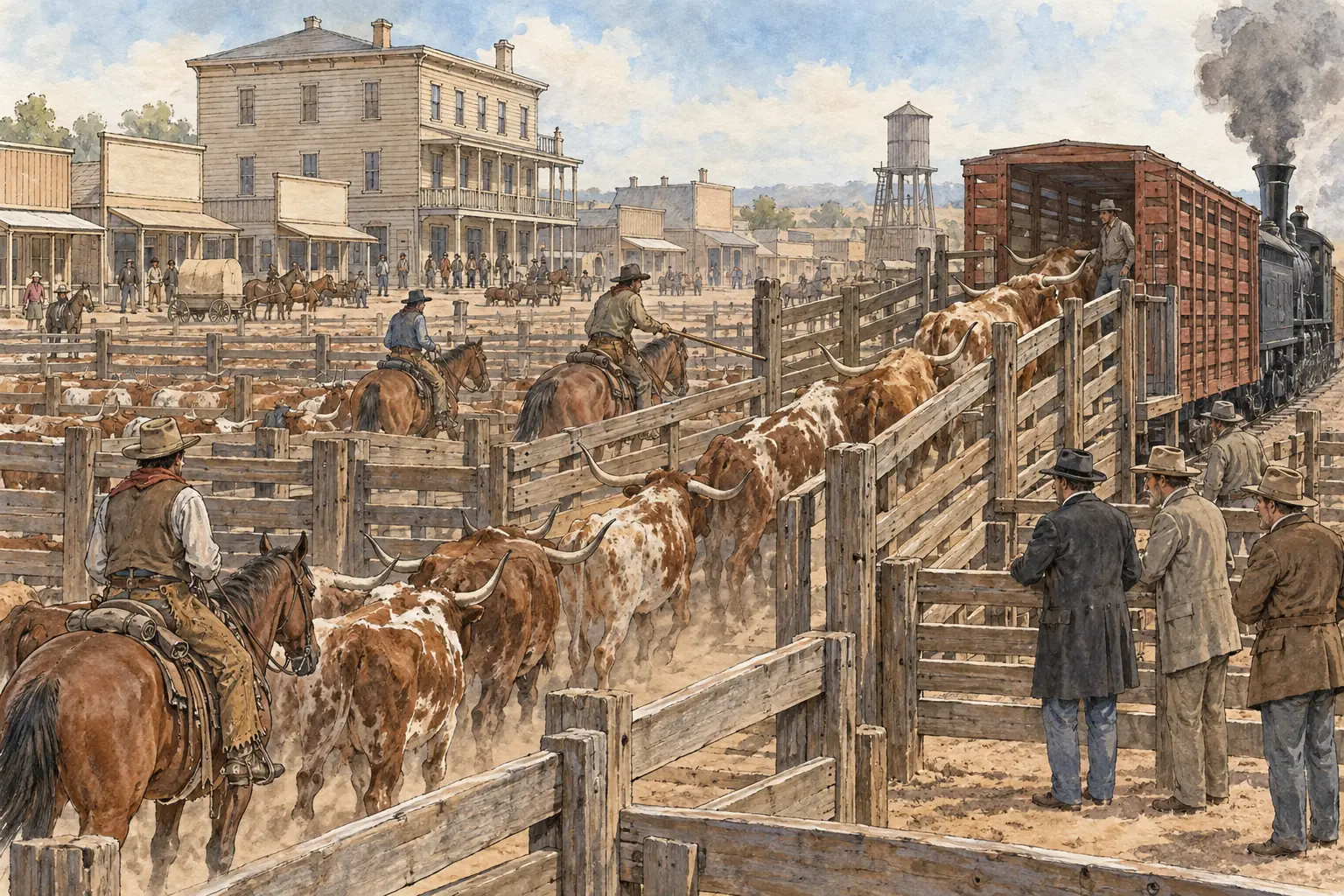
Joseph McCoy recognised the potential to connect Texas cattle with eastern markets through railroads. In 1867, he transformed the small town of Abilene, Kansas, into a bustling centre for cattle shipping, marking a key advancement in the industry.
McCoy's contributions to the cattle trade
- Establishing infrastructure - McCoy built stockyards, loading pens, and hotels in Abilene to handle large herds, making it efficient for cowboys to sell cattle directly to buyers.
- Promotion and organisation - He advertised the route to Texas ranchers and arranged for railroad connections, ensuring cattle could be shipped eastward quickly and profitably.
- Economic impact - Abilene became the first major cow town, handling hundreds of thousands of cattle annually and setting a model for other railheads.
Charles Goodnight and the Goodnight-Loving Trail
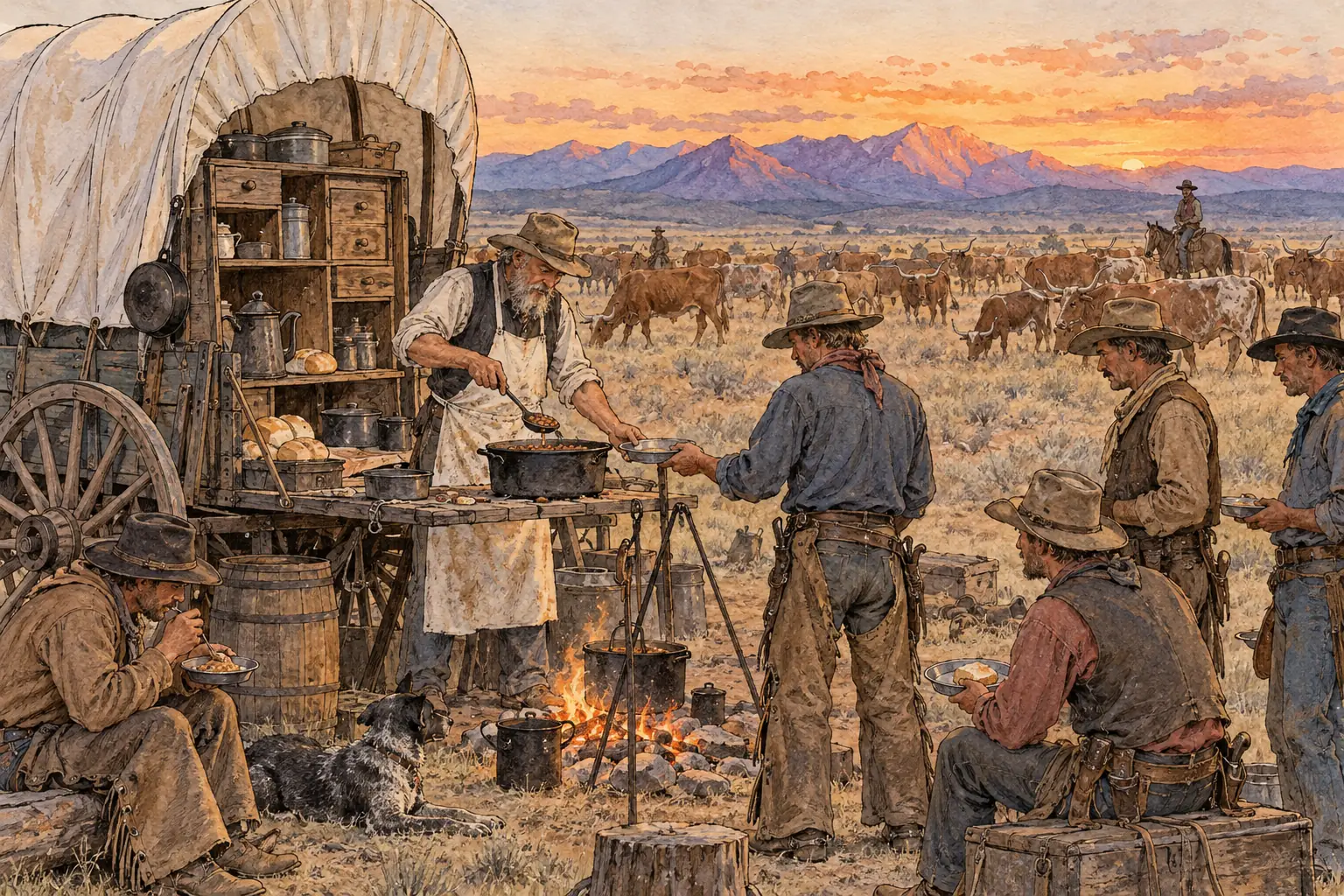
Charles Goodnight, a former Texas Ranger, partnered with Oliver Loving to create a new trail in 1866 that expanded cattle markets beyond Texas. This route addressed the need to supply beef to remote western territories.
Features of the Goodnight-Loving Trail
- Route and purpose - The trail ran from Texas through New Mexico to Colorado, delivering cattle to mining camps and military posts where demand was high.
- Innovations in herding - Goodnight introduced practical tools like the chuck wagon for mobile cooking and developed techniques for managing large herds over long distances.
- Legacy - The trail opened up new markets, inspiring further drives and contributing to the spread of ranching across the Plains.
John Iliff and open-range ranching on the Plains
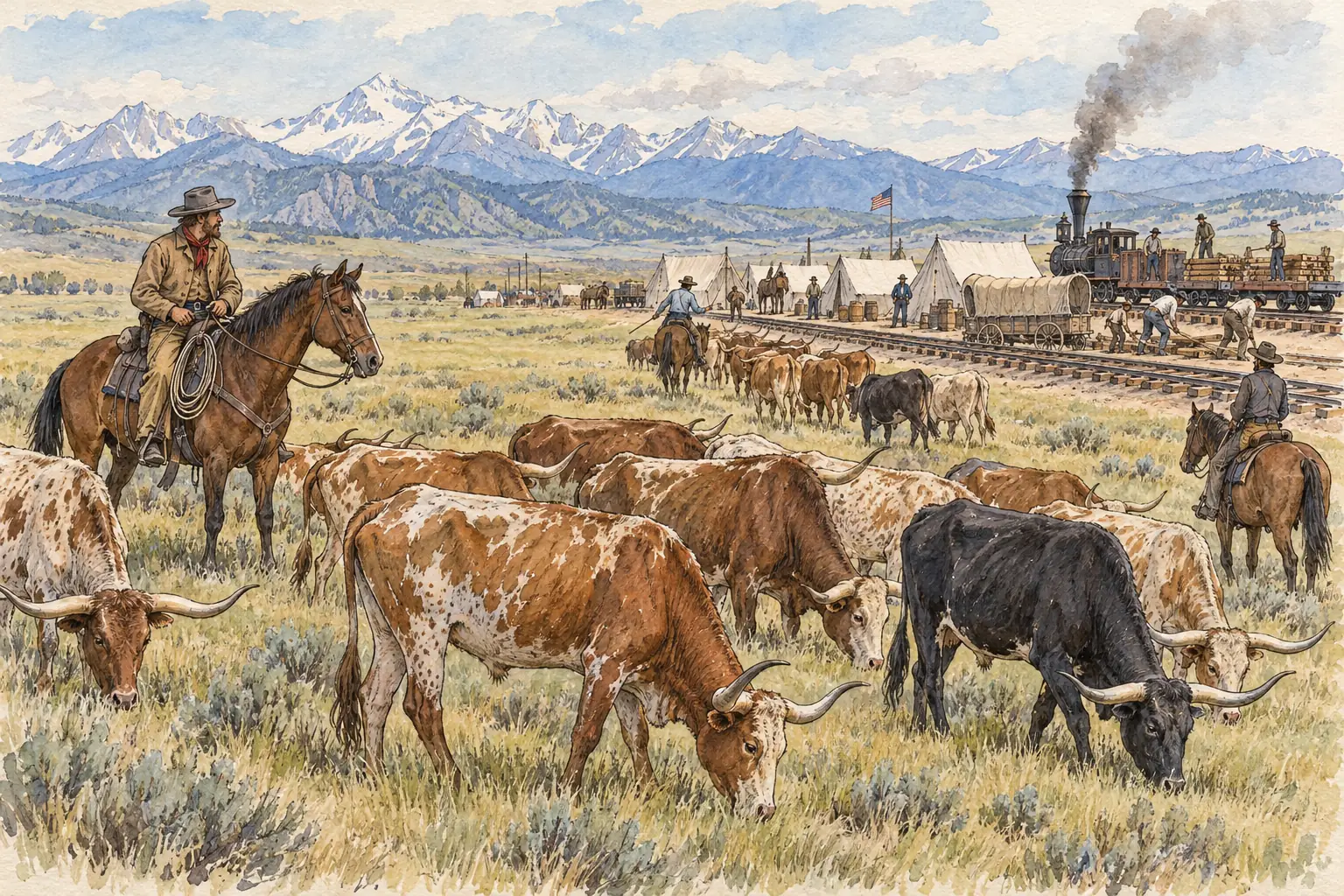
John Iliff pioneered open-range ranching in Colorado starting in 1868, adapting cattle operations to the vast Plains environment. His methods focused on efficiency and proximity to buyers, reducing the need for long drives.
Iliff's approach to ranching
- Open-range system - Cattle grazed freely on unfenced public lands, allowing herds to grow large without the costs of enclosures or intensive feeding.
- Wintering strategies - Iliff kept cattle near markets during winter, using natural shelters and supplemental feed to prevent losses from cold weather.
- Business expansion - He supplied beef to railroads, miners, and Native American reservations, building a massive operation that demonstrated the viability of Plains ranching.
Impact of expanding railroads on cattle transportation and ranching
The growth of railroads in the 1870s revolutionised the cattle industry by providing faster, more reliable transport. This shift reduced the risks of trail drives and encouraged ranching closer to rail lines.
Changes brought by railroad expansion
- From drives to shipping - Railroads allowed cattle to be loaded at nearby points and shipped directly to eastern slaughterhouses, shortening journeys and minimising weight loss in animals.
- Rise of ranching near lines - Ranchers established operations along rail routes, focusing on breeding and fattening cattle locally rather than driving them long distances.
- Broader effects - Improved access boosted profits, attracted more investors, and integrated the West into the national economy, though it also led to overgrazing on open ranges.