3.7 - Second-Wave Feminism: NOW, Roe v Wade & ERA
Key facts and dates
Second wave feminism emerged in the 1960s and 1970s as a movement seeking greater equality for women in American society, building on earlier suffrage efforts. It focused on challenging systemic discrimination through various strategies, though it faced significant opposition and achieved mixed results by the early 1970s.
Timeline of key events
- 1963 – Equal Pay Act passed, mandating equal wages for equal work regardless of gender.
- 1966 – National Organisation for Women (NOW) founded to advocate for women's rights.
- 1972 – Title IX prohibits sex discrimination in education; Equal Rights Amendment (ERA) passes Congress but requires state ratification.
- 1973 – Roe v Wade Supreme Court decision legalises abortion nationwide.
- 1975 – International Women's Year highlights global feminist issues, boosting U.S. activism.
- 1982 – ERA fails to achieve ratification by the required number of states.
Aims and tactics of second wave feminism
Image 1 of 2: On 26 August 1970 tens of thousands of women marched down Fifth Avenue in New York in the Women's Strike for Equality
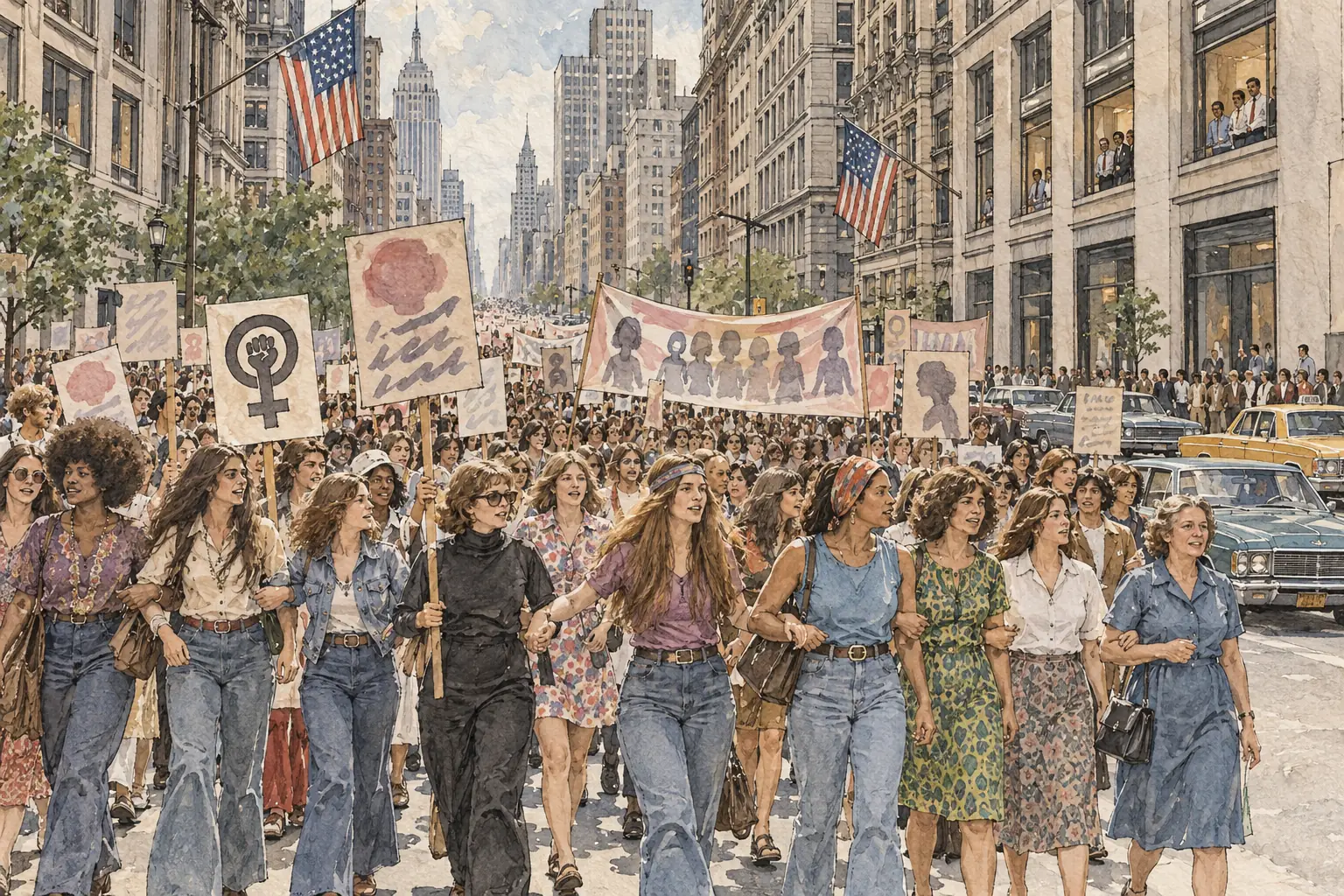

Second wave feminism, which gained momentum in the 1960s, sought to address widespread inequalities faced by women in post-war America. It built on the first wave's focus on voting rights by targeting broader social, economic, and legal barriers.
Core aims of the movement
- Equal pay - Campaigners pushed for fair wages, highlighting how women often earned less than men for similar roles, with the 1963 Equal Pay Act serving as an early legislative win that prohibited gender-based wage discrimination.
- Equal opportunity - Efforts focused on opening up jobs, promotions, and professional fields traditionally dominated by men, aiming to dismantle barriers in employment and career progression.
- Legal equality - Activists demanded reforms to end discriminatory laws, such as those limiting women's property rights or access to credit.
- Control over reproduction - A key goal was securing women's autonomy in family planning, including access to contraception and abortion, to enable greater personal and professional freedom.
Main tactics employed
- Legal challenges - Feminists used court cases to contest discriminatory practices, often supported by organisations filing lawsuits against unfair policies.
- Lobbying - Groups pressured politicians and lawmakers through petitions, meetings, and campaigns to introduce and pass supportive legislation.
- Protest - Public demonstrations, marches, and consciousness-raising groups raised awareness, with events like the 1970 Women's Strike for Equality drawing large crowds to demand change.
Formation and role of NOW
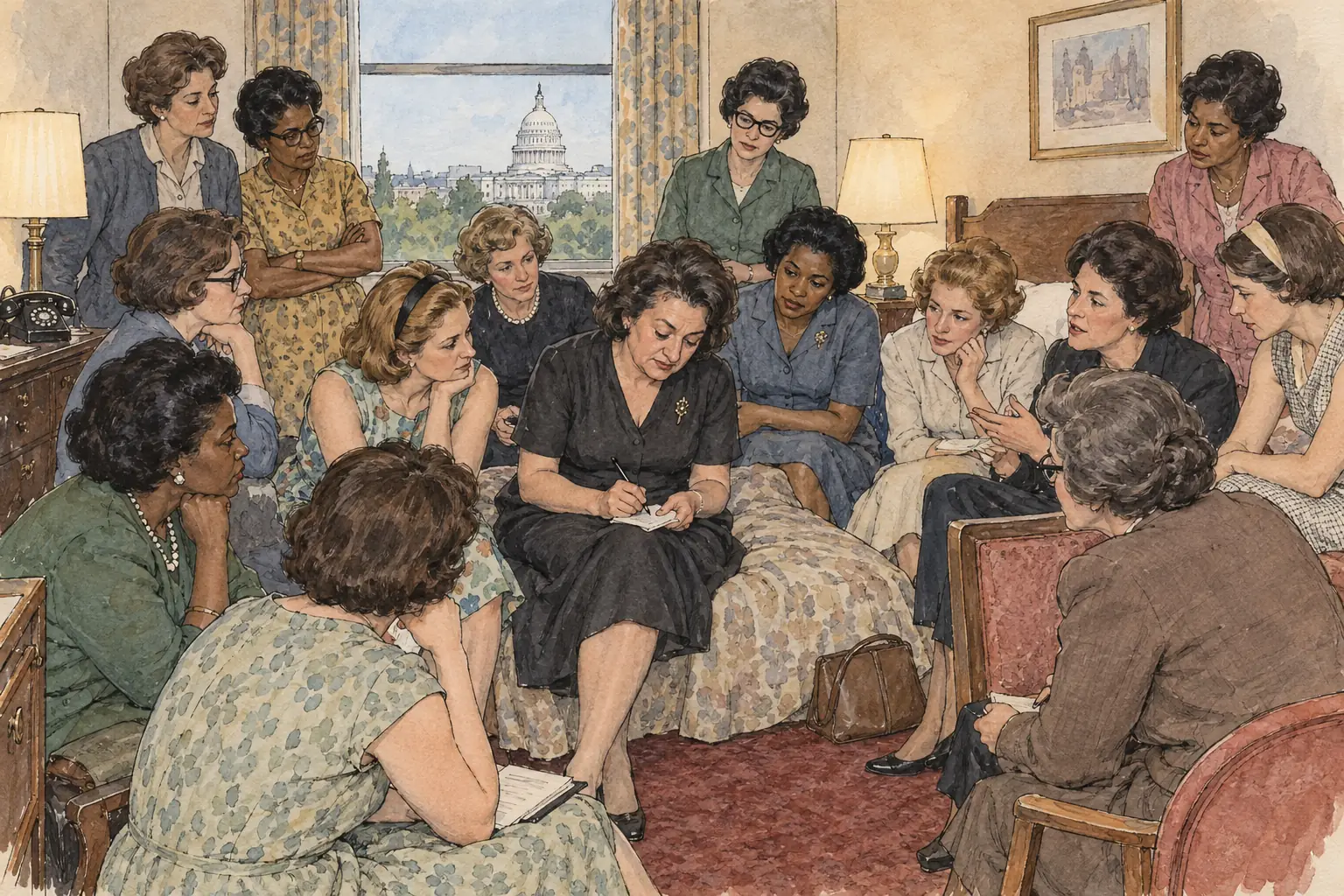
The National Organisation for Women (NOW) was established in 1966 amid growing frustration with the slow pace of gender equality reforms. Founded by activists including Betty Friedan, it became a central force in coordinating feminist efforts across the United States.
Founding and early objectives
- Origins in 1966 - Created in response to the federal government's failure to enforce existing anti-discrimination laws, such as those from the 1964 Civil Rights Act, NOW aimed to unite women in fighting systemic sexism.
- Membership and structure - It grew rapidly, attracting diverse members from housewives to professionals, and operated through local chapters to address regional issues while pursuing national goals.
Key contributions to feminism
- Advocacy for equal rights - NOW campaigned for better enforcement of equal pay laws and pushed for women’s inclusion in male-dominated professions.
- Legal and political pressure - The organisation filed lawsuits against discriminatory employers and lobbied for bills like the Equal Rights Amendment.
- Broader social impact - It organised protests and media campaigns to challenge cultural stereotypes, helping to shift public attitudes towards women's roles in society.
Key legal developments including Roe v Wade
Image 1 of 2: Title IX of 1972 required schools and colleges that received federal money to give girls and women equal opportunities, including in sport

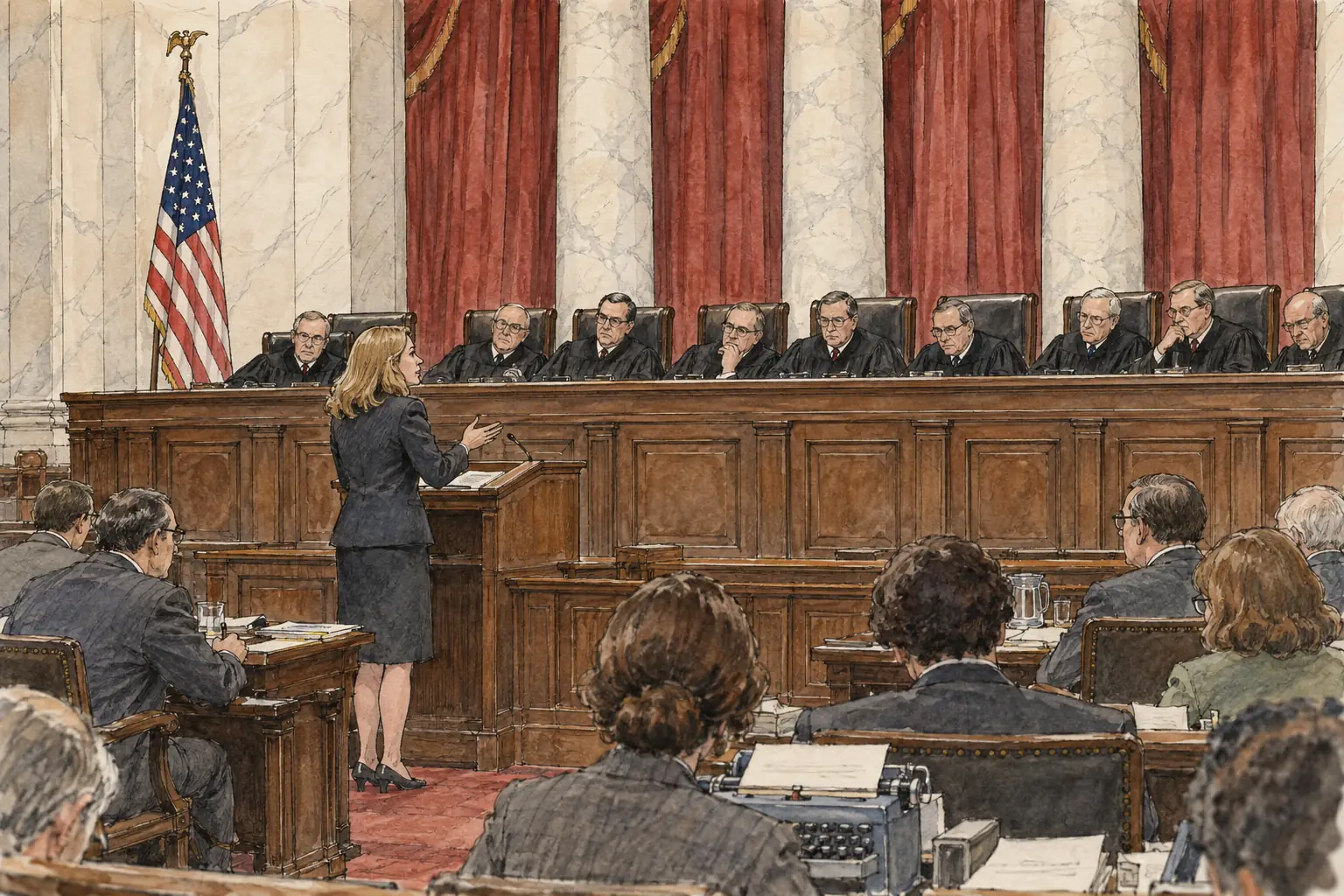
The early 1970s marked a period of significant legal victories for feminists, as court rulings and new laws addressed long-standing inequalities. These changes reflected the movement's success in using the judicial system to advance women's rights.
Major legal turning points around 1972
- Title IX of the Education Amendments - Enacted in 1972, this law banned sex discrimination in federally funded education programmes, opening up sports, scholarships, and academic opportunities for women.
- Other reforms - Courts struck down laws restricting women's jury service and access to certain jobs, while Congress expanded protections against workplace bias.
Roe v Wade decision in 1973
- Background - The case challenged Texas laws criminalising most abortions, arguing they violated women's privacy rights under the Constitution.
- Supreme Court ruling - In a 7-2 decision, the Court legalised abortion nationwide, dividing pregnancies into trimesters and balancing women's rights with state interests.
- Impact - It granted women greater reproductive control, though it sparked ongoing debates and backlash from conservative groups opposing the decision.
Debates surrounding the Equal Rights Amendment
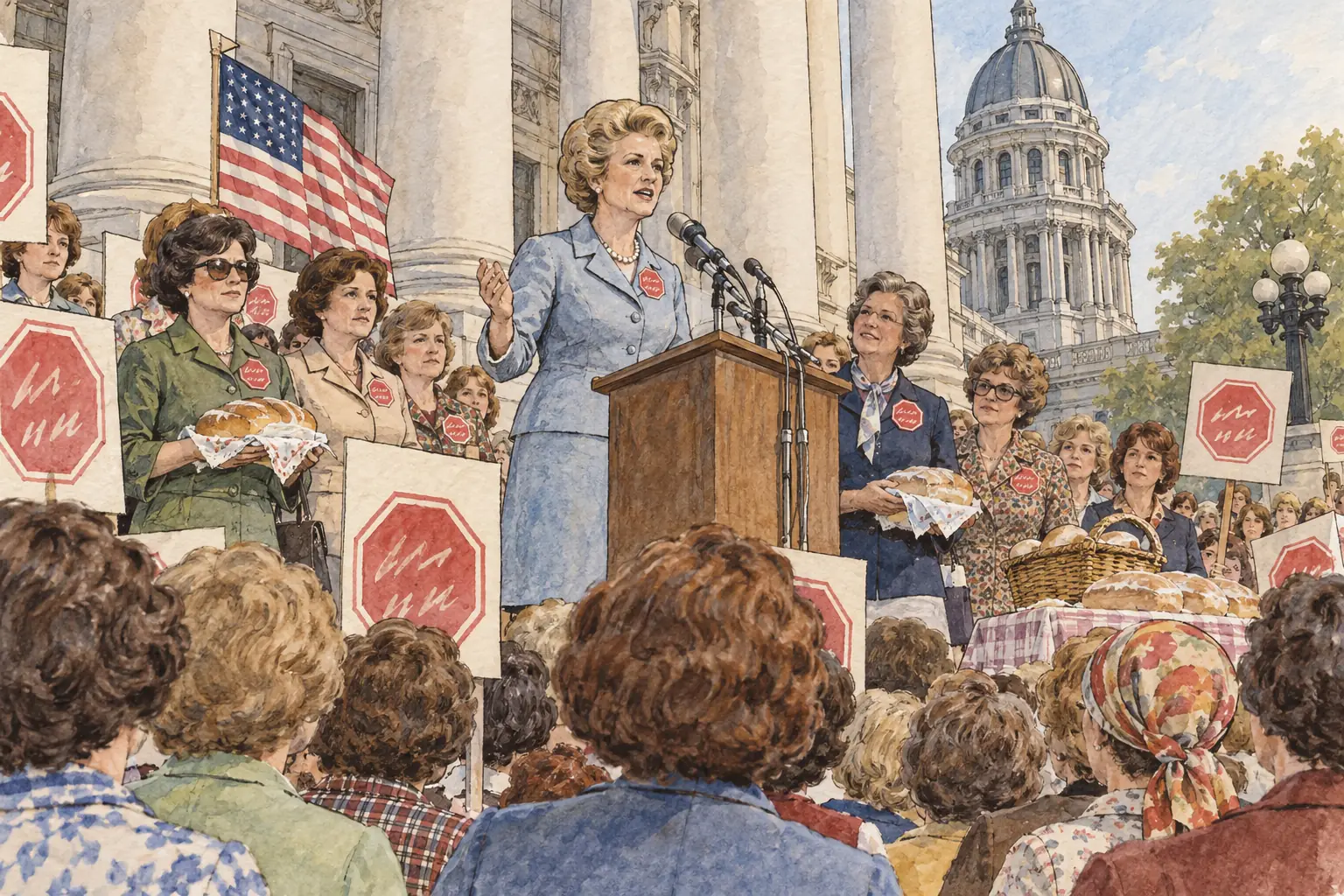
The Equal Rights Amendment (ERA), first proposed in 1923, gained renewed attention in the 1970s as a potential constitutional guarantee of gender equality. However, it faced intense debates and organised resistance that ultimately prevented its full adoption.
Key elements of the ERA
- Congressional passage in 1972 - The amendment stated that equality of rights under the law shall not be denied on account of sex, requiring ratification by 38 states within seven years (later extended).
- Support from feminists - Advocates argued it would provide a firm legal basis to eliminate discrimination in areas like divorce, property, and employment.
Organised opposition and failure
- Conservative resistance - Groups led by figures like Phyllis Schlafly claimed the ERA would undermine traditional family structures, force women into combat roles, and eliminate gender-specific protections like alimony.
- State-level debates - While 35 states ratified it, opposition campaigns in others portrayed the amendment as a threat to women's roles, leading to its failure by the 1982 deadline.
- Broader controversies - Debates highlighted divisions within feminism, with some critics arguing the ERA overlooked issues faced by working-class and minority women.
Progress and limitations by the early 1970s
By the early 1970s, second wave feminism had achieved notable gains in reshaping American society, but progress was uneven, with persistent barriers in several areas revealing the movement's limits.
Advances across key sectors
- Law - Reforms like Roe v Wade and Title IX expanded legal protections, reducing overt discrimination and enhancing women's rights.
- Workplace - More women entered professional roles, with equal pay laws narrowing wage gaps, though enforcement remained inconsistent.
- Education - Increased access to higher education and sports programmes empowered women academically and athletically.
- Culture - Feminist ideas influenced media and public discourse, challenging stereotypes and promoting gender equality in everyday life.
Ongoing limitations and challenges
- Incomplete equality - Wage disparities persisted, and women remained underrepresented in leadership positions.
- Backlash and divisions - Conservative opposition slowed reforms, while the movement was criticised for focusing primarily on white, middle-class issues, often sidelining racial and economic inequalities.
- Cultural resistance - Traditional attitudes continued to limit women's opportunities, with reproductive rights facing ongoing legal threats.