1.1 - The Armistice & Aims of the Peacemakers
Key facts and dates
The Armistice of 1918 marked the end of fighting in the First World War, setting the stage for peace negotiations among Allied leaders. These peacemakers aimed to establish a lasting settlement, though their national interests often clashed, influencing the final treaties.
Timeline of key events
- 11 November 1918 – Armistice signed at Compiègne, bringing an immediate ceasefire and imposing terms on Germany.
- Late 1918 – German forces begin withdrawal from occupied territories as per Armistice conditions.
- Early 1919 – Peacemakers convene in Paris to negotiate peace terms, balancing shared goals with differing priorities.
- June 1919 – Treaty of Versailles signed, reflecting compromises on punishment, security, and reconstruction.
Terms of the Armistice, 11 November 1918
Image 1 of 2: German delegates signed the armistice in Marshal Foch's railway carriage in the Forest of Compiègne in the early hours of 11 November 1918
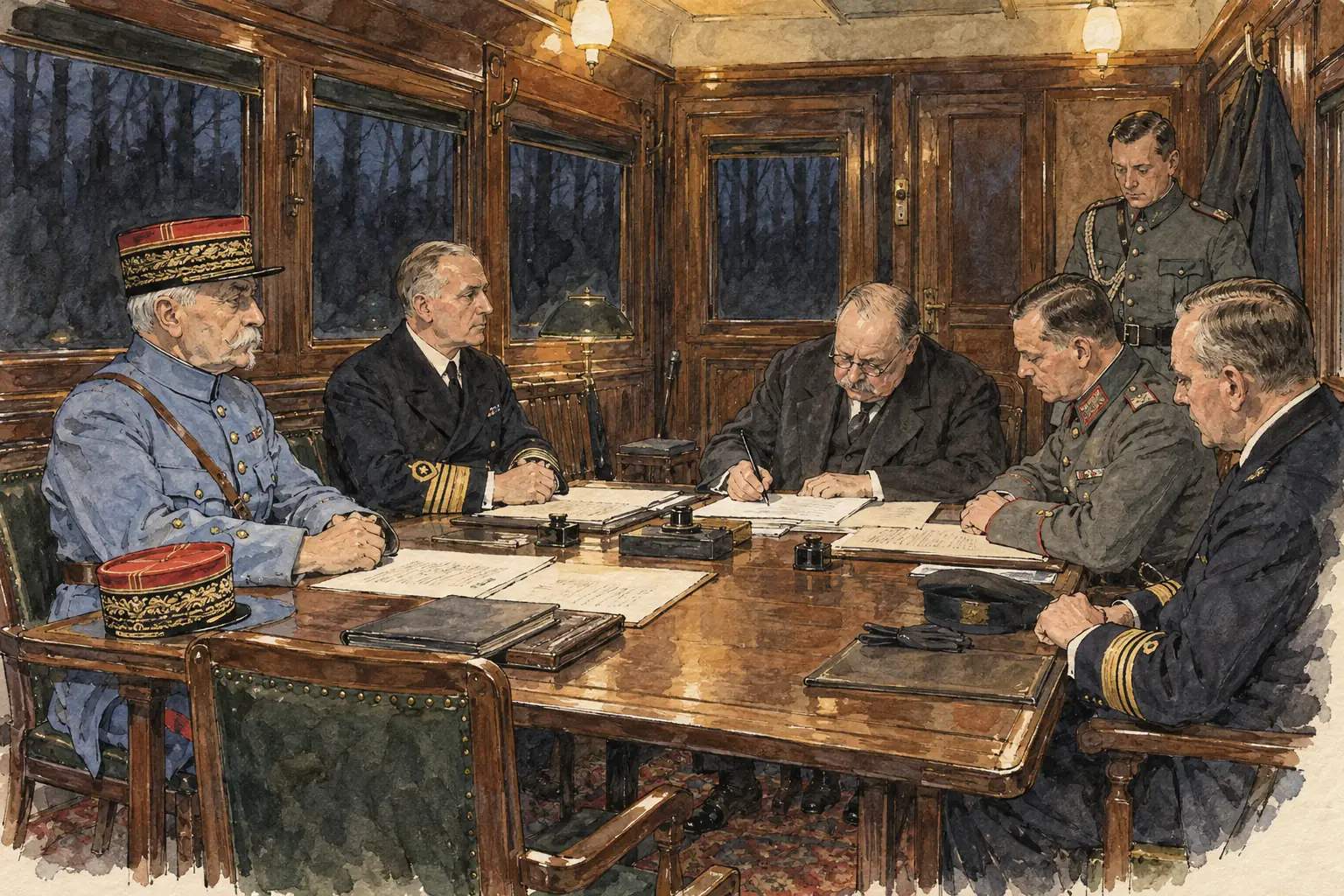
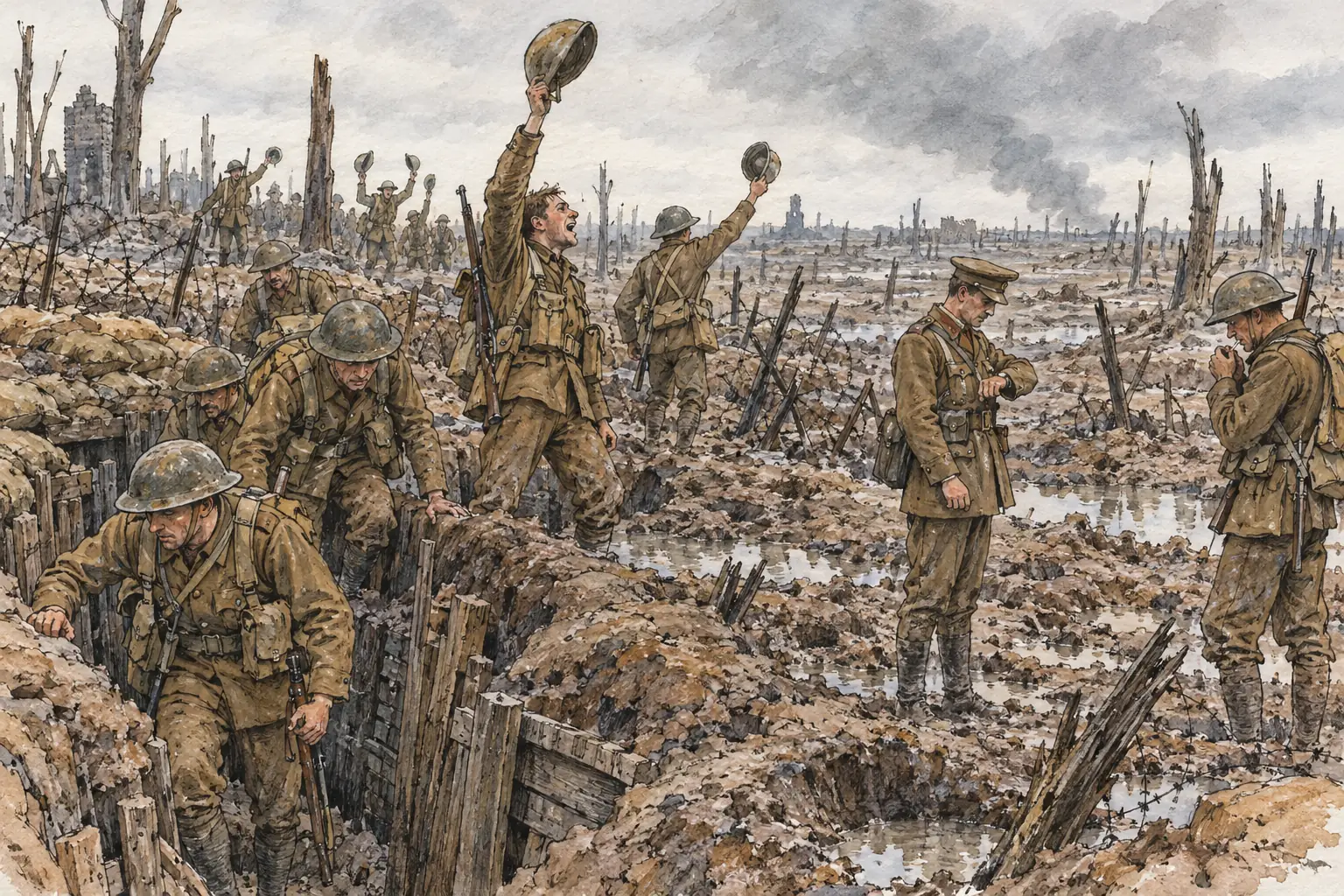
The Armistice agreement, signed in a railway carriage at Compiègne in France, brought an end to hostilities on the Western Front after four years of conflict. It imposed immediate conditions on Germany to prevent further aggression while peace talks proceeded.
Key conditions of the Armistice
- Immediate ceasefire - All fighting stopped at 11:00 a.m. on the day of signing, halting military operations across fronts.
- Territorial withdrawals - German troops had to evacuate occupied areas in Belgium, France, and Alsace-Lorraine within specified deadlines.
- Surrender of military assets - Germany was required to hand over heavy artillery, submarines (U-boats), and a significant portion of its naval fleet.
- Repatriation of prisoners - Allied prisoners of war held by Germany were to be released promptly without reciprocity.
- Continuation of naval blockade - The Allied blockade of German ports remained in place until a formal peace treaty was agreed, maintaining pressure on the economy.
Definition and shared aims of the peacemakers
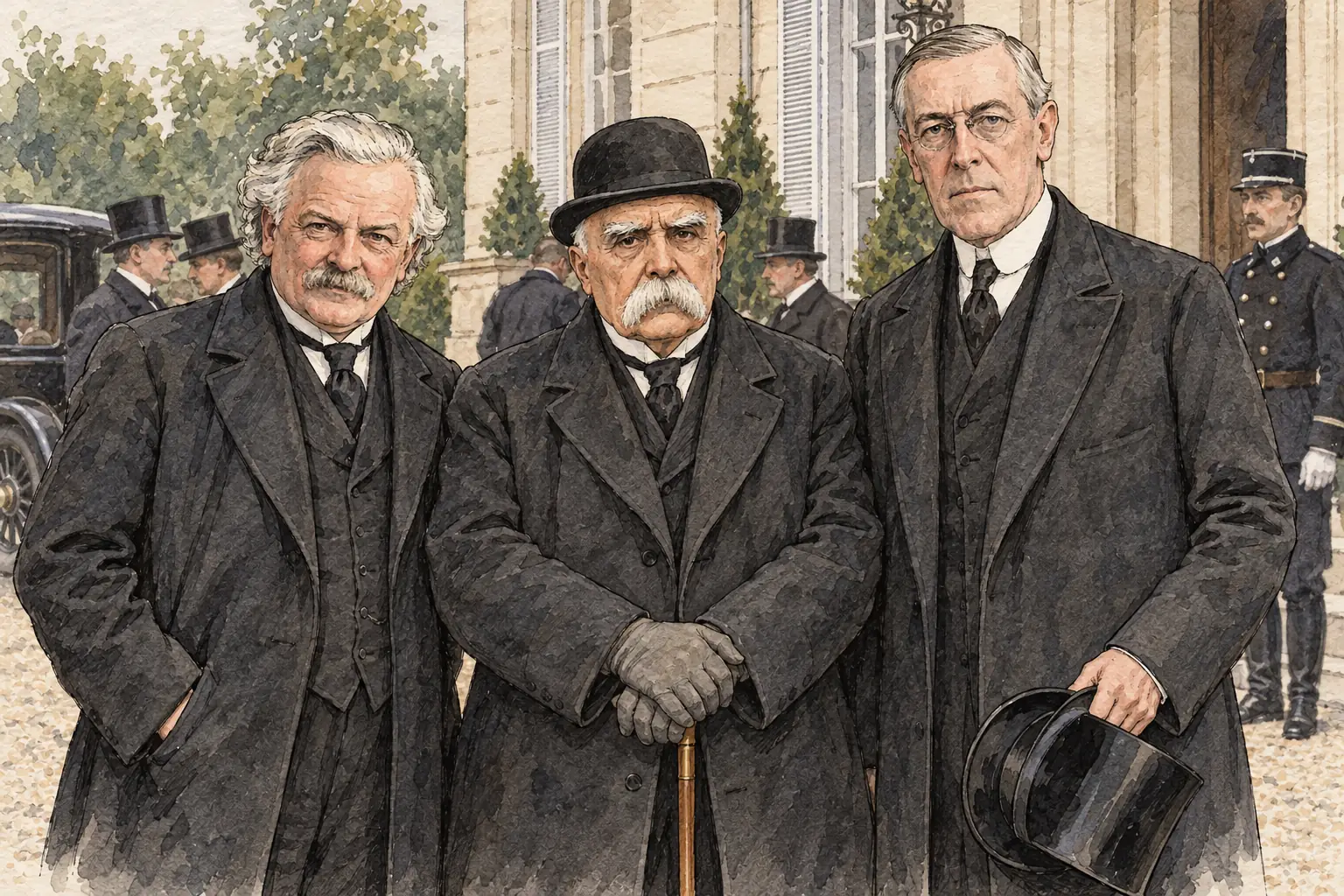
The term 'peacemakers' refers to the principal Allied leaders involved in the post-war negotiations: Woodrow Wilson (President of the United States), Georges Clemenceau (Prime Minister of France), and David Lloyd George (Prime Minister of Britain). These figures met to draft the peace settlement, with a common focus on preventing future conflicts.
Shared objectives among the peacemakers
- Ending the war - Their primary goal was to conclude the conflict definitively, ensuring no resumption of hostilities.
- Securing a stable peace - They sought to create a lasting international order that would promote stability and deter aggression.
- Exam note - In assessments, refer to these leaders as the 'peacemakers' rather than the 'Big Three' to align with preferred terminology.
Priorities of Wilson, Clemenceau, Lloyd George
Each peacemaker brought distinct national interests to the negotiations, shaped by their countries' experiences during the war. These priorities influenced their approaches to the peace process.
Priorities by leader
- Woodrow Wilson - Focused on idealistic principles like self-determination for nations and establishing a League of Nations to foster global cooperation and prevent future wars.
- Georges Clemenceau - Prioritised French security, seeking harsh penalties on Germany to weaken its military and economic power after the devastation suffered by France.
- David Lloyd George - Aimed for a balanced settlement that punished Germany without crippling it entirely, to maintain trade opportunities and avoid fostering resentment that could lead to instability.
Views on punishment, security, reconstruction
The peacemakers held varying perspectives on how to address Germany's role in the war, reflecting their national contexts. These differences centred on the degree of retribution, measures for protection, and plans for rebuilding Europe.
Contrasting perspectives among the peacemakers
- Views on punishment - Clemenceau advocated severe penalties to dismantle German power, while Wilson favoured leniency to encourage democracy; Lloyd George sought a middle ground to satisfy public opinion without economic ruin.
- Views on security - Clemenceau emphasised military disarmament and territorial buffers for France, contrasting with Wilson's reliance on collective security through international organisations.
- Views on reconstruction - Wilson promoted democratic reforms and economic recovery for all, whereas Clemenceau focused on reparations to rebuild France, and Lloyd George aimed to restore trade networks.
How these differences shaped the peace terms
The clashing views of the peacemakers led to compromises in the final peace treaties, particularly the Treaty of Versailles. This core enquiry explores why divergent opinions on punishment, security, and reconstruction resulted in a settlement that balanced retribution with forward-looking reforms.
Influences on the peace settlement
- Compromises in punishment - Harsh clauses like reparations and war guilt were included to appease Clemenceau, but moderated by Wilson and Lloyd George to avoid total humiliation.
- Security measures - Germany's army was limited and the Rhineland demilitarised for French protection, while Wilson's League of Nations provided a framework for collective defence.
- Reconstruction elements - The treaties redrew borders for self-determination and mandated economic reparations, aiming to rebuild Europe but sowing seeds of future discontent due to unresolved tensions.