1.6 - Military Restrictions, War Guilt & Reparations
Key facts and dates
The Treaty of Versailles in 1919 imposed severe military restrictions on Germany, along with the war guilt clause that justified reparations for war damages. These measures created significant economic strain and political resentment, though later international agreements attempted to ease the burden.
Timeline of key events
- 1919 – Treaty of Versailles signed, limiting Germany's army to 100,000 soldiers and demilitarising the Rhineland.
- 1919 – Article 231 (war guilt clause) assigns blame to Germany and its allies for starting the First World War.
- 1921 – Reparations amount fixed at £6.6 billion, to be paid over 42 years.
- 1924 – Dawes Plan restructures reparations with American loans and reduced annual payments.
- 1929 – Young Plan further lowers reparations to £2 billion, extending the payment period to 59 years.
Military restrictions imposed on Germany
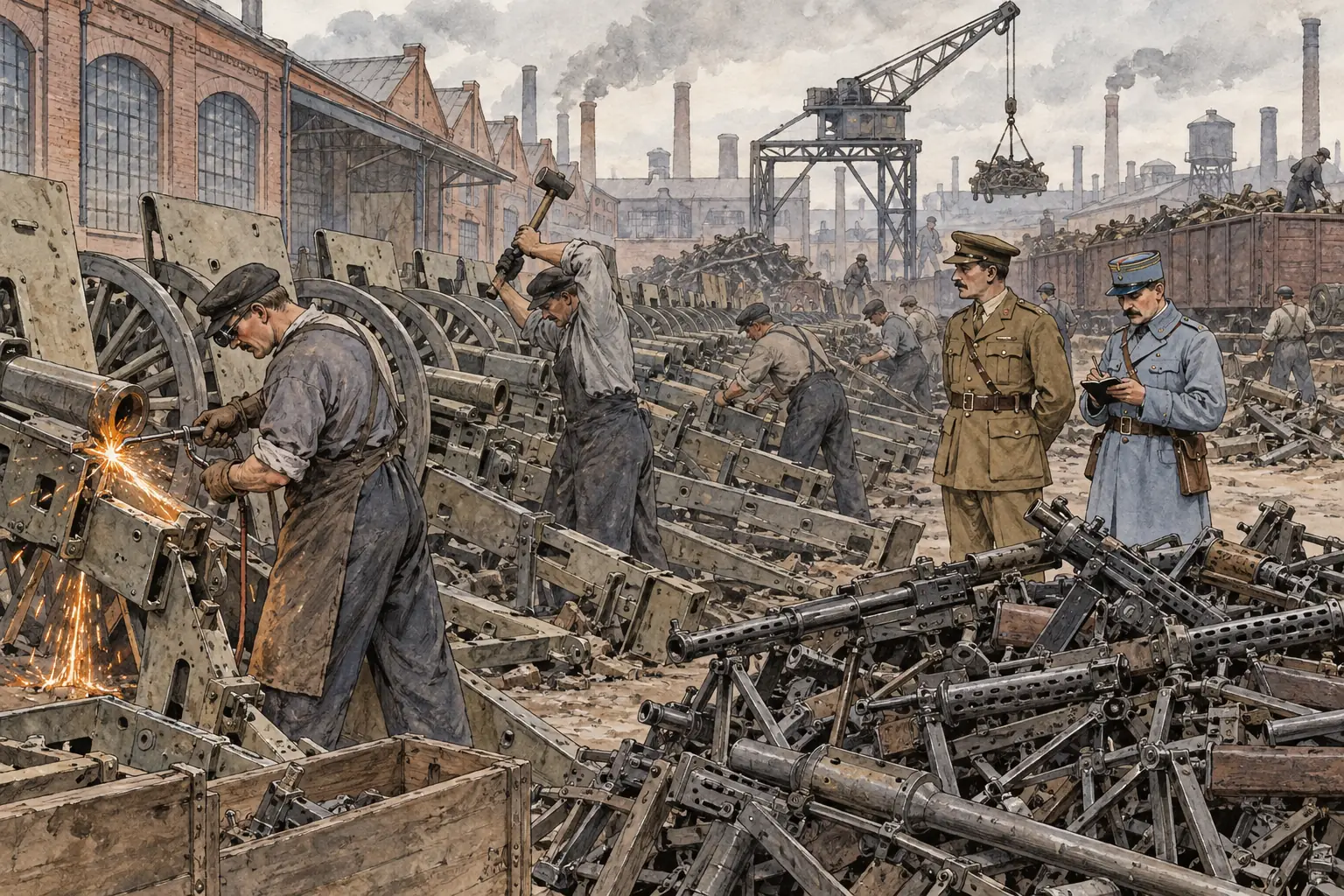
The Treaty of Versailles placed strict limits on Germany's armed forces to prevent future aggression. These measures aimed to weaken the country's military capabilities and maintain European security, but they fostered deep resentment among Germans who viewed them as humiliating.
Limits on the German army and navy
- Army size and equipment - The army was restricted to a maximum of 100,000 professional soldiers, with no conscription allowed to prevent rapid expansion; heavy weapons such as tanks and military aircraft were banned entirely.
- Naval restrictions - The navy was limited to a small surface fleet of six battleships, six cruisers, and 12 destroyers; submarines were prohibited, and the total naval personnel could not exceed 15,000.
- Demilitarisation of the Rhineland - This region, bordering France and Belgium, was declared a demilitarised zone where no German troops or fortifications were permitted, creating a buffer area to protect neighbouring countries.
The war guilt clause and its implications
Article 231 of the Treaty of Versailles, commonly known as the war guilt clause, held Germany and its allies solely responsible for causing the First World War. This provision served as the legal foundation for demanding compensation from Germany.
Key aspects of the war guilt clause
- Assignment of blame - The clause explicitly stated that Germany and its allies were accountable for all losses and damages suffered by the Allied powers during the conflict.
- Legal basis for reparations - By establishing guilt, the clause justified the imposition of financial penalties, which were intended to cover the costs of reconstruction in war-torn areas like France and Belgium.
- Symbolic impact - The clause was seen by many Germans as an unfair accusation, ignoring the complex causes of the war and contributing to a sense of national injustice.
Reparations and their economic impact
Image 1 of 2: French and Belgian troops occupied the Ruhr in January 1923 after Germany fell behind with reparations
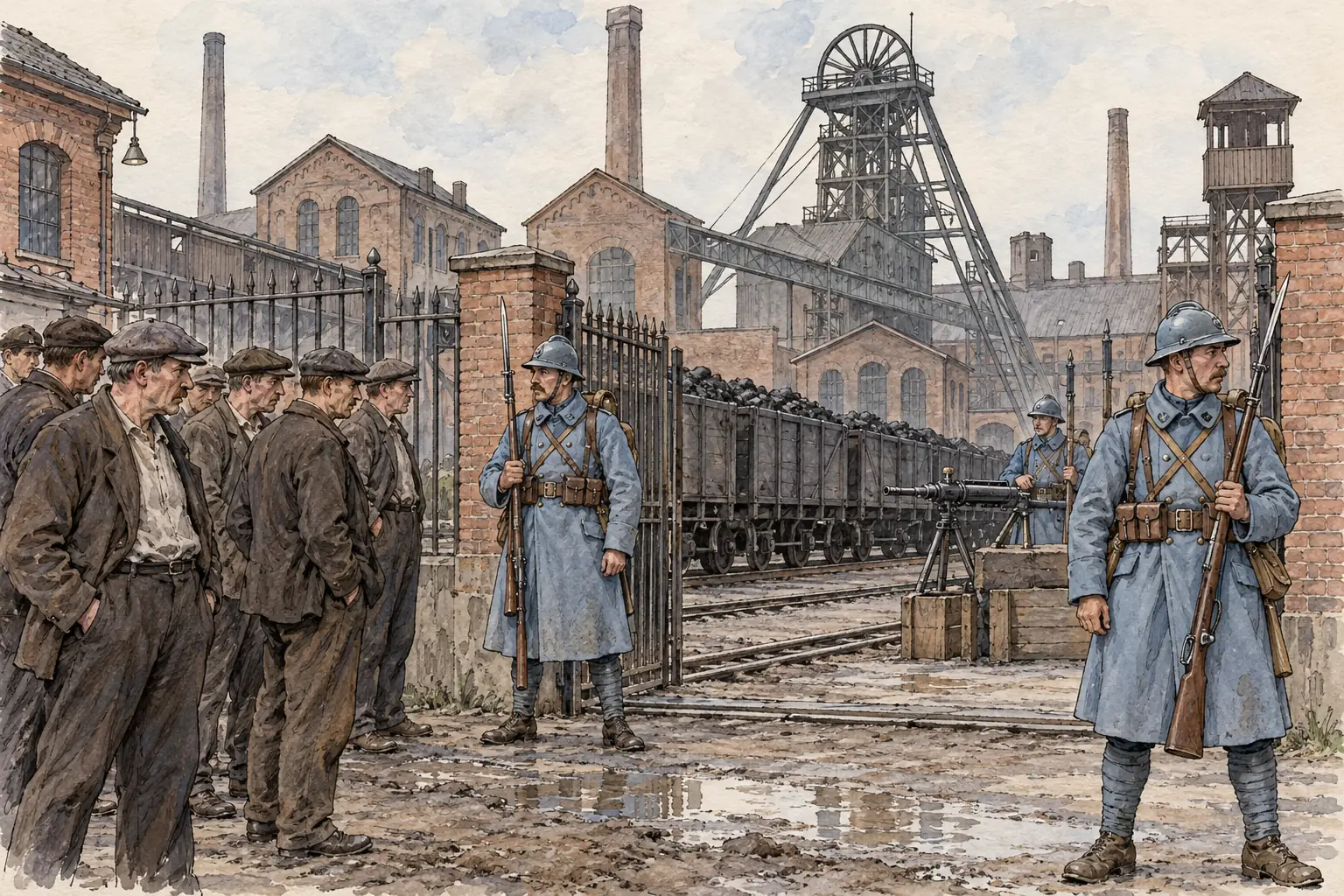

Reparations were financial payments that Germany was required to make to the Allied powers as compensation for war damages. The amount was initially set in 1921, placing a heavy burden on Germany's recovering economy.
Structure and effects of reparations
- Fixed amount and schedule - In 1921, the total was established at £6.6 billion, payable in annual instalments over 42 years, including payments in cash, goods, and resources like coal.
- Economic strain - These demands led to hyperinflation in Germany by 1923, as the government printed money to meet obligations, causing the value of the mark to plummet and savings to become worthless.
- Broader consequences - Factories and industries were forced to prioritise exports for reparations, leading to shortages of essential goods domestically and widespread unemployment.
Political effects within Germany
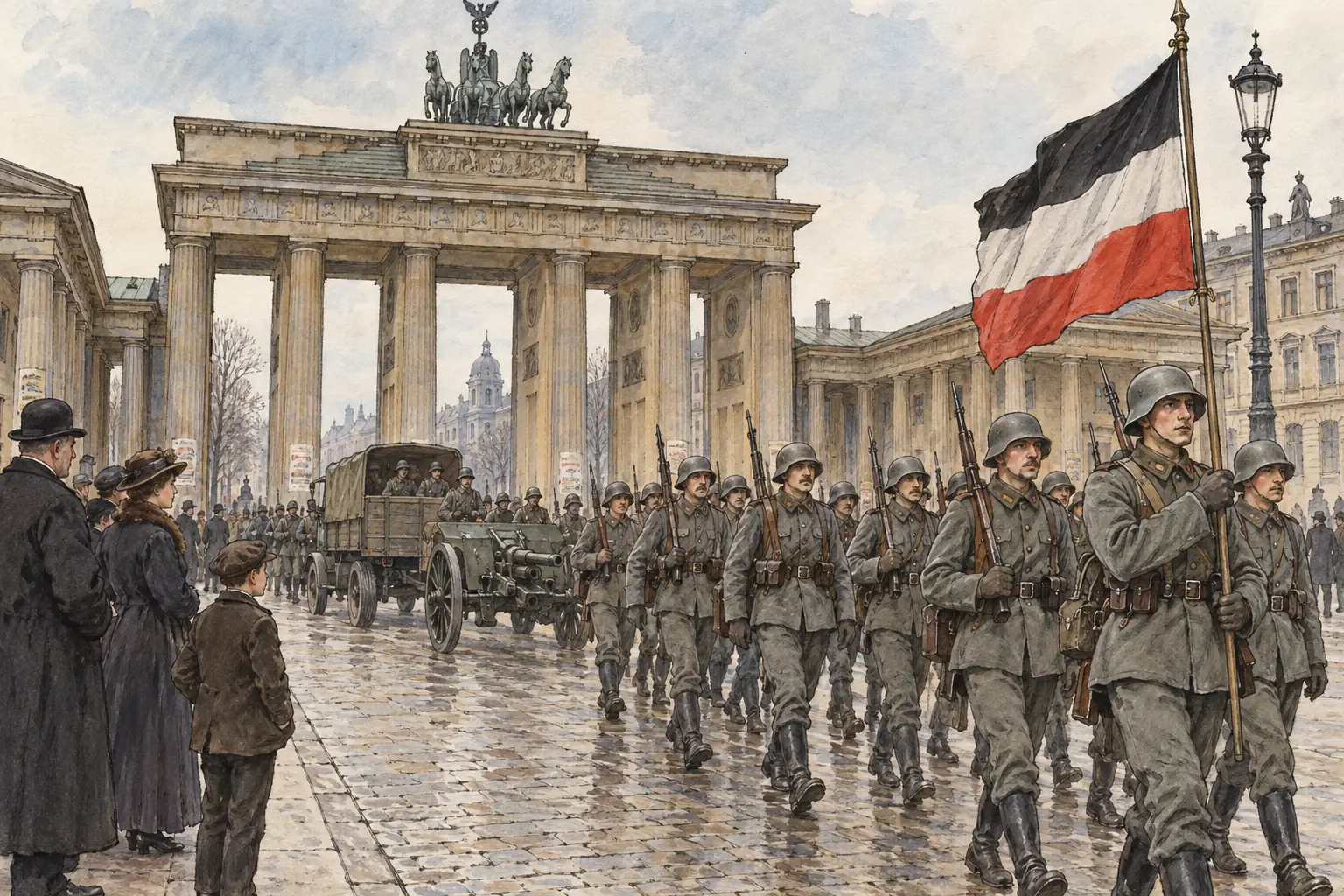
The military restrictions, war guilt clause, and reparations fuelled significant political unrest in Germany. They weakened the new Weimar Republic and created opportunities for extremist groups to gain support.
Political repercussions in Germany
- Rise of nationalism - Many Germans, including veterans and conservatives, resented the treaty as a "diktat" (imposed peace), leading to the "stab-in-the-back" myth that blamed internal traitors for the defeat rather than military failure.
- Instability of the Weimar government - The republic faced criticism for accepting the terms, resulting in assassinations, uprisings like the Kapp Putsch in 1920, and growing support for parties opposed to the treaty.
- Growth of extremism - Groups such as the Nazis exploited public anger over the restrictions and reparations, promising to restore Germany's military strength and reject the war guilt narrative.
Later revisions to reparations plans
International concerns about Germany's economic collapse led to adjustments in the reparations scheme. These revisions aimed to make payments more manageable while stabilising Europe's economy.
Major revisions and their outcomes
| Plan | Year introduced | Key changes | Impact |
|---|---|---|---|
| Dawes Plan | 1924 | Introduced American loans to Germany; reduced annual payments and linked them to economic performance; supervised by a committee to ensure fairness. | Temporarily stabilised Germany's economy, allowing for a period of recovery known as the "Golden Years" until the 1929 Wall Street Crash. |
| Young Plan | 1929 | Lowered the total reparations to £2 billion; extended the payment period to 59 years; ended foreign oversight of Germany's finances. | Provided further relief but was undermined by the global depression, leading to a moratorium on payments in 1931 and eventual cancellation at the Lausanne Conference in 1932. |
These plans sparked debates about the original treaty's fairness, with some arguing they acknowledged the impracticality of the initial demands, while others saw them as insufficient to address Germany's grievances.