2.1 - China 1949: Communist Victory & Superpower Impact
Key facts and dates
The communist victory in China in 1949 marked a turning point in the Cold War, transforming the global power balance as the world's most populous nation joined the communist sphere. This development intensified superpower tensions and reshaped alliances in Asia.
Timeline of key events
- 1949 – Mao Zedong's communist forces win the Chinese Civil War, establishing the People's Republic of China (PRC) and forcing Nationalists to retreat to Taiwan.
- 1950 – Sino-Soviet Treaty signed, formalising alliance between China and the Soviet Union with mutual defence and economic aid.
- 1950 – US refuses to recognise the PRC, instead supporting Nationalist government on Taiwan with military and financial backing.
- 1951 – PRC intervenes in Korean War, heightening US fears of expanding communism in Asia.
- 1951 – UN General Assembly votes to recognise Nationalist China (Taiwan) as official representative, excluding the PRC.
Mao's victory and the establishment of the PRC
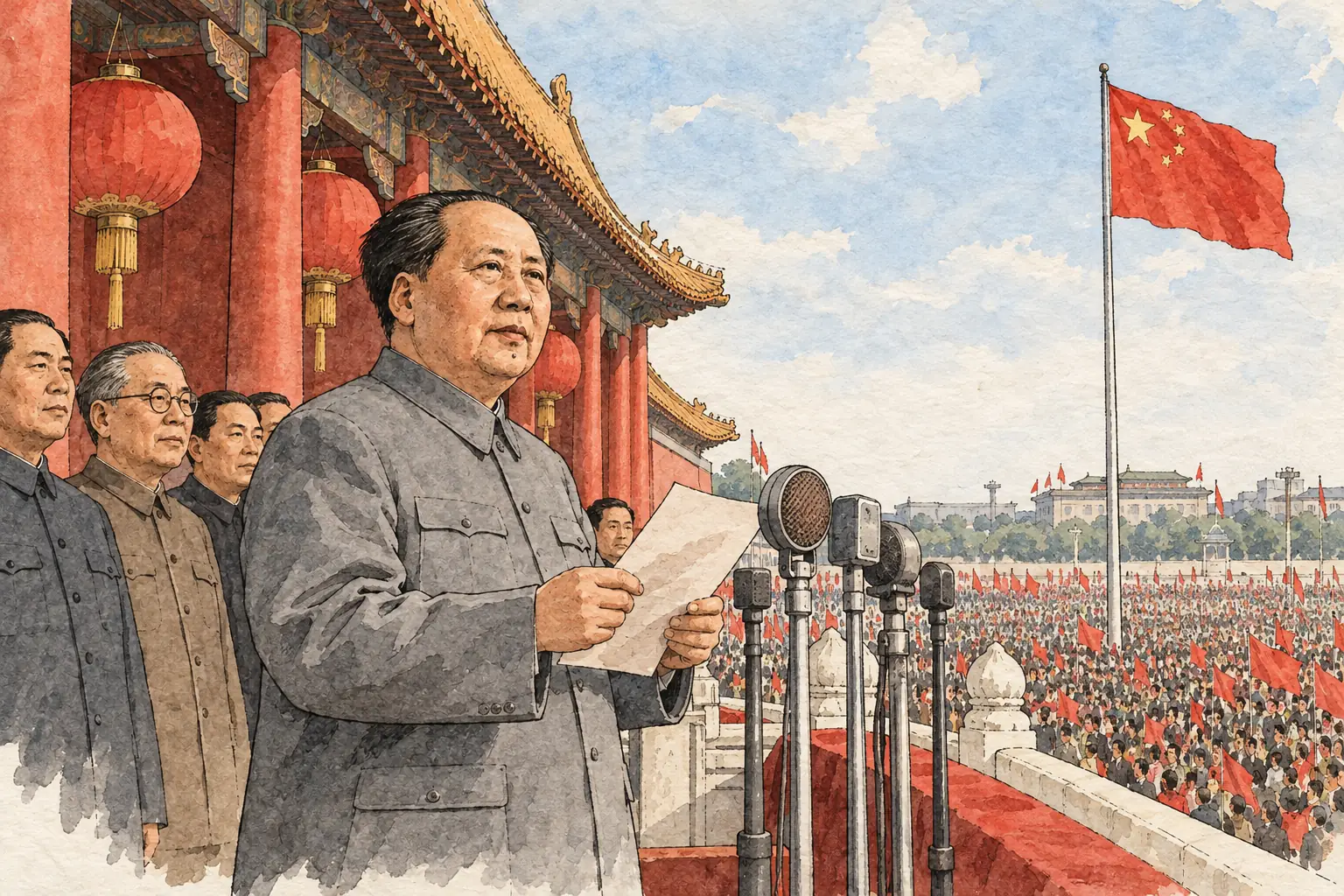
The Chinese Civil War, fought between communist forces led by Mao Zedong and the Nationalist government under Chiang Kai-shek, concluded in 1949 with a decisive communist triumph. This outcome established the People's Republic of China (PRC) on the mainland, while Nationalist remnants fled to Taiwan.
Factors leading to communist victory
- Weaknesses of the Nationalist regime - Corruption, economic instability, and loss of popular support undermined Chiang Kai-shek's government, especially after World War II.
- Strengths of Mao's communists - Effective guerrilla tactics, land reforms that gained peasant backing, and control over rural areas allowed the communists to outmanoeuvre Nationalist forces.
- Global significance - With a population exceeding 500 million, China's shift to communism created the largest communist state, dramatically altering the ideological landscape of the Cold War.
The Sino-Soviet Treaty of 1950
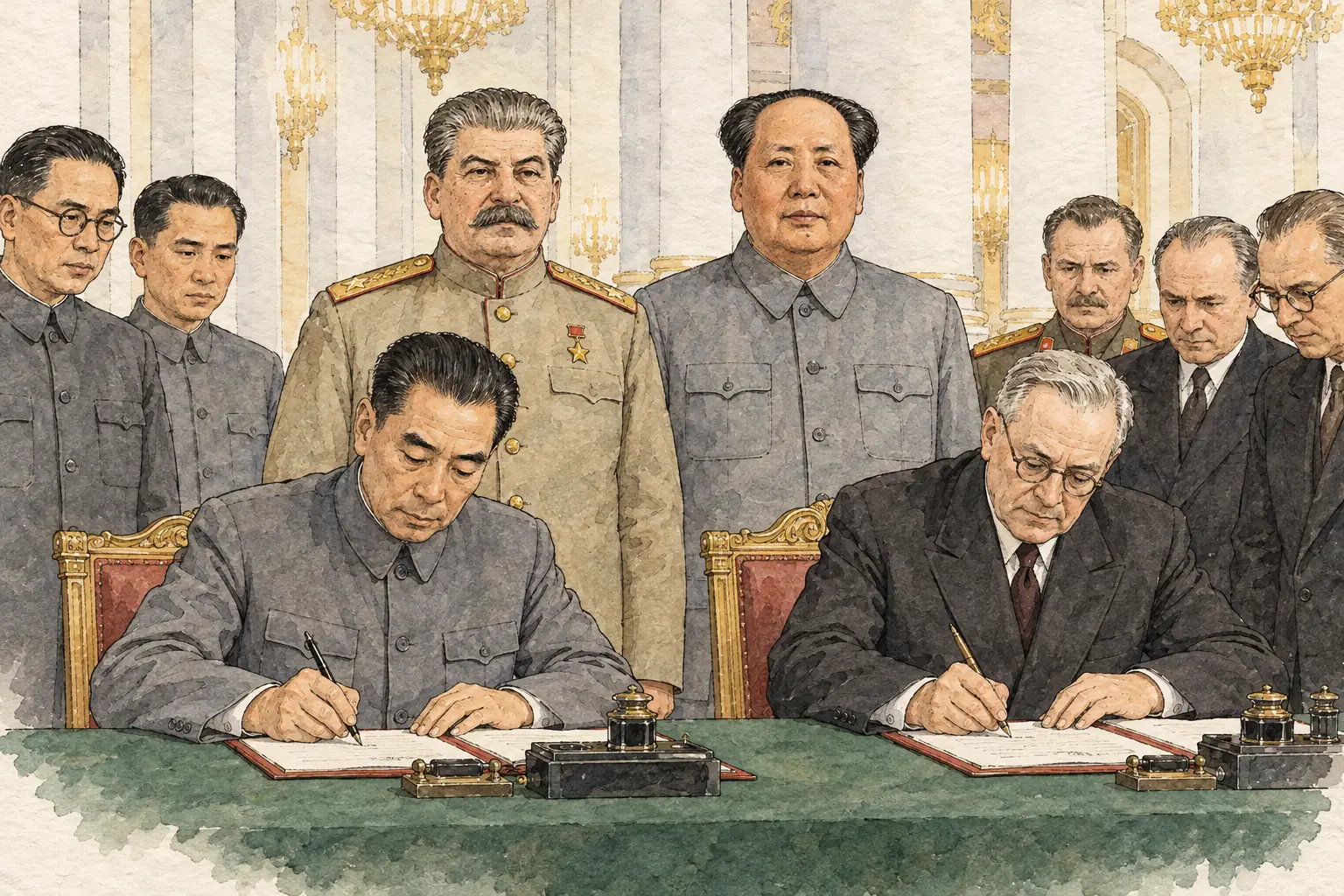
In February 1950, China and the Soviet Union signed a treaty of friendship, alliance, and mutual assistance, solidifying their partnership amid growing Cold War divisions. This agreement provided China with crucial support as it consolidated power.
Key provisions of the treaty
- Mutual defence commitment - Both nations pledged to assist each other if attacked by Japan or its allies, aimed at countering potential US threats.
- Economic and technical aid - The Soviet Union offered loans, industrial expertise, and military equipment to aid China's reconstruction and modernisation.
- Strategic implications - The pact reinforced the perception of a united communist front, encouraging coordination in foreign policy and amplifying Soviet influence in Asia.
US response: Taiwan and non-recognition of the PRC
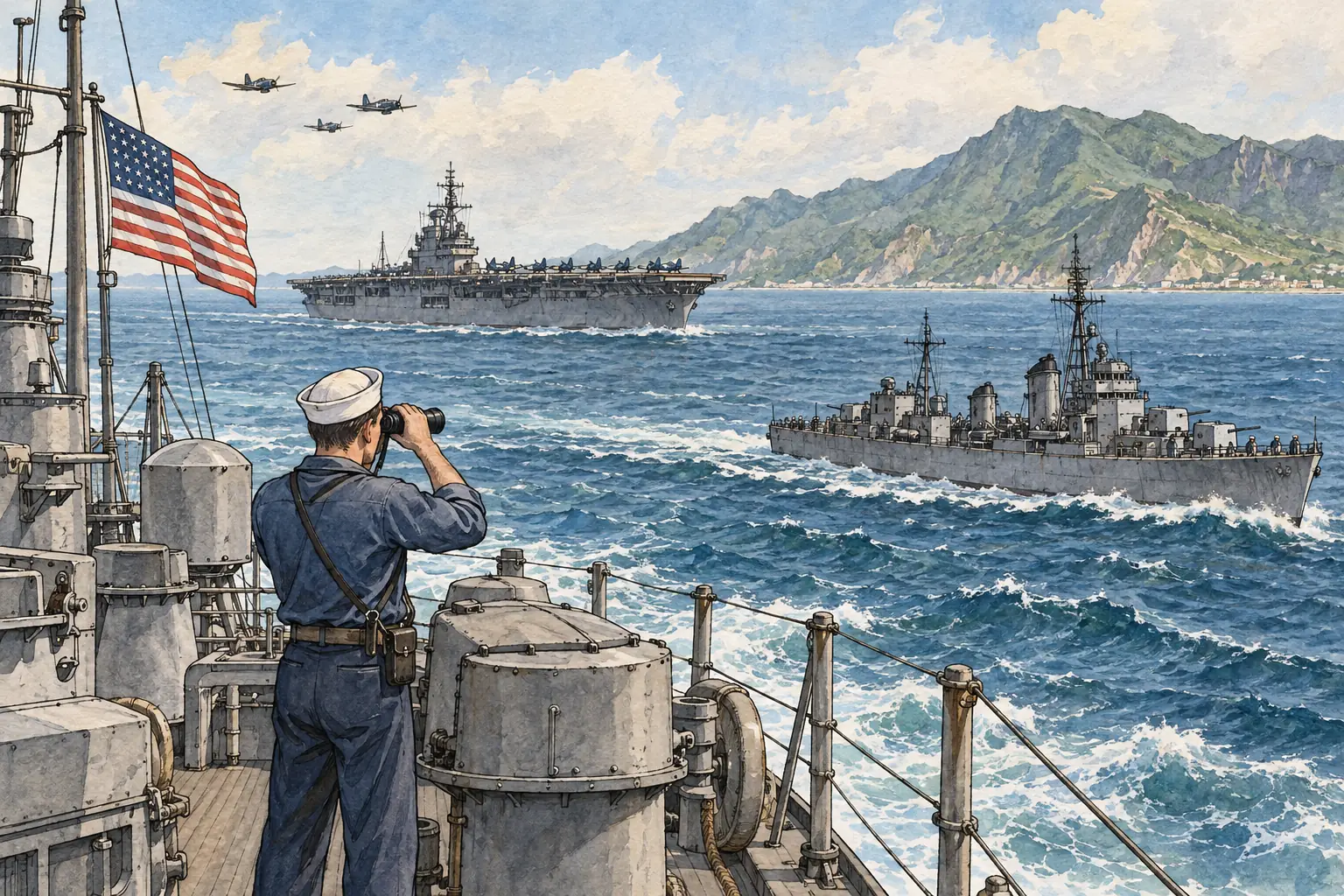
The United States viewed China's communist victory as a major setback and responded by bolstering the Nationalist regime on Taiwan while isolating the PRC diplomatically. This stance reflected broader efforts to contain communism.
Elements of US policy towards China
- Military and financial support for Taiwan - The US provided arms, economic aid, and naval protection to prevent a communist invasion, establishing Taiwan as a key anti-communist stronghold.
- Policy of non-recognition - Washington refused to acknowledge the PRC as China's legitimate government, maintaining diplomatic ties with the Nationalists and blocking PRC entry into international bodies.
- Broader containment measures - This approach included forming alliances like SEATO to encircle China and prevent further communist expansion in the region.
US containment strategy and monolithic communism
China's alignment with the Soviet Union intensified American anxieties about a unified communist bloc, prompting adjustments to the US containment strategy. Policymakers feared a 'monolithic' communism where Moscow directed global revolutionary efforts.
Consequences for US foreign policy
- Heightened containment efforts - The US expanded military commitments in Asia, including intervention in the Korean War to halt communist advances.
- Fears of domino effect - Concerns grew that China's model could inspire revolutions elsewhere, leading to increased aid for non-communist regimes in Southeast Asia.
- Perception of monolithic communism - Events like the Sino-Soviet Treaty fuelled beliefs in a coordinated communist threat, influencing decisions such as the escalation of the arms race and intelligence operations.
UN significance and Cold War alignments in Asia
The communist victory in China reshaped the United Nations and realigned Cold War dynamics in Asia, creating divisions that persisted for decades. The PRC's exclusion from the UN highlighted the organisation's role in superpower rivalries.
Effects on international institutions and regional alliances
- UN representation debate - The US successfully lobbied to seat Nationalist Taiwan as China's representative until 1971, using its influence to marginalise the PRC and maintain a pro-Western majority.
- Shifts in Asian alignments - Countries like Japan and South Korea aligned with the US for protection, while others, such as India, pursued non-alignment to avoid entanglement in the Sino-Soviet-US divide.
- Long-term Cold War tensions - China's emergence strengthened the communist bloc, prompting proxy conflicts and diplomatic manoeuvres that defined Asian geopolitics throughout the 1950s and 1960s.