2.2 - Korean War 1950–53: UN Forces & Cold War Expansion
Key facts and dates
The Korean War represented the first major armed conflict of the Cold War era, drawing in United Nations forces, primarily led by the United States, against North Korean and later Chinese troops supported by the Soviet Union. This proxy war heightened global tensions without escalating to direct superpower clashes, ultimately reinforcing divisions in Asia.
Timeline of key events
- 1945 – Korea divided at the 38th parallel after Japan's defeat, with Soviet occupation in the north and American in the south.
- June 1950 – North Korean forces invade South Korea, prompting swift United Nations condemnation and military response.
- September 1950 – UN troops, under General MacArthur, execute the Inchon landing, turning the tide against North Korean advances.
- October 1950 – UN forces push northwards to the Yalu River, provoking Chinese intervention to support North Korea.
- 1951-53 – Conflict settles into a stalemate around the 38th parallel, with prolonged trench warfare and negotiations.
- July 1953 – Armistice signed at Panmunjom, establishing a demilitarised zone but no formal peace treaty.
Causes of the Korean War
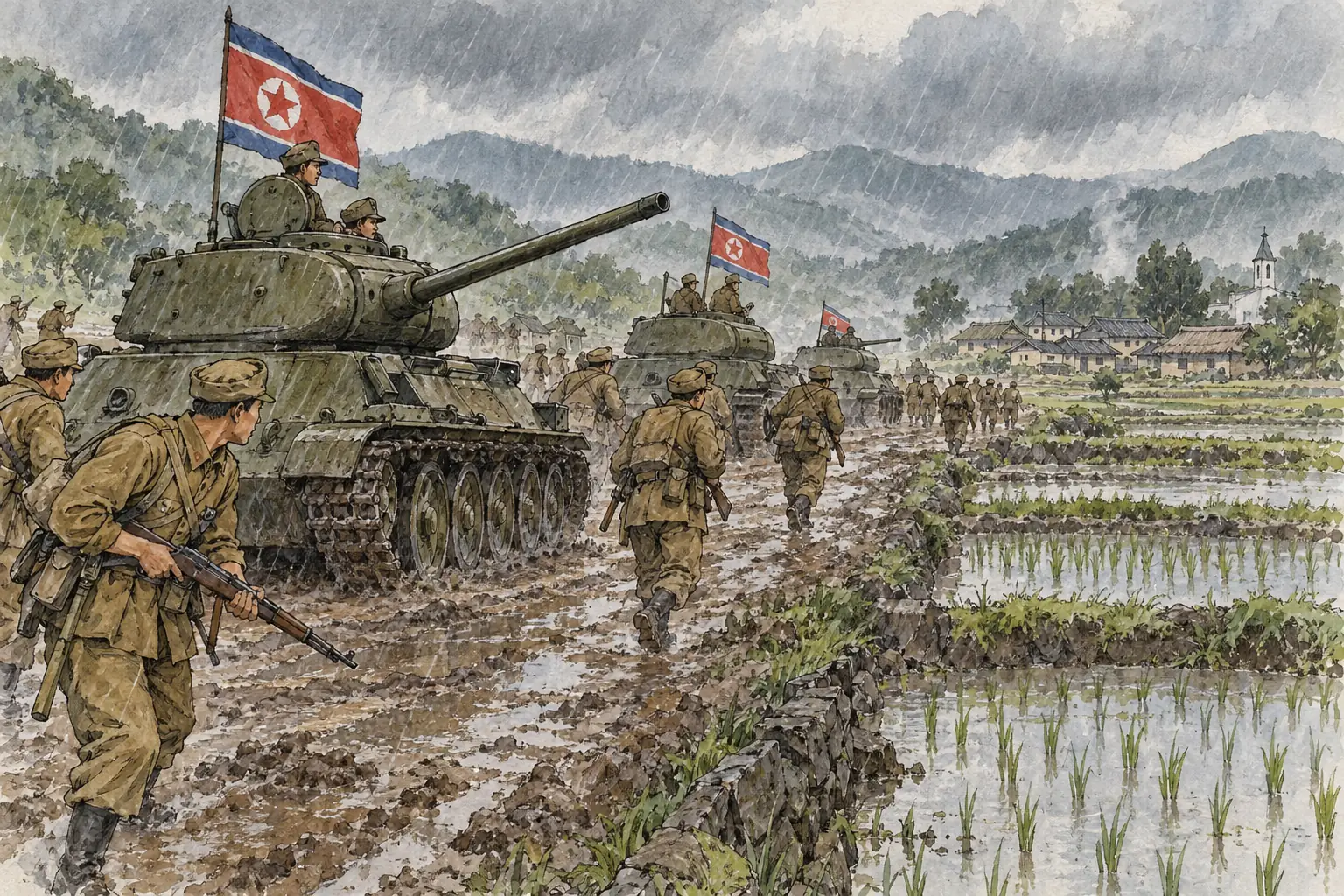
The Korean War stemmed from post-World War II divisions and escalating Cold War rivalries in Asia. Following Japan's surrender in 1945, Korea was split into two zones of occupation, setting the stage for ideological conflict between communist and capitalist influences.
Factors leading to the outbreak
- Division at the 38th parallel - The temporary line drawn in 1945 separated a Soviet-backed communist regime in the north under Kim Il-sung from a US-supported capitalist government in the south led by Syngman Rhee, creating rival states with unification ambitions.
- North Korean invasion - In June 1950, North Korean troops, equipped with Soviet tanks and artillery, crossed the parallel to unify the peninsula under communism, rapidly capturing Seoul and advancing southwards.
- UN-led intervention - The United States, viewing the attack as Soviet expansionism, secured UN Security Council approval for a multinational force (absent Soviet veto due to their boycott), deploying troops to defend South Korea and contain communism.
Key events and progression of the conflict
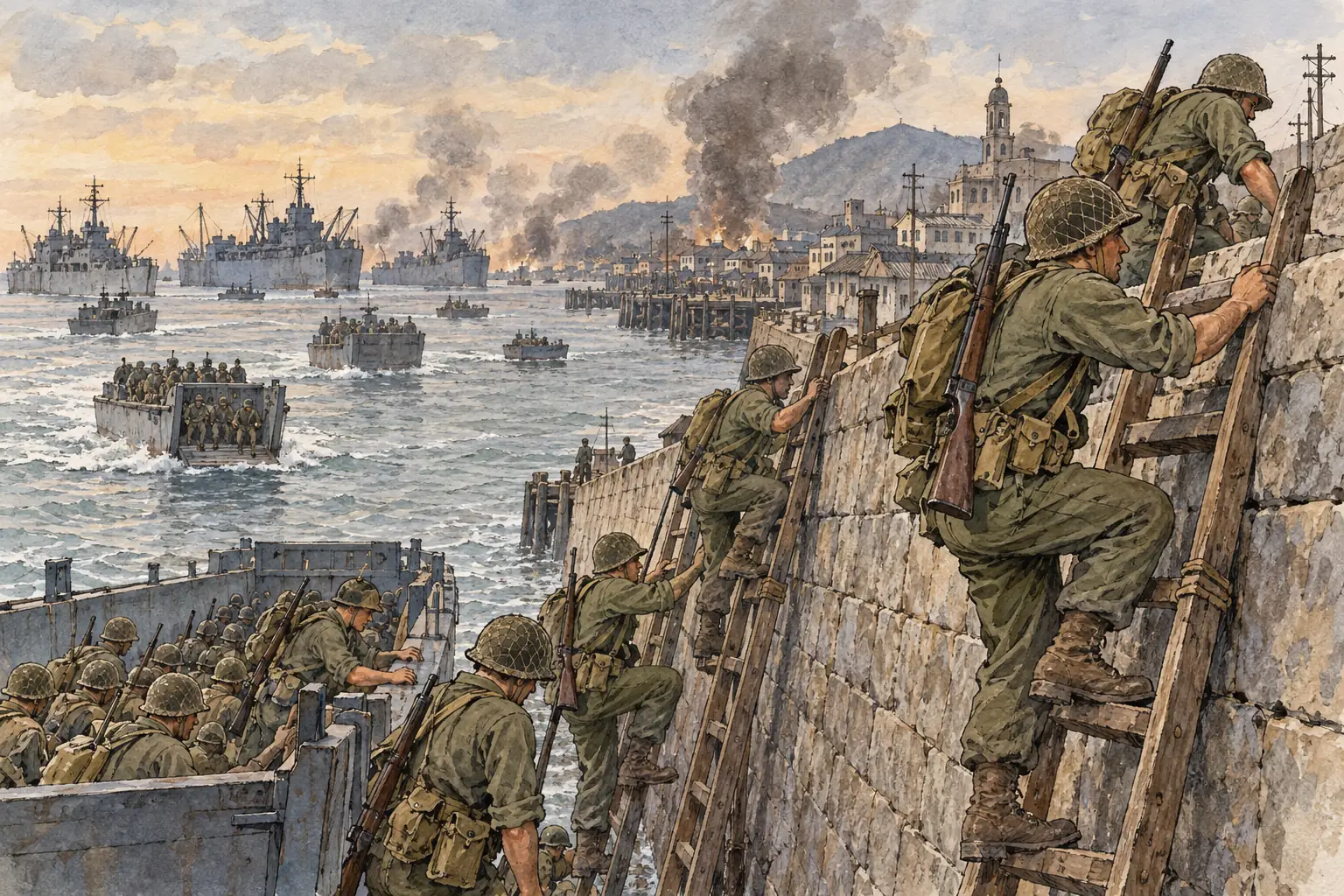
Image 1 of 2: At Inchon on 15 September 1950 US Marines climbed the sea wall from their landing craft, far behind the North Korean front line
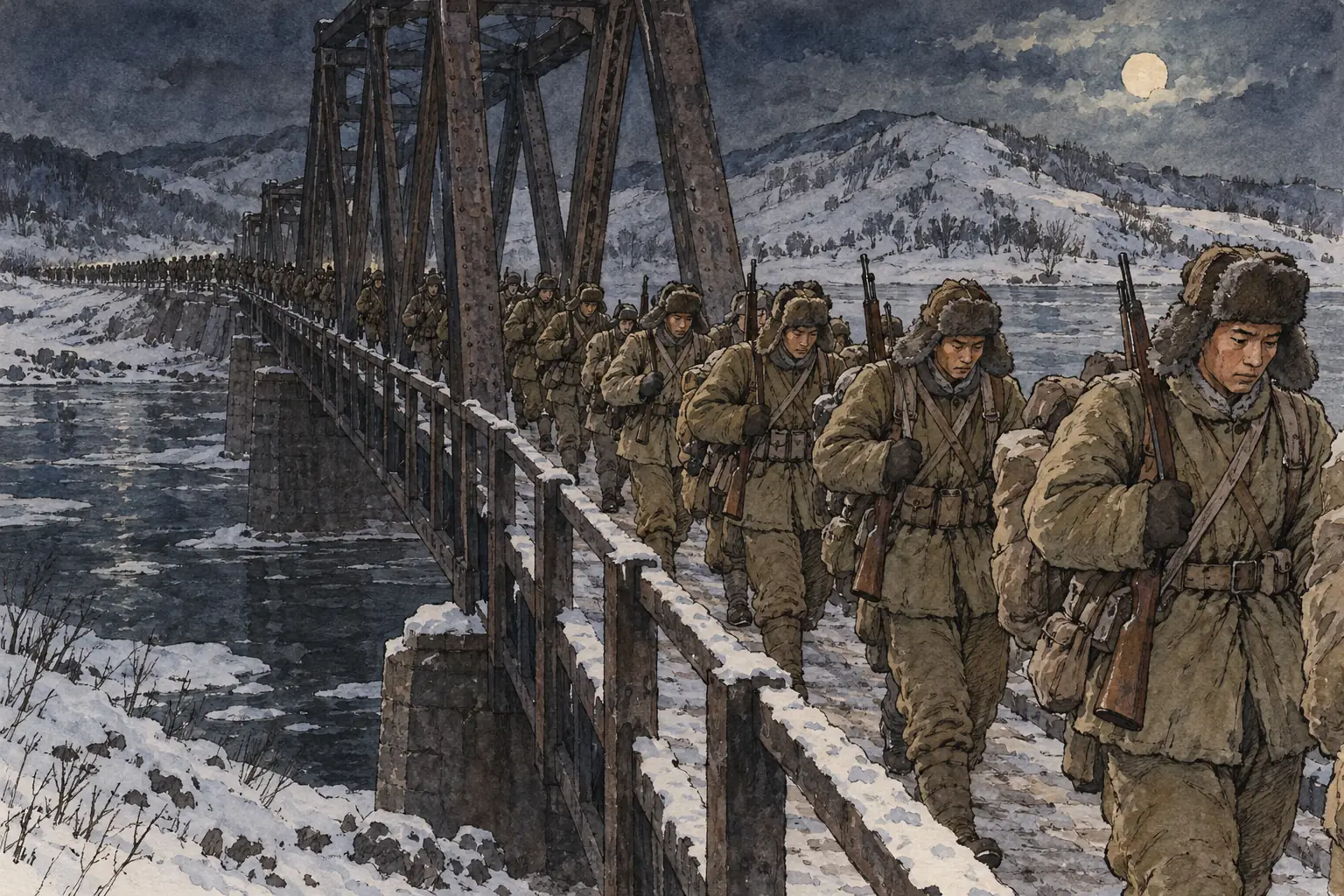
The war unfolded in distinct phases, marked by rapid territorial shifts, international involvement, and eventual deadlock. UN forces, dominated by American troops, initially faced setbacks before counteroffensives altered the momentum.
Phases of the Korean War
- Initial North Korean advance - North Korean forces overwhelmed South Korean defences in the summer of 1950, pushing UN troops into a defensive perimeter around Pusan.
- Inchon landing and counteroffensive - In September 1950, a daring amphibious assault at Inchon, led by US General Douglas MacArthur, recaptured Seoul and allowed UN forces to drive northwards towards the Chinese border at the Yalu River.
- Chinese intervention - Alarmed by UN proximity, China sent hundreds of thousands of "volunteer" troops across the Yalu in October 1950, forcing a UN retreat and recapturing territory up to the 38th parallel.
- Stalemate and armistice - From 1951, the war bogged down in attritional fighting around the original dividing line, with peace talks beginning in 1951 but dragging on until the July 1953 armistice, which restored the pre-war border without a peace treaty.
Reasons for avoiding direct nuclear confrontation
Despite intense proxy involvement, the superpowers refrained from direct military engagement or nuclear escalation, recognising the risks of global catastrophe. This restraint characterised the Cold War's "limited" conflicts.
Factors preventing escalation
- Proxy warfare strategy - The United States armed and led UN forces, while the Soviet Union supplied North Korea and China with weapons, pilots, and advisors, allowing both sides to pursue goals without committing their own troops directly against each other.
- Nuclear deterrence - Mutual possession of atomic weapons created a balance of terror; US President Truman considered but rejected nuclear use, fearing Soviet retaliation and wider war, especially after China's entry.
- Diplomatic calculations - Both superpowers sought to avoid alienating allies or provoking a broader conflict in Europe; the US limited operations to Korea, and the USSR avoided overt involvement to prevent UN expansion.
Consequences for the Cold War and Korea
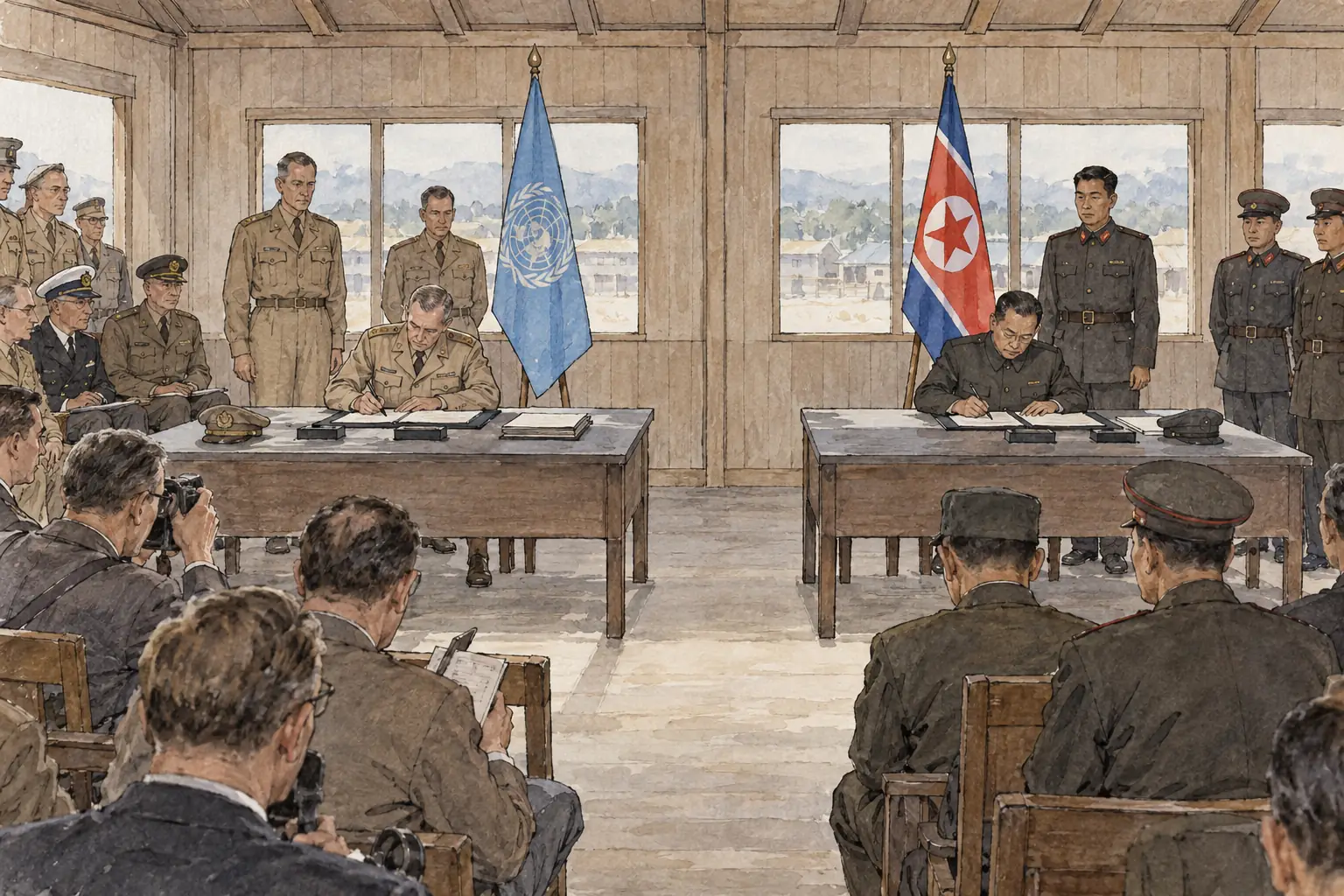
The Korean War profoundly shaped the Cold War's trajectory, accelerating militarisation and solidifying alliances, while leaving Korea permanently divided. It demonstrated the dangers of ideological confrontations in divided regions.
Long-term impacts of the conflict
- Militarisation of the Cold War - The war prompted the US to adopt NSC-68, a policy document advocating massive rearmament, increasing military spending and NATO commitments to counter perceived Soviet aggression.
- Strengthened US alliances in Asia - It led to defence pacts like those with Japan, South Korea, and Taiwan, establishing a network of anti-communist alliances to contain Chinese and Soviet influence.
- Entrenched division of Korea - The armistice created a demilitarised zone along the 38th parallel, perpetuating a tense standoff; North Korea developed into an isolated communist state, while South Korea industrialised under US protection, with no reunification in sight.