2.6 - Town Life: Trade, Craft & Urban Growth
Key facts and dates
The Norman Conquest of 1066 brought significant changes to English towns, fostering urban growth through trade, craft and infrastructure. While many towns built on existing sites, Norman influence introduced new defensive and economic features that shaped their development into bustling centres.
Key facts to remember
- Norman town features – Included defensive walls, central markets and mints for coin production.
- Strategic locations – Often at river crossings, coastal ports or former Roman settlements for trade and defence.
- Main occupations – Merchants handled commerce, while craftsmen specialised in trades like blacksmithing or weaving.
- Castle impact – Garrisons provided security but also stimulated local economies through soldier spending.
- Trade mechanisms – Tolls collected fees on goods, with markets and fairs enabling regular exchanges.
- Post-1066 growth – Trade networks expanded, linking towns to continental Europe.
- Urban living – Dense housing led to crowded conditions, contrasting with rural villages.
- Governance – Guilds regulated crafts where established, while law focused on trade disputes under lordly oversight.
Key features and locations of Norman towns
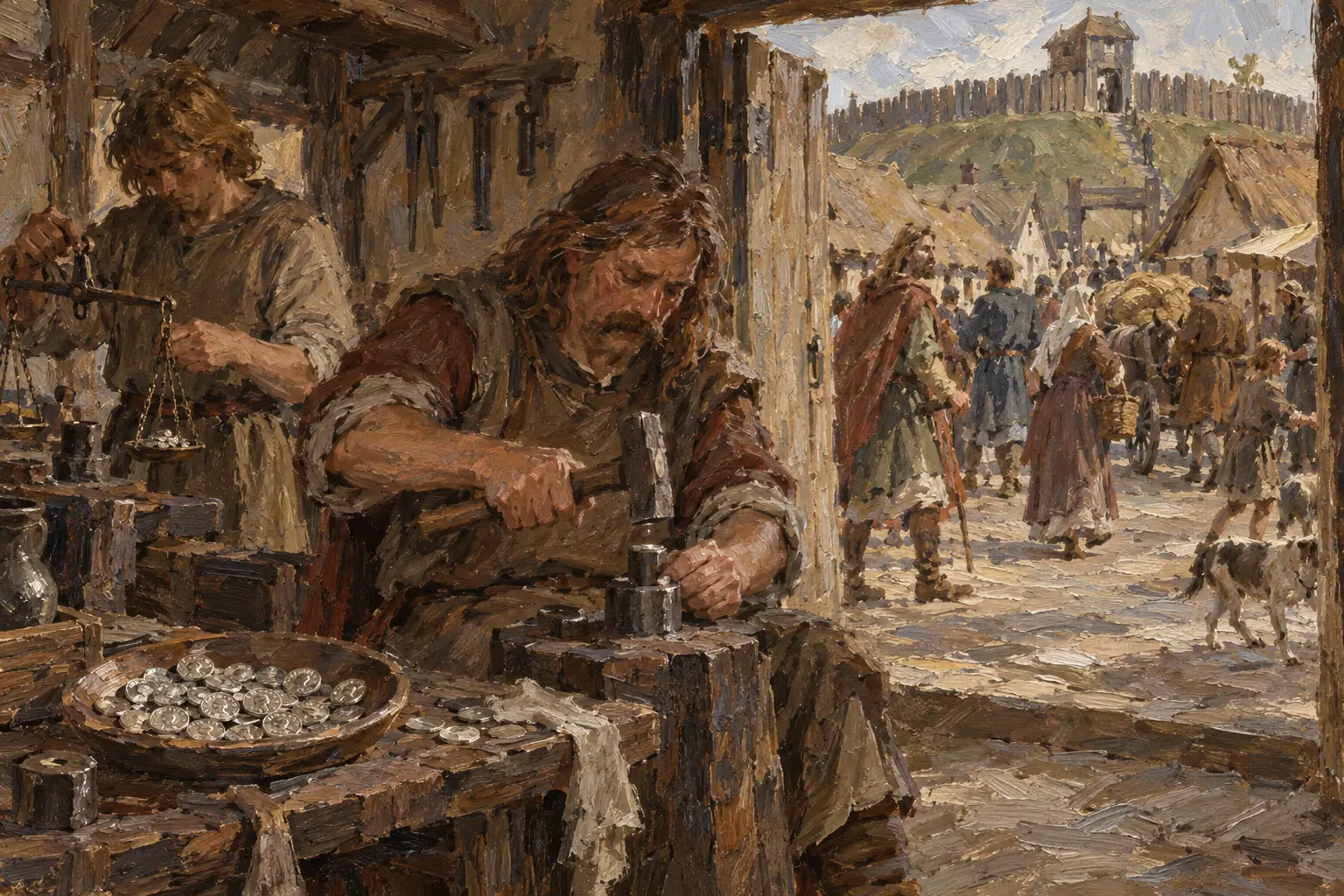
Norman towns in England developed distinct characteristics that supported both defence and commerce, building on pre-existing settlements while incorporating new elements introduced after the Conquest. These features helped towns become vital hubs for economic activity and population growth.
Characteristic elements of Norman urban centres
- Defensive walls - Many towns were enclosed by sturdy stone or wooden walls to protect against raids, with gates controlling access and providing security for residents and traders.
- Markets - Central open spaces served as venues for buying and selling goods, often held weekly to facilitate local and regional trade.
- Mints - Facilities for producing coins were established in key towns, standardising currency and boosting economic transactions under royal authority.
Strategic positioning of towns
- River crossings - Locations near bridges or fords allowed easy movement of people and goods, enhancing connectivity for merchants.
- Ports - Coastal sites provided access to sea routes, enabling imports and exports with other regions.
- Roman sites - Many Norman towns were built on or near ancient Roman foundations, reusing roads and fortifications for efficiency.
Occupations and the influence of castles on towns
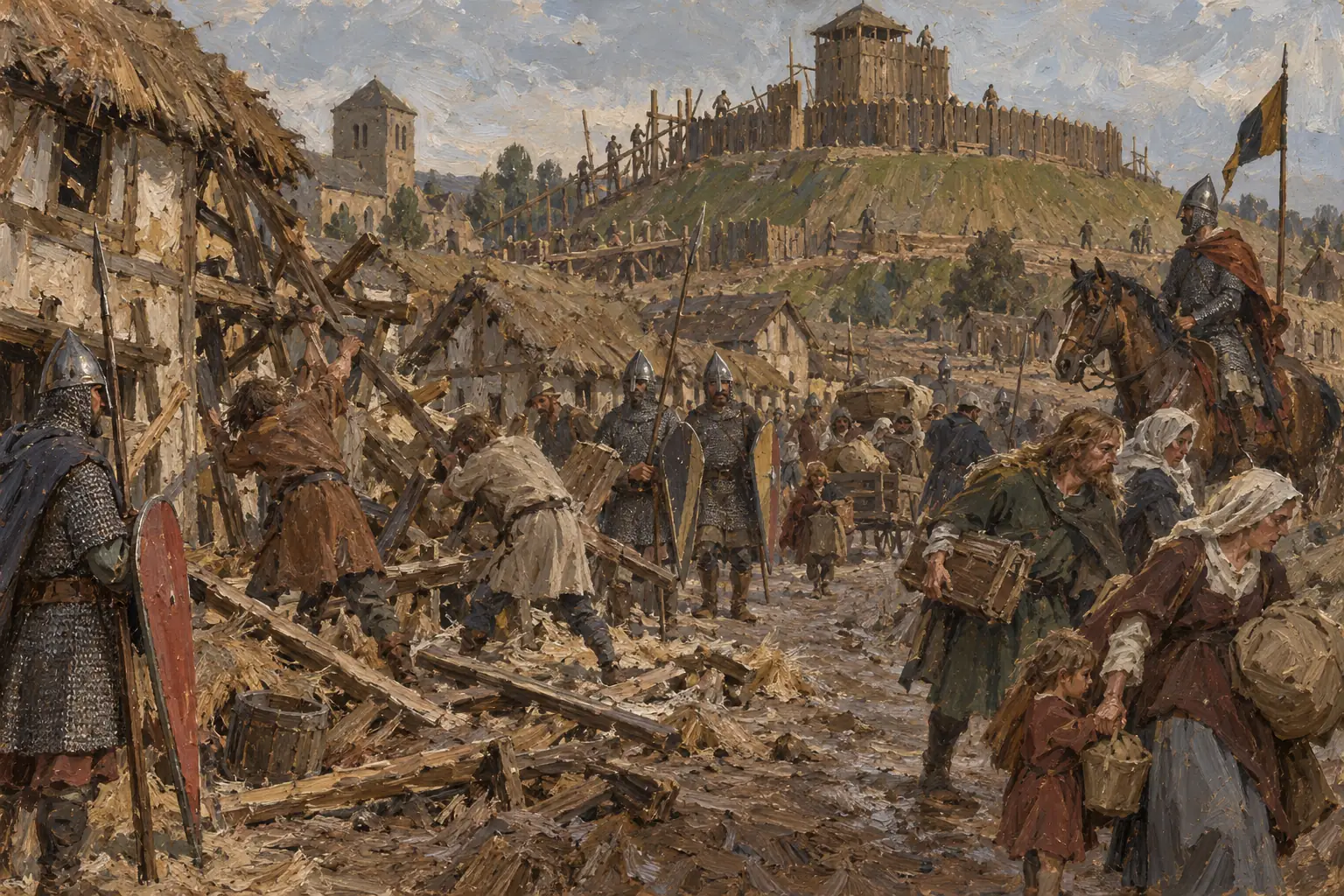
Towns offered diverse employment opportunities, attracting people from rural areas and contributing to urban expansion. Castles played a dual role, serving military purposes while also driving economic and social changes in the surrounding areas.
Primary occupations in Norman towns
- Merchants - These traders dealt in goods such as wool, cloth and spices, often travelling between towns or overseas to build wealth and networks.
- Craftsmen - Skilled workers specialised in trades like metalworking, leather crafting or baking, producing items for local sale or export.
How castles and garrisons shaped towns
- Military protection - Castles provided defence, making towns safer and encouraging settlement and investment.
- Economic stimulus - Garrisons of soldiers created demand for food, supplies and services, benefiting local craftsmen and merchants.
- Urban planning influence - Castles often anchored town layouts, with streets and buildings developing around them, leading to organised growth and increased population density.
Tolls, markets, fairs and trade networks after 1066
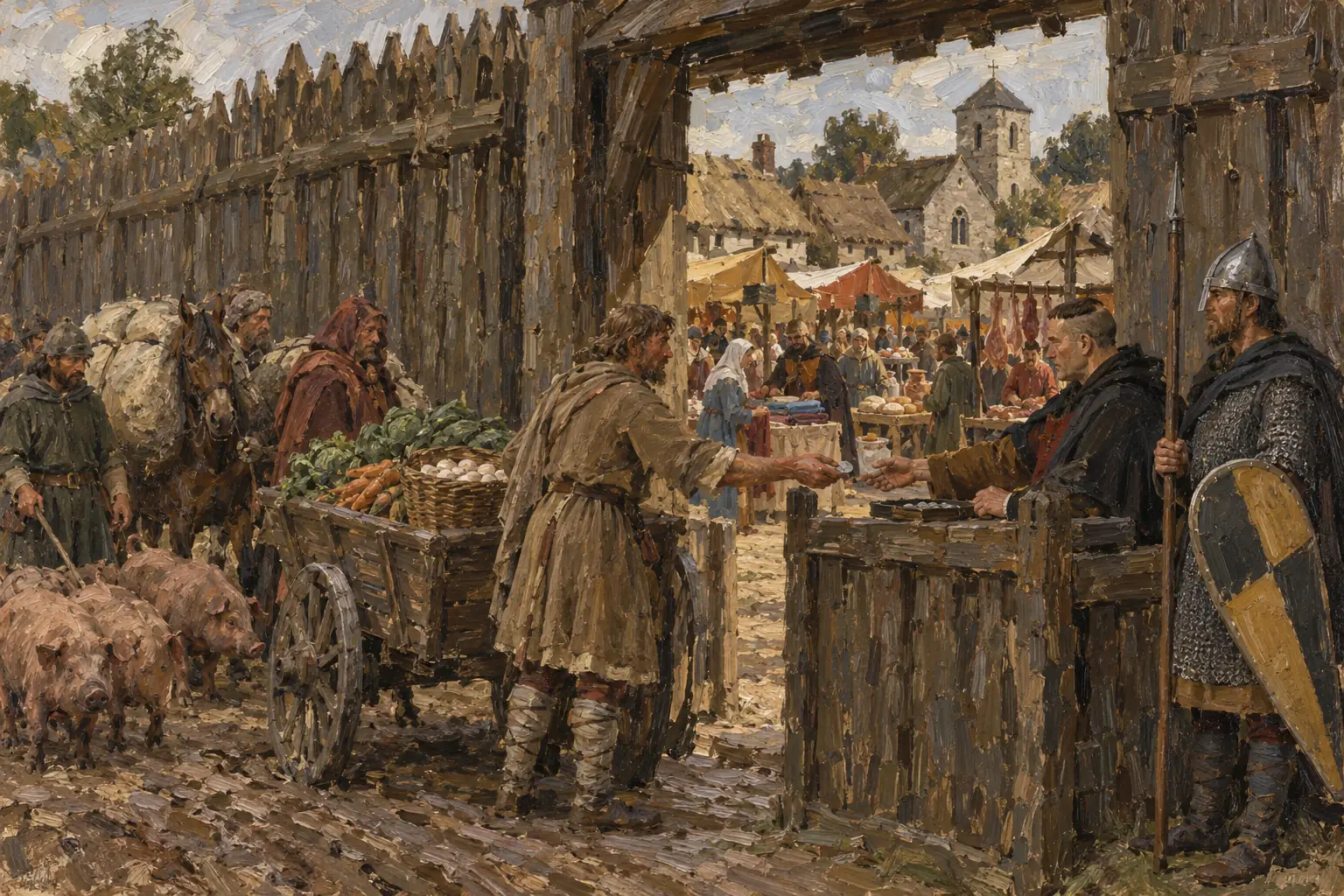
Following the Norman Conquest in 1066, trade became a cornerstone of town life, supported by mechanisms that regulated and expanded commerce. These elements connected English towns to broader networks, fostering economic prosperity.
Functions of tolls, markets and fairs
- Tolls - Fees imposed on goods entering or leaving towns, collected at gates or bridges to generate revenue for lords and fund infrastructure.
- Markets - Regular gatherings where locals exchanged everyday items, promoting consistent trade and community interaction.
- Fairs - Larger, periodic events attracting distant traders, often lasting several days and featuring specialised goods like livestock or luxury imports.
Expansion of trade networks post-1066
- Continental links - Norman rule strengthened ties with France and other European regions, increasing imports of wine, timber and metals.
- Internal growth - Improved roads and security allowed for more efficient movement of goods between English towns, boosting regional economies.
- Overall impact - These developments led to rising wealth in towns, with trade volumes growing as networks extended beyond local boundaries.
Living conditions and housing density in towns
Urban life in Norman England contrasted sharply with rural existence, characterised by close-quarters living that brought both opportunities and challenges. High population density influenced daily experiences and health.
Aspects of urban living conditions
- Crowded environments - Towns featured narrow streets and closely packed buildings, leading to noise, pollution and rapid spread of diseases.
- Sanitation and health - Waste disposal was basic, often relying on open drains, which contributed to frequent outbreaks of illness.
- Social dynamics - Diverse populations, including immigrants and travellers, created vibrant but sometimes tense communities.
Characteristics of housing density
- Building types - Houses were typically timber-framed and multi-storey to maximise space, with shops on ground floors and living quarters above.
- Space constraints - Overcrowding meant families shared small areas, increasing fire risks and limiting privacy compared to spacious village homes.
- Adaptations - Wealthier residents built larger properties, while poorer ones occupied rented rooms, reflecting social hierarchies within dense urban settings.
Guilds, law and lordship in towns versus villages
Towns had unique systems for organisation and governance, differing from rural villages in their emphasis on trade regulation and collective oversight. These structures helped maintain order amid growing populations.
Role and presence of guilds
- Craft regulation - Where guilds existed, they controlled standards for trades, setting prices, quality rules and training apprentices to ensure fair practices.
- Limited establishment - Guilds were not universal in Norman towns but emerged in larger centres to protect members' interests and limit competition.
- Social functions - They provided mutual support, such as aid for sick members, fostering community ties among craftsmen.
Operation of law and lordship
- Urban law - Focused on commercial disputes, with town courts handling cases related to trade, debts and market violations, often under royal charters granting self-governance.
- Lordly influence - Lords or bishops oversaw towns, collecting rents and tolls, but with less direct control over daily life than in villages where manorial lords dictated farming and labour.
- Comparison with villages - Village law centred on agricultural obligations and feudal duties, while towns offered more freedom for merchants, though both operated under overarching Norman authority.