2.1 - Feudal System & Government: Roles, Rights & Duties
Key facts and dates
The transition from Anglo-Saxon to Norman rule after 1066 introduced a more centralised feudal system while retaining some administrative elements. This shift redistributed power and land to support military strength and royal revenue, blending old and new structures for effective governance.
Key facts to remember
- Feudal hierarchy – Structured society with the king at the top, granting land in exchange for loyalty and service.
- Tenant-in-chief – Nobles holding land directly from the king, forming the backbone of Norman land distribution.
- Subinfeudation – Process where tenants-in-chief granted portions of their land to lower vassals.
- Homage and fealty – Ceremonies where vassals pledged loyalty and service to their lord.
- Curia Regis – The king's advisory council, central to decision-making and justice.
- Government by writ – System of short, sealed royal orders issued through the Chancery to enforce authority.
- Shires and hundreds – Retained Anglo-Saxon administrative divisions for local governance.
- Sheriffs – Officials who continued to collect taxes and maintain order under Norman rule.
Anglo-Saxon and Norman social hierarchies
The social structures of Anglo-Saxon and Norman England shared a hierarchical nature but differed in their composition and emphasis. Anglo-Saxon society featured a mix of free and unfree classes under the king, while the Norman system introduced a more rigid feudal order tied to landholding and military obligations.
Anglo-Saxon social hierarchy
| Class | Description |
|---|---|
| Kings | Held supreme authority, granting land and expecting loyalty from nobles. |
| Earls | Powerful regional lords who governed large areas and provided military support. |
| Thegns | Local landowners who served as warriors and advisors to earls or the king. |
| Ceorls | Free peasants who owned small farms and could participate in local assemblies. |
| Cottars | Lower peasants who worked on others' land for basic subsistence. |
| Serfs | Unfree labourers bound to the land, with few rights and heavy obligations. |
Norman social hierarchy
| Class | Description |
|---|---|
| Kings | Central figures who owned all land and distributed it to loyal followers. |
| Barons and bishops | High-ranking nobles and church leaders who held large estates directly from the king. |
| Knights | Mounted warriors who received smaller land grants in return for military service. |
| Villeins | Unfree peasants tied to the manor, performing labour services for their lord. |
These hierarchies reflected a shift from a somewhat fluid Anglo-Saxon system to a more stratified Norman one, where land tenure directly linked to feudal duties.
Key terms in the feudal system
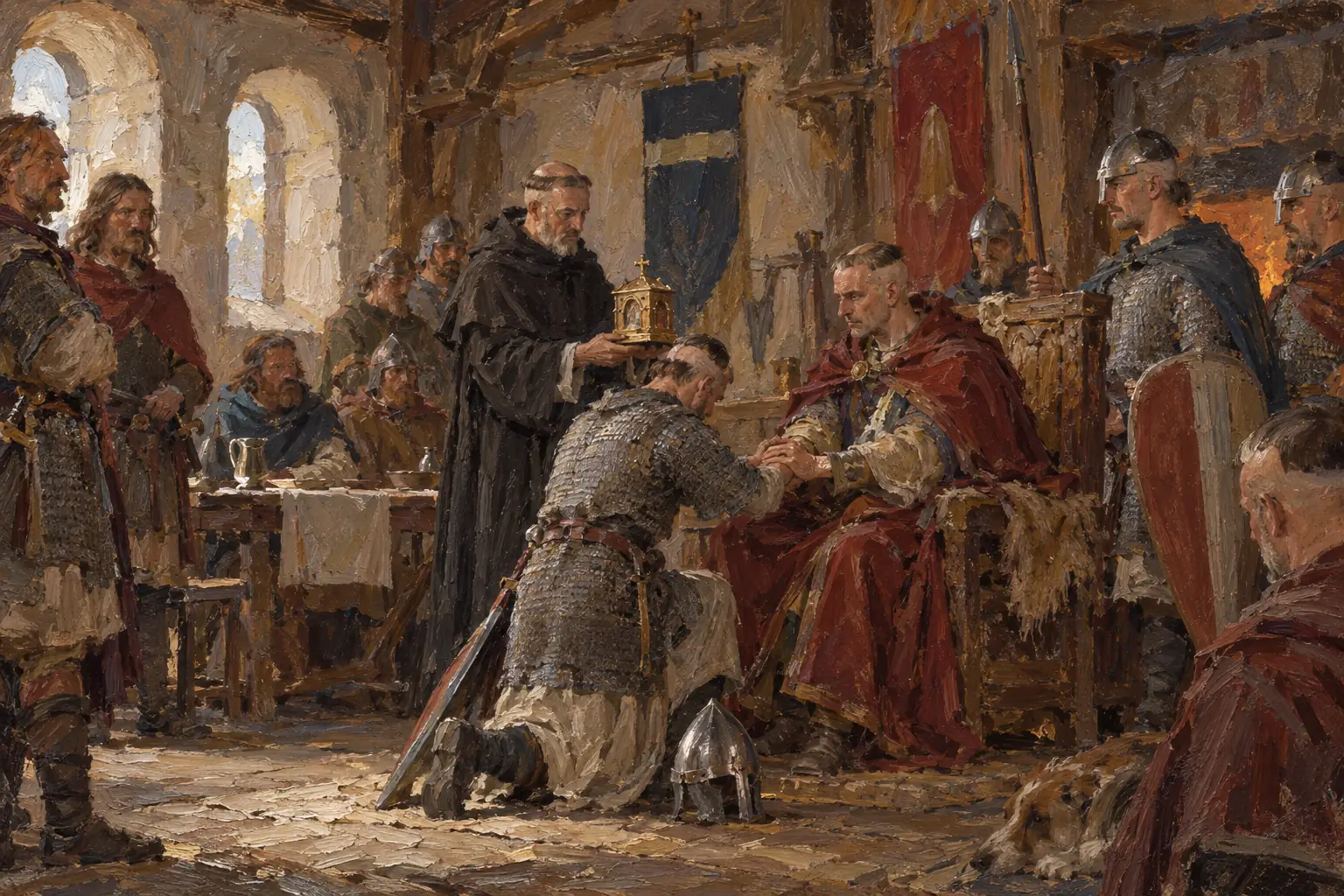
The Norman feudal system relied on specific concepts that defined relationships between lords and vassals. These terms emphasised loyalty, land distribution, and mutual obligations, ensuring the king's control over his realm.
Definitions of core feudal terms
| Term | Definition |
|---|---|
| Tenant-in-chief | A high-ranking individual, such as a baron or bishop, who held land directly from the king in exchange for providing knights and other services. |
| Subinfeudation | The practice where tenants-in-chief divided their landholdings and granted portions to lesser vassals, creating a chain of feudal relationships. |
| Homage | A formal ceremony in which a vassal knelt before their lord, placed their hands in the lord's, and pledged personal loyalty. |
| Fealty | An oath of faithfulness sworn by a vassal to their lord, promising obedience and support in return for protection and land. |
These terms underpinned the feudal contract, binding society through reciprocal rights and duties.
Curia Regis and government by writ
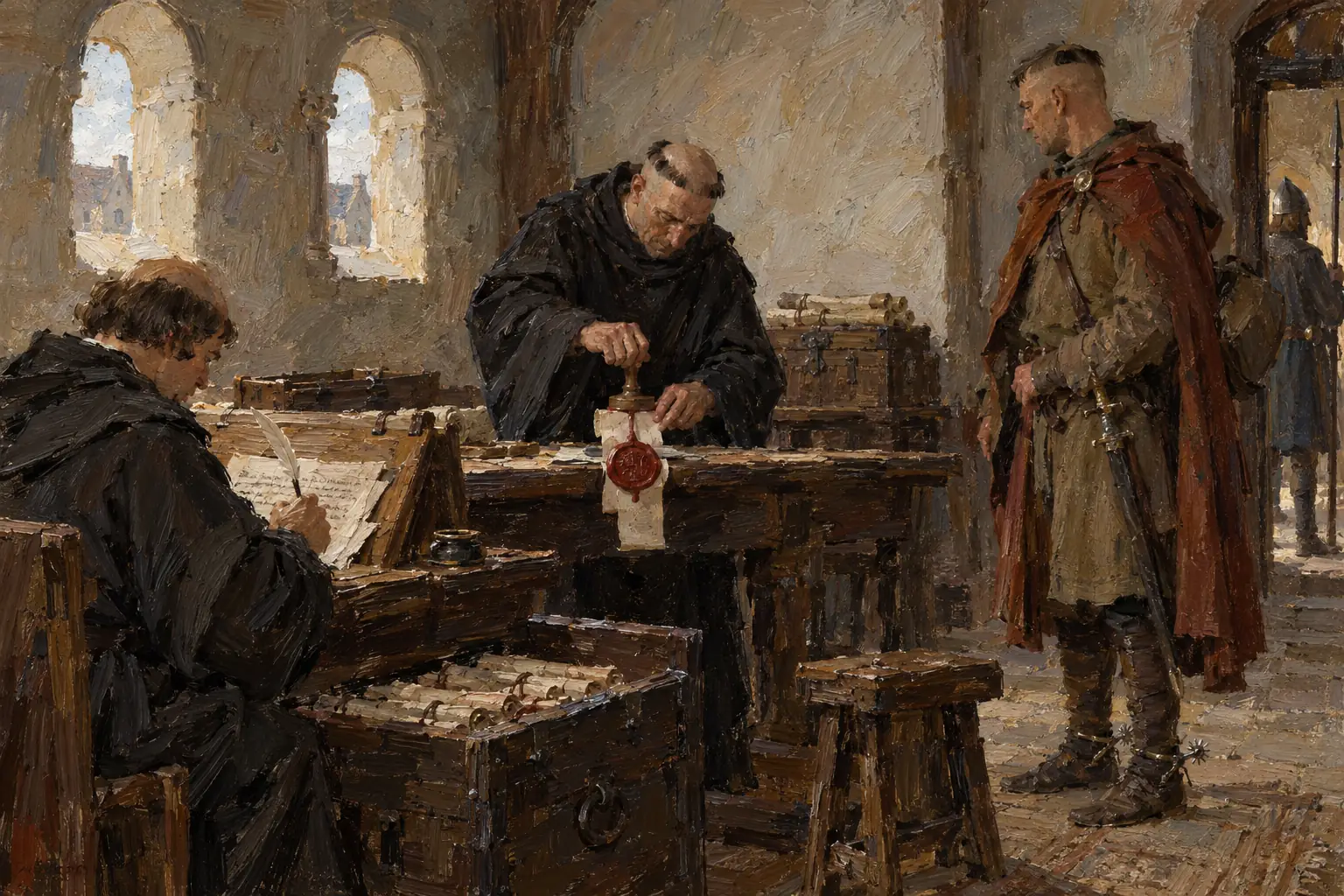
Under Norman rule, the king maintained authority through advisory bodies and efficient administrative tools. The Curia Regis served as a central hub for governance, while writs extended royal commands across the kingdom.
Functions of the Curia Regis
The Curia Regis acted as the king's council, comprising trusted barons, bishops, and officials who advised on policy, justice, and administration. It met regularly to discuss matters like taxation, law, and military campaigns, helping the king make informed decisions.
System of government by writ
Royal authority was enforced through the Chancery, which issued short, sealed documents known as writs. These orders directed local officials, such as sheriffs, to carry out tasks like collecting fines or summoning juries, allowing efficient control over distant shires without constant royal travel.
Changes and continuities in government structure
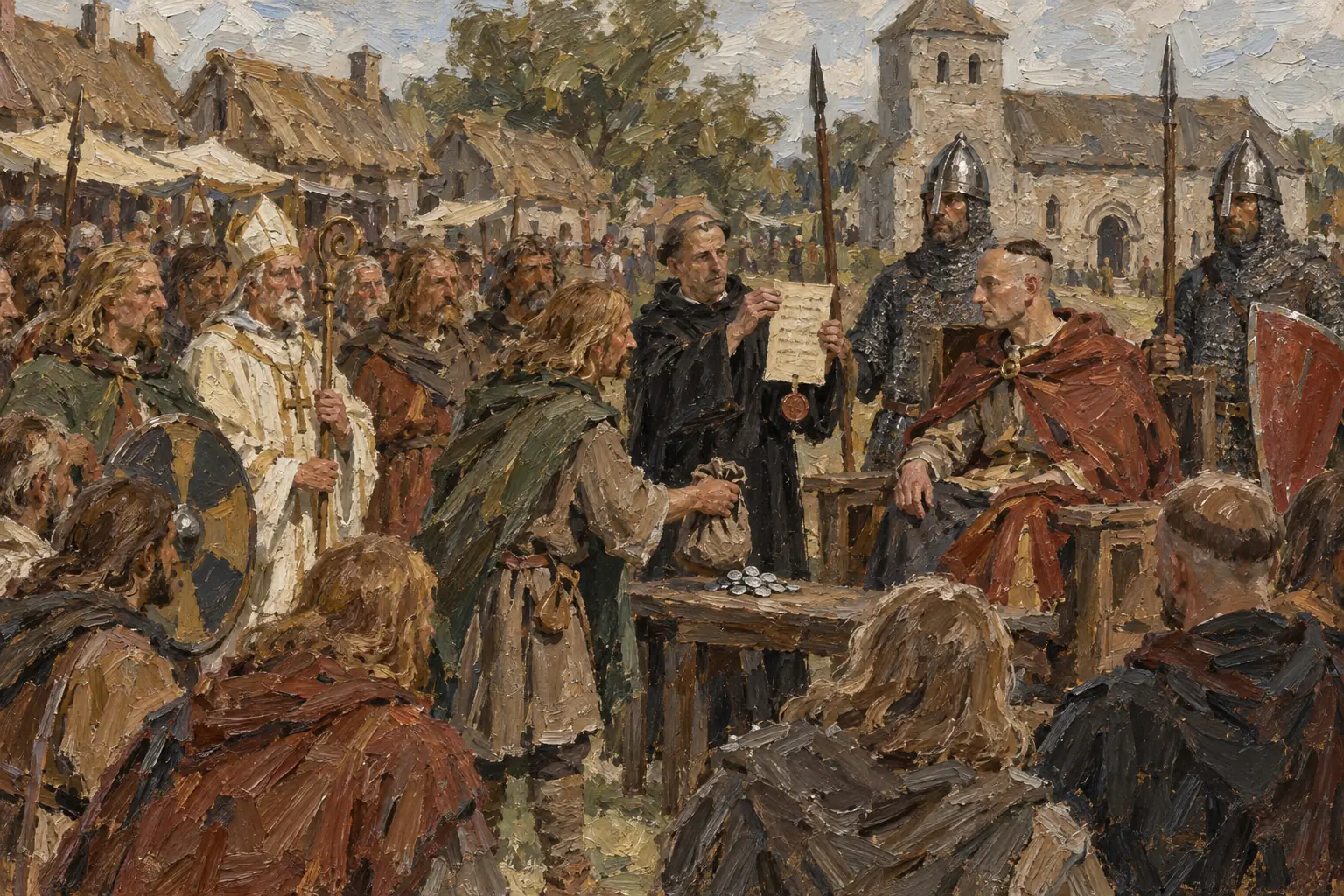
The Norman Conquest brought significant transformations to English government, increasing centralisation while preserving some Anglo-Saxon elements. This blend adapted existing systems to meet new demands for control and revenue.
Changes introduced by Norman rule
- Greater centralisation - The king asserted direct control over land and nobles, reducing regional autonomy compared to the Anglo-Saxon era.
- Redistribution of land - Anglo-Saxon estates were confiscated and granted to Norman followers, creating a loyal elite bound to the king.
Continuities from Anglo-Saxon administration
- Use of shires and hundreds - These local divisions remained for organising justice, taxation, and military levies.
- Role of sheriffs - These officials continued to oversee shires, collecting royal dues and maintaining law and order on the king's behalf.
Links to military and fiscal needs
The feudal system and government structures were closely tied to the king's requirements for defence and income. Land grants ensured a ready supply of knights for warfare, while administrative tools facilitated efficient tax collection.
Military links
- Feudal obligations required vassals to provide armed knights, supporting the king's army during conflicts.
- Centralised control through tenants-in-chief prevented rebellions and maintained a standing force.
Fiscal links
- Land redistribution generated revenue via feudal dues, such as reliefs paid on inheritance.
- Writs and sheriffs streamlined tax gathering across shires, funding royal projects and administration.
This integration of structure with practical needs strengthened Norman rule, balancing power with efficiency.