2.6 - Exploration, Trade, Hawkins, Drake & Raleigh
Key facts and dates
During the Elizabethan era, English exploration and trade expanded rapidly, driven by economic ambitions and rivalry with Spain. Key figures like Hawkins, Drake, and Raleigh pioneered voyages that involved privateering, slave trading, and early colonisation efforts, ultimately escalating conflicts with Spanish interests.
Timeline of key events
- 1560s – John Hawkins begins slave-trading voyages to West Africa and the Americas, challenging Spanish monopolies.
- 1568 – San Juan de Ulúa incident sees Spanish forces attack Hawkins' fleet in Mexico, straining Anglo-Spanish relations.
- 1577–1580 – Francis Drake circumnavigates the globe, raiding Spanish ports and claiming 'Nova Albion' for England.
- 1578 – Introduction of 'race-built' ships enhances English naval capabilities with speed and manoeuvrability.
- 1584 – Sir Walter Raleigh receives royal patent to colonise Virginia, leading to Roanoke expeditions.
- 1585–1590 – Failed Roanoke colonies highlight challenges of settlement, while privateering increases hostility with Spain.
Motives for overseas enterprise
In the Elizabethan period, England pursued overseas ventures with a mix of economic, strategic, and exploratory goals. These efforts marked a shift towards global expansion, challenging established powers like Spain and Portugal.
Key drivers of exploration and trade
- Profit opportunities - Merchants sought wealth through trade in valuable goods such as spices, precious metals, and enslaved people, aiming to bypass European middlemen.
- Rivalry with Spain - Competition for dominance in the New World motivated raids on Spanish possessions and disruption of their treasure fleets.
- Adventure and discovery - Explorers were drawn by the thrill of unknown lands and the quest for alternative trade routes to Asia, avoiding hostile territories.
- Search for new routes - Efforts focused on finding passages like the Northwest Passage to access eastern markets more directly, reducing reliance on overland paths.
Advances in navigation and shipbuilding
Image 1 of 2: Sailors used the astrolabe to find their latitude and the log-line to measure their speed
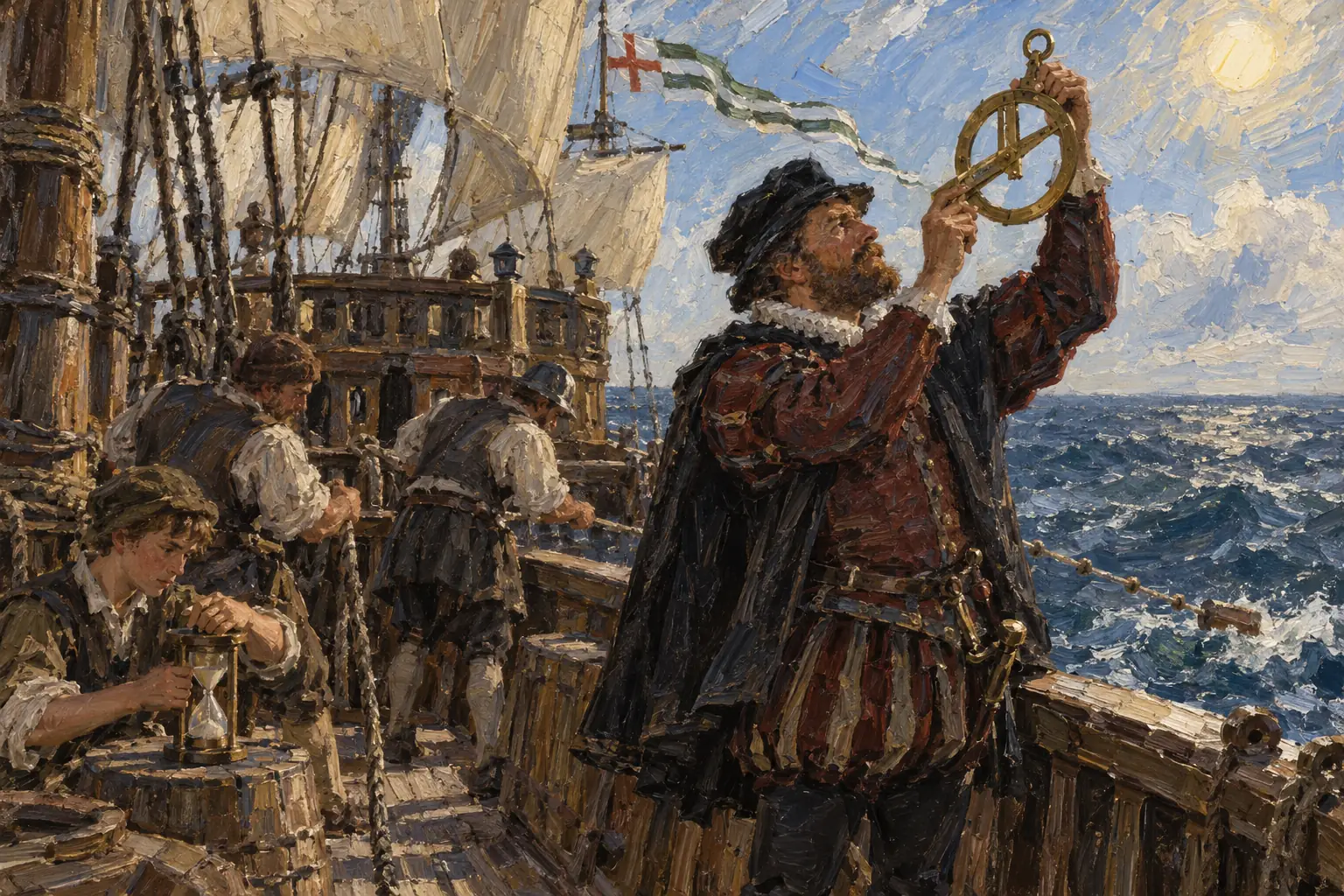
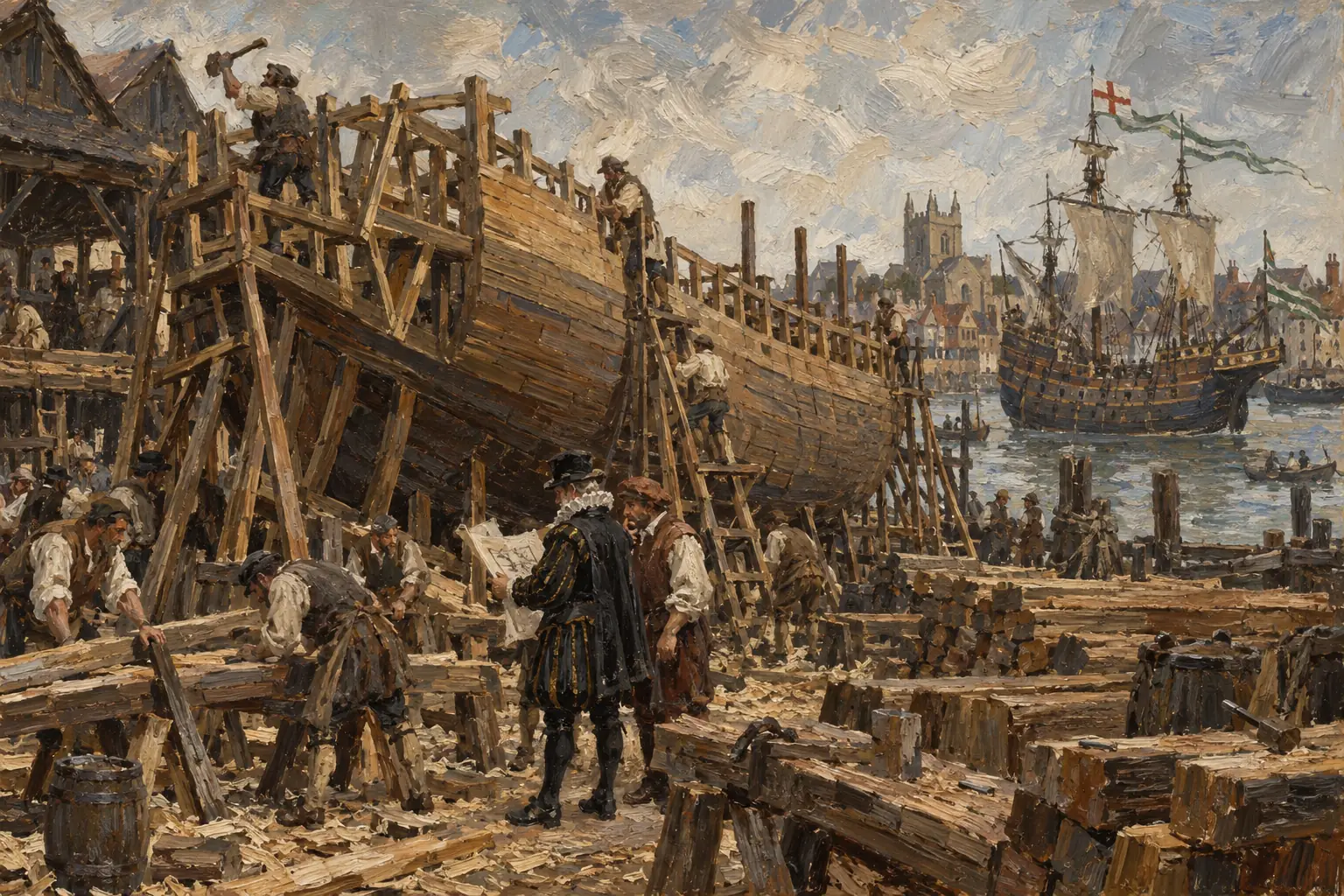
Technological improvements in the late 16th century enabled longer and more efficient voyages. These innovations supported English explorers in navigating vast oceans and competing with rival nations.
Improvements in navigation tools
- Astrolabe - This device allowed sailors to measure the altitude of celestial bodies, helping to determine latitude more accurately during voyages.
- Logline - A knotted rope trailed behind ships to measure speed in knots, aiding in distance calculations and route planning.
- Improved charts - More precise maps, incorporating new discoveries, provided better guidance on coastlines, currents, and hazards.
Developments in ship design
- 'Race-built' ships - These galleons featured sleeker hulls, lower profiles, and enhanced sail configurations, offering greater speed and agility compared to bulkier Spanish vessels.
- Impact on exploration - Such advancements reduced travel times, improved manoeuvrability in battles, and allowed for extended journeys, contributing to successes in trade and privateering.
John Hawkins and the transatlantic slave trade
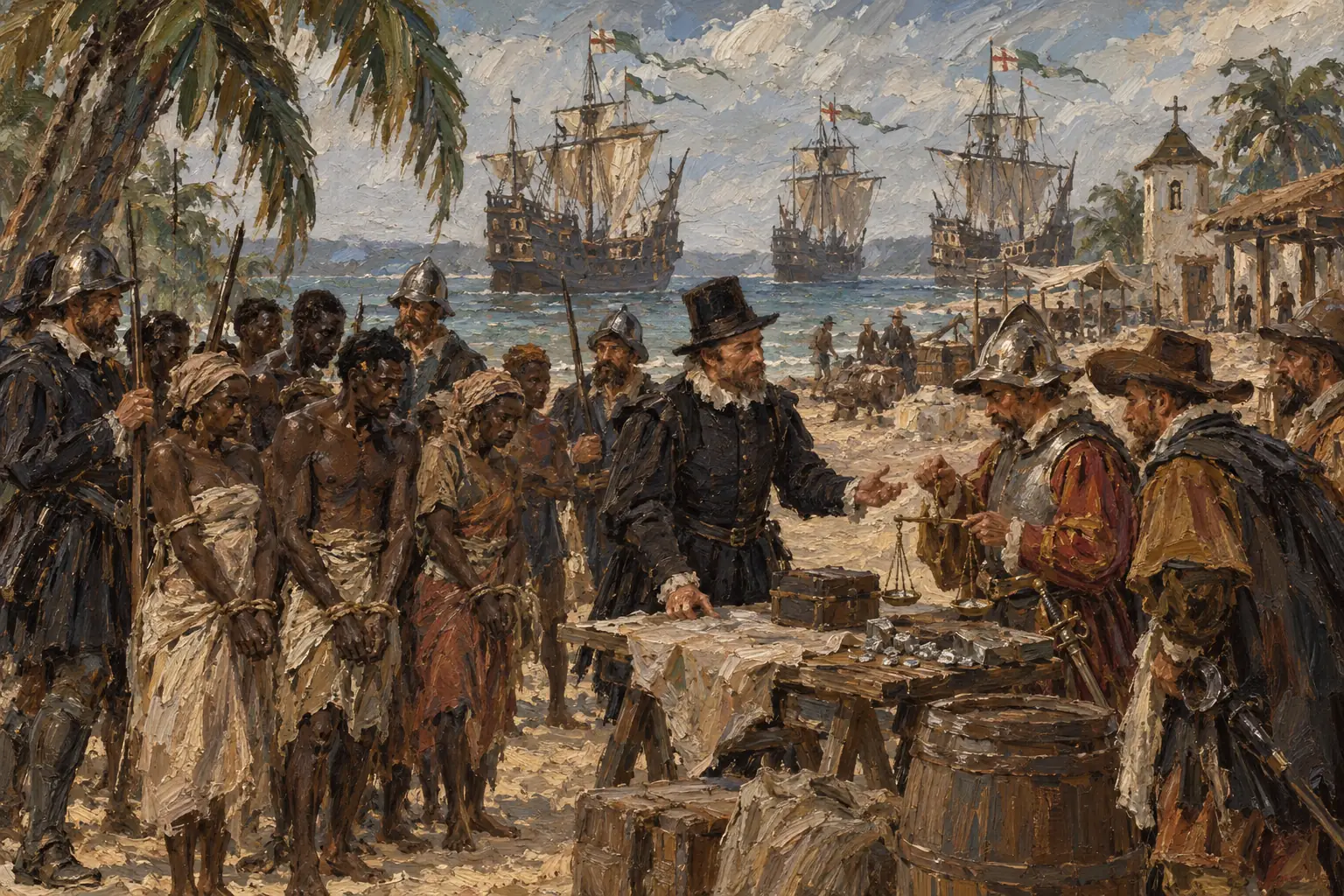
John Hawkins, a prominent English merchant and naval commander, initiated England's involvement in the transatlantic slave trade during the 1560s. His expeditions combined commerce with challenges to Spanish colonial monopolies.
Features of Hawkins' slave-trading activities
- Voyage patterns - Hawkins sailed to West Africa to capture or purchase enslaved Africans, then transported them to Spanish colonies in the Americas for sale, profiting from the demand for labour in plantations.
- Early English role - These trips marked England's entry into the lucrative but brutal slave trade, previously dominated by Portugal and Spain, with Hawkins completing multiple voyages despite official prohibitions.
- San Juan de Ulúa incident (1568) - While resupplying in the Mexican port of San Juan de Ulúa, Hawkins' fleet was ambushed by Spanish ships, resulting in heavy losses and the destruction of several vessels.
Diplomatic consequences of the incident
- Strained relations - The attack, seen as a betrayal after initial agreements, heightened English resentment towards Spain and fuelled calls for retaliation.
- Long-term fallout - It damaged trust between the two nations, contributing to growing hostilities and encouraging English privateers to target Spanish interests more aggressively.
Francis Drake's circumnavigation
Image 1 of 2: Drake raided Spanish ships and ports along the Pacific coast of South America, capturing silver and gold
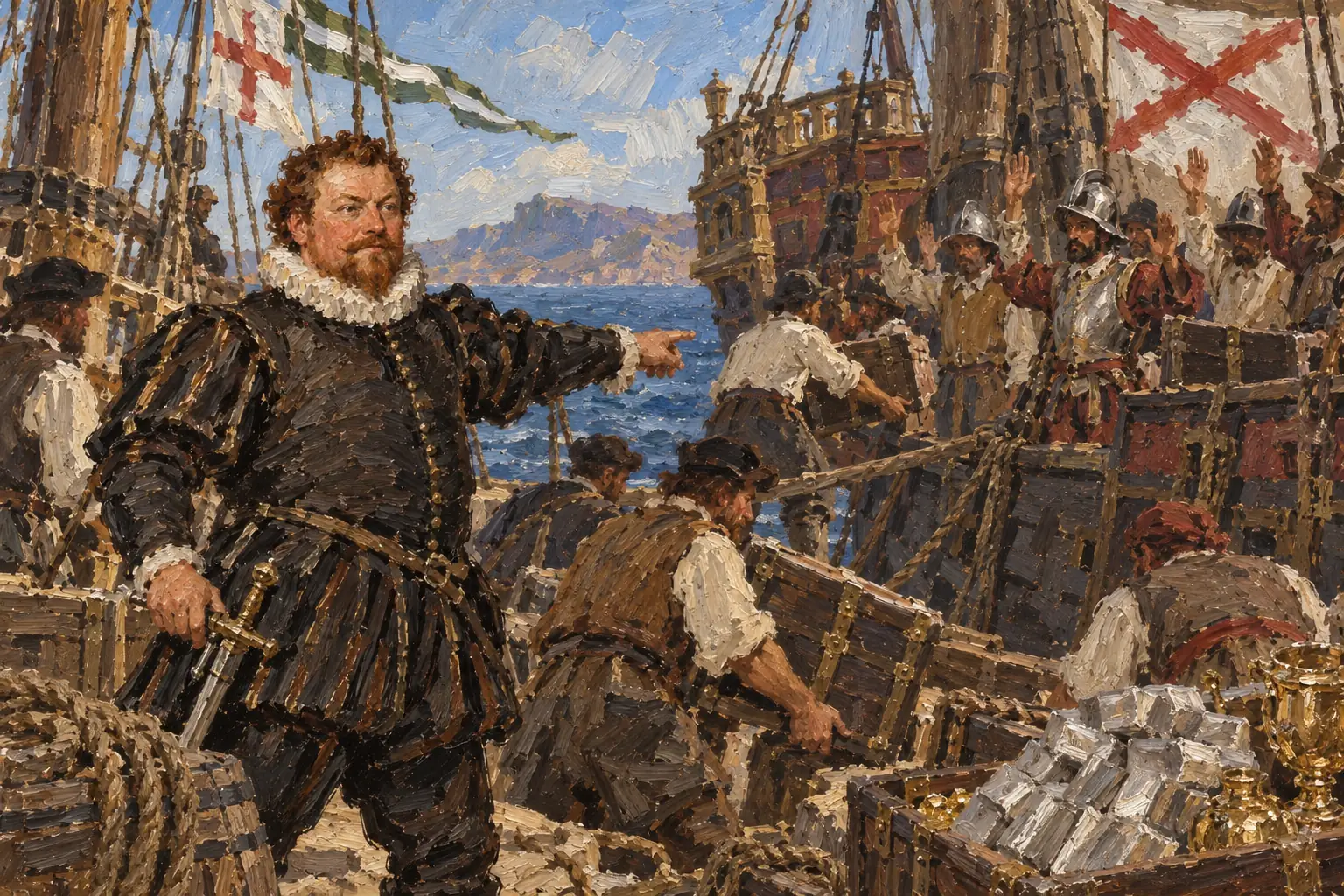
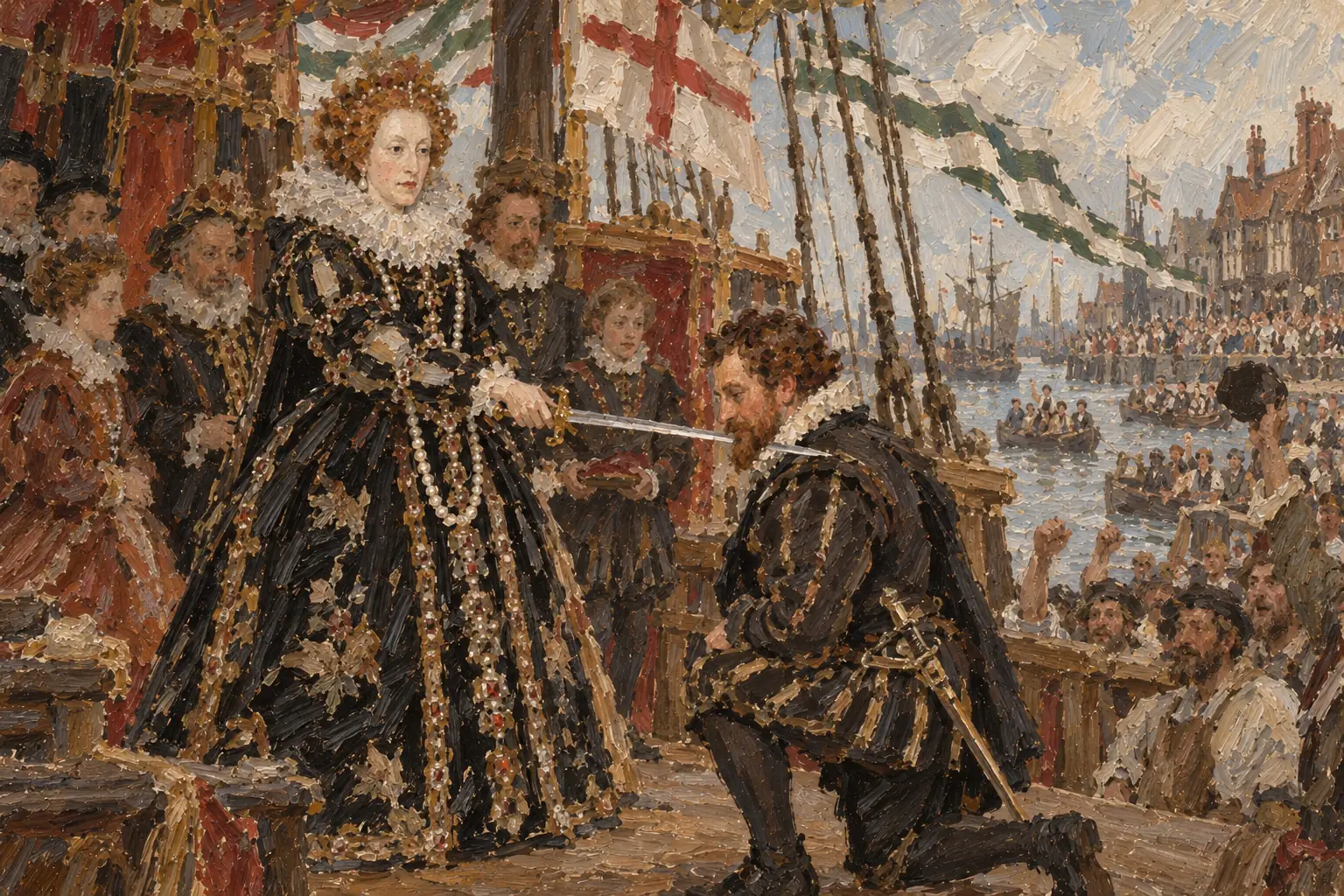
Francis Drake's voyage around the world from 1577 to 1580 was a daring feat of exploration and privateering. Starting with five ships, he returned with immense wealth, boosting England's reputation.
Route and key actions during the journey
- Pacific raids - After passing through the Strait of Magellan, Drake attacked Spanish ports and ships along the South American coast, capturing treasure including silver and gold.
- Claim of 'Nova Albion' - In 1579, he landed on the California coast, naming it 'Nova Albion' and claiming it for Queen Elizabeth I, extending English territorial ambitions.
- Full circumnavigation - Continuing across the Pacific, Indian Ocean, and around Africa, Drake became the first Englishman to sail around the globe, completing the journey in Plymouth.
Outcomes of the expedition
- Prestige for England - The voyage demonstrated English naval prowess, inspiring further exploration and elevating Drake to heroic status upon his knighting by the queen.
- Financial gains - Drake seized valuables worth an estimated £500,000, providing substantial profits for investors and the crown, while disrupting Spanish trade networks.
Raleigh's colonisation and tensions with Spain
Image 1 of 2: Sir Walter Raleigh obtained a royal patent in 1584 and planned the Roanoke expeditions
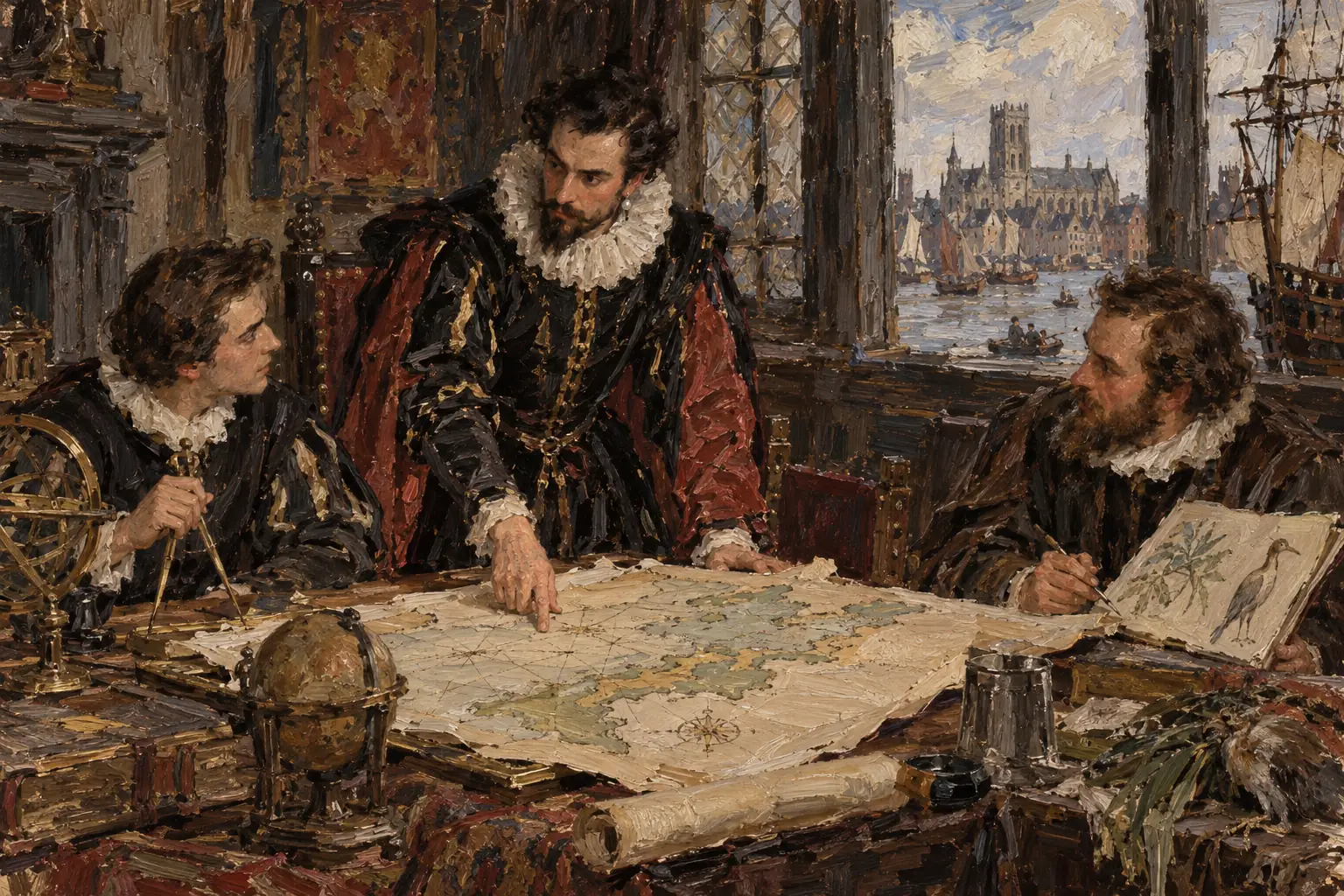
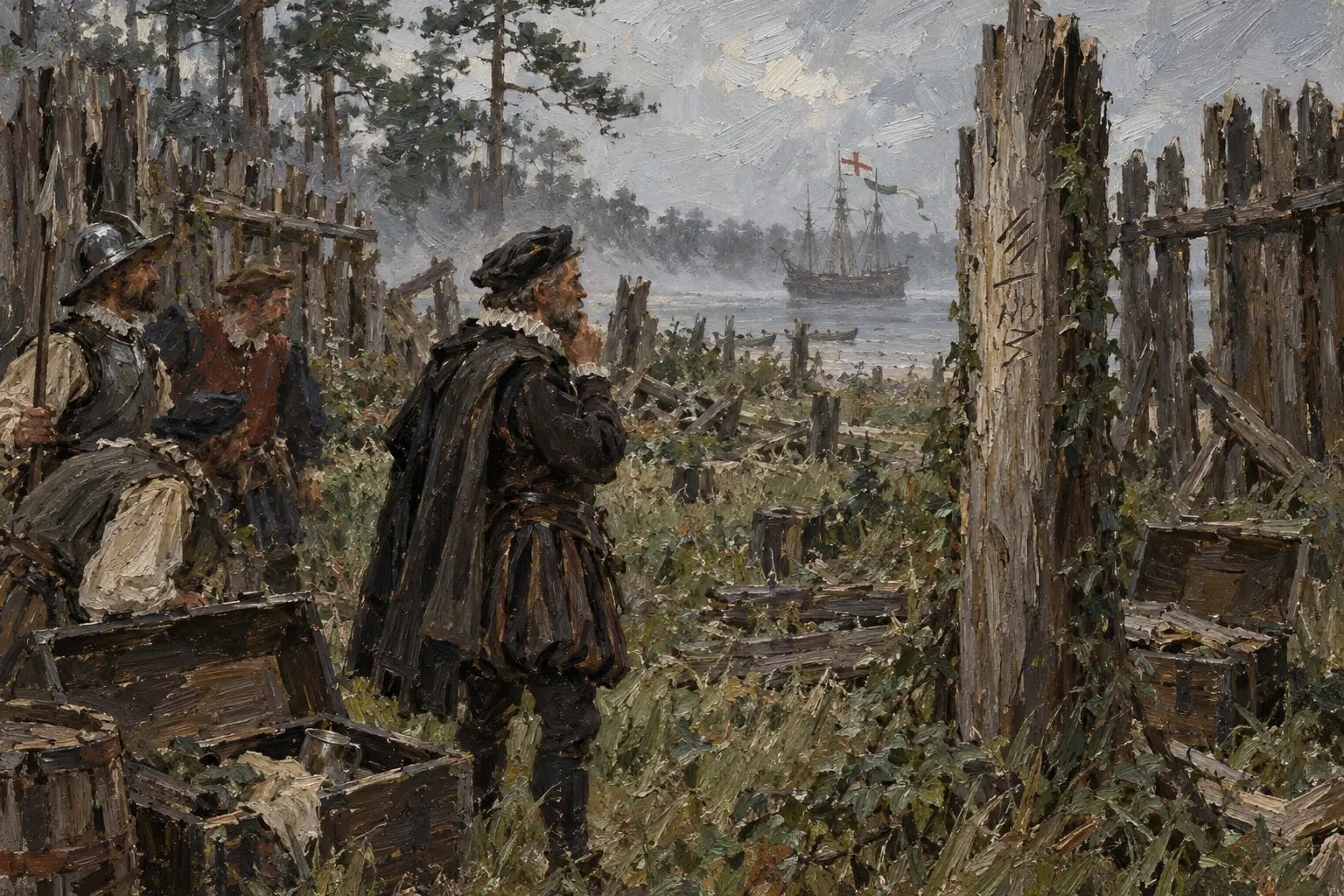
Sir Walter Raleigh, a courtier and explorer, spearheaded England's early efforts to establish colonies in North America. His initiatives, though unsuccessful, laid groundwork for future settlements and intensified Anglo-Spanish rivalries.
Raleigh's role in Roanoke expeditions
- Initial ventures - In 1584, Raleigh obtained a royal patent to colonise Virginia, sending expeditions to Roanoke Island in 1585 and 1587 to establish settlements.
- Challenges and failure - The colonies faced supply shortages, harsh conditions, and conflicts with indigenous peoples, leading to their abandonment by 1590, with the second group mysteriously disappearing.
- Significance - Despite the setbacks, these attempts promoted ideas of permanent English presence in the Americas, influencing later successes like Jamestown.
How privateering and trade increased tensions with Spain
- Privateering activities - English captains, including Drake and Hawkins, were licensed to raid Spanish ships and ports, seizing goods and weakening Spain's empire, which provoked retaliatory measures.
- Trade disruptions - Involvement in slave trading and resource extraction challenged Spain's exclusive claims, escalating diplomatic disputes and contributing to the outbreak of war in 1585.
- Broader impact - These actions fostered a cycle of aggression, culminating in events like the Spanish Armada in 1588, as Spain sought to curb English expansion.