3.6 - Appeasement: Reasons, Sudeten Crisis & Munich
Key facts and dates
Appeasement was a British foreign policy in the 1930s aimed at preventing war by making concessions to aggressive powers, particularly Nazi Germany. This approach culminated in the Sudeten crisis and Munich Agreement, but ultimately failed to contain Hitler's ambitions, leading to its abandonment in 1939.
Timeline of key events
| Date | Event |
|---|---|
| 1933 | Hitler becomes Chancellor of Germany and begins rearmament, challenging the Treaty of Versailles |
| 1935 | Anglo-German Naval Agreement allows Germany a larger navy, seen as an early act of appeasement |
| 1936 | German remilitarisation of the Rhineland goes unopposed by Britain and France |
| March 1938 | Anschluss unites Austria with Germany, accepted by appeasers |
| September 1938 | Sudeten crisis escalates with Hitler's demands; meetings at Berchtesgaden and Bad Godesberg |
| 29–30 September 1938 | Munich Agreement signed, ceding Sudetenland to Germany |
| March 1939 | Germany invades the rest of Czechoslovakia, ending appeasement |
| September 1939 | Germany invades Poland, prompting Britain to declare war |
Reasons for appeasement
Appeasement emerged as a key British foreign policy in the 1930s, driven by a mix of practical, ideological, and strategic considerations. Prime Minister Neville Chamberlain and others believed it was the best way to maintain peace in Europe amid growing tensions.
Factors influencing the policy of appeasement
| Factor | Description |
|---|---|
| Desire to avoid another war | Memories of the First World War's devastation, with over 700,000 British deaths, made politicians and the public reluctant to risk conflict; many saw negotiation as a path to lasting peace |
| Economic weakness | Britain's economy was strained by the Great Depression, limiting funds for rearmament; resources were needed for domestic recovery rather than military buildup |
| Imperial commitments | The vast British Empire required defending territories across Asia, Africa, and the Middle East, stretching military resources thin and making a European war undesirable |
| Belief in legitimate grievances | Some viewed the Treaty of Versailles as overly harsh on Germany, justifying concessions like reversing territorial losses to address perceived injustices |
| Fear of communism | There was concern that weakening Germany could strengthen Soviet influence; Hitler was seen as a bulwark against the spread of communism from the east |
| Faith in negotiation | Leaders believed rational discussions could moderate Hitler's aims, 'civilising' his regime through diplomacy rather than confrontation |
The Sudeten crisis in 1938
Image 1 of 2: Chamberlain flew to Germany on 15 September 1938 for the first of his three meetings with Hitler
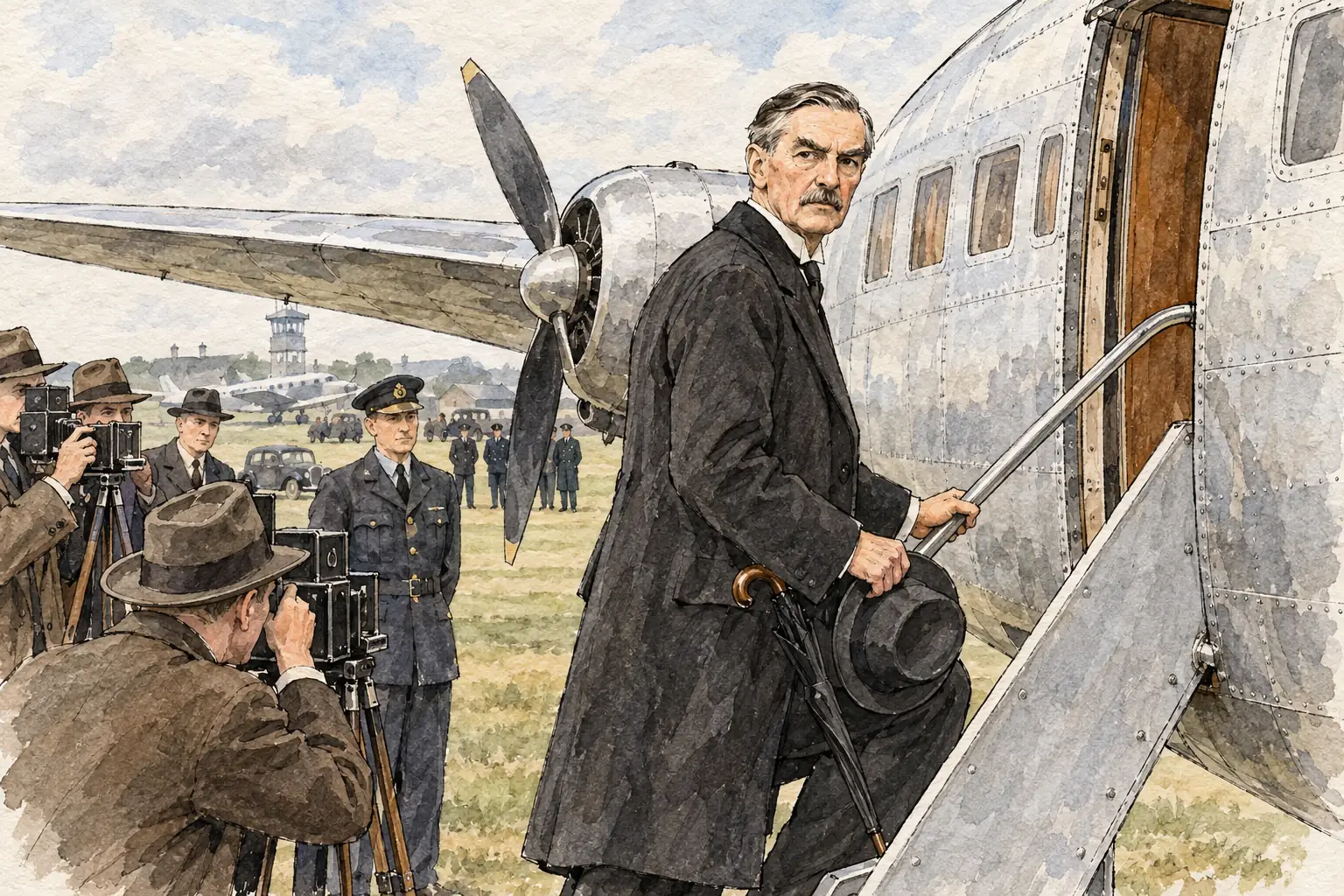
The Sudeten crisis arose from Hitler's demands for the Sudetenland, a region of Czechoslovakia with a large ethnic German population. This escalation tested the limits of appeasement and brought Europe to the brink of war.
Hitler's escalating demands during the crisis
- Initial claims - Hitler argued that the three million Sudeten Germans faced discrimination and should join Germany, using propaganda and staged incidents to justify intervention.
- Meeting at Berchtesgaden - On 15 September 1938, Chamberlain met Hitler, who demanded the Sudetenland's immediate cession; Chamberlain agreed in principle but sought consultations.
- Meeting at Bad Godesberg - On 22–23 September 1938, Hitler raised his demands, insisting on rapid German occupation without plebiscites, heightening tensions and prompting mobilisation in Czechoslovakia and France.
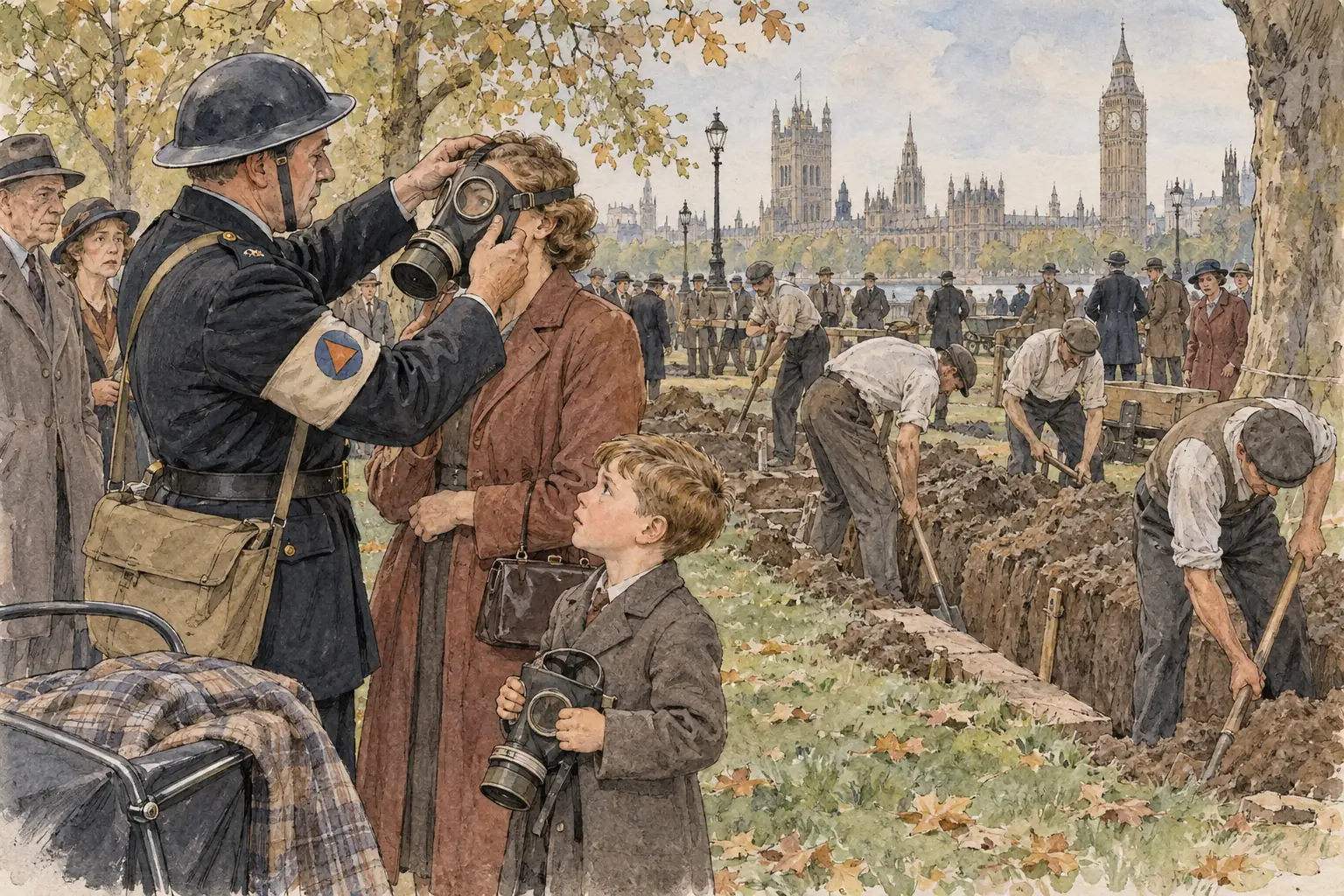
These events created a war scare, with Britain preparing air raid defences and France calling up reserves, highlighting the fragility of European peace.
The Munich Agreement and its terms
Image 1 of 2: Chamberlain, Daladier and Mussolini at the Munich Conference on 29 September 1938, to which Czechoslovakia was not invited
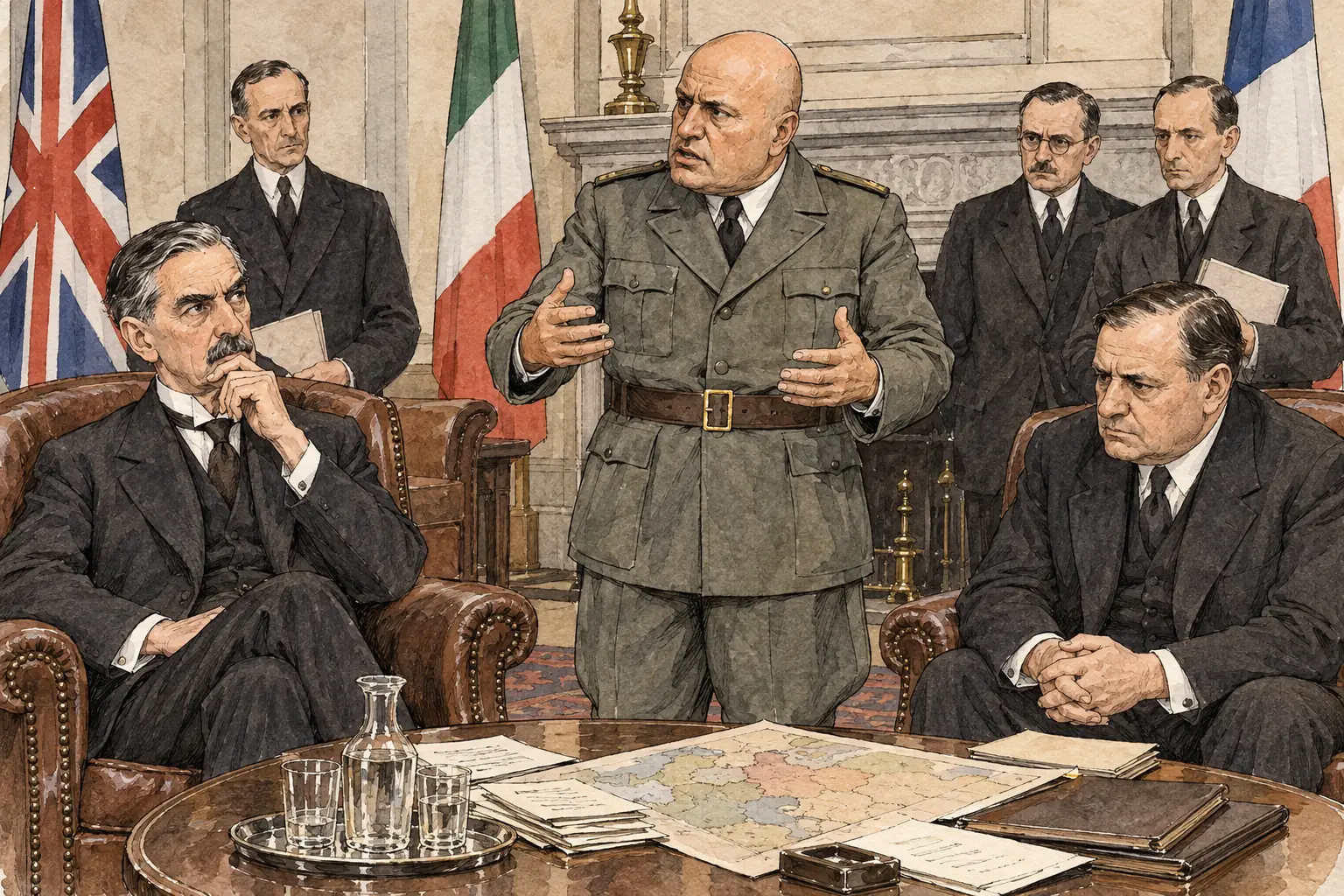
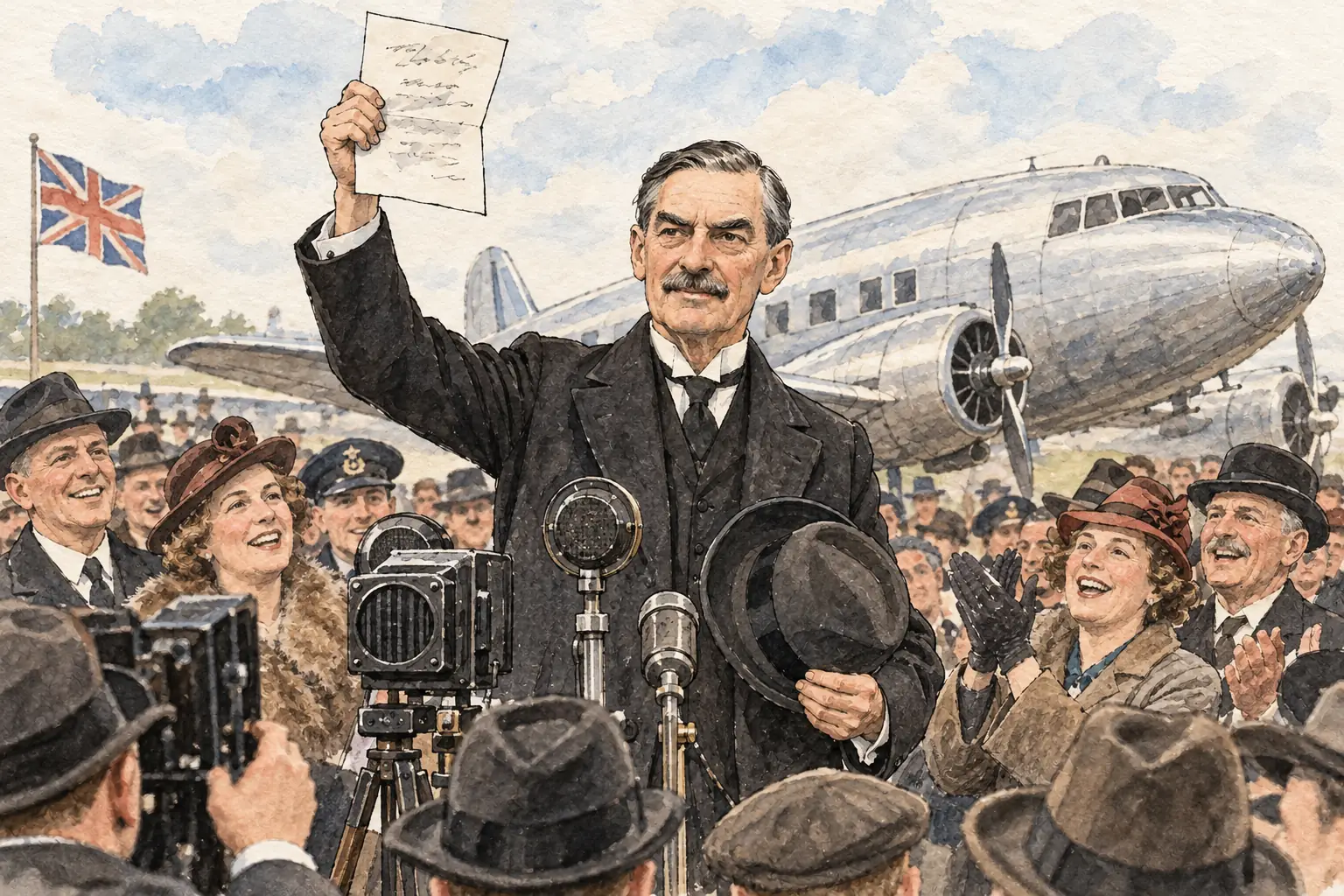
The Munich Agreement was signed on 29–30 September 1938 by Britain, France, Germany, and Italy, resolving the Sudeten crisis through concessions. Czechoslovakia was not invited to the negotiations, underscoring the policy's focus on appeasing Germany.
Key terms and outcomes of the agreement
- Cession of the Sudetenland - Germany gained control of the region, including its fortifications and industries, without consulting Czechoslovakia; German troops occupied it in stages from 1 October 1938.
- International guarantees - Britain and France promised to protect the remaining Czech territory, while Hitler assured no further territorial demands.
- Absence of Soviet involvement - The USSR, an ally of Czechoslovakia, was excluded, reflecting Western fears of communism.
- Immediate effects - Chamberlain returned to Britain proclaiming "peace for our time," but the agreement weakened Czechoslovakia by stripping its natural defences.
Advantages and drawbacks of the Munich Agreement
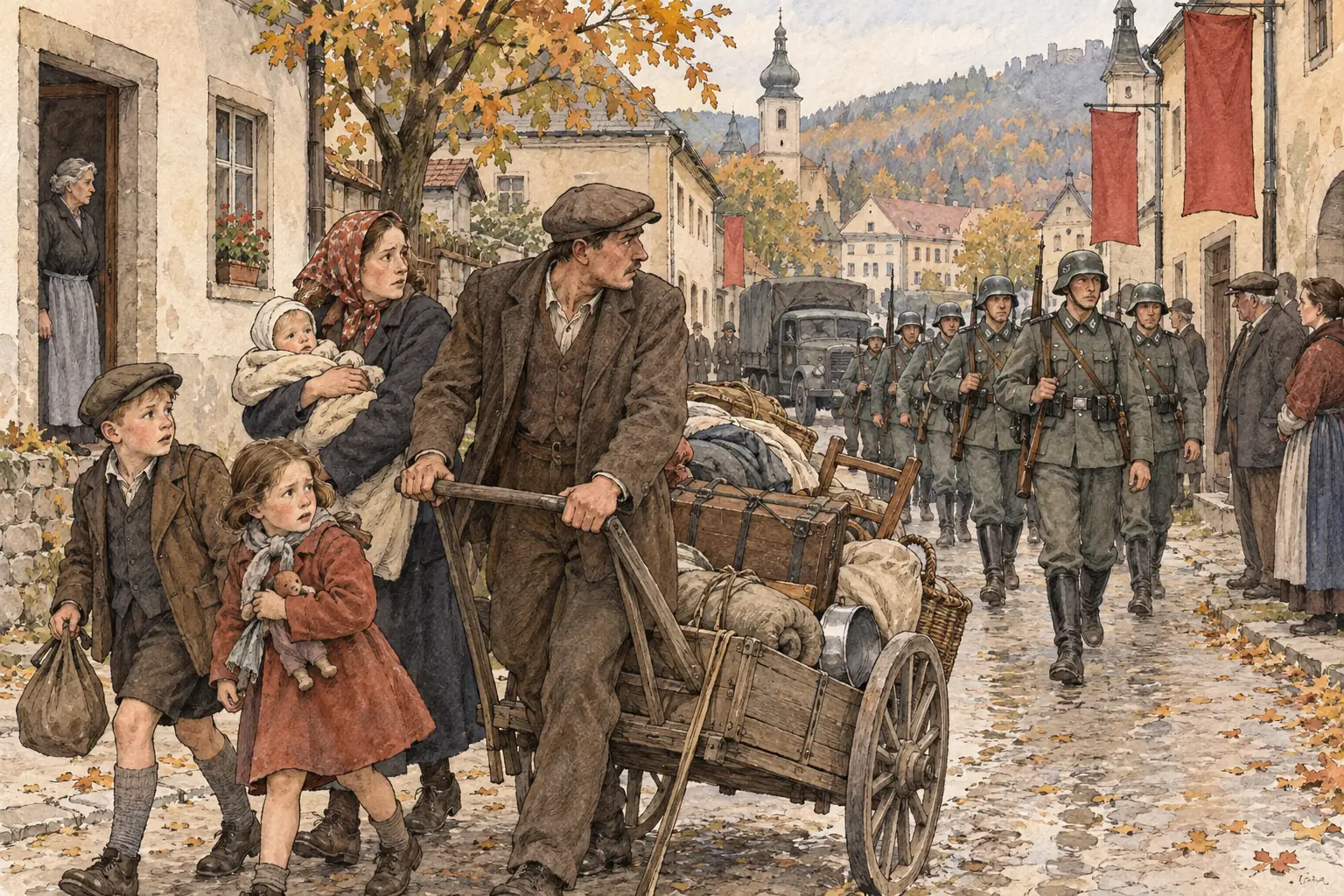
The Munich Agreement was initially hailed as a diplomatic success but later criticised for its long-term consequences. It provided short-term relief while exposing flaws in the appeasement strategy.
Perceived advantages of the agreement
- Time to rearm - Britain gained a year to accelerate military production, including radar development and aircraft manufacturing, better preparing for potential conflict.
- Avoidance of immediate war - The deal prevented a 1938 confrontation when Britain and France were militarily unprepared, potentially saving lives in the short term.
- Public support - It aligned with widespread anti-war sentiment, boosting Chamberlain's popularity and allowing focus on domestic issues.
Drawbacks of the agreement
- Encouragement of aggression - By rewarding Hitler's threats, it emboldened further demands, leading to the invasion of the rest of Czechoslovakia in March 1939.
- Betrayal of a small state - Czechoslovakia lost vital territory and defences without a say, damaging trust in Britain and France as reliable allies.
- Moral and strategic failures - The exclusion of Czechoslovakia and the USSR isolated potential partners against Germany, while ignoring Hitler's expansionist ideology weakened collective security.
The ending of appeasement in 1939
Appeasement ended abruptly in 1939 as Hitler's actions proved negotiations ineffective. This shift marked a turning point towards confrontation, culminating in the outbreak of the Second World War.
Events leading to the policy's abandonment
- Invasion of Czechoslovakia - On 15 March 1939, German forces occupied Prague, violating Munich guarantees and exposing appeasement's failure; Bohemia and Moravia became a protectorate.
- British guarantee to Poland - In response, Chamberlain pledged support for Poland on 31 March 1939, signalling a new commitment to resist aggression.
- Nazi-Soviet Pact - Signed on 23 August 1939, this non-aggression agreement between Germany and the USSR freed Hitler to invade Poland without eastern threats.
- Invasion of Poland - On 1 September 1939, Germany's attack prompted Britain and France to declare war two days later, formally ending appeasement and starting the war.