3.7 - From Prague to War: Nazi-Soviet Pact & Poland
Key facts and dates
The period from March to September 1939 marked the final escalation towards the Second World War, as Nazi Germany's aggressive expansion shattered illusions of peaceful intentions and prompted decisive responses from Britain and France. This timeline captures the critical events that led to the outbreak of global conflict.
Timeline of key events
- March 1939 – Germany occupies the remainder of Czechoslovakia, exposing Hitler's broader expansionist aims.
- 31 March 1939 – Britain issues a guarantee to Poland, promising military support against aggression.
- 23 August 1939 – Nazi-Soviet Pact signed, including secret protocols dividing Eastern Europe into spheres of influence.
- 1 September 1939 – Germany invades Poland, triggering the start of the Second World War.
- 3 September 1939 – Britain and France declare war on Germany in response to the invasion.
German occupation of the rest of Czechoslovakia
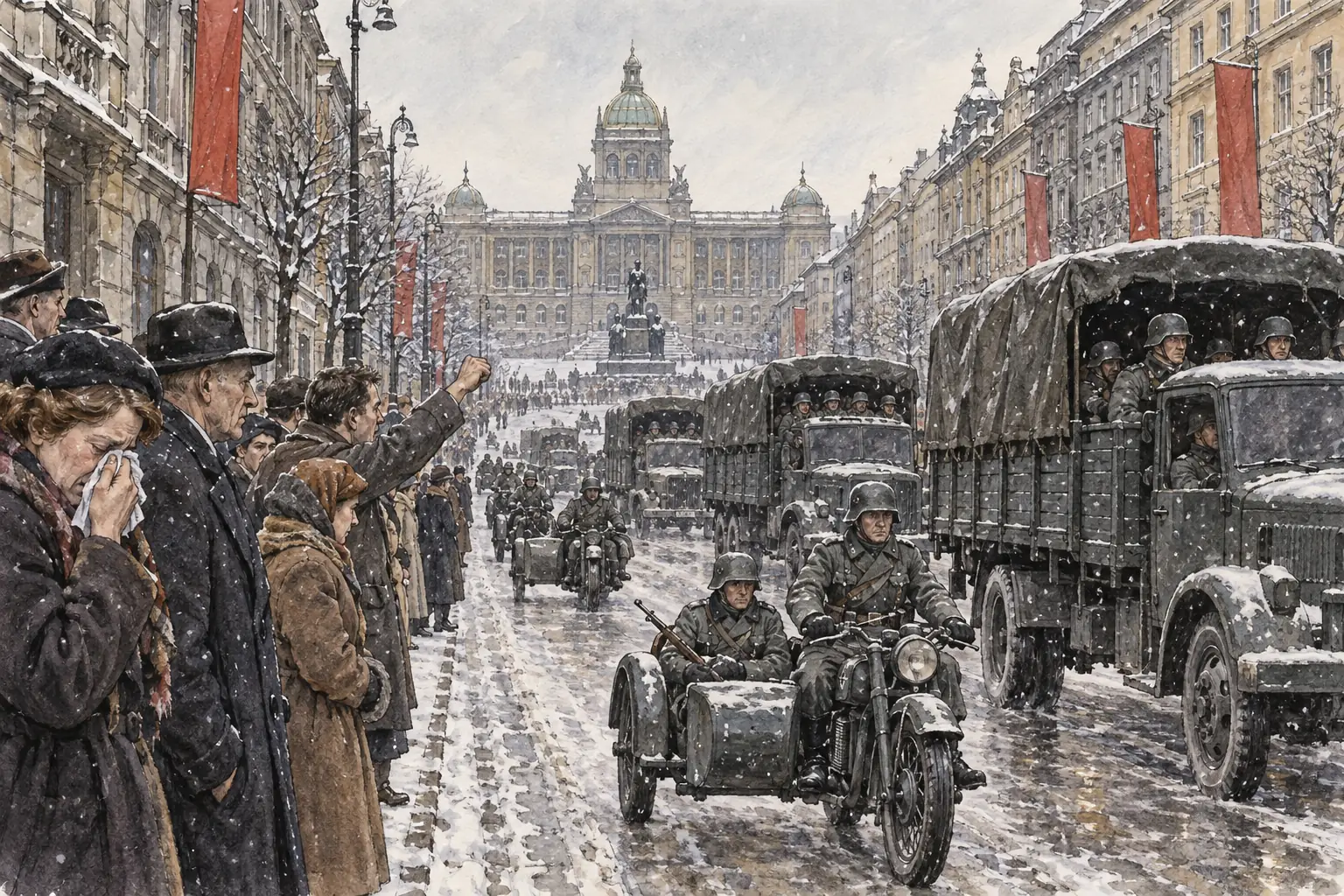
Following the Munich Agreement of 1938, which had allowed Germany to annex the Sudetenland, Hitler moved to seize the remaining Czech territories. This action, occurring in March 1939, dismantled the independent state of Czechoslovakia and revealed the true extent of Nazi ambitions.
Consequences of the occupation
- Exposure of Hitler's intentions - The takeover ended any pretence that Nazi demands were limited to uniting German-speaking populations, as it involved non-German areas and violated the Munich Agreement.
- Creation of new entities - Bohemia and Moravia became a German protectorate, while Slovakia was established as a puppet state under Nazi influence.
- International reaction - The move alarmed Britain and France, signalling that appeasement had failed and prompting a shift towards firmer opposition to further aggression.
Britain's guarantee to Poland
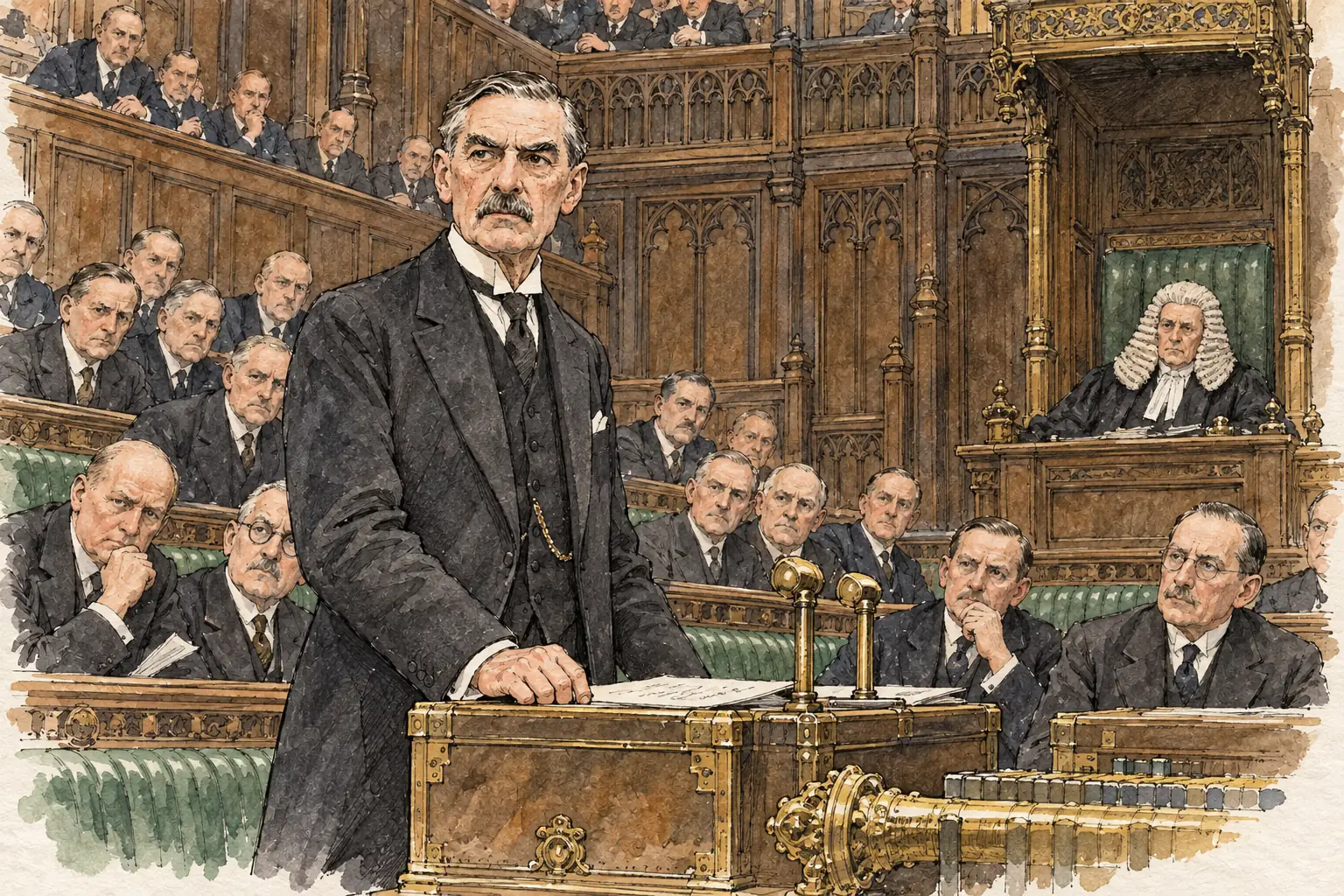
In response to the Czech occupation, Britain adopted a more resolute stance against Nazi expansion. On 31 March 1939, Prime Minister Neville Chamberlain announced a formal guarantee to Poland, committing to defend its independence.
Details and implications of the guarantee
- Scope of the commitment - Britain pledged military assistance if Poland faced aggression, with France later joining the agreement to strengthen the alliance.
- Shift from appeasement - This marked a departure from previous policies of concession, reflecting growing recognition that Hitler's demands were insatiable.
- Strategic importance - The guarantee aimed to deter German attacks on Poland, a key Eastern European state, and to prevent further erosion of the European balance of power.
The Nazi-Soviet Pact and its implications
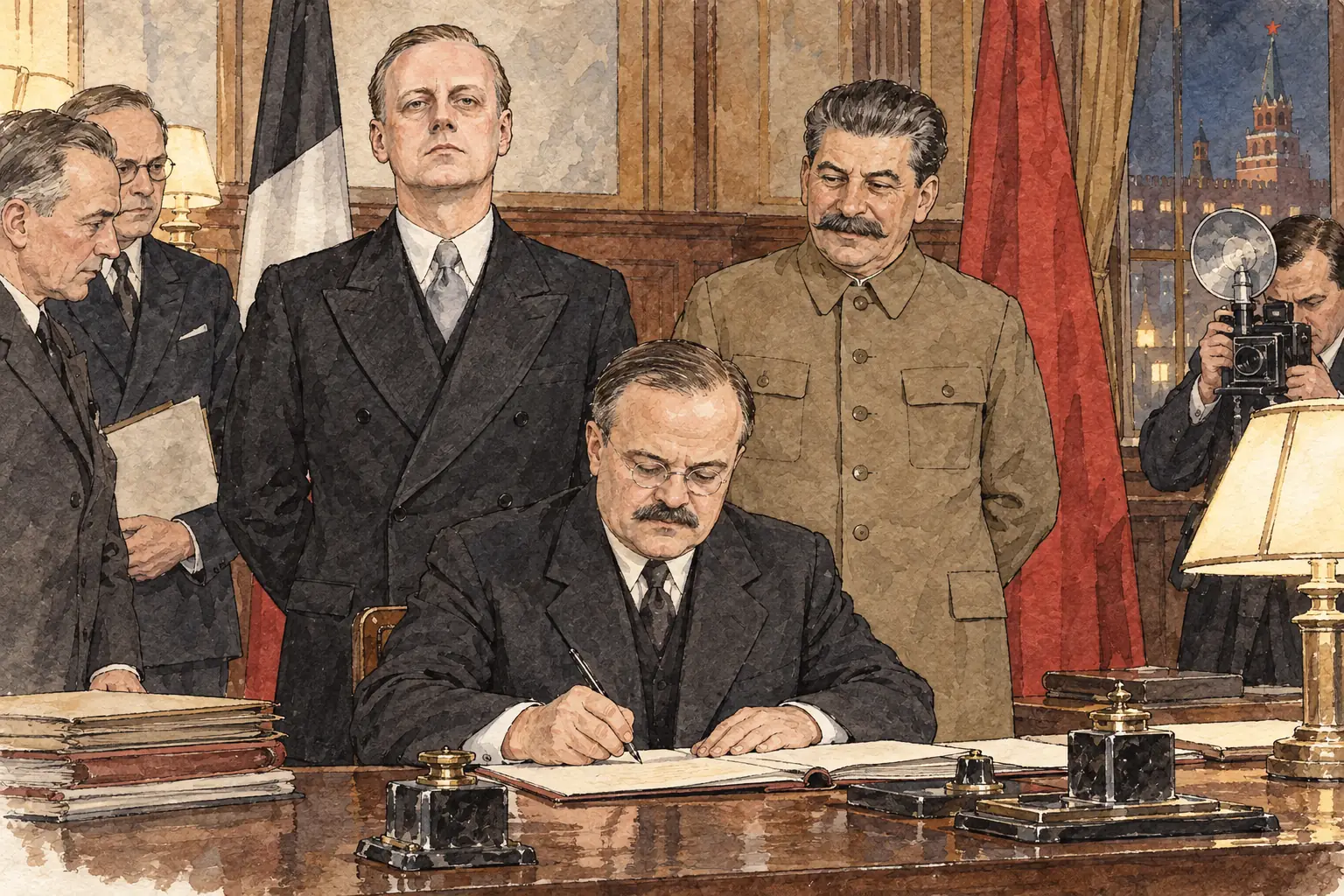
The Nazi-Soviet Pact, signed on 23 August 1939, was a non-aggression treaty between Germany and the Soviet Union that stunned the world due to the ideological opposition between Nazism and communism. It included secret protocols that reshaped Eastern Europe.
Key features of the pact
- Public non-aggression agreement - Both nations promised not to attack each other for ten years, allowing Germany to avoid a two-front war and the Soviet Union to gain time for military preparations.
- Secret protocols - These divided spheres of influence, assigning Finland, Estonia, Latvia, and parts of Romania to the Soviet Union, while Lithuania and western Poland fell under German control, with eastern Poland allocated to the Soviets.
- Strategic benefits - For Hitler, it neutralised the threat from the east, enabling focus on western campaigns; for Stalin, it provided a buffer zone and delayed potential conflict.
The invasion of Poland and the outbreak of war
Image 1 of 2: German troops crossed into Poland at dawn on 1 September 1939
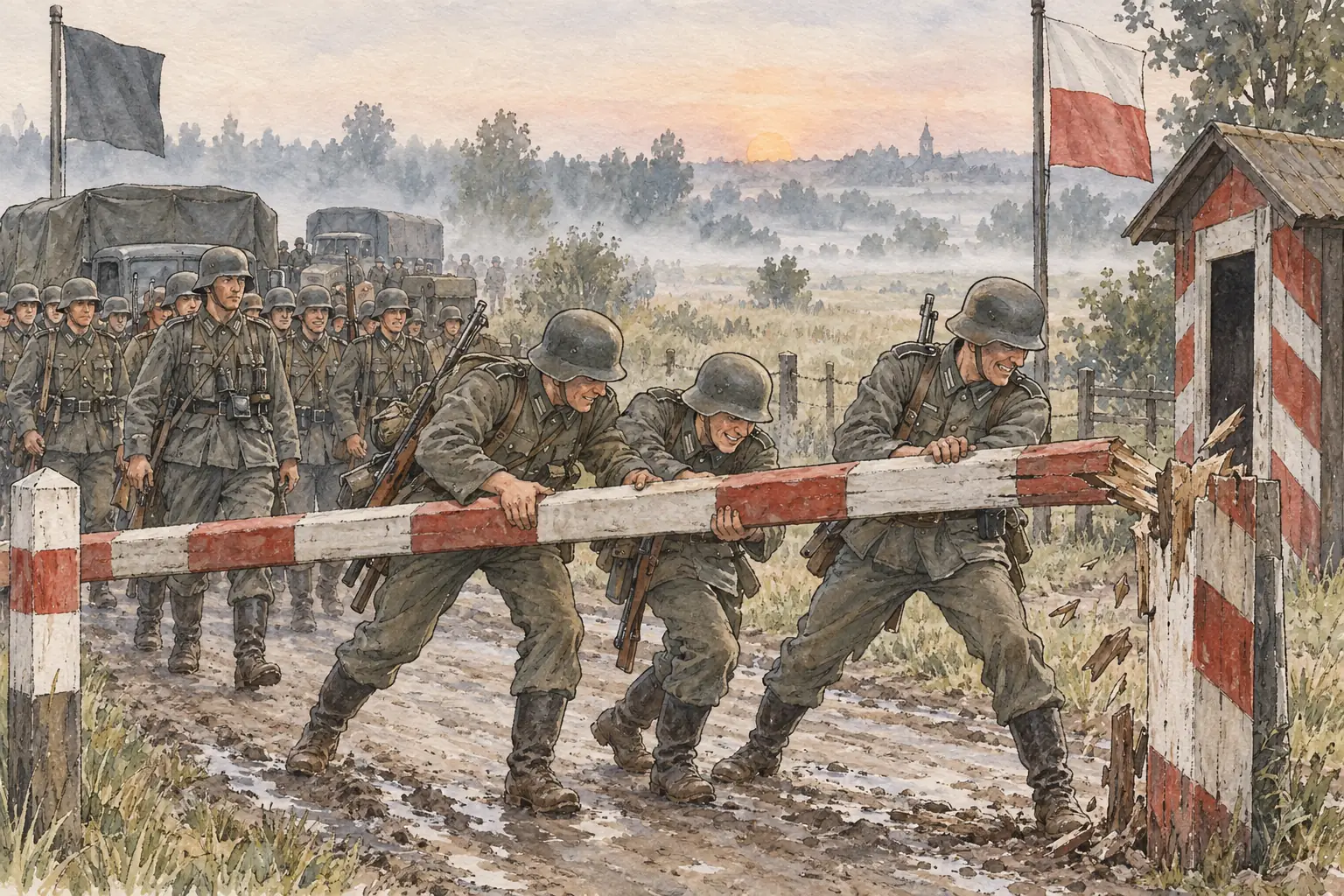
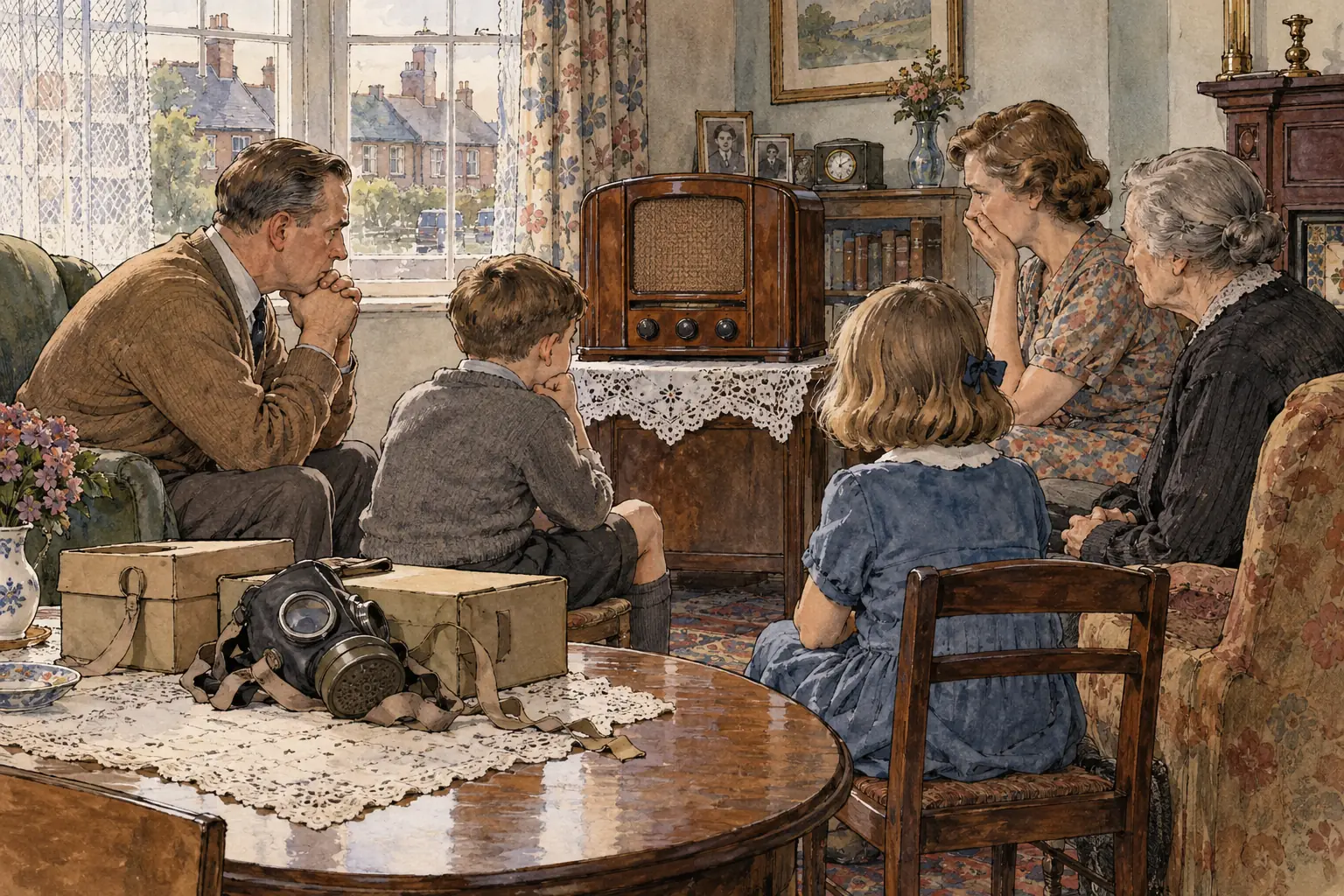
Emboldened by the Nazi-Soviet Pact, Germany launched a full-scale invasion of Poland on 1 September 1939, employing blitzkrieg tactics for rapid conquest. This prompted Britain and France to honour their guarantees, leading to the formal start of the Second World War.
Events of the invasion
- German tactics - The assault involved coordinated air and ground attacks, overwhelming Polish defences and resulting in quick territorial gains.
- Soviet involvement - On 17 September, the Soviet Union invaded eastern Poland as per the pact's secret terms, dividing the country between the two powers.
- Declaration of war - Britain and France declared war on Germany on 3 September 1939, though initial military action was limited, marking the beginning of the 'Phoney War' period.
Assessing responsibility for the war
The outbreak of the Second World War stemmed from a complex interplay of factors, with historians debating the relative roles of key individuals, treaties, and international failures. Weighing these elements helps explain how tensions escalated into global conflict.
Factors contributing to the war
| Factor | Arguments for primary responsibility | Arguments against primary responsibility |
|---|---|---|
| Hitler's role | His aggressive expansionism, including the Czech occupation and Polish invasion, directly triggered the conflict, driven by ideological goals of Lebensraum. | Other powers' weaknesses, like appeasement, enabled his actions rather than forcing confrontation. |
| Stalin's role | The Nazi-Soviet Pact facilitated the invasion by removing the two-front war risk and enabling the division of Poland. | Stalin acted defensively to buy time against potential German aggression, reacting to Western failures in collective security. |
| Chamberlain's role | Appeasement policies, such as Munich, emboldened Hitler by conceding without resistance, delaying a firm stand until too late. | He inherited a weakened military position and sought to avoid war, with the guarantee to Poland showing a eventual shift. |
| Treaty of Versailles | Harsh terms created German resentment, fuelling Nazi rise and revanchist policies that led to expansion. | The treaty's enforcement was inconsistent, and economic factors like the Depression played a larger role in instability. |
| Failure of collective security | The League of Nations' inability to enforce peace, as seen in Abyssinia and Manchuria, eroded deterrence and allowed aggression to go unchecked. | Individual leaders' decisions, rather than institutional flaws, were the decisive triggers for war. |