1.2 - Wilson's 14 Points & Self-Determination
Key facts and dates
Woodrow Wilson's 14 Points outlined a vision for a fair and lasting peace after the First World War, emphasising principles like self-determination and international cooperation. Although influential, they faced resistance from European powers focused on security and reparations, leading to compromises in the final treaties.
Timeline of key events
- 8 January 1918 – President Wilson presents his 14 Points in a speech to the US Congress, proposing ideals for post-war settlement.
- October 1918 – Germany requests an armistice based on the 14 Points, hoping for lenient terms.
- 11 November 1918 – Armistice signed, broadly accepting Wilson's principles but without detailed enforcement.
- 18 January 1919 – Paris Peace Conference begins, where the 14 Points influence discussions but are modified.
- 28 June 1919 – Treaty of Versailles signed, departing from several of Wilson's points to address Allied demands.
Summary of Wilson's 14 Points
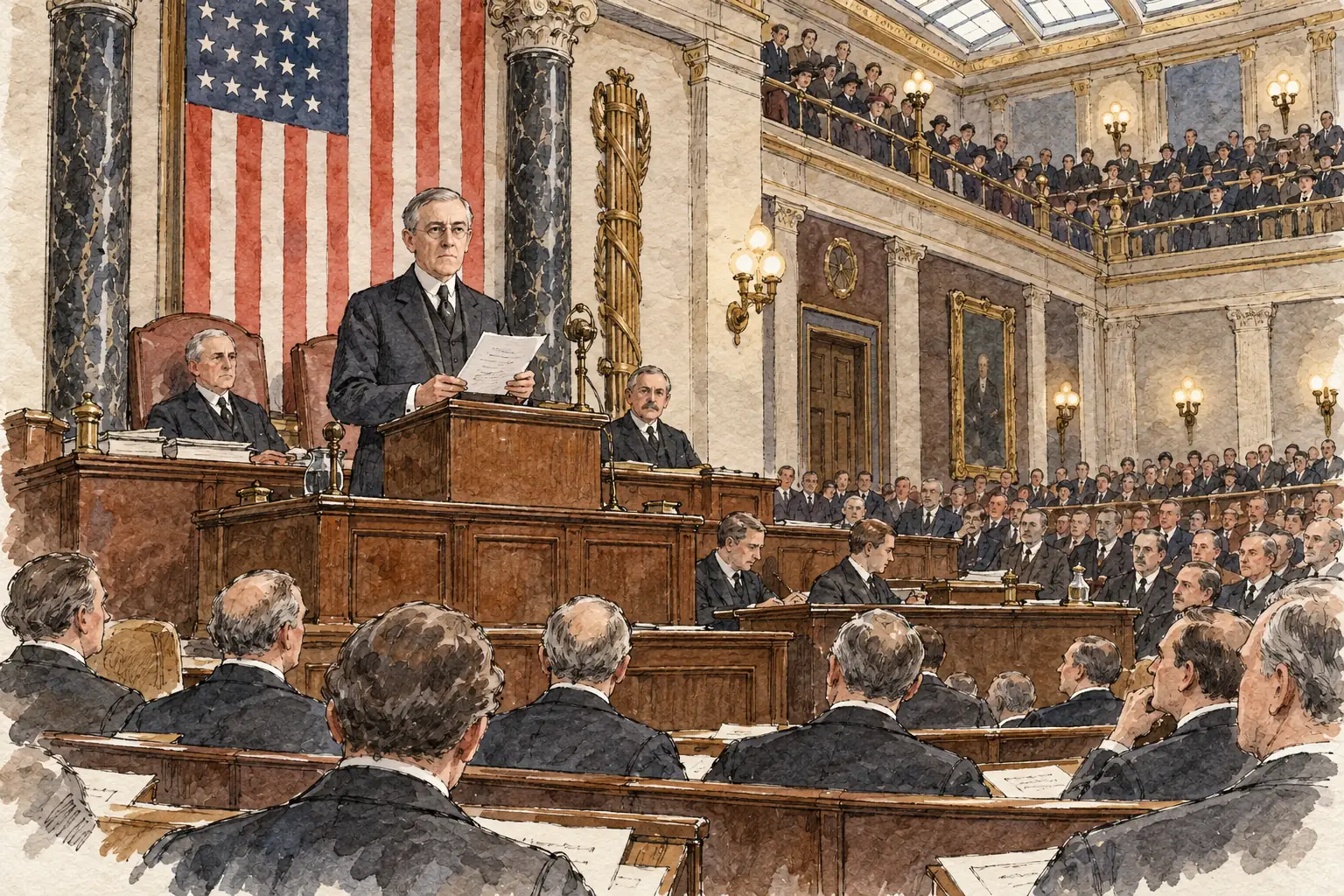
President Woodrow Wilson of the United States proposed his 14 Points in January 1918 as a blueprint for ending the First World War and preventing future conflicts. These points aimed to promote transparency, fairness, and global stability, contrasting with the secret alliances that had contributed to the war.
Core principles in the 14 Points
| Principle | Description |
|---|---|
| Open diplomacy | All international agreements should be public, eliminating secret treaties. |
| Freedom of the seas | Navigation rights should be guaranteed for all nations in peacetime and wartime, except in cases of international enforcement. |
| Free trade | Barriers to international commerce should be removed to encourage economic cooperation. |
| Disarmament | Nations should reduce armaments to the lowest levels consistent with domestic safety. |
| Self-determination for nations | Peoples should have the right to choose their own governments, particularly in regions under foreign control. |
| Adjustment of colonial claims | Colonial issues should be resolved fairly, considering the interests of both colonial powers and local populations. |
| Evacuation of occupied territories | Invaded areas, such as those in Russia, Belgium, and France, should be restored. |
| Alsace-Lorraine to France | This territory, taken by Germany in 1871, should be returned to French control. |
| Creation of a League of Nations | An international organisation should be established to resolve disputes and maintain peace. |
The appeal and limits of self-determination
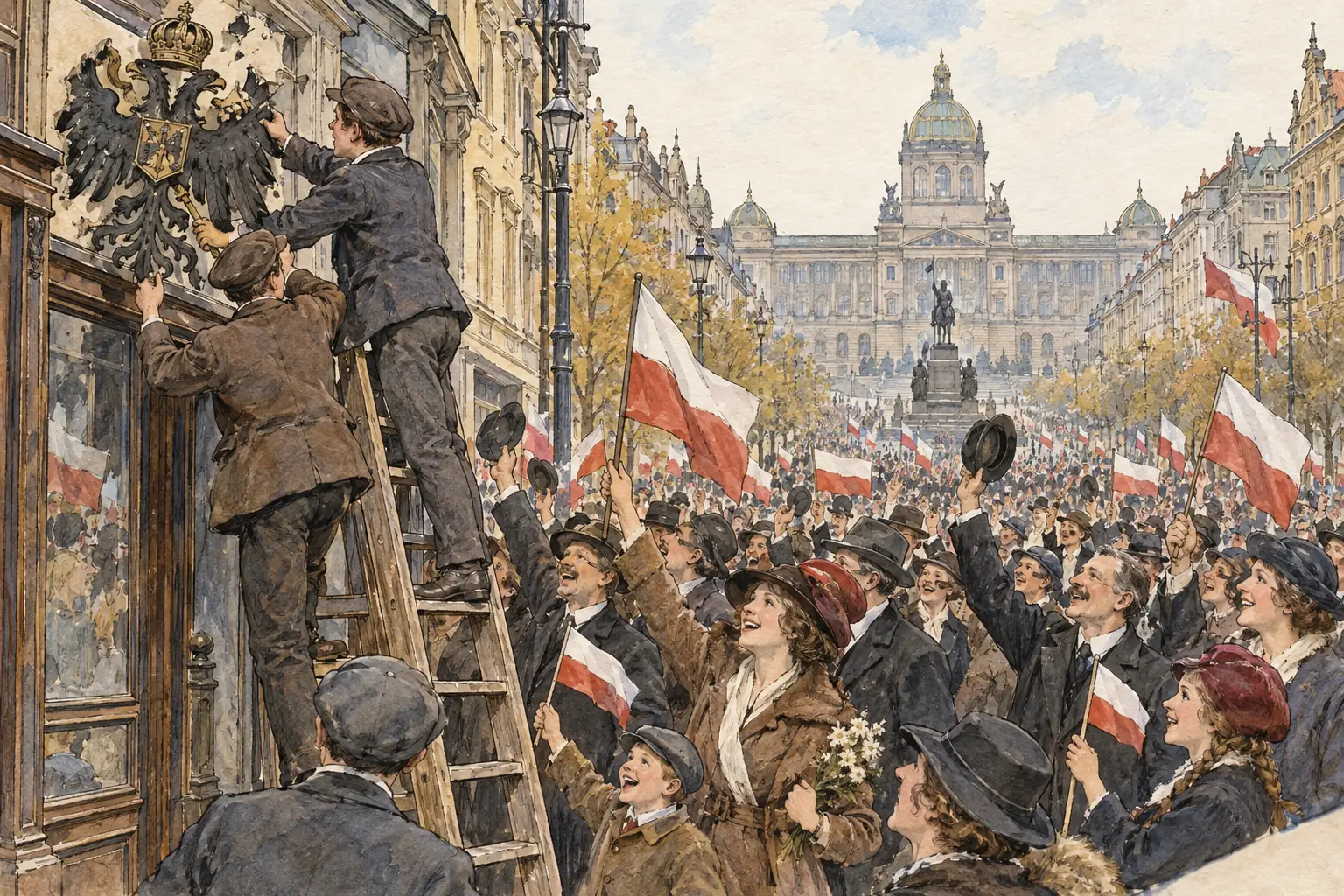
Self-determination, a key element of Wilson's 14 Points, referred to the right of ethnic groups to govern themselves and form independent states. This idea gained popularity as it promised to address nationalist aspirations suppressed by empires during the war.
Appeal of self-determination
- Promotion of justice - It resonated with oppressed groups seeking freedom from imperial rule, fostering hope for a more equitable world order.
- Prevention of conflict - By allowing peoples to form nations based on shared identity, it aimed to reduce tensions that had sparked the war.
- Influence on new states - It inspired the creation of countries like Poland and Czechoslovakia from the remnants of collapsed empires.
Limits in multi-ethnic regions
- Challenges in diverse areas - In places like Central and Eastern Europe, mixed populations made it difficult to draw clear borders without leaving minorities dissatisfied.
- Potential for instability - Self-determination sometimes ignored economic or geographic realities, leading to fragmented states vulnerable to internal strife.
- Selective application - It was applied unevenly, often favouring European groups while overlooking colonial subjects in Africa and Asia.
How the 14 Points provided a framework for peace
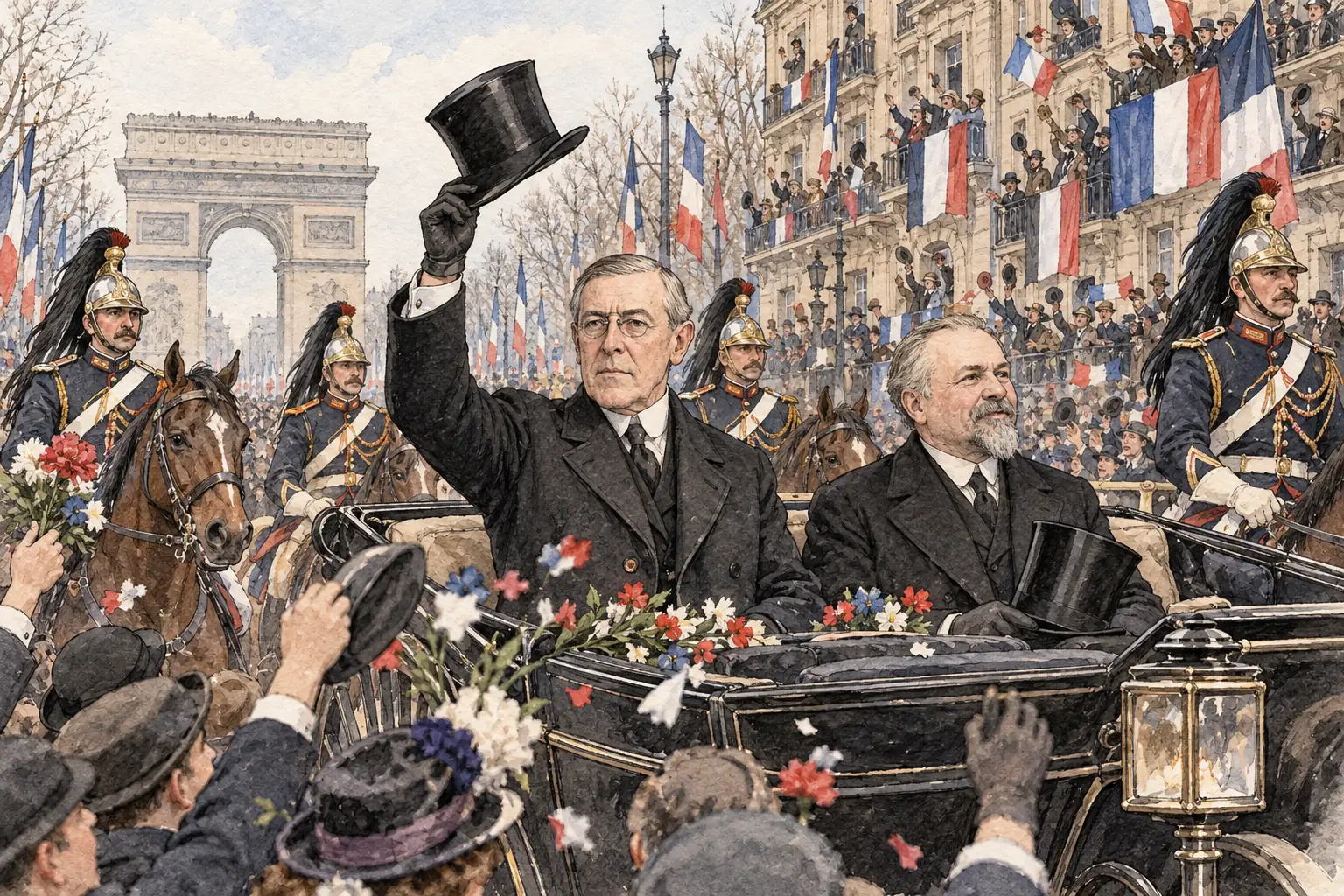
Wilson's 14 Points served as an idealistic foundation for negotiating the end of the First World War, offering a set of principles to guide the armistice and subsequent peace talks. They emphasised moral and practical reforms to build a stable international system.
Role as a peace framework
- Basis for armistice - Germany agreed to the armistice in November 1918 on the understanding that the 14 Points would shape the final terms, providing a structured path to negotiations.
- Promotion of global cooperation - Points like the League of Nations encouraged collective security, aiming to replace power politics with dialogue.
- Focus on fairness - By addressing issues such as territorial restoration and economic openness, the points sought to eliminate root causes of resentment among nations.
Clashes and departures in the final settlement
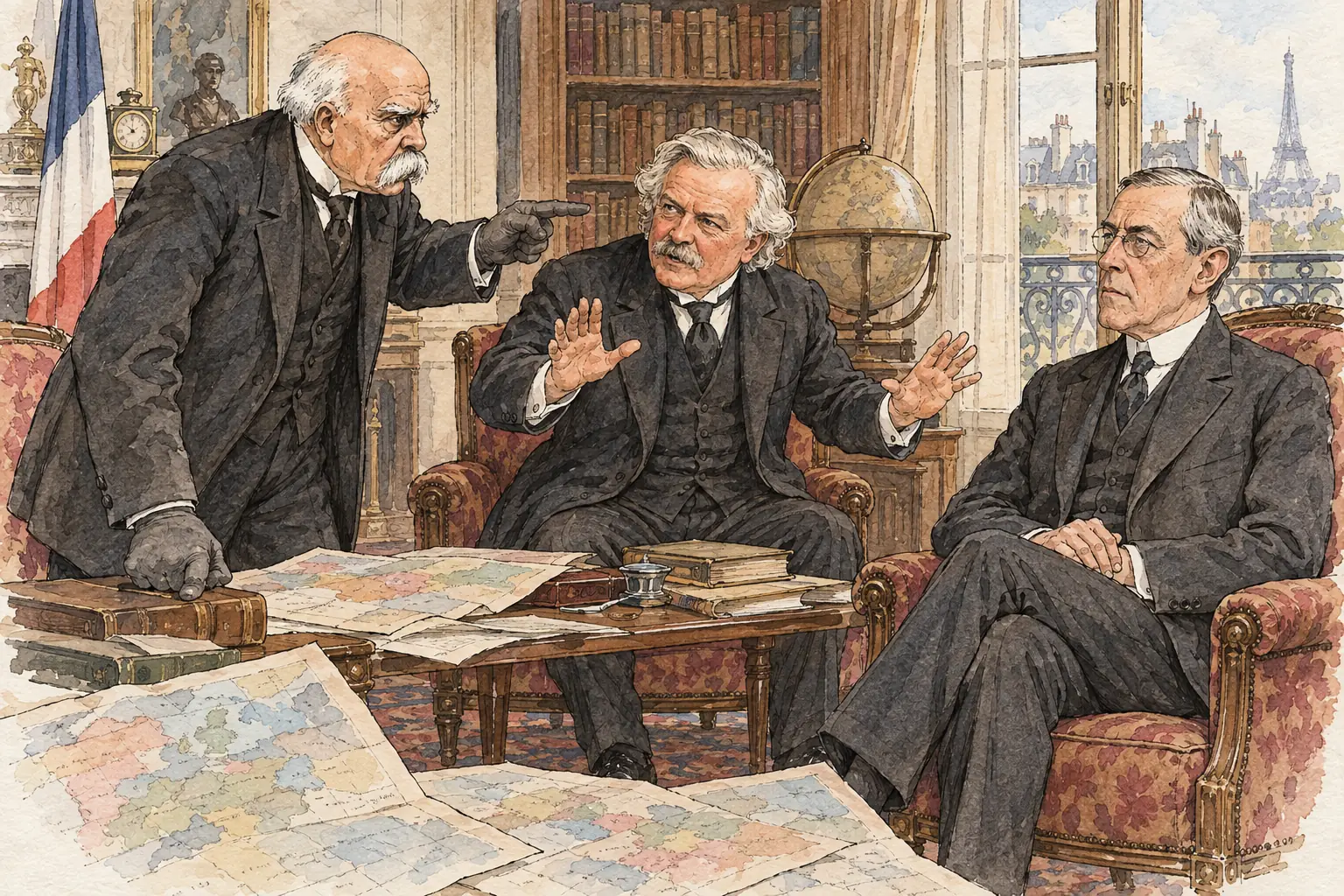
While the 14 Points influenced initial discussions, they often conflicted with the priorities of European Allies, who sought stronger guarantees against future aggression and compensation for war damages. This led to significant modifications in the Paris Peace Conference outcomes.
Clashes with European security and imperial interests
- Security priorities - France and Britain prioritised weakening Germany through harsh penalties, viewing Wilson's ideals as too lenient and risking renewed threats.
- Imperial considerations - European powers resisted full self-determination for their colonies, protecting economic interests and global influence.
- Punitive demands - Allies pushed for reparations and territorial losses for the Central Powers, clashing with Wilson's emphasis on moderation.
Departures in the final settlement
- Modifications to key points - The Treaty of Versailles imposed heavy reparations on Germany, contrary to the spirit of fair trade and disarmament for all.
- Limited self-determination - While new nations emerged in Europe, mandates in former colonies maintained imperial control under the League of Nations.
- Compromised League - The League was created but lacked US participation after Congress rejected it, weakening its effectiveness.