1.3 - Medieval Surgery
Key facts and dates
Medieval surgery evolved slowly between the 5th and 15th centuries, relying on basic techniques and limited medical knowledge, which often led to high risks and poor outcomes. While surgeons gained practical experience through warfare, misconceptions about infection persisted, though some innovative ideas began to emerge.
Key facts to remember
- Common procedures – Included wound treatment, bone setting, trepanning, cauterisation, and amputation.
- Major risks – Pain, infection, and blood loss, exacerbated by crude tools and limited hygiene.
- Anaesthetics – Basic options like opiates, mandrake, and hemlock provided inconsistent pain relief.
- Antiseptics – Simple substances such as wine and honey were used to clean wounds.
- Laudable pus theory – Widely held belief that pus in wounds indicated healing.
- Innovative surgeons – Hugh of Lucca (c.1160–1252) and Theodoric of Lucca (1205–1296) promoted wound cleaning.
- Notable figures – John of Arderne (1307–1392) specialised in anal fistula operations; John Bradmore (d.1412) extracted an arrow from Prince Henry.
- Warfare's impact – Provided surgical experience but resulted in high mortality and suffering.
Common surgical procedures in medieval times
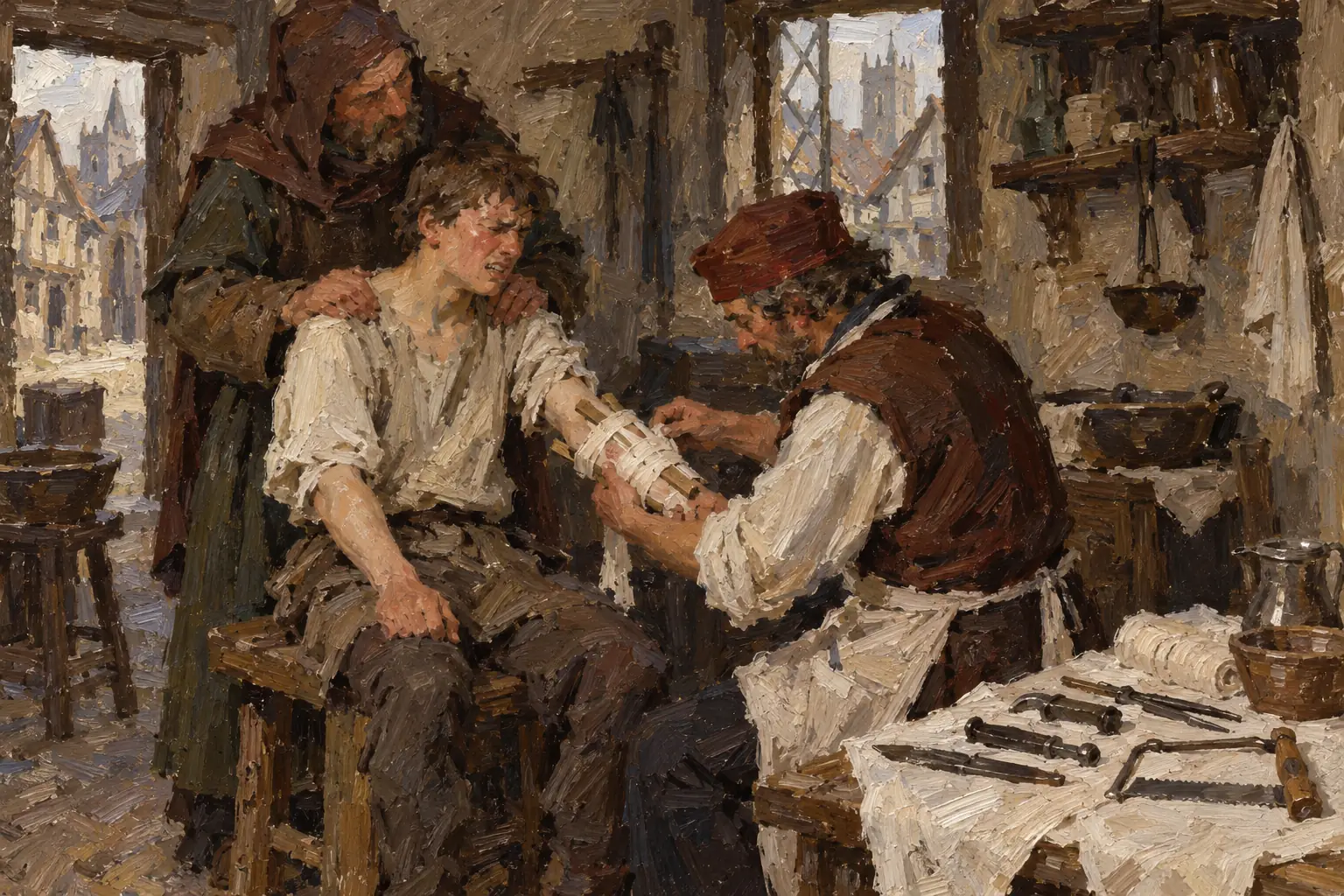
During the medieval period, surgeons performed a range of basic operations using simple tools like knives, saws, and needles. These procedures were often carried out by barber-surgeons or physicians with limited training, and they were constrained by a lack of anatomical knowledge and sterile environments.
Types of procedures performed by medieval surgeons
- Wound treatment - Involved stitching or binding cuts from injuries, often using thread made from animal gut or silk to close the skin.
- Setting bones - Fractured limbs were realigned manually, sometimes with splints made from wood or cloth to hold them in place during healing.
- Trepanning - A hole was drilled into the skull to relieve pressure from head injuries or to treat conditions like migraines, using a tool called a trephine.
- Cauterisation - Hot irons or boiling oil were applied to seal blood vessels and prevent bleeding, commonly used in battlefield injuries.
- Amputation - Limbs damaged by gangrene or trauma were removed with saws, followed by cauterisation to stop haemorrhage.
Risks associated with medieval surgery
Medieval surgery carried significant dangers due to the era's limited medical understanding and rudimentary techniques. Patients frequently faced life-threatening complications, with survival rates remaining low even for minor operations.
Main dangers in medieval surgical practices
- Pain - Procedures were excruciating without effective anaesthesia, leading to shock or fainting, and surgeons often had to restrain patients during operations.
- Infection - Open wounds easily became contaminated in unsanitary conditions, as there was no knowledge of bacteria, resulting in widespread sepsis.
- Blood loss - Excessive bleeding was common during cuts or amputations, with basic methods like tourniquets offering only partial control, often leading to death from haemorrhage.
Methods for pain relief and infection control
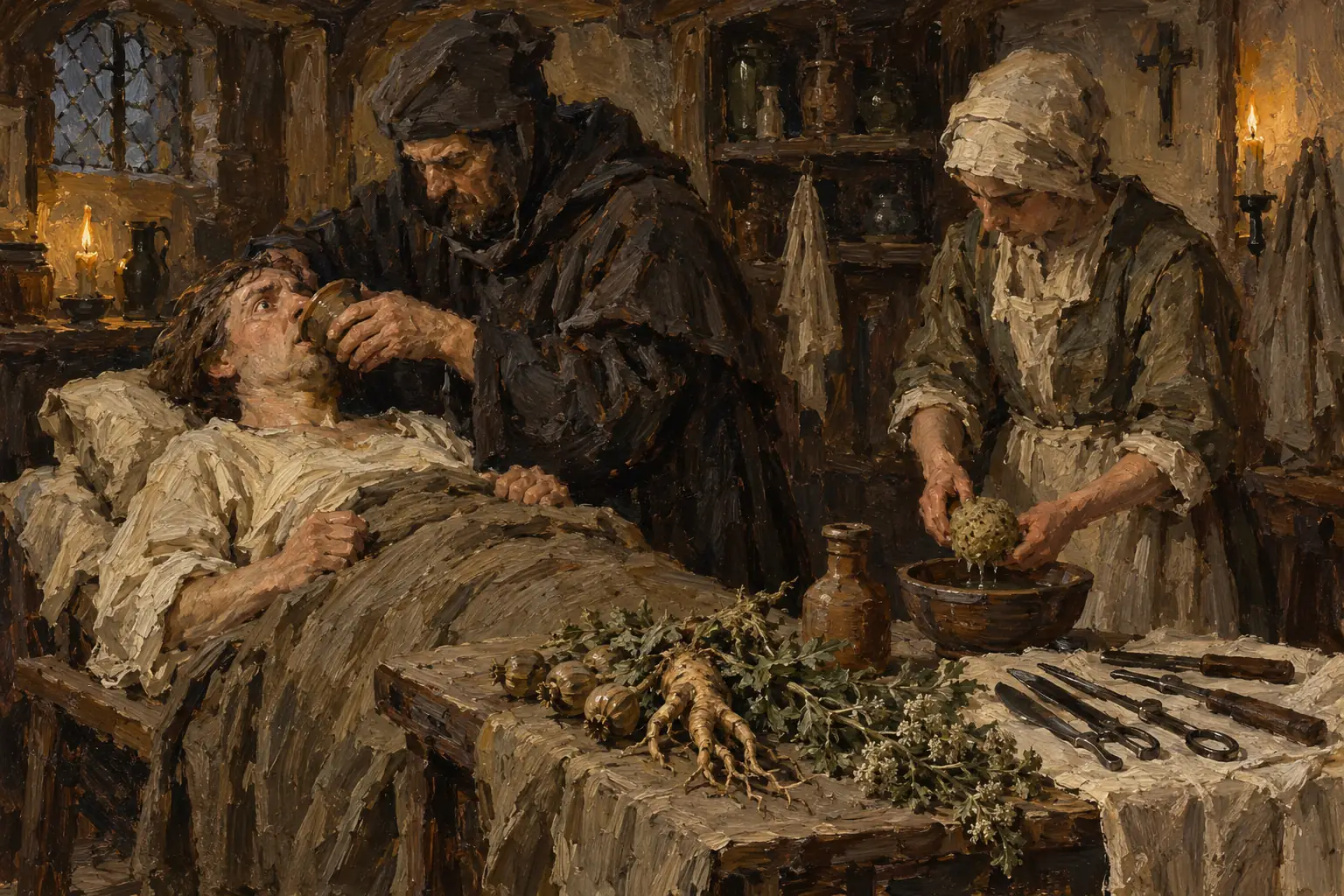
Medieval surgeons employed basic substances to manage pain and prevent infection, drawing from herbal traditions and ancient texts. However, these methods were inconsistent and often ineffective, reflecting the trial-and-error nature of the time.
Approaches to anaesthesia and antisepsis
- Crude anaesthetics - Herbal mixtures including opiates from poppies, mandrake root, and hemlock were administered to dull sensation, though dosages were imprecise and could cause overdose or insufficient relief.
- Simple antiseptics - Natural agents like wine, with its alcohol content, and honey, known for its antibacterial properties, were poured onto wounds to cleanse them and reduce the risk of festering.
Contrasting views on wound treatment
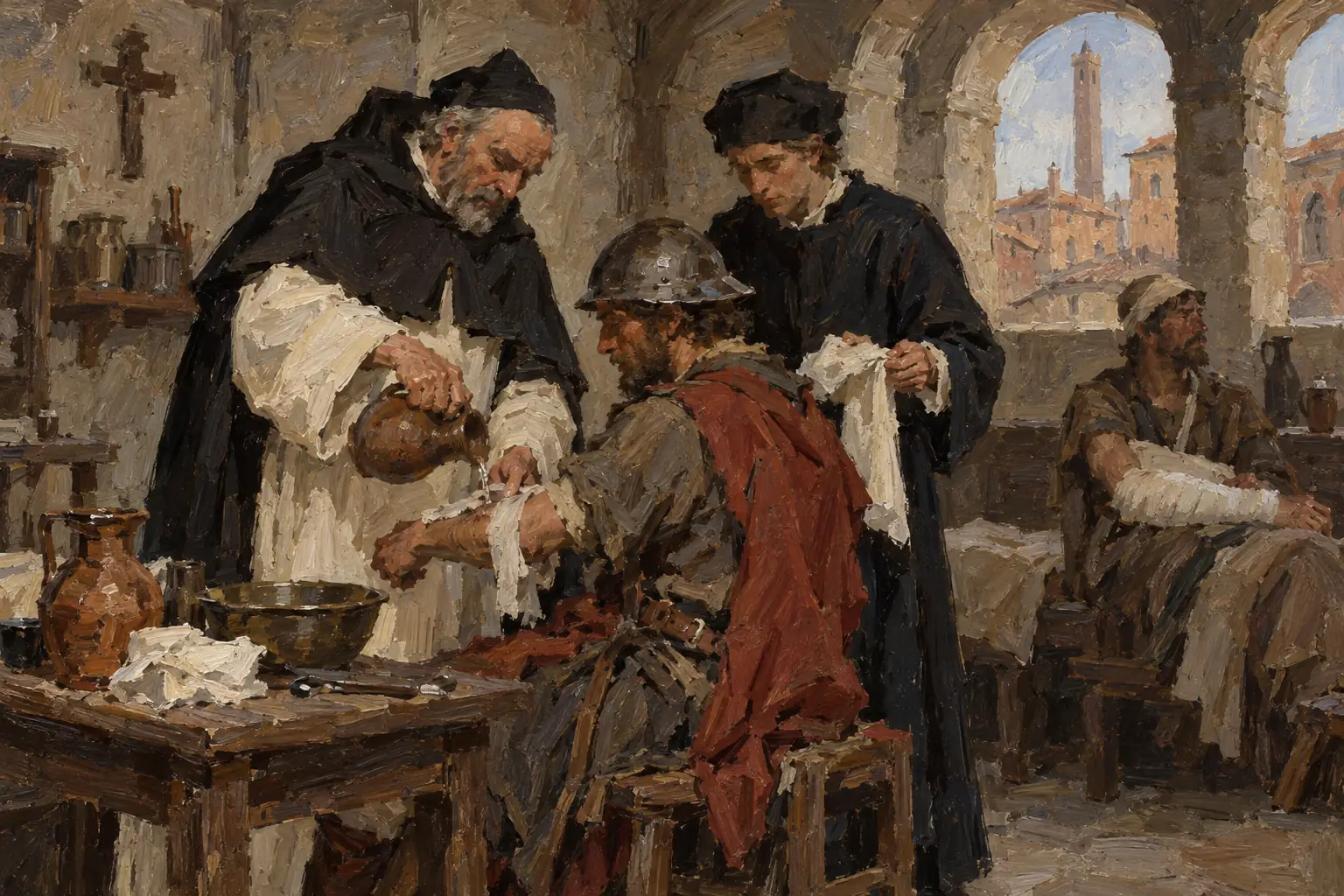
Medieval medical beliefs about wound healing varied, with traditional ideas clashing against emerging progressive thoughts. This debate highlighted a gradual shift towards more effective practices, though old theories dominated.
Traditional and innovative perspectives on wounds
- Laudable pus theory - Many practitioners believed that the formation of pus in a wound was a positive sign of the body expelling harmful substances, encouraging them to leave wounds open to promote this process.
- Cleaning advocacy by Hugh and Theodoric of Lucca - In contrast, these Italian surgeons argued for keeping wounds dry and clean, using wine to wash them and bandages to prevent contamination, which reduced infection rates in their patients.
Notable surgeons and the role of warfare
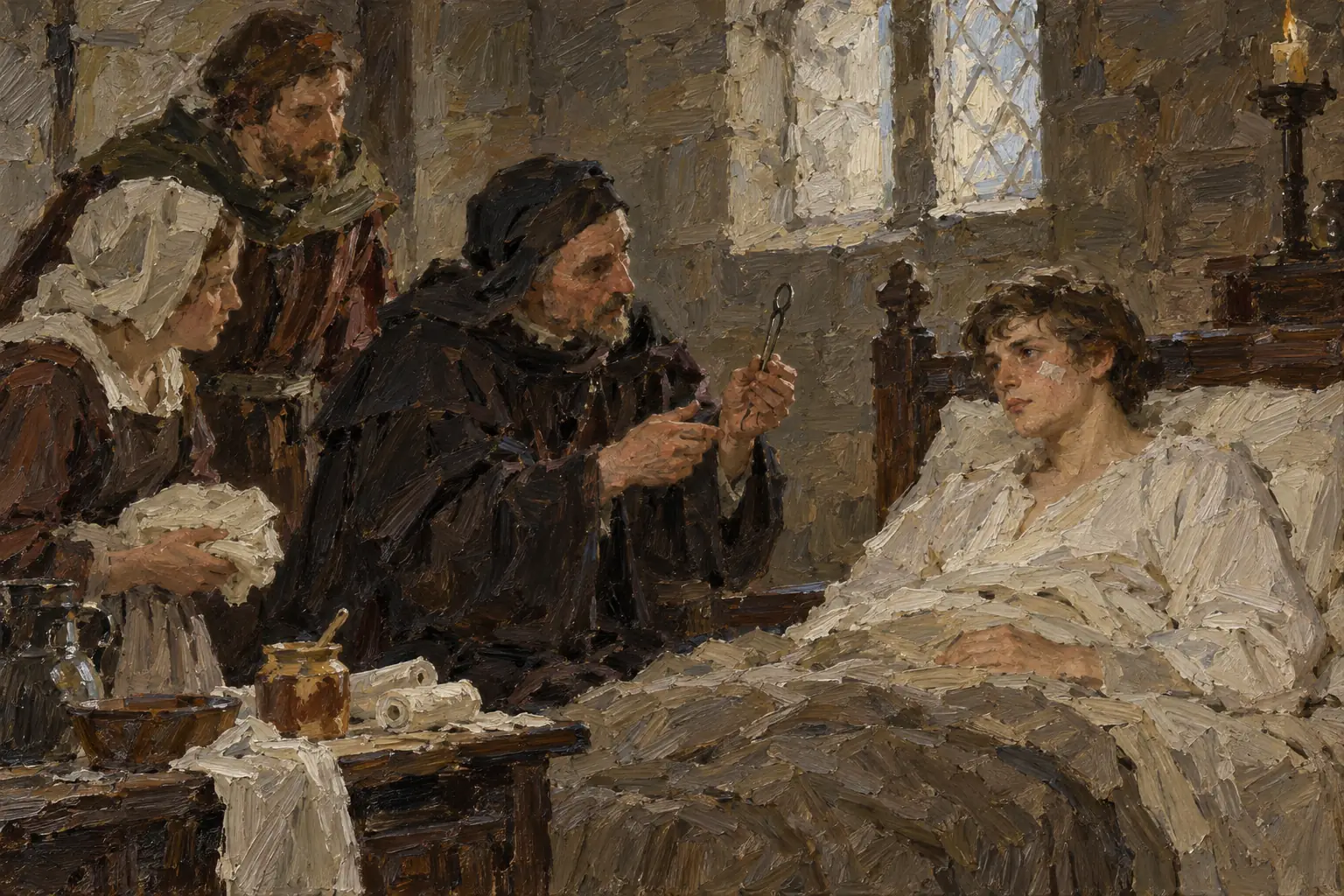
Certain surgeons stood out for their innovations and writings, contributing to the slow advancement of surgical knowledge. Warfare played a dual role, offering practical training opportunities while inflicting widespread trauma.
Contributions of key medieval surgeons
- John of Arderne - An English surgeon who developed techniques for treating anal fistulas, involving careful cutting and drainage; he also authored manuals that detailed procedures and emphasised hygiene.
- John Bradmore - Known for inventing a specialised tool to remove a deeply embedded arrow from Prince Henry's face in 1403, using probes and honey as an antiseptic to aid healing.
Influence of warfare on surgical development
- Practical experience - Battles provided surgeons with frequent cases to hone skills in treating wounds, fractures, and amputations, leading to improvised techniques that improved over time.
- Drawbacks and suffering - The high volume of injuries resulted in immense pain and mortality, with many soldiers dying from complications rather than initial wounds, underscoring the limitations of medieval medicine.