1.4 - Christianity, the Church & Medicine
Key facts and dates
During the medieval period, the Christian Church played a central role in shaping medical beliefs, practices, and institutions across Europe. It promoted spiritual explanations for disease while providing organised care through religious establishments, though it also restricted scientific progress by emphasising ancient authorities.
Key facts to remember
- Spiritual view of illness – Disease often interpreted as divine punishment or a test of faith.
- Common responses – Prayer, confession, and pilgrimages to holy sites used to seek healing.
- Church-run facilities – Hospitals and infirmaries focused on care, rest, and basic hygiene rather than medical cures.
- Educational control – Universities preserved classical texts but discouraged dissection and challenges to established theories.
- Preservation of knowledge – Monks copied and stored ancient medical works, maintaining access to texts like those of Galen.
- Limitations on progress – Emphasis on spiritual healing and deference to authority hindered new discoveries.
The Church's influence on beliefs about illness
The Christian Church significantly shaped medieval attitudes towards health and disease in Europe. It integrated religious doctrine into explanations of sickness, viewing it through a spiritual lens that influenced both individual and societal responses.
How the Church shaped perceptions of disease
- Illness as divine intervention - Sickness was frequently seen as a punishment from God for sins or as a test to strengthen faith, encouraging people to reflect on their moral conduct.
- Integration with classical ideas - The Church blended Christian teachings with ancient theories, such as those from Galen, presenting them as compatible with religious beliefs.
- Widespread acceptance - These views dominated society, from peasants to nobility, reinforcing the Church's authority over matters of life, health, and morality.
Responses to illness promoted by the Church
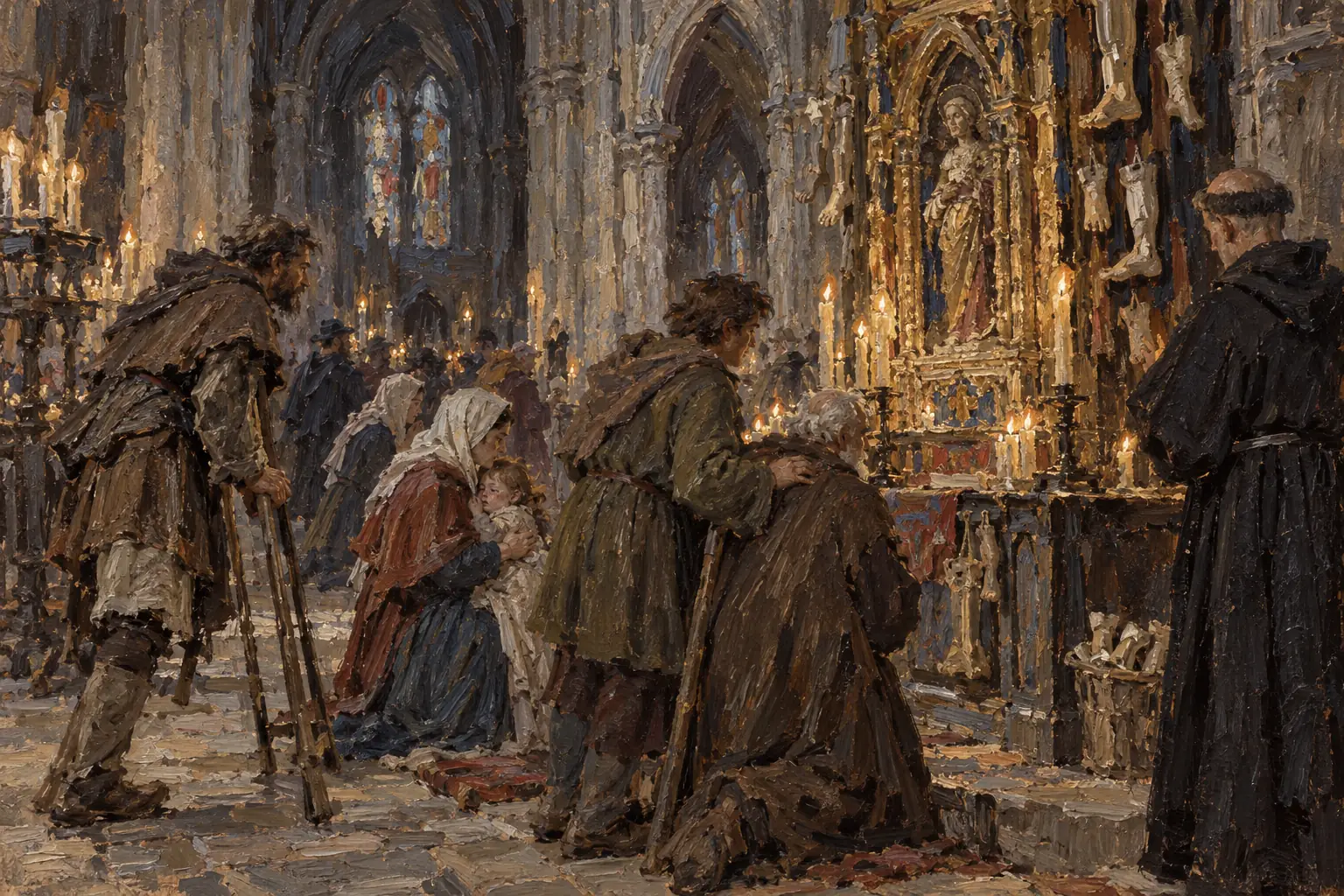
When faced with disease, the Church encouraged spiritual and communal practices as primary means of seeking relief. These methods emphasised faith and repentance over physical treatments, aligning with the belief that healing ultimately came from God.
Key Church-promoted approaches to healing
- Prayer and confession - Individuals were urged to pray for forgiveness and confess sins, as these acts were believed to restore spiritual balance and potentially cure physical ailments.
- Pilgrimages to holy sites - Travelling to shrines or sacred locations, such as those associated with saints, was promoted as a way to demonstrate devotion and receive miraculous healing.
- Community rituals - Group prayers, processions, and religious ceremonies were common, fostering a sense of collective faith in addressing outbreaks or personal illnesses.
Church hospitals and monastic infirmaries
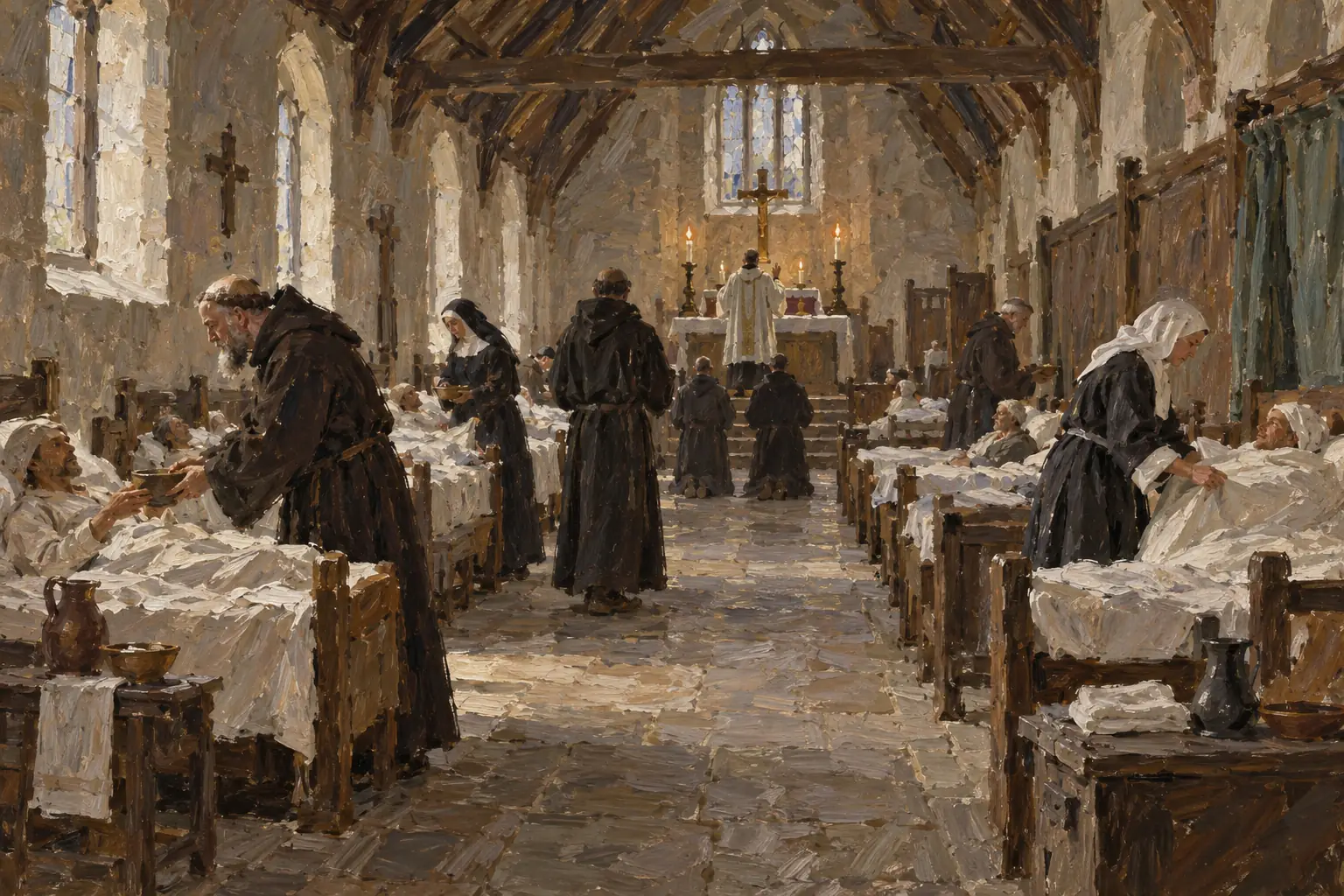
The Church established and managed hospitals and infirmaries, often attached to monasteries, which served as key institutions for the sick. These facilities prioritised compassionate care and basic hygiene over advanced medical interventions, reflecting religious values of charity.
Features of Church-run medical facilities
- Focus on care and rest - Emphasis was placed on providing shelter, nursing, and a peaceful environment to aid recovery, rather than attempting complex cures.
- Use of herbal remedies - Simple treatments, such as plant-based medicines prepared by monks, were administered to ease symptoms and support the body's natural healing.
- Hygiene and infrastructure - Facilities often included latrines, fresh water systems, and clean bedding, which helped reduce the spread of infection in an era of limited medical knowledge.
The Church's impact on medical education
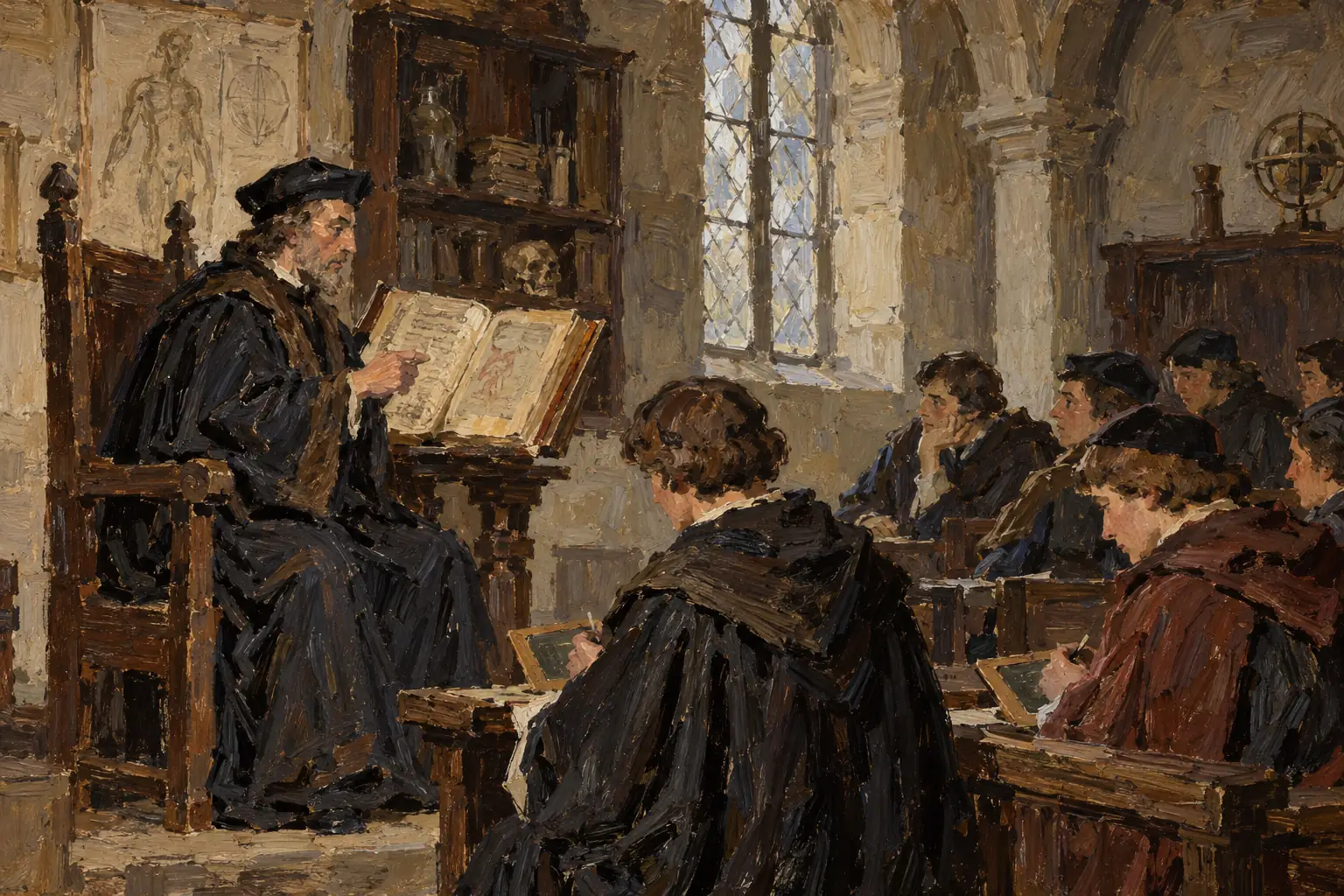
The Church controlled much of the formal learning in medieval Europe, particularly through universities it founded or influenced. This oversight preserved valuable knowledge but also imposed restrictions that slowed innovation in medicine.
How the Church shaped medical training
- Preservation of classical texts - Monks copied and stored works by ancient scholars like Galen and Hippocrates, ensuring their survival and integration into curricula.
- Curriculum design - University courses focused on theoretical study of these texts, with practical training limited to observation rather than experimentation.
- Restrictions on practices - Dissection of human bodies was often forbidden on religious grounds, and challenging established authorities was discouraged to maintain doctrinal harmony.
Benefits and constraints of Church involvement
The Church's role in medicine brought both advantages and limitations, balancing organised support with barriers to progress. This dual impact highlights its complex influence on health practices during the medieval period.
Advantages and disadvantages of Church influence
| Aspect | Benefits | Constraints |
|---|---|---|
| Knowledge preservation | Copied and stored classical texts, maintaining access to ancient medical ideas | Over-reliance on authorities like Galen prevented questioning of outdated theories |
| Care provision | Offered organised hospitals and infirmaries with basic hygiene and nursing | Prioritised spiritual healing over physical treatments, limiting medical advancements |
| Educational framework | Established universities that trained physicians in structured curricula | Banned practices like dissection and discouraged innovation to uphold religious doctrine |
| Societal impact | Promoted charity and community care for the sick and poor | Reinforced views of illness as divine punishment, delaying scientific explanations |