3.2 - Pasteur & the Germ Theory
Key facts and dates
The mid-19th century marked a pivotal shift in understanding infectious diseases, moving from traditional theories to evidence-based explanations. Louis Pasteur's work challenged long-held beliefs and laid the foundation for modern microbiology through rigorous experimentation.
Timeline of key events
- 1850s – Pasteur begins studies on fermentation, showing microbes cause souring in wine and beer.
- 1857 – Pasteur publishes findings linking specific microbes to fermentation processes.
- 1861 – Swan-neck flask experiment disproves spontaneous generation by preventing airborne microbes from contaminating broth.
- 1862 – Germ theory formally proposed, attributing disease to microscopic organisms.
- 1860s onwards – Advances in microscopy enable detailed observation of bacteria and other microbes.
Pre-germ theory ideas about disease
Before the mid-19th century, explanations for infectious diseases relied on ancient and untested concepts that attributed illness to environmental or internal factors rather than specific causes. These ideas dominated medical thinking and influenced public health measures.
Main pre-germ theory concepts
- Miasma theory - Diseases were thought to spread through poisonous vapours or 'bad air' from decaying matter, leading to practices like fumigation and avoiding foul-smelling areas.
- Spontaneous generation - This belief held that living organisms, such as maggots or microbes, could arise spontaneously from non-living material, without any external agents.
Pasteur's experiments and the germ theory
Image 1 of 2: In the 1850s Pasteur showed that microbes made wine and beer go sour
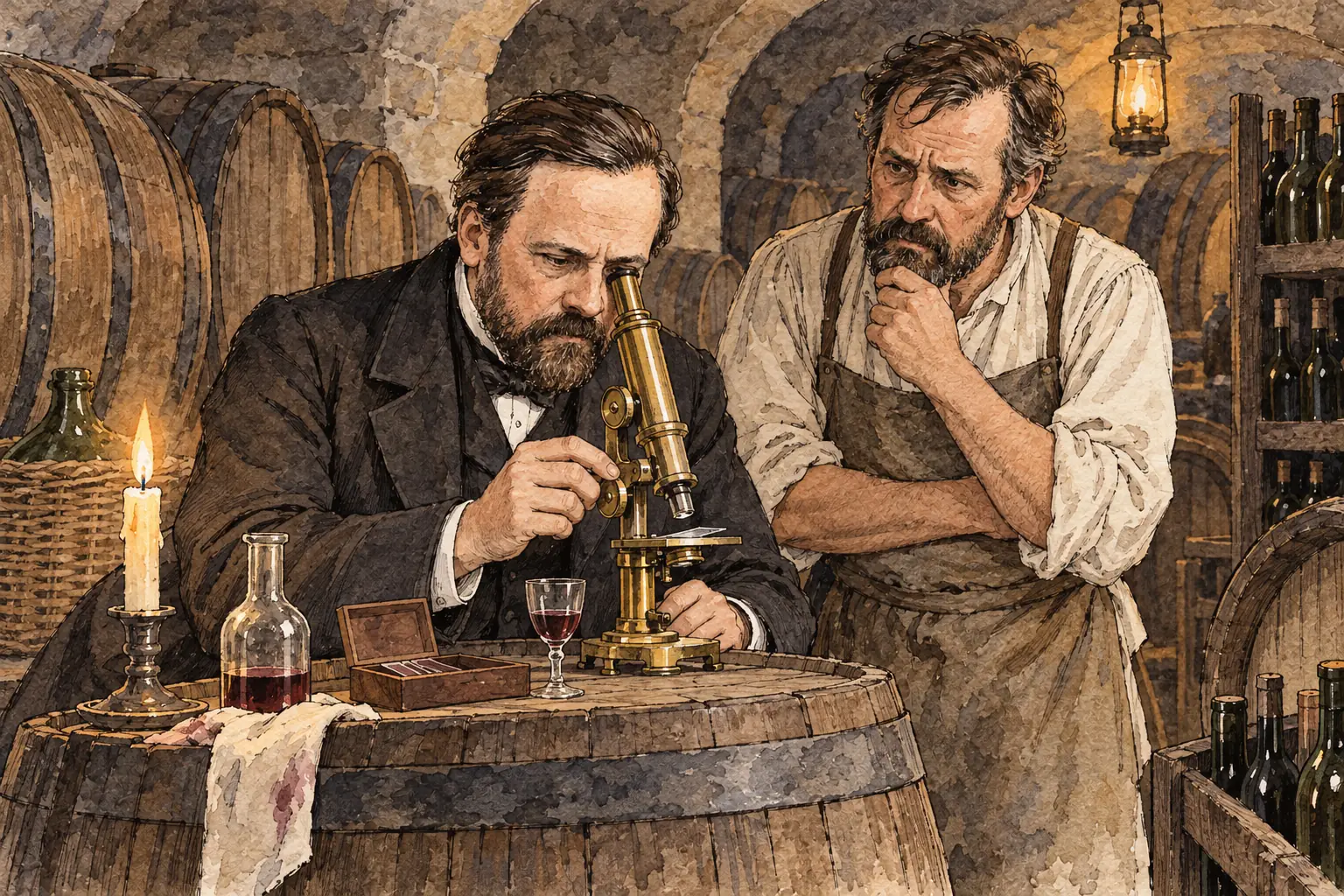
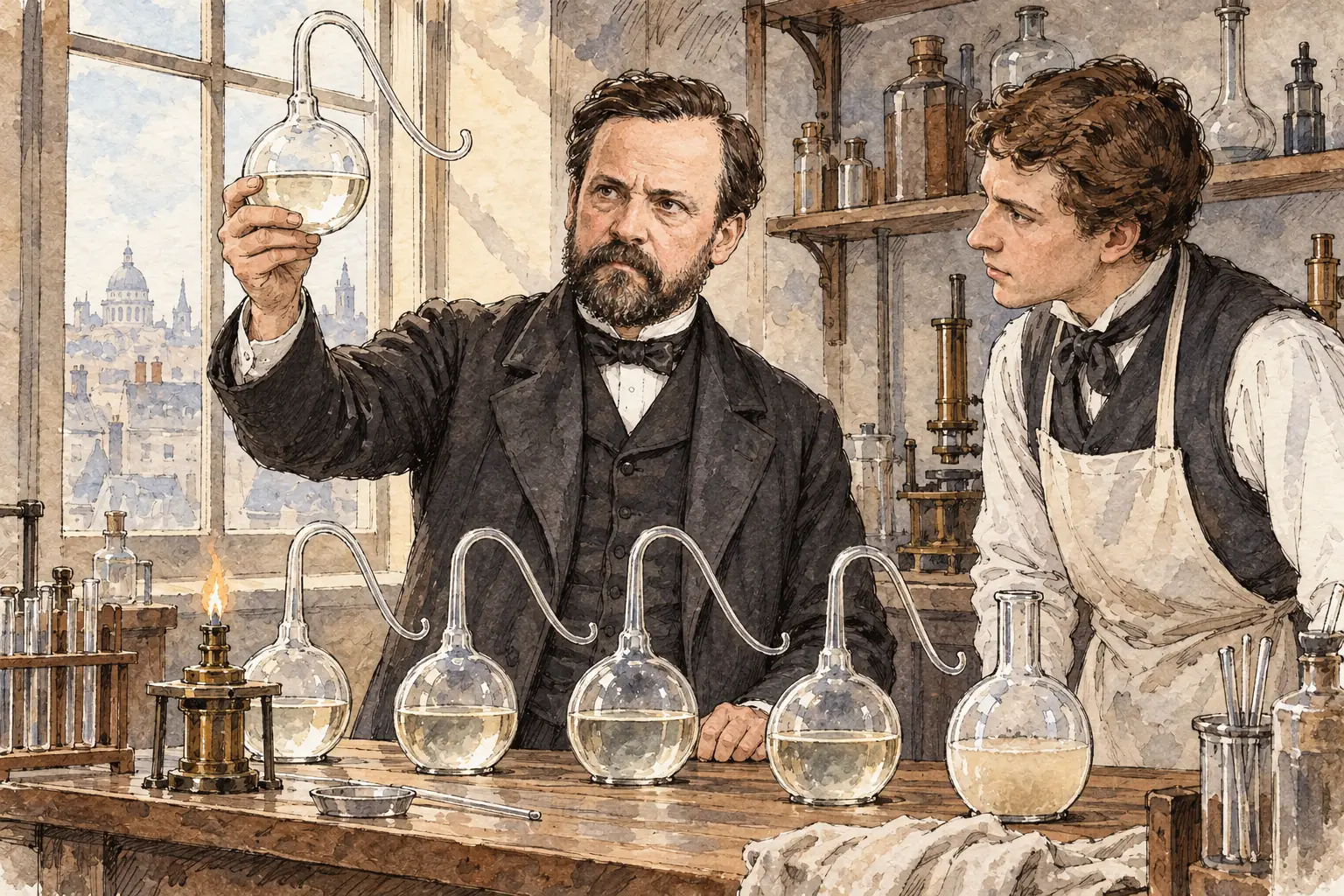
Louis Pasteur, a French scientist, conducted groundbreaking experiments in the 1850s and 1860s that challenged existing ideas and established the germ theory. His work demonstrated that invisible microorganisms were responsible for processes like fermentation and decay, extending this to disease causation.
Pasteur's key experiments on fermentation
- Wine and beer studies (1850s) - Pasteur showed that fermentation was caused by specific microbes, such as yeast, rather than chemical reactions alone; he identified how unwanted bacteria led to spoiling, and heating (pasteurisation) could kill them without altering the product.
- Swan-neck flask experiment (1861) - Pasteur designed flasks with curved necks that allowed air in but trapped dust and microbes; nutrient broth in these flasks remained clear, while straight-necked flasks exposed to air became cloudy with microbial growth, proving microbes came from the environment, not spontaneous generation.
These findings formed the basis of germ theory, which posits that many diseases are caused by germs (microorganisms) invading the body, providing a unified explanation for infection.
Why germ theory was a turning point
The germ theory represented a revolutionary shift in medicine, replacing vague notions with a scientific framework that could be tested and applied. It transformed approaches to preventing and treating infectious diseases, influencing multiple fields.
Impacts of germ theory on medicine
- Single, testable explanation - It offered a clear cause for infectious diseases, allowing scientists to identify specific germs and develop targeted interventions.
- Foundation for vaccination - Understanding germs enabled vaccines, such as Pasteur's own anthrax and rabies vaccines, which prepared the body to fight specific pathogens.
- Development of antiseptics - Knowledge of germs led to chemical agents (antiseptics) that killed microbes on skin or instruments, reducing infection during surgery.
- Advancement of aseptic techniques - Later methods (aseptic techniques), like sterilising equipment and maintaining clean environments, built on germ theory to prevent contamination in medical settings.
Role of science and technology in its development
Pasteur's discoveries were made possible by advancements in scientific tools and methods during the 19th century. These innovations allowed for precise observation and experimentation, overcoming limitations of earlier eras.
Technological enablers of germ theory
- Improved microscopes - Enhanced lenses and designs enabled scientists to view bacteria and other microbes clearly, revealing their role in disease.
- Laboratory methods - Techniques like controlled experiments, sterile culturing, and chemical analysis provided reliable ways to test hypotheses about microbial activity.