3.3 - Koch & Microbe Hunting
Key facts and dates
Robert Koch revolutionised microbiology by developing precise techniques to link specific bacteria to diseases, shifting medicine from guesswork to evidence-based approaches. His work inspired a generation of researchers and laid the foundation for modern diagnostics and treatments.
Timeline of key events
- 1876 – Koch identifies the bacterium causing anthrax, proving its role in disease transmission.
- 1880 – Development of solid culture media using gelatine, later improved with agar.
- 1881 – Introduction of bacterial staining methods to make microbes visible under microscopes.
- 1882 – Discovery of the tuberculosis bacillus, enabling targeted diagnosis.
- 1883 – Isolation of the cholera vibrio during an Egyptian outbreak.
- 1884 – Formalisation of Koch's postulates as a systematic framework for pathogen identification.
- 1890s onwards – Koch's Berlin laboratory becomes a training hub for international microbe hunters.
Koch's methods for identifying specific pathogens
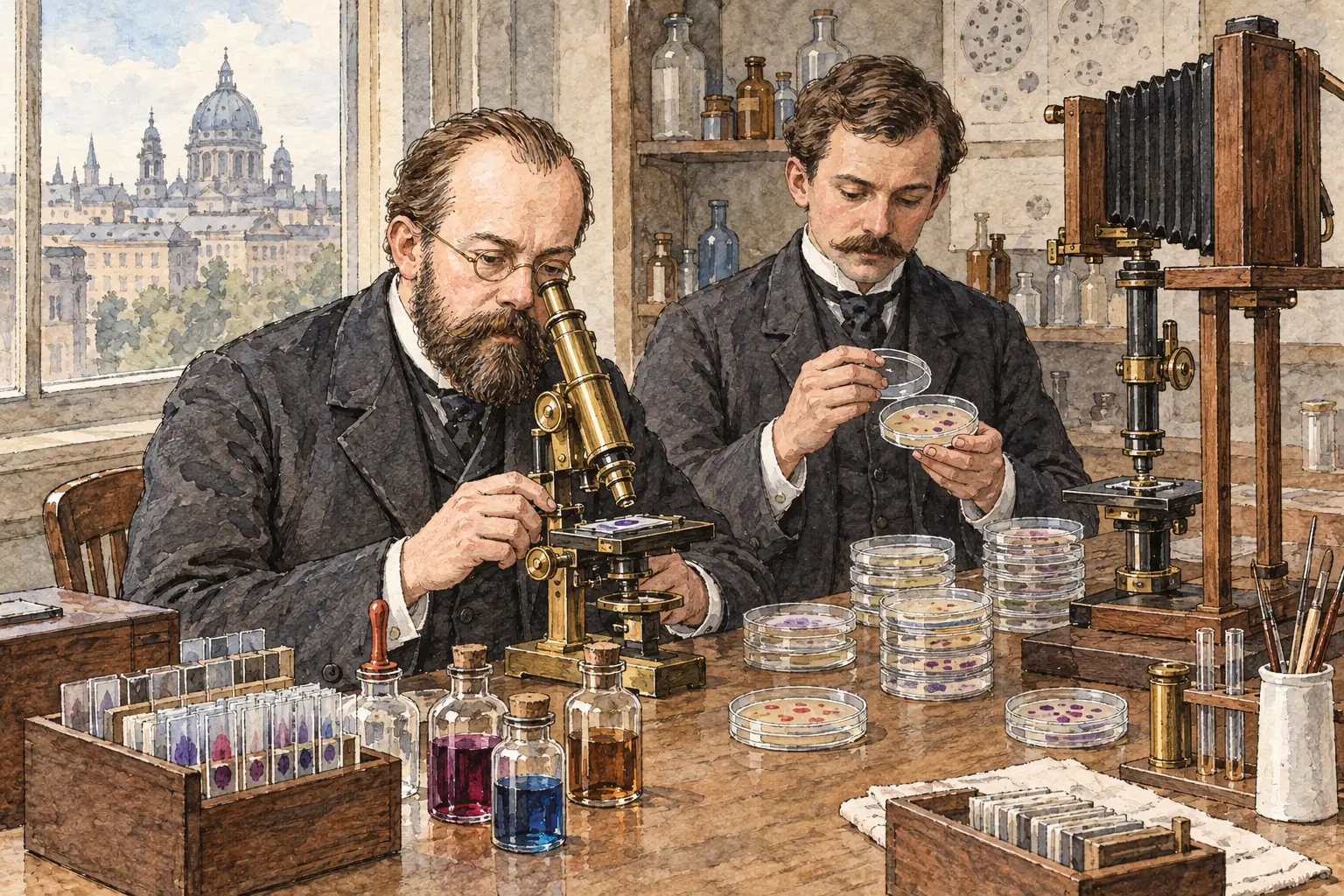
Robert Koch, a German physician, pioneered techniques that allowed scientists to pinpoint the microbes responsible for particular illnesses. His innovations addressed the challenges of studying invisible organisms, making it possible to observe, isolate, and confirm their role in diseases.
Techniques developed by Koch
- Staining methods - Koch created dyes to colour bacteria, making them visible under microscopes. This involved fixing samples on slides and applying stains like methylene blue, which highlighted bacterial structures for easier identification.
- Solid culture media - He introduced solid surfaces, initially using gelatine and later agar, to grow pure bacterial colonies. This allowed separation of individual microbes from mixed samples, preventing contamination and enabling detailed study.
- Systematic procedures - Koch emphasised rigorous steps to link a microbe to a disease, including isolating it from infected hosts, growing it in pure form, and testing its effects on healthy subjects.
Koch's postulates and their systematic procedures
Koch's postulates provided a logical framework for proving that a specific microbe causes a disease. These steps ensured scientific reliability and became a standard in microbiology, though they have limitations with certain pathogens like viruses.
The four postulates of Koch
- The microbe must be found in abundance in all organisms suffering from the disease but absent from healthy ones.
- The microbe must be isolated from a diseased organism and grown in pure culture.
- The cultured microbe should cause the same disease when introduced into a healthy organism.
- The microbe must be re-isolated from the newly infected organism and match the original in characteristics.
These postulates promoted targeted research by requiring evidence at each stage, though they do not apply universally, such as to asymptomatic carriers or non-culturable microbes.
Discoveries in anthrax, tuberculosis, and cholera
Image 1 of 2: In 1876 Koch identified the bacterium that causes anthrax
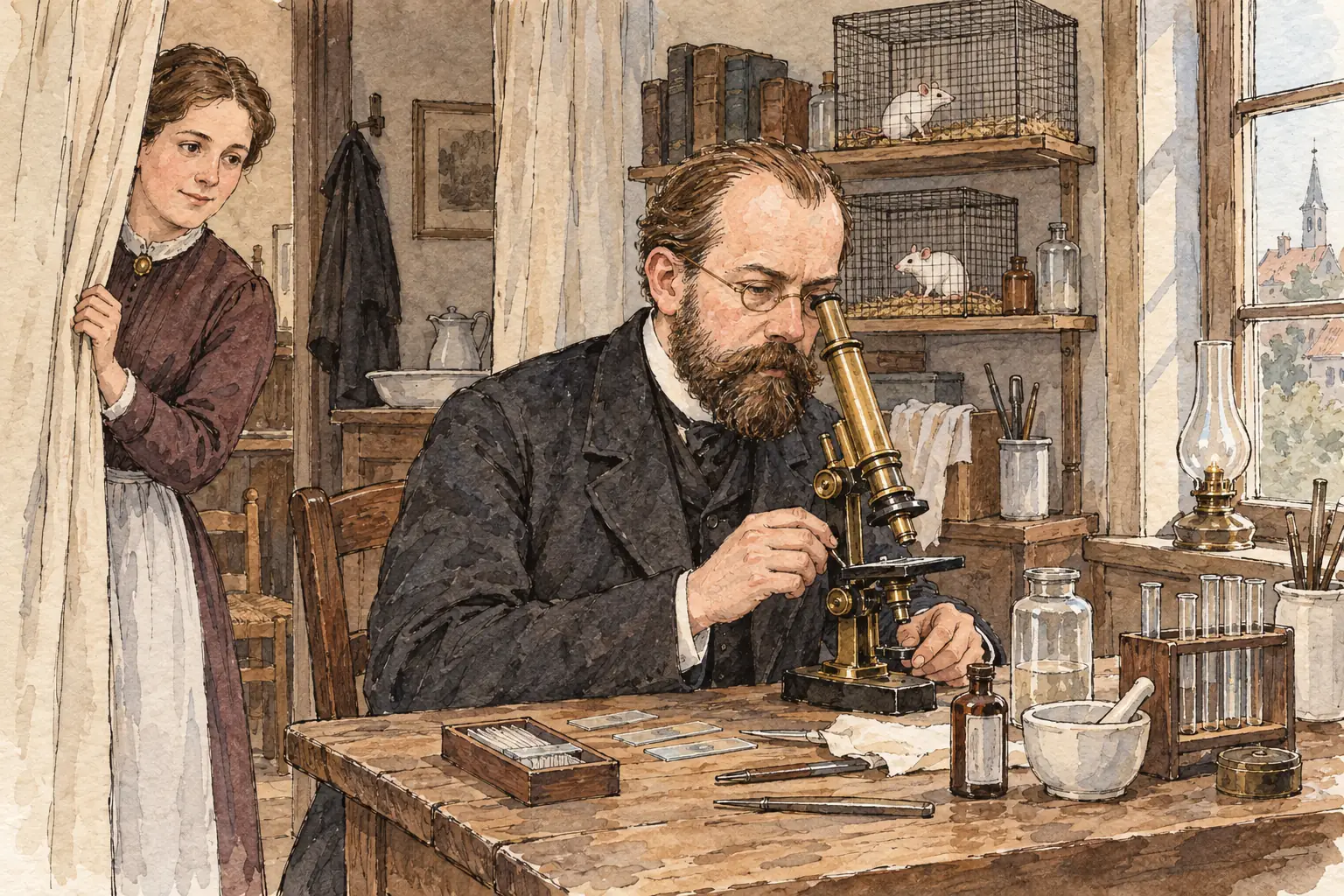
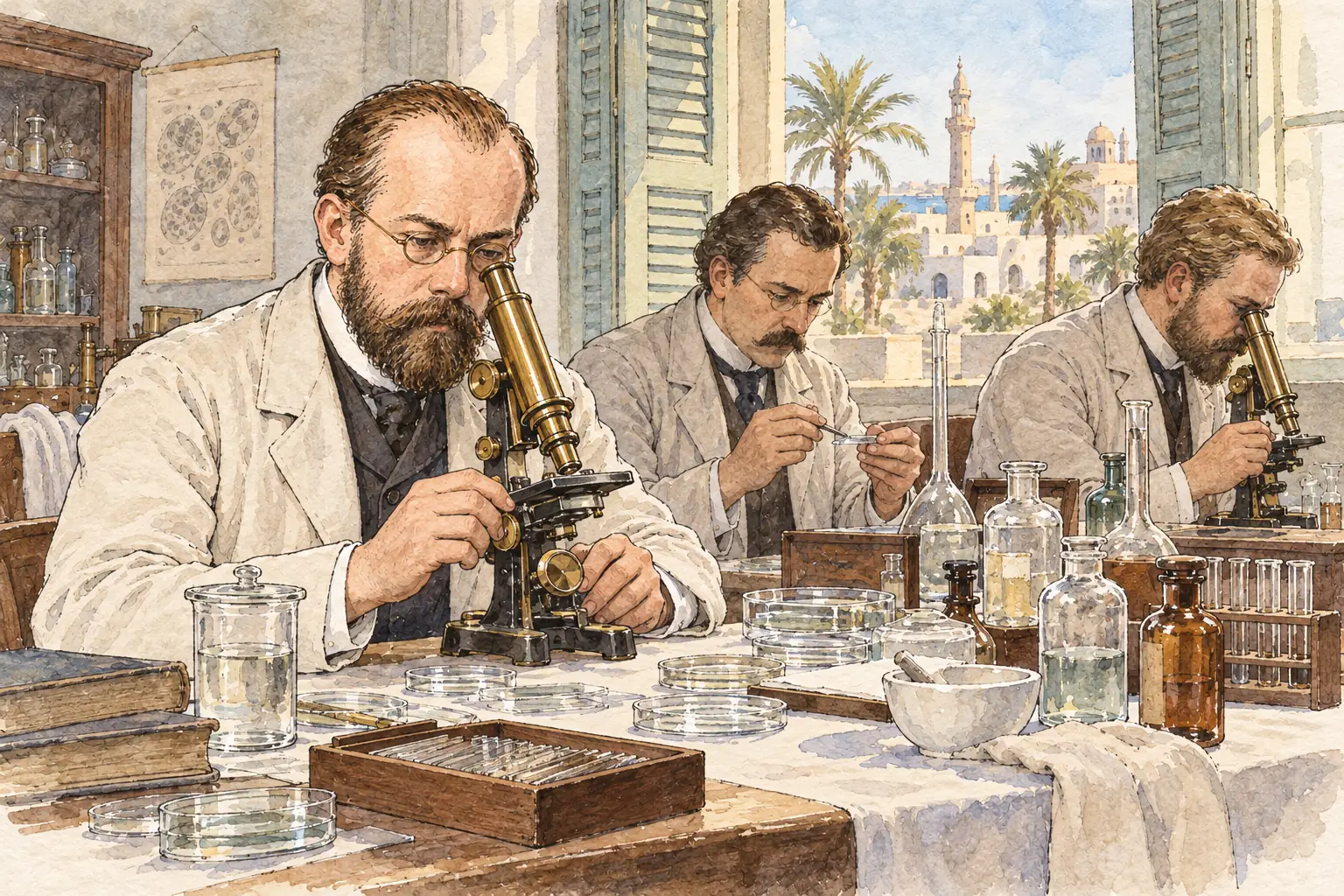
Koch applied his methods to major diseases, providing breakthroughs that demonstrated bacteria as causative agents. His work on these illnesses validated his techniques and spurred global efforts to combat infectious diseases.
Anthrax discovery (1876)
- Koch studied anthrax in cattle, isolating rod-shaped bacteria (Bacillus anthracis) from infected blood.
- He grew the bacteria in culture and injected them into healthy animals, reproducing the disease and re-isolating the same microbe.
- This confirmed the germ theory and showed how spores allow the bacterium to survive in soil, infecting grazing animals.
Tuberculosis discovery (1882)
- Focusing on tuberculosis (TB), Koch used staining to identify the slow-growing Mycobacterium tuberculosis in lung tissue.
- He cultured it on solid media and tested it in animals, proving it caused the infection.
- This enabled better diagnosis through sputum tests and paved the way for treatments like sanatoria isolation.
Cholera discovery (1883)
- During an outbreak in Egypt, Koch isolated the comma-shaped Vibrio cholerae from victims' intestines.
- He observed its growth in water contaminated with faeces, linking it to poor sanitation.
- Though unable to fully satisfy his postulates due to ethical limits on human testing, his findings supported preventive measures like clean water supplies.
Influence of Koch's lab on microbe hunting
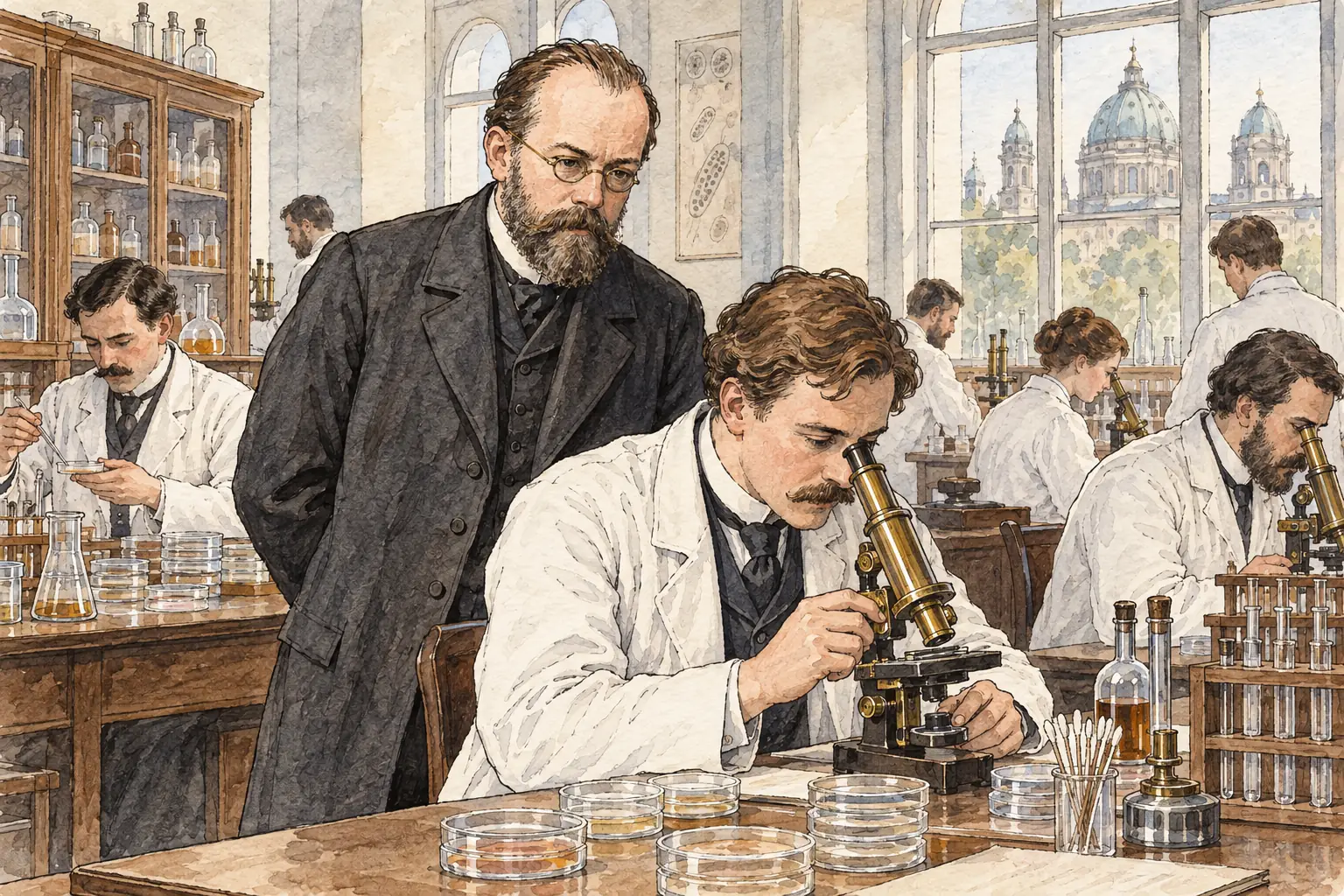
Koch's laboratory in Berlin became a model for systematic microbe research, training scientists worldwide and fostering a new era of "microbe hunting." It emphasised teamwork, precision, and innovation, leading to advancements beyond identification.
Impact on research and applications
- Model for microbe hunters - The lab's structured approach, with dedicated spaces for culturing and microscopy, inspired similar facilities globally, attracting researchers like Paul Ehrlich.
- Targeted diagnosis - Techniques enabled quick identification of pathogens in patients, improving outbreak control.
- Development of vaccines and treatments - Discoveries facilitated creations like the anthrax vaccine for livestock and antitoxins for diphtheria, reducing mortality from infectious diseases.
- Long-term legacy - Koch's methods accelerated progress in bacteriology, contributing to public health strategies and the eventual decline of epidemics in the late 19th century.