3.4 - Impact of Koch & Pasteur in Britain
Key facts and dates
The discoveries of Robert Koch and Louis Pasteur revolutionised understanding of disease causation through germ theory, influencing British medical practice from the late 19th century. Their work on bacteria and vaccines, alongside Paul Ehrlich's chemical treatments, shifted medicine towards scientific precision and targeted therapies.
Timeline of key events
- 1876 – Robert Koch identifies the anthrax bacterium, laying foundations for germ theory.
- 1881 – Louis Pasteur develops an anthrax vaccine for livestock, demonstrating practical applications of bacteriology.
- 1882 – Koch discovers the tuberculosis bacterium, advancing diagnostic methods.
- 1885 – Pasteur creates the rabies vaccine, marking a breakthrough in human immunisation.
- 1880s – British doctors like William Roberts and William Cheyne promote germ theory through research and translations.
- 1910 – Paul Ehrlich introduces Salvarsan 606, the first targeted chemical treatment for syphilis.
British engagement with germ theory
British doctors began to adopt and promote germ theory in the late 19th century, moving away from earlier ideas like miasma. This shift was driven by continental discoveries, with key figures translating and applying these concepts to improve medical practice in Britain.
Key British promoters of germ theory
- William Roberts - A physician who conducted experiments on bacteria in the 1870s, demonstrating how they caused fermentation and disease. His work helped validate Pasteur's ideas in Britain, encouraging acceptance among medical professionals.
- William Cheyne - As a surgeon, he translated Koch's writings into English in the 1880s, making bacteriology accessible. Cheyne applied these principles to antiseptic surgery, reducing infection rates in operations and promoting sterile techniques in hospitals.
This engagement fostered a scientific approach, with British doctors forming societies to discuss and experiment with bacteriology, gradually integrating it into training and public health policies.
Pasteur's work on vaccines and everyday practice
Image 1 of 2: In 1881 Pasteur showed that his anthrax vaccine protected farm animals
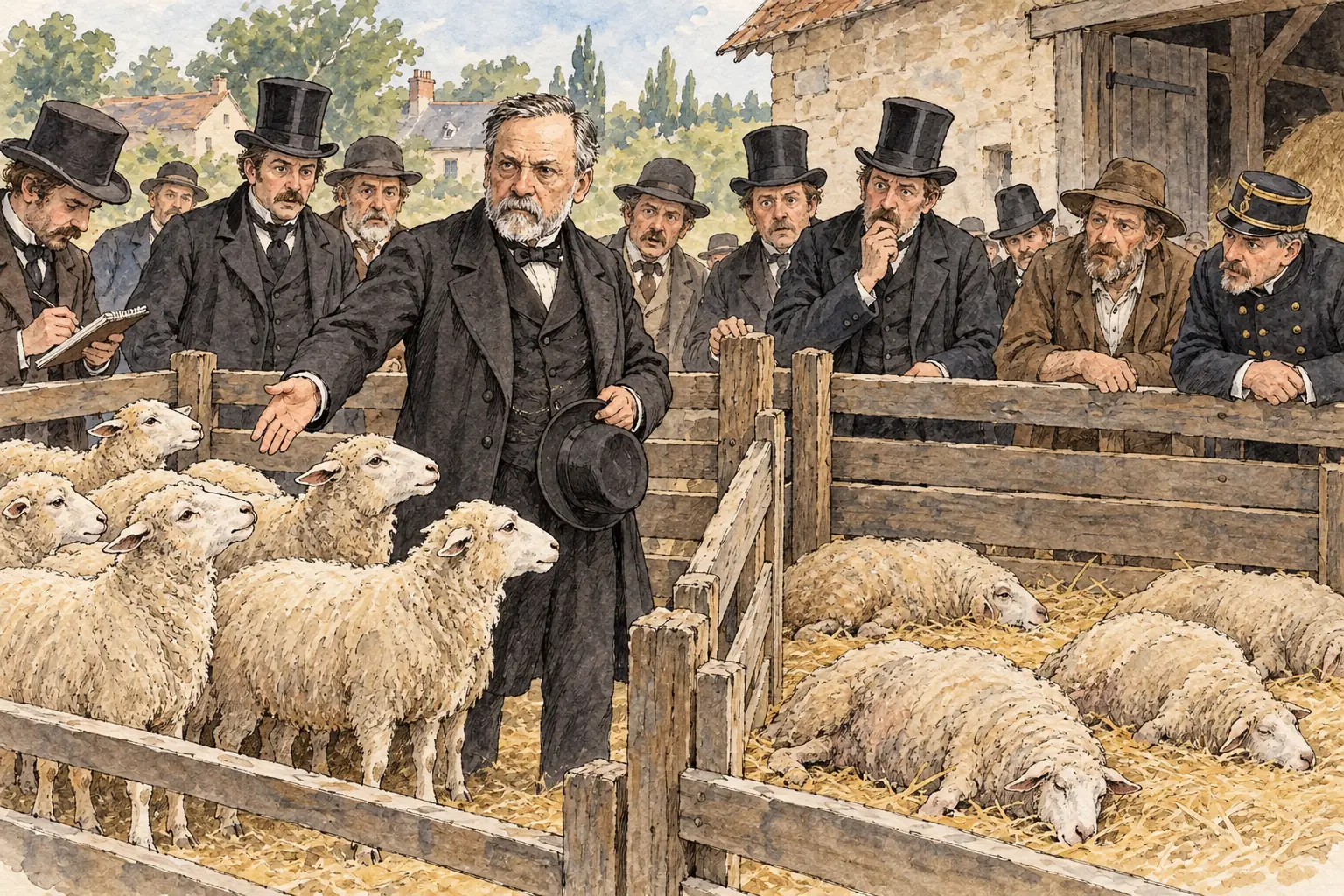
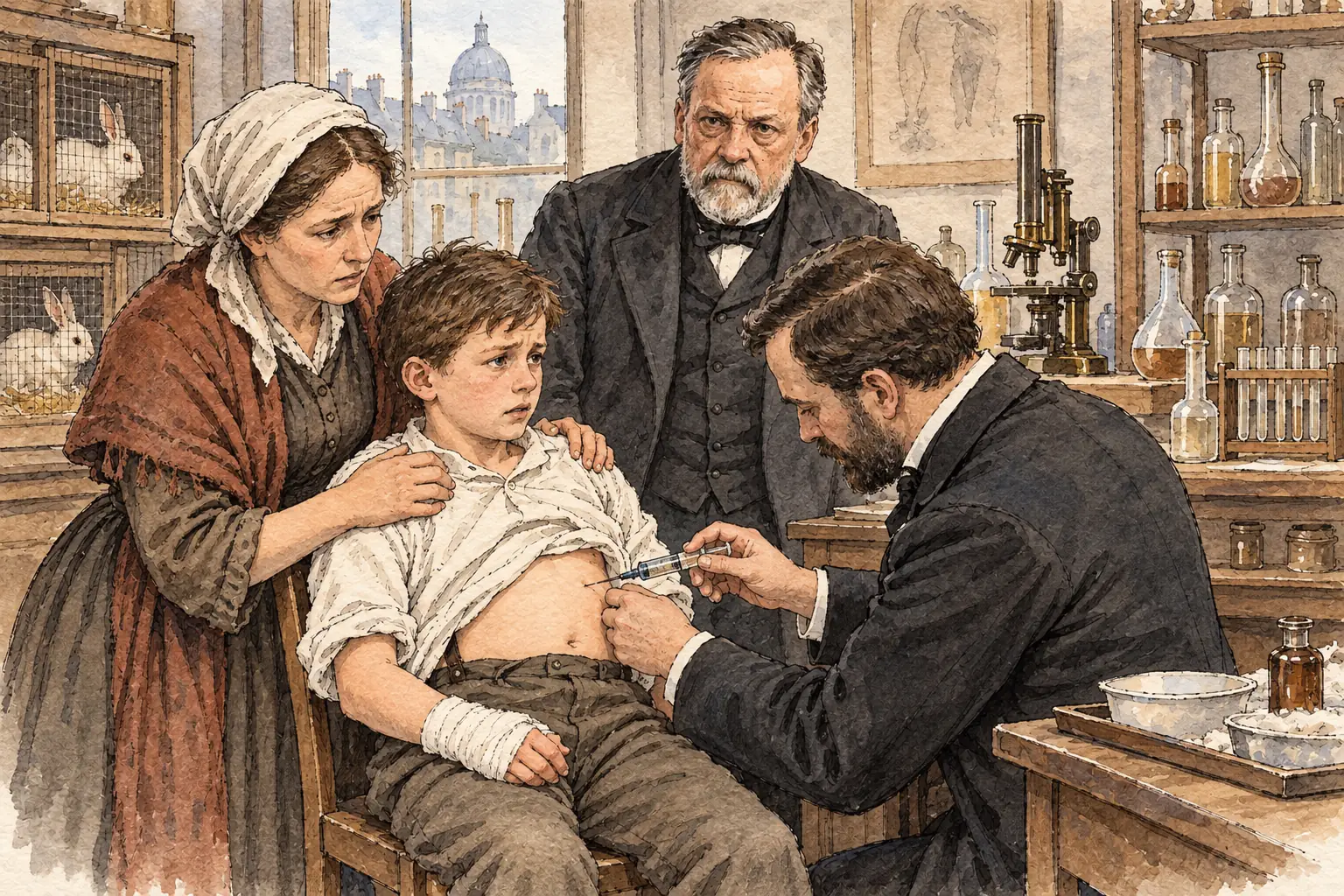
Louis Pasteur's advancements in the 1880s built on germ theory by developing vaccines, which targeted specific bacteria or viruses. These innovations transformed laboratory science into practical tools that influenced routine medical care.
Pasteur's key vaccine developments
- Anthrax vaccine (1881) - Created by weakening the anthrax bacterium, this vaccine protected animals from the disease, proving that immunisation could prevent outbreaks and save agricultural economies.
- Rabies vaccine (1885) - Developed through experiments on rabbits, it involved injecting attenuated virus to build immunity, successfully treating humans bitten by rabid animals.
Reasons laboratory science changed everyday practice
- Shift to prevention - Vaccines encouraged a focus on immunisation rather than just treatment, leading to widespread programmes that reduced disease incidence.
- Integration into medicine - Doctors began using lab-based diagnostics, like identifying bacteria in samples, to guide treatments and improve hygiene in surgeries and hospitals.
- Broader applications - This scientific method inspired routine practices, such as sterilising equipment and isolating patients, making healthcare more effective and evidence-based.
Ehrlich's magic bullets and new therapy models
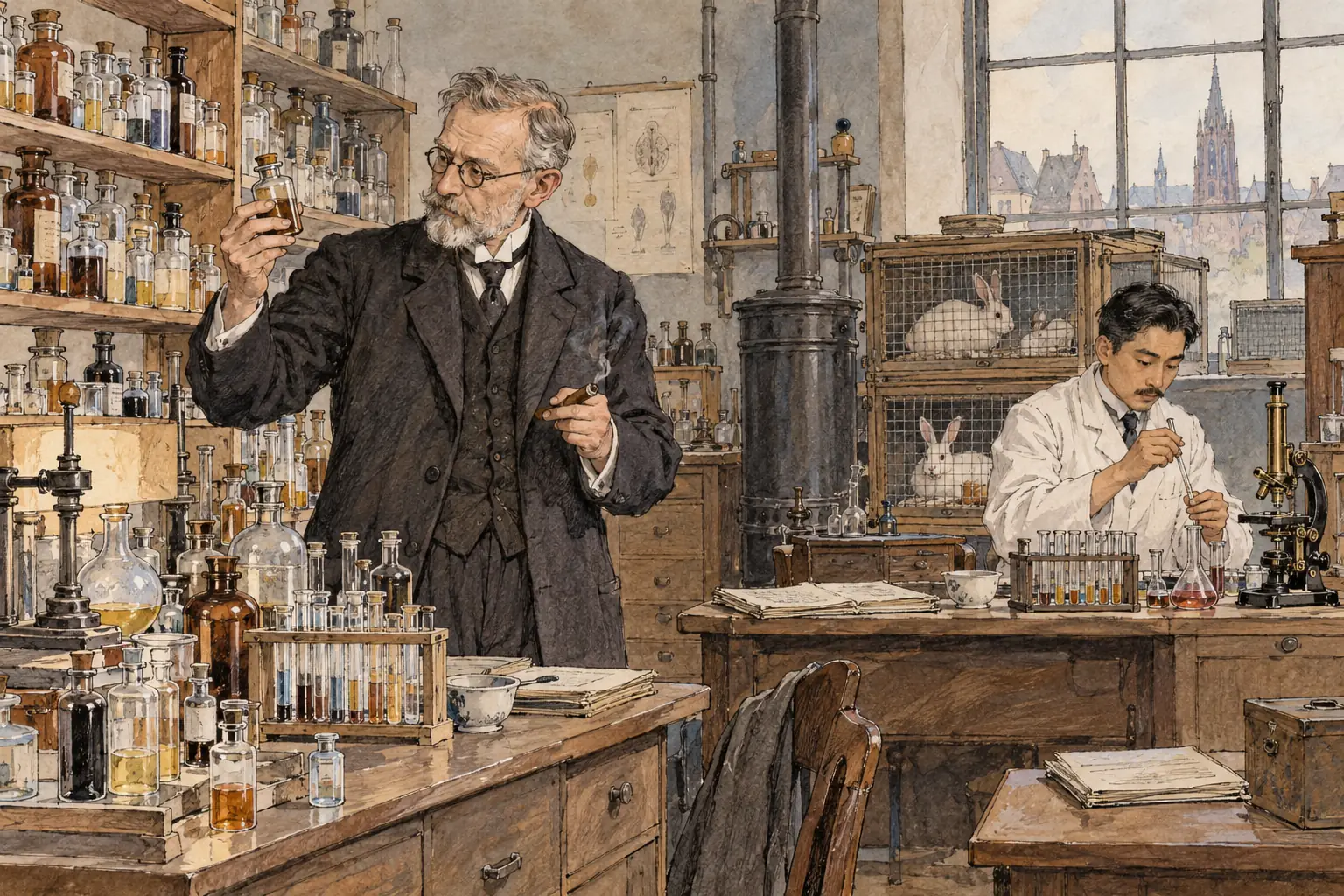
Paul Ehrlich pioneered targeted chemical treatments in the early 20th century, introducing the concept of 'magic bullets'—substances that attacked specific pathogens without harming the body. This marked a new era in therapy, shifting from general remedies to precise interventions.
Development and impact of magic bullets
- Salvarsan 606 (1910) - Ehrlich's team tested hundreds of arsenic compounds to find this effective treatment for syphilis, which selectively killed the causative bacterium while minimising side effects.
- New model for therapy - This approach emphasised laboratory research to design drugs that targeted microbes directly, inspiring modern chemotherapy and influencing drug development for other infections.
Ehrlich's work demonstrated how chemistry could complement bacteriology, providing a blueprint for pharmaceutical innovation and personalised medicine.
Impact of continental discoveries on Britain
Continental breakthroughs by Koch, Pasteur, and Ehrlich significantly reshaped British medicine, though adoption was gradual and faced resistance. Their influence extended to public health, promoting scientific rigour over traditional methods.
Extent of reshaping British medicine
- Positive transformations - Germ theory led to antiseptic practices in surgeries, reducing mortality; vaccines were adopted for diseases like smallpox, inspiring national immunisation efforts; targeted therapies like Salvarsan influenced antibiotic development.
- Limitations and challenges - Initial scepticism from British doctors delayed widespread use, with some clinging to miasma ideas until the 1890s. Not all discoveries translated immediately to everyday care due to limited lab facilities.
Influence on public health
- Policy changes - Discoveries supported acts like the 1875 Public Health Act, emphasising sanitation and isolation to combat bacteria.
- Overall evaluation - While these ideas revolutionised understanding and reduced disease rates, full impact required infrastructure and education, with Britain adapting them to fit local needs rather than wholesale adoption.