2.1 - Society, Prosperity & the Rise of the Gentry
Key facts and dates
The Tudor period witnessed significant social changes, including rising prosperity among the gentry class alongside growing population pressures and urban development. These shifts highlighted both opportunities for advancement and persistent inequalities, setting the stage for broader discussions of poverty and insecurity.
Key facts to remember
| Key fact | Detail |
|---|---|
| Great Chain of Being | Hierarchical worldview placing God at the top, followed by monarchs, nobility, gentry, and commoners. |
| Population growth | England's population rose from about 2.5 million in 1520 to over 4 million by 1600, driving urban expansion. |
| Urbanisation | Towns like London grew rapidly, with the capital's population reaching around 200,000 by the end of the 16th century. |
| Grammar schools | Expansion of education, with over 300 founded by 1600, aiding social mobility for the middle classes. |
| Gentry rise | Prosperous landowners built grand houses, symbolising status; Bess of Hardwick exemplified ascent through marriages and ambition. |
| Class variations | While gentry prospered, lower classes faced insecurity due to inflation and enclosure, leading to vagrancy. |
The social hierarchy and the Great Chain of Being
Tudor society was structured around a rigid hierarchy known as the Great Chain of Being, a belief system that viewed the world as an ordered chain linking all creation. This concept reinforced social stability by assigning everyone a fixed place, with divine consequences for disrupting the order.
Elements of the Great Chain of Being
- Divine order - God sat at the pinnacle, followed by angels, then humans, animals, plants, and inanimate objects, emphasising harmony and obedience.
- Human ranks - Within society, the monarch occupied the highest human position, followed by nobility, gentry, yeomen farmers, artisans, labourers, and the poor; each group had defined roles and duties.
- Implications for behaviour - Challenging this hierarchy, such as through rebellion or social climbing without merit, was seen as sinful and disruptive to cosmic balance.
Living standards, consumption and population
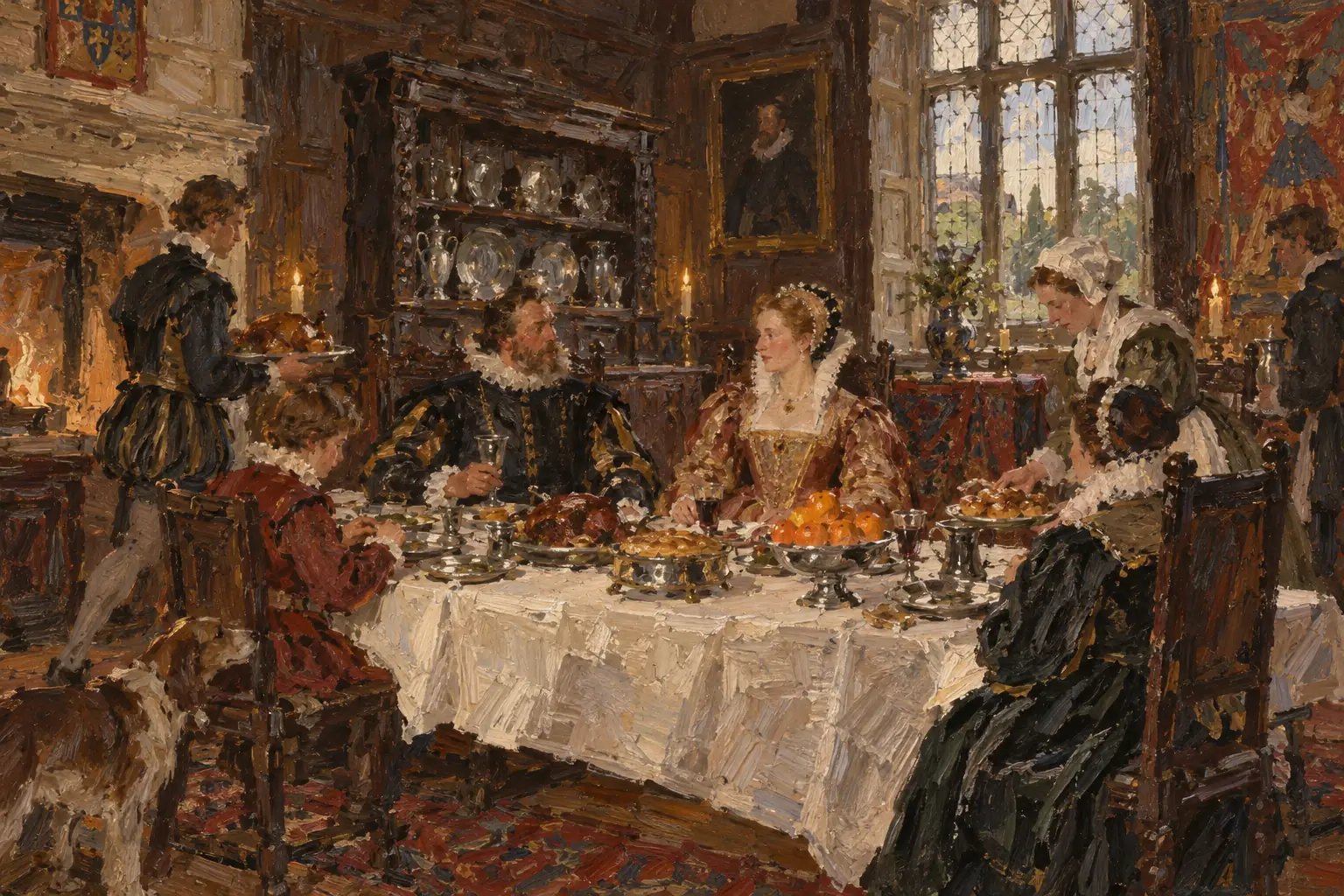
During the Tudor era, England experienced notable improvements in living standards for some groups, driven by economic growth and increased consumption. However, these changes were uneven, coinciding with rapid population increases that strained resources.
Factors influencing living standards and consumption
- Rising prosperity - Wealthier classes enjoyed better diets, imported goods like spices and silks, and household items such as furniture, reflecting a shift towards material comfort.
- Population expansion - Steady growth, fuelled by lower mortality rates and immigration, led to greater demand for food and housing, boosting markets but also causing overcrowding.
- Impact on daily life - Increased consumption included luxury items for display, while agricultural improvements supported higher living standards in prosperous regions.
Urbanisation and improvements in education
Image 1 of 2: London grew rapidly, reaching about 200,000 people by 1600 as migrants arrived looking for work
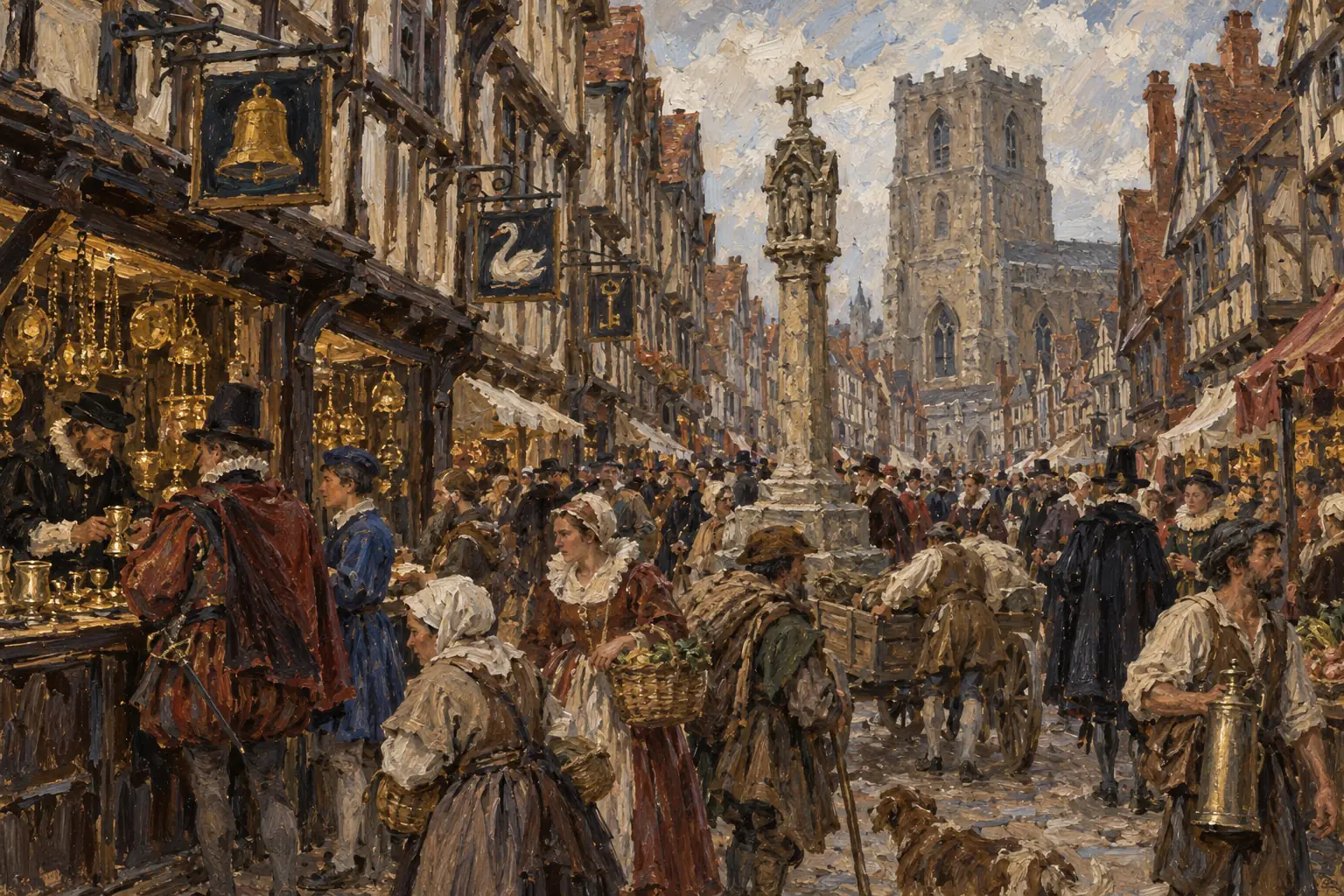
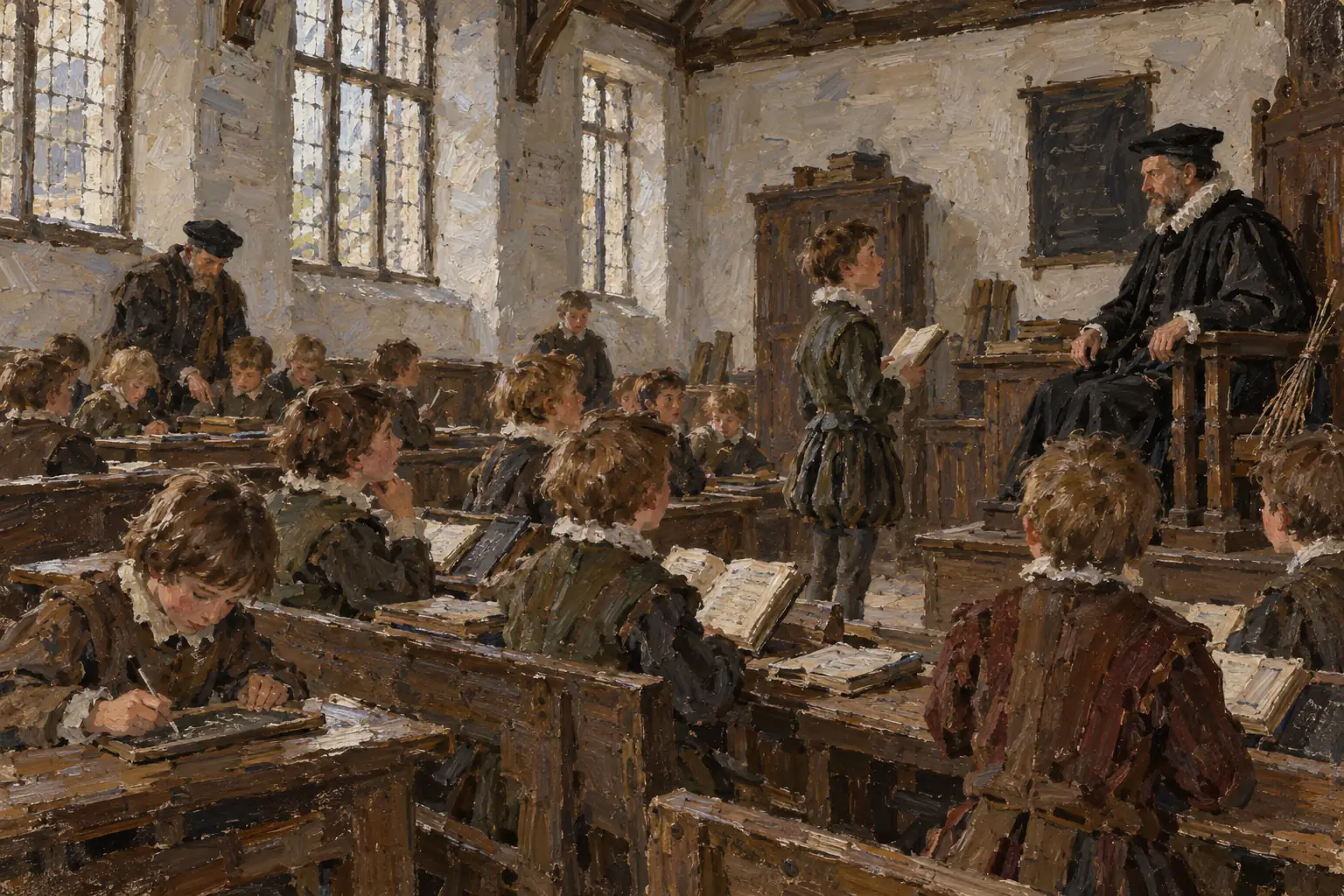
The Tudor period saw significant urban growth and educational advancements, which contributed to social mobility and cultural development. Towns expanded as centres of trade and administration, while new schools provided opportunities for learning.
Patterns of urbanisation
- Growth of towns - Migration from rural areas swelled urban populations, with cities offering employment in crafts, trade, and services; this shift fostered economic diversity but also led to sanitation challenges.
- Social effects - Urban environments promoted new ideas and commerce, attracting ambitious individuals seeking better prospects away from traditional village life.
Developments in education
- Grammar schools - These institutions, often endowed by wealthy patrons, taught Latin, rhetoric, and classical subjects, preparing boys for university or professional roles.
- Access and impact - While mainly for middle-class boys, they enabled some from humble backgrounds to rise socially, expanding literacy and contributing to a more educated gentry.
Culture of display: fashion, houses and patronage
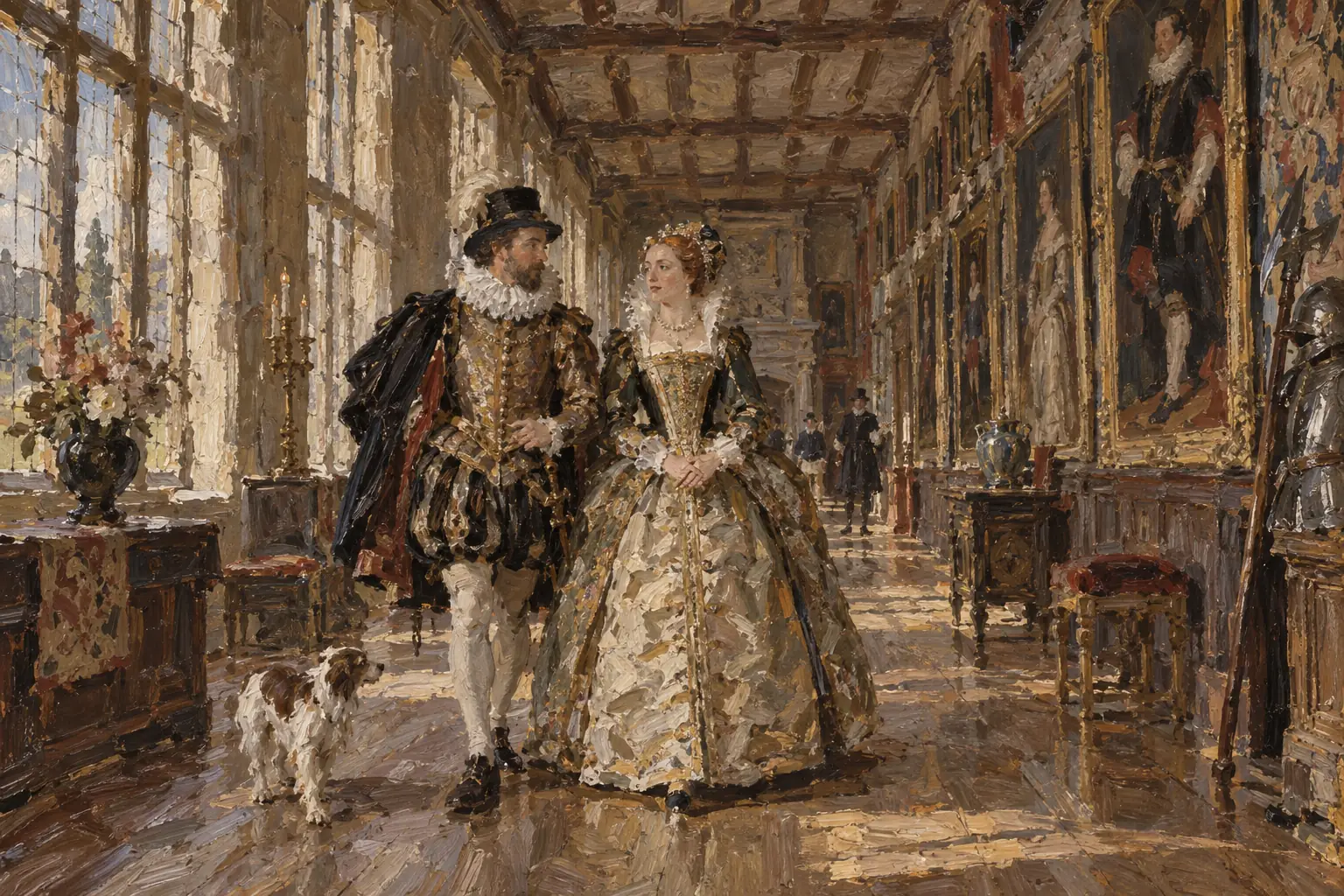
Prosperity in Tudor England fostered a culture where the wealthy showcased their status through elaborate displays. This included clothing, architecture, and support for the arts, signalling success and influence.
Aspects of the culture of display
- Fashion trends - Elaborate clothing, such as embroidered doublets and ruffs made from fine fabrics, demonstrated wealth and adherence to court styles, often influenced by European fashions.
- Grand houses - Prosperous families constructed impressive residences with features like large windows and ornate interiors, serving as symbols of power and venues for entertaining.
- Patronage practices - Wealthy individuals sponsored artists, musicians, and writers, enhancing their reputation and contributing to cultural flourishing.
Bess of Hardwick and variations in prosperity
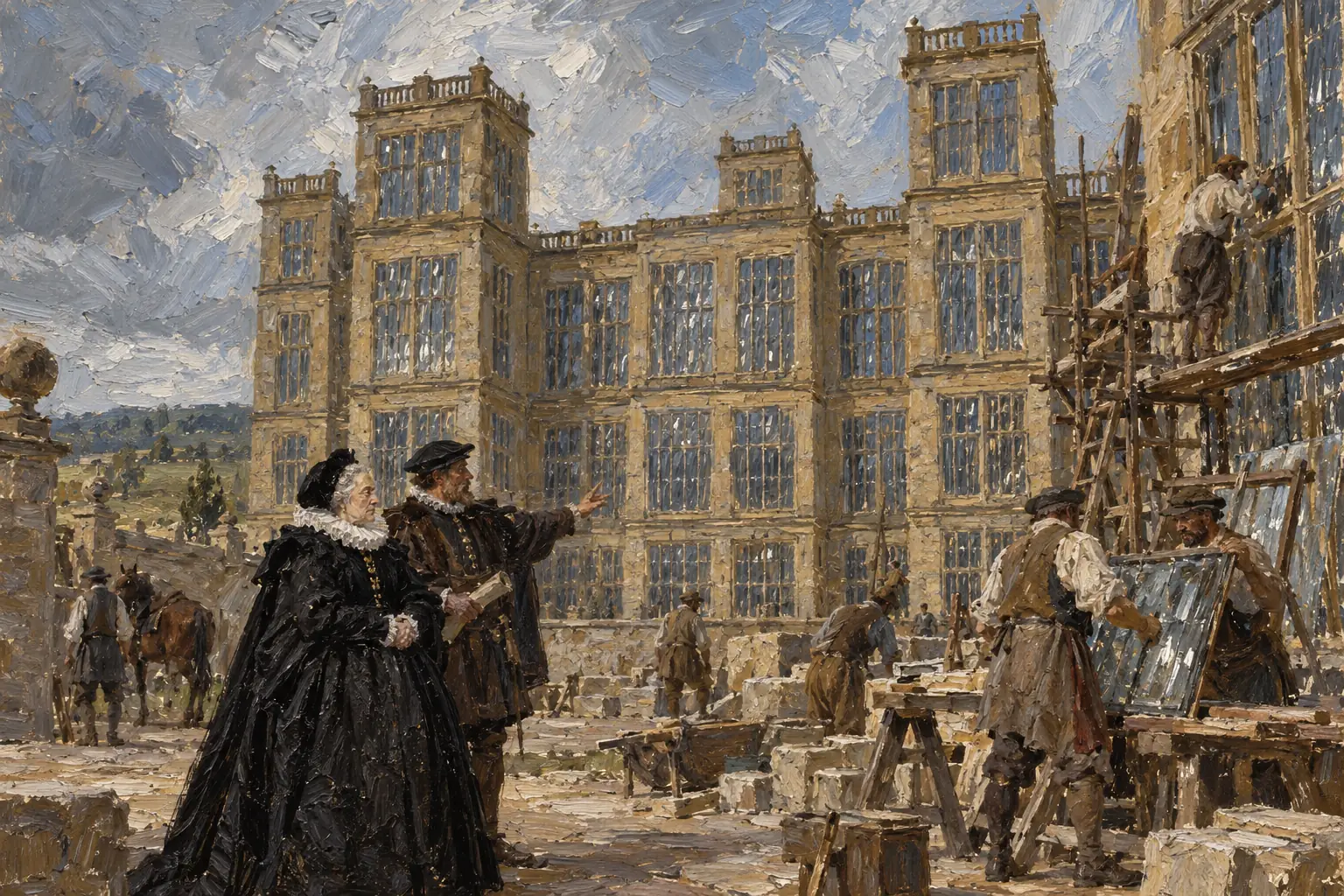
Bess of Hardwick rose from modest origins to become one of the wealthiest women in Tudor England, exemplifying gentry ambition through strategic marriages and property investments. Her story highlights broader patterns of social ascent, while also underscoring variations in prosperity across regions and classes.
Bess of Hardwick's ascent and architectural ambition
- Path to wealth - Through four marriages, including to nobles and courtiers, Bess accumulated estates and influence, eventually becoming Countess of Shrewsbury.
- Hardwick Hall - Her most famous project, this grand house featured innovative designs like extensive glass windows, symbolising her status and serving as a statement of female achievement.
- Legacy - Bess's success demonstrated how land acquisition and alliances could elevate the gentry, influencing family dynasties.
Regional and class variations
- Prosperous areas - Southern and eastern England often saw greater wealth from trade and fertile land, benefiting gentry and merchants.
- Insecure groups - In contrast, northern regions and lower classes faced hardships from poor harvests, enclosure of common lands, and inflation, leading to unemployment and vagrancy.
- Broader implications - These disparities created social tensions, with prosperity for some contrasting sharply with insecurity for others, foreshadowing issues of widespread poverty.