2.2 - Elizabethan Theatre: Stages, Companies & Plays
Key facts and dates
Elizabethan theatre emerged as a vibrant cultural force in the late 16th century, blending entertainment with social commentary through purpose-built venues and professional companies. The following timeline highlights the establishment of major theatres and key developments that shaped this era.
Timeline of key events
- 1576 – The Theatre opens in London as the first purpose-built playhouse, marking the start of dedicated public amphitheatres.
- 1577 – The Curtain theatre is constructed nearby, expanding options for performances and audiences.
- 1587 – The Rose theatre begins operations on the south bank of the Thames, becoming a hub for innovative staging.
- 1599 – The Globe theatre is built using timbers from The Theatre, serving as the primary venue for Shakespeare's company.
- Late 1500s – Acting companies gain noble patronage, enabling legal operations and professional growth.
- 1594 – Formation of the Lord Chamberlain's Men, later the King's Men, featuring prominent actors and playwrights.
Design and features of public amphitheatres
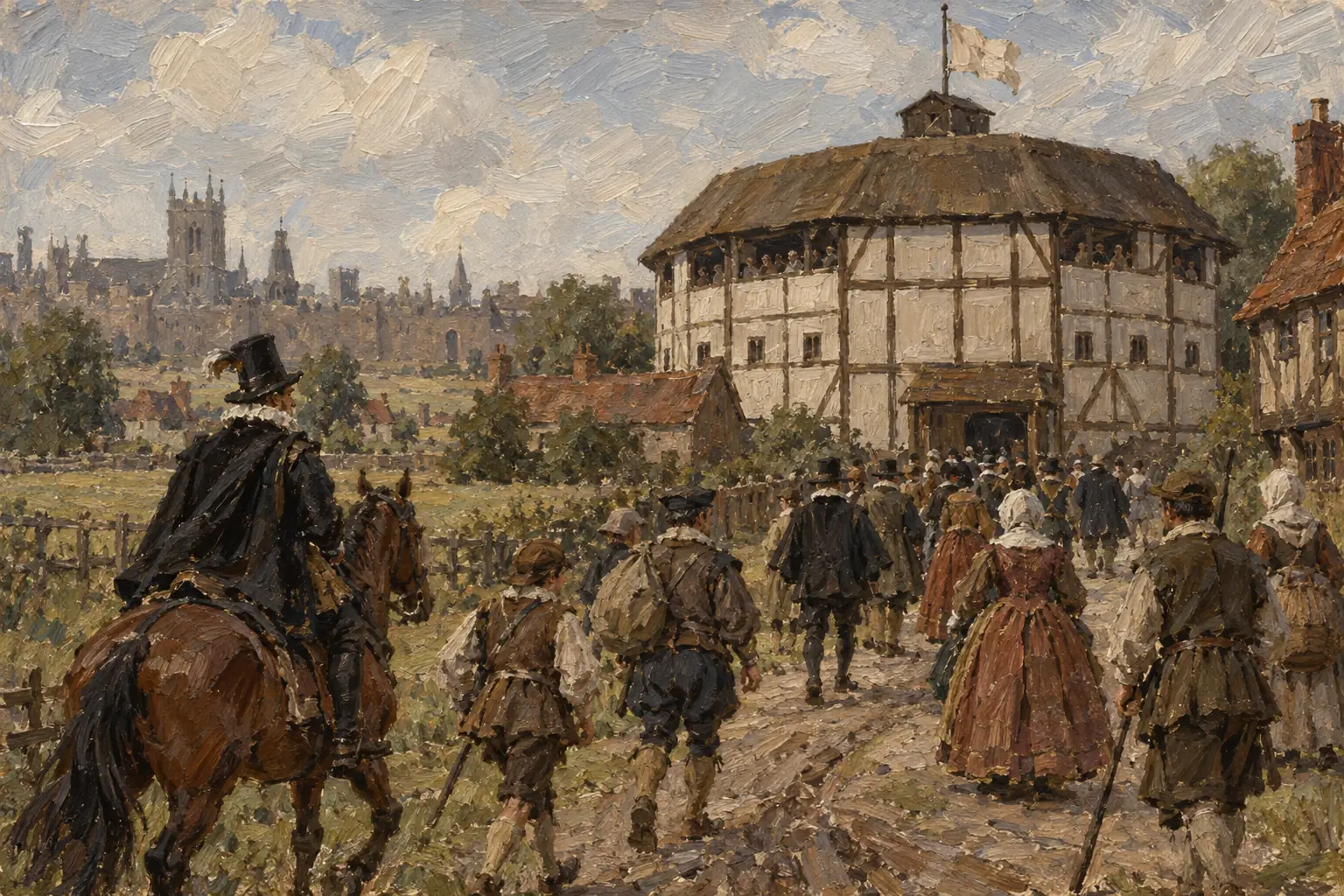
Public amphitheatres represented a major innovation in Elizabethan England, providing dedicated spaces for large-scale performances outside of inns or halls. These venues, built in and around London, catered to growing public demand for drama and spectacle.
Characteristics of amphitheatre design
- Polygonal structure - Theatres like The Theatre, The Curtain, The Rose, and The Globe featured a multi-sided exterior, typically 12- to 20-sided, which allowed for efficient construction and maximised seating capacity.
- Open-air layout - Performances took place in daylight under an open roof, with a central yard for standing audiences and tiered galleries for seated spectators, creating an immersive environment exposed to the elements.
- Thrust stage - The stage projected into the audience area, enabling close interaction between actors and viewers from three sides, which enhanced engagement and dramatic effects.
- Minimal scenery - Sets were basic or absent, relying on props, costumes, and spoken descriptions to convey locations and atmospheres, encouraging audience imagination.
Structure and operation of acting companies
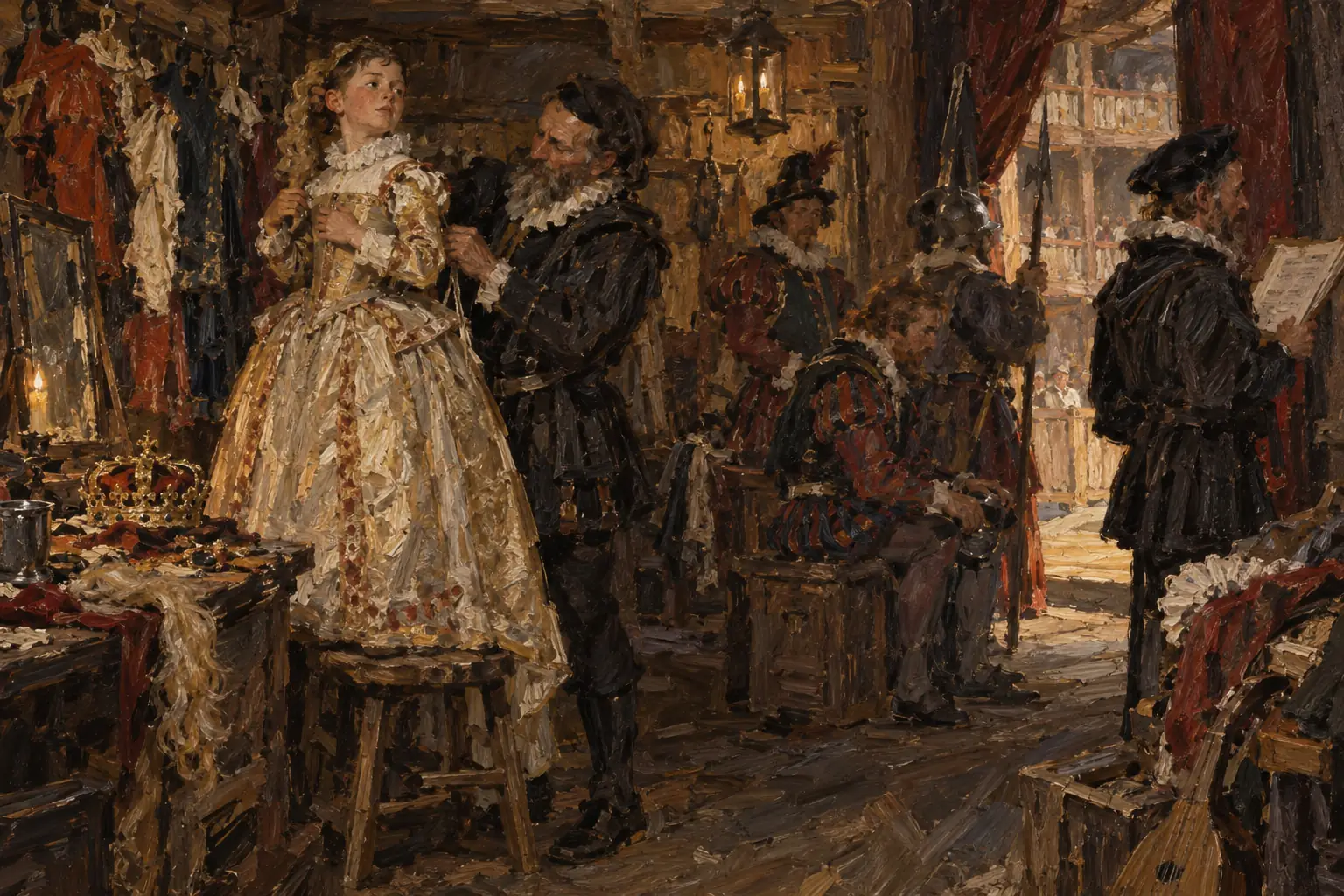
Acting companies formed the backbone of Elizabethan theatre, operating as professional troupes that performed regularly to generate income. These groups navigated legal and financial challenges through strategic organisation and support.
Organisation and economics of acting companies
- Noble patronage - Companies secured protection from influential nobles, such as the Lord Chamberlain or Lord Admiral, which granted them licences to perform and shielded them from laws against unlicensed actors.
- All-male casts - Performances featured only male actors, with boys taking female roles due to social conventions that barred women from the stage.
- Role of sharers - Key members, known as sharers, invested in the company and shared profits, while hired actors received wages; this system motivated high-quality productions to ensure financial success.
- Economics of performance - Troupes earned revenue from ticket sales, with affordable entry for groundlings in the yard and higher prices for gallery seats, supplemented by tours to provincial towns during plague closures in London.
Leading figures in Elizabethan theatre
Several individuals rose to prominence in Elizabethan theatre, contributing as actors, playwrights, and entrepreneurs. Their talents and innovations helped elevate drama to a respected art form.
Profiles of key figures
- Richard Burbage - A leading actor and sharer in the Lord Chamberlain's Men, renowned for his powerful performances in tragic roles; he also played a role in building and managing The Globe.
- William Shakespeare - A prolific playwright and actor who joined the Lord Chamberlain's Men in 1594, authoring works that blended genres and explored human nature, while investing as a sharer to secure his financial stake in the company.
Variety of plays and repertoire
Elizabethan companies maintained diverse repertoires to attract repeat audiences, drawing from various genres and traditions. This variety reflected both popular tastes and intellectual currents of the time.
Types of plays performed
- Histories - Dramas recounting English royal chronicles, often with patriotic themes, such as tales of kings and battles that resonated with national identity.
- Comedies - Light-hearted works featuring romance, mistaken identities, and witty dialogue, designed to entertain through humour and clever plots.
- Tragedies - Intense plays exploring themes of fate, ambition, and downfall, drawing on classical influences to deliver emotional depth and moral lessons.
- Morality influences - Elements from medieval morality plays persisted, incorporating allegorical figures and ethical dilemmas to convey messages about virtue and vice.
Audiences and social role of theatres
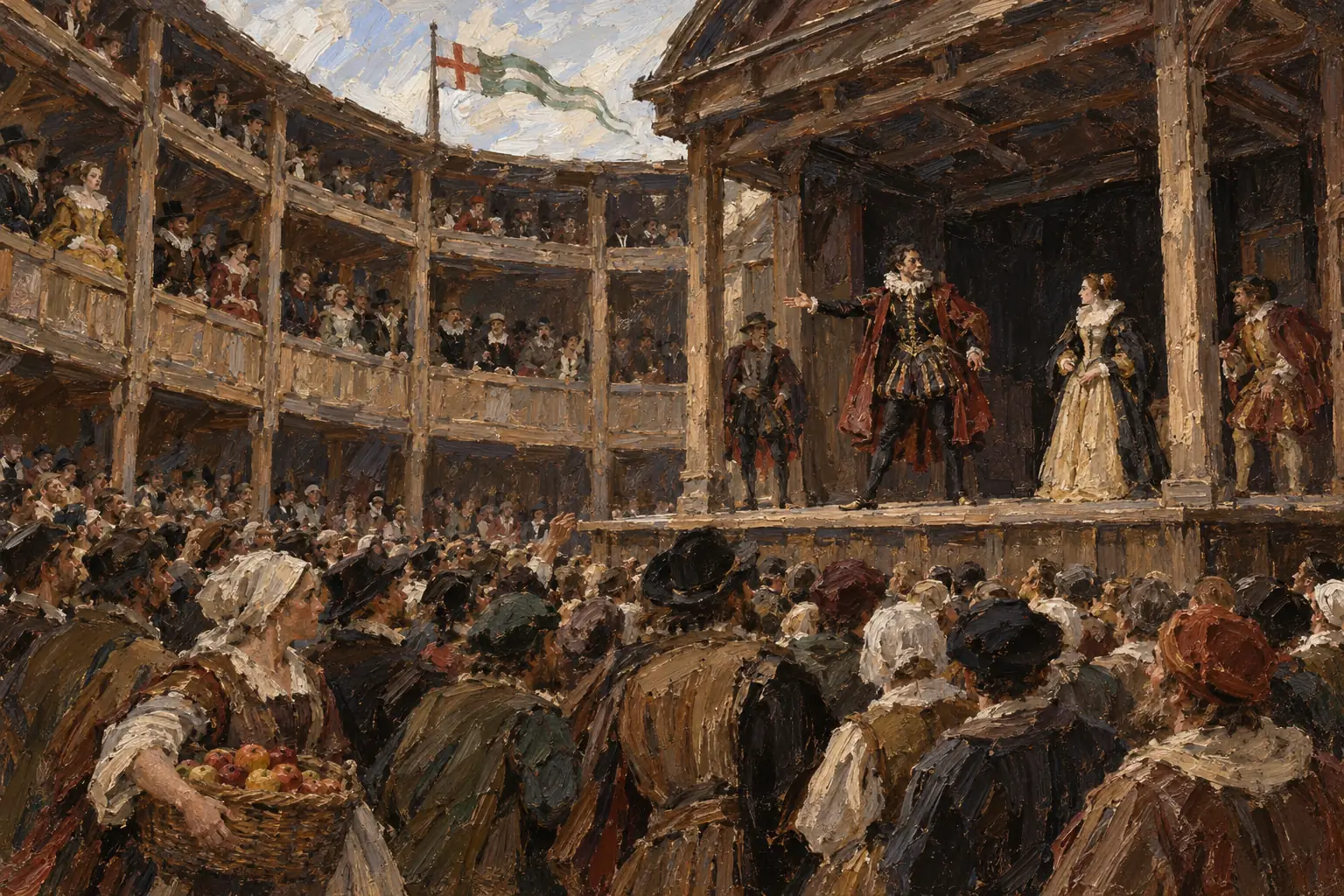
Theatres drew crowds from across society, serving as communal spaces for entertainment and discourse. They functioned not only as venues for amusement but also as platforms for exploring contemporary ideas.
Composition of audiences and theatrical functions
- Diverse social groups - Spectators included members of the court and gentry in premium seats, alongside artisans, apprentices, and merchants in the yard, creating a broad cross-section of Elizabethan society.
- Entertainment value - Plays offered escapism, excitement, and spectacle, with elements like music, dance, and special effects appealing to all levels of audience.
- Vehicles for ideas - Theatres disseminated social, political, and philosophical concepts, often subtly critiquing authority or reflecting on human behaviour, which made them influential in shaping public thought..