3.2 - McCarthyism, Red Scare & Cold War Context
Key facts and dates
McCarthyism emerged during the early Cold War, a period of intense rivalry between the United States and the Soviet Union, fuelling fears of communist infiltration. This era, known as the Second Red Scare, led to widespread investigations and restrictions on civil liberties. The following timeline outlines the major events that defined this tense chapter in American history.
Timeline of key events
| Year | Event |
|---|---|
| 1947 | President Truman introduces loyalty oaths for federal employees to combat perceived communist threats. |
| 1947 | House Un-American Activities Committee (HUAC) begins probing alleged communist influence in Hollywood. |
| 1950 | Senator Joseph McCarthy claims to have evidence of 205 communists in the State Department, sparking national hysteria. |
| 1953 | McCarthy becomes chairman of the Senate Permanent Subcommittee on Investigations, intensifying interrogations. |
| 1954 | Army-McCarthy hearings expose McCarthy's aggressive tactics on television, eroding public support. |
| 1954 | Senate censures McCarthy for conduct unbecoming a senator, marking the end of his influence. |
Early Cold War context and Second Red Scare
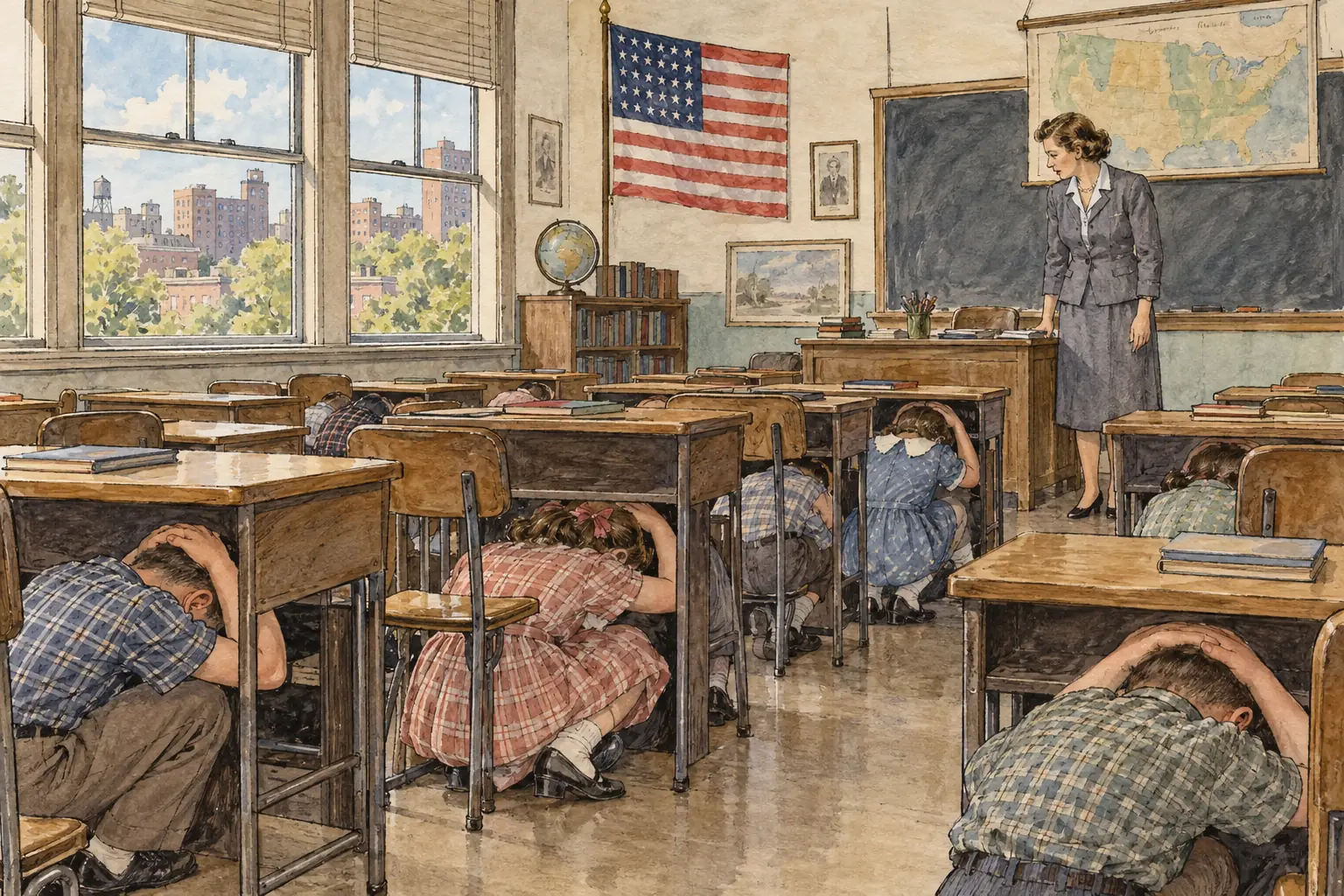
The early Cold War, beginning after World War II, created a climate of suspicion and fear in the United States, as tensions with the Soviet Union escalated. This period, often called the Second Red Scare, built on earlier anti-communist sentiments from the 1920s but intensified due to global events and domestic anxieties.
Factors contributing to the Second Red Scare
- International developments - Events like the Soviet Union's development of atomic weapons in 1949 and the communist victory in China's civil war heightened American fears of espionage and subversion.
- Domestic spy cases - High-profile trials, such as that of Alger Hiss in 1948, accused of passing secrets to the Soviets, convinced many that communists had infiltrated the government.
- Political climate - The Truman administration's policies, including the 1947 Truman Doctrine to contain communism, encouraged a national obsession with loyalty and security.
- Public mood - Widespread paranoia led to the perception that any left-leaning views could indicate disloyalty, affecting everyday life and encouraging conformity.
Joseph McCarthy's rise, accusations and methods
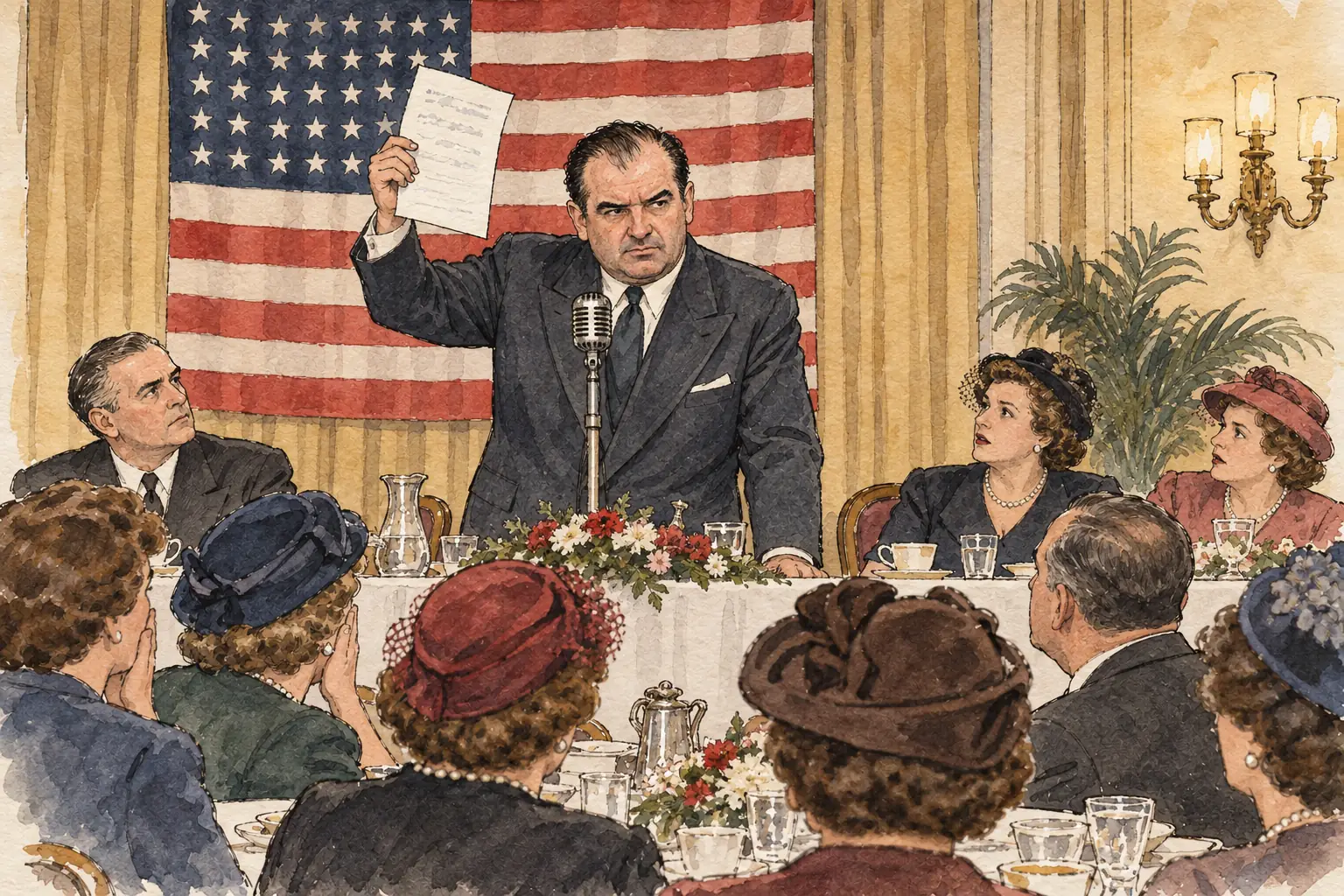
Joseph McCarthy, a Republican senator from Wisconsin, rose to prominence by exploiting Cold War fears through unsubstantiated claims of communist infiltration. His tactics amplified national hysteria, using media and public hearings to spread alarm.
McCarthy's path to influence
- Initial rise - In a 1950 speech in West Virginia, McCarthy alleged he possessed a list of over 200 communists working in the State Department, though he provided no concrete evidence.
- Accusations and targets - He focused on government officials, diplomats and intellectuals, accusing them of treason without proof, which resonated with a public anxious about Soviet threats.
- Methods of investigation - McCarthy employed aggressive interrogation in Senate hearings, often bullying witnesses and relying on innuendo rather than facts to ruin reputations.
- Role of media - Extensive newspaper and television coverage sensationalised his claims, turning McCarthy into a household name and intensifying the climate of fear across the nation.
Key cases, loyalty tests and blacklisting
Image 1 of 2: In October 1947 the Hollywood Ten refused to answer HUAC's questions about communist ties, and were later jailed and blacklisted
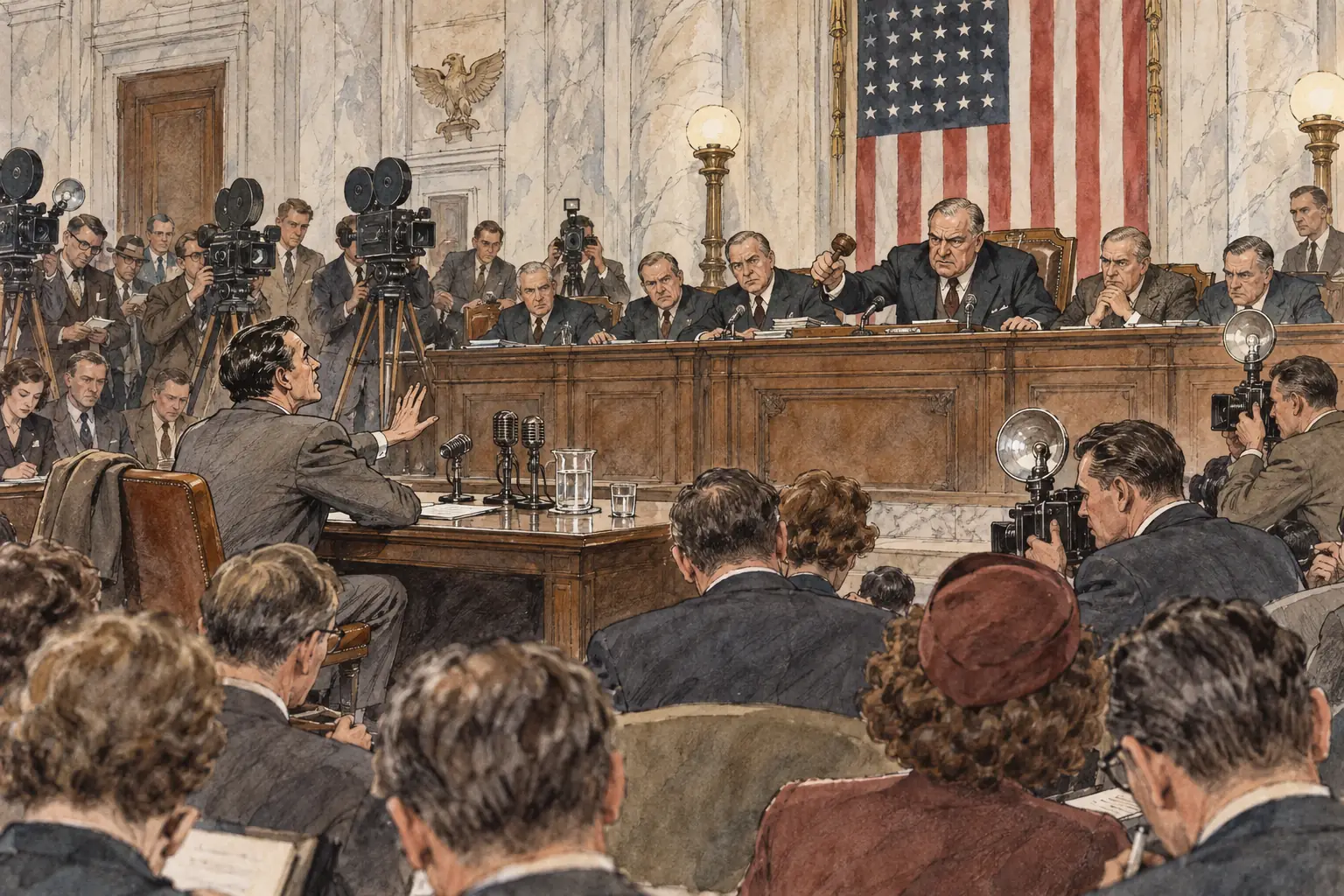
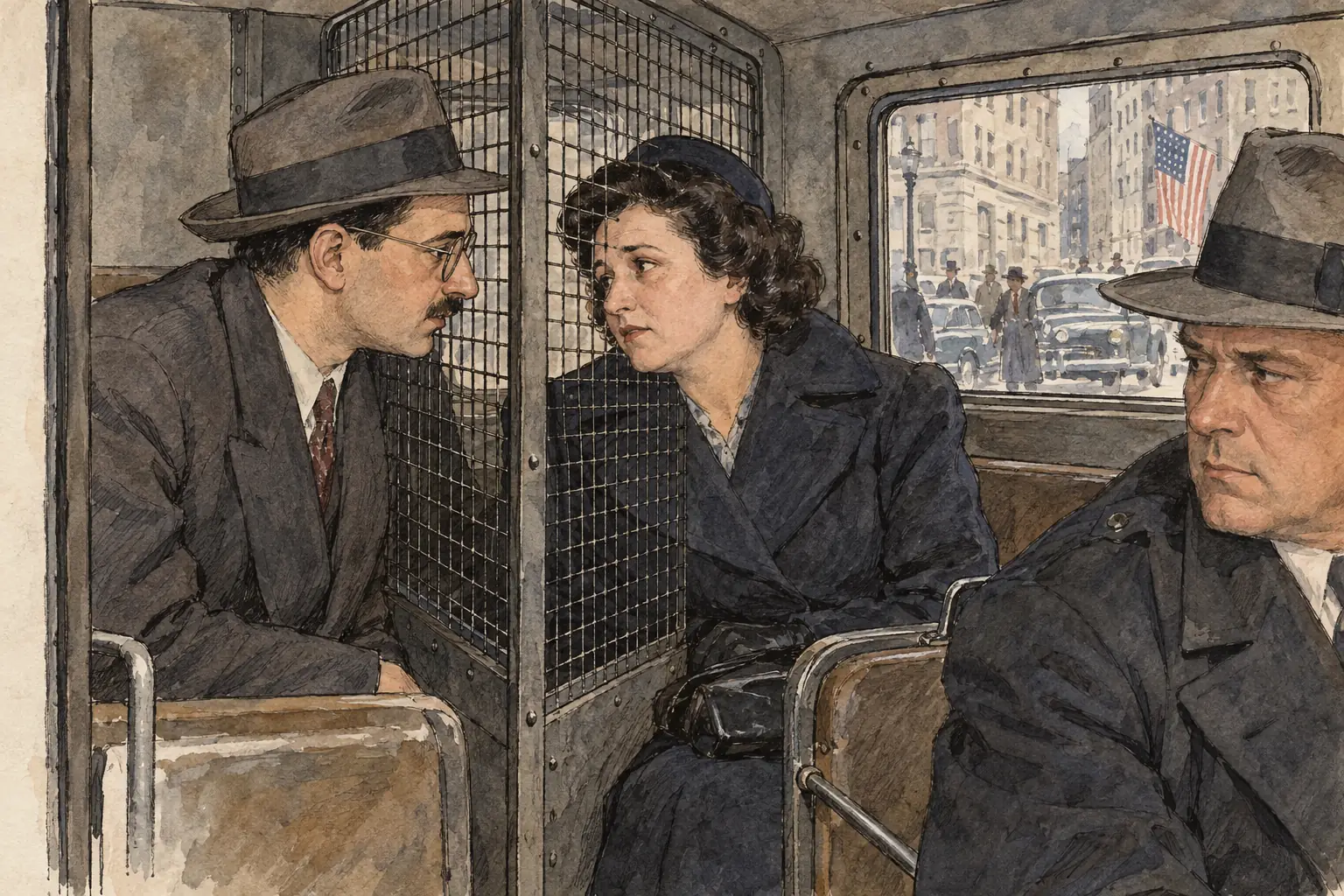
McCarthyism involved prominent investigations and policies that restricted freedoms, creating an environment where suspicion alone could destroy careers. Key cases highlighted the era's excesses, while loyalty programmes and blacklists enforced conformity.
Notable cases during McCarthyism
- Hollywood Ten - In 1947, ten film industry figures refused to testify before HUAC about alleged communist ties, leading to prison sentences and widespread blacklisting in entertainment.
- Rosenberg trial - Julius and Ethel Rosenberg were executed in 1953 for supposedly passing atomic secrets to the Soviets, a case that symbolised the era's harsh anti-communist stance despite debated evidence.
Climate of loyalty tests and blacklisting
- Federal loyalty programmes - From 1947, government employees had to swear oaths denying communist affiliations, with thousands investigated and hundreds dismissed based on vague suspicions.
- Blacklisting practices - Industries like film and education maintained unofficial lists of suspected communists, barring them from work and forcing many to name others to clear their names.
- Broader impact - These measures stifled free speech, as people avoided controversial topics to evade accusation, affecting unions, schools and cultural institutions.
McCarthy's downfall and civil liberties
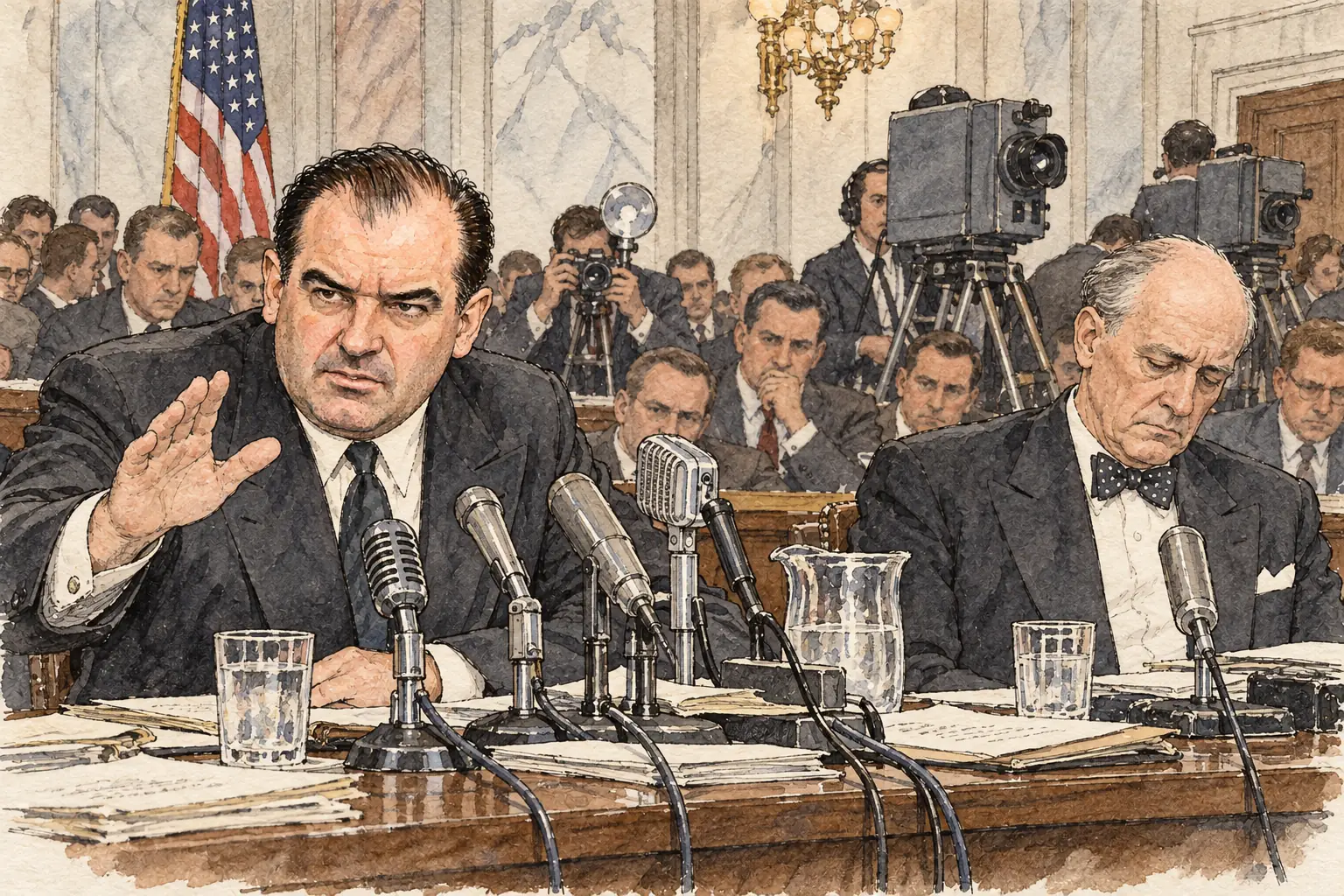
McCarthy's aggressive approach eventually led to his censure, exposing the dangers of unchecked power. This decline revealed flaws in American political culture and prompted reflection on protecting individual rights.
Events leading to McCarthy's fall
- Army-McCarthy hearings - In 1954, televised sessions investigated McCarthy's claims of communism in the military, where his bullying tactics alienated viewers and senators.
- Senate censure - Later that year, the Senate voted to condemn McCarthy for unethical conduct, stripping him of influence and effectively ending his career.
- Public backlash - Media exposure highlighted his lack of evidence, shifting opinion against him as the immediate Cold War threats seemed less imminent.
Revelations about political culture and civil liberties
- Abuse of power - McCarthyism showed how fear could enable demagogues to manipulate institutions, undermining democratic principles.
- Erosion of rights - It demonstrated the fragility of civil liberties, as innocent people suffered job losses and social ostracism without due process.
- Long-term reforms - The episode led to greater scrutiny of congressional investigations and a renewed emphasis on protecting free expression.
Causes, consequences and source reliability
McCarthyism stemmed from a mix of genuine security concerns and political opportunism, with lasting effects on American society. Evaluating sources from this period requires careful analysis to distinguish fact from propaganda.
Causes and consequences of McCarthyism
- Underlying causes - A combination of Cold War anxieties, real espionage cases and McCarthy's ambition drove the movement, amplified by partisan politics.
- Short-term consequences - Thousands faced ruined careers, while society experienced heightened conformity and division.
- Long-term consequences - It contributed to a more cautious political environment, influencing later debates on surveillance and rights during crises.
Assessing reliability of sources from the period
- Bias in primary sources - Government documents and McCarthy's speeches often exaggerated threats for political gain, requiring cross-checking with independent accounts.
- Media influence - Newspaper reports varied in objectivity; some sensationalised stories, while others provided balanced critiques.
- Historical evaluation - Reliable analysis involves considering context, such as anti-communist hysteria, and corroborating with multiple viewpoints to judge accuracy.