3.3 - Popular Culture: Rock & Roll & Television
Key facts and dates
The 1950s and 1960s in the United States saw rapid developments in popular culture, driven by technological advances and social shifts. Television and rock & roll became central to everyday life, influencing how people spent their time, formed opinions, and interacted with society, while highlighting generational divides.
Timeline of key events
- 1948 – Television ownership begins to surge, with over 1 million sets in American homes by year's end.
- 1954 – Colour television introduced, boosting its appeal and integration into family routines.
- 1955 – Rock & roll gains mainstream popularity with hits like Bill Haley's "Rock Around the Clock".
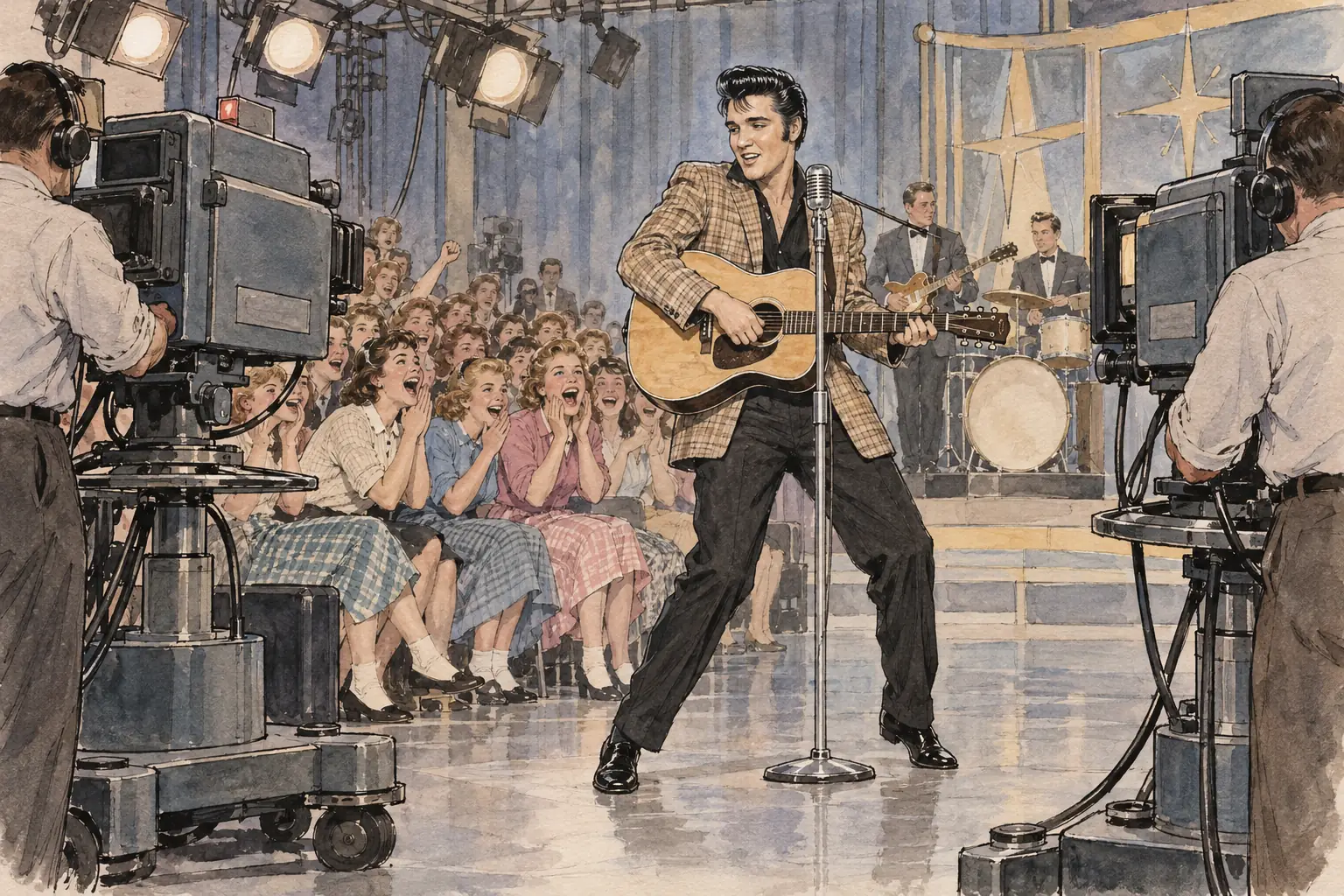
- 1956 – Elvis Presley's television appearances spark widespread youth enthusiasm and parental concerns.
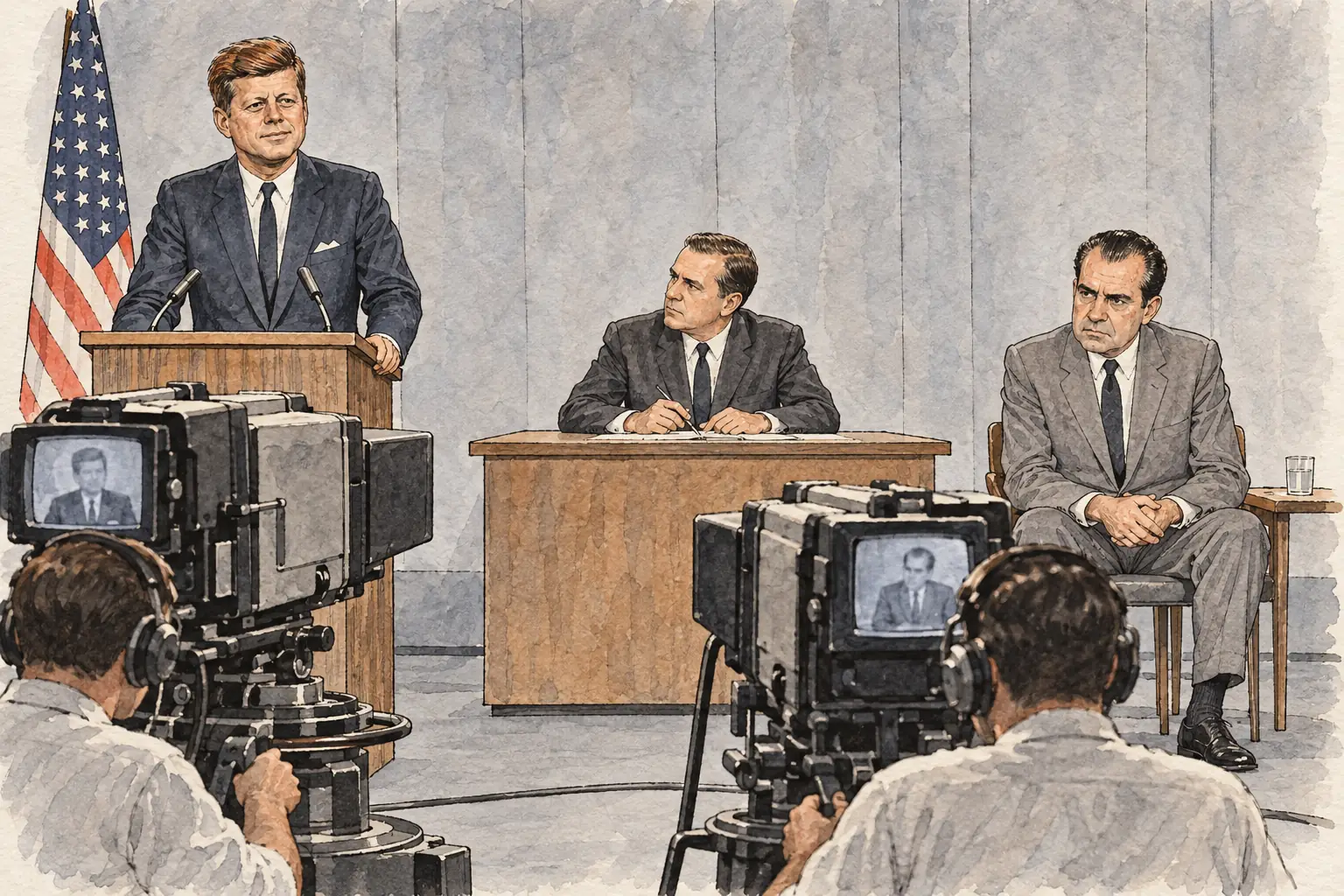
- 1960 – First televised presidential debates between Kennedy and Nixon demonstrate TV's political influence.
- 1963 – Beatles' arrival in the US ignites "Beatlemania" and further defines youth culture.
- 1969 – Woodstock festival symbolises the peak of counterculture and generational rebellion.
Growth and impact of television
Image 1 of 2: By the mid-1950s most American families owned a television, and evenings centred on watching it together
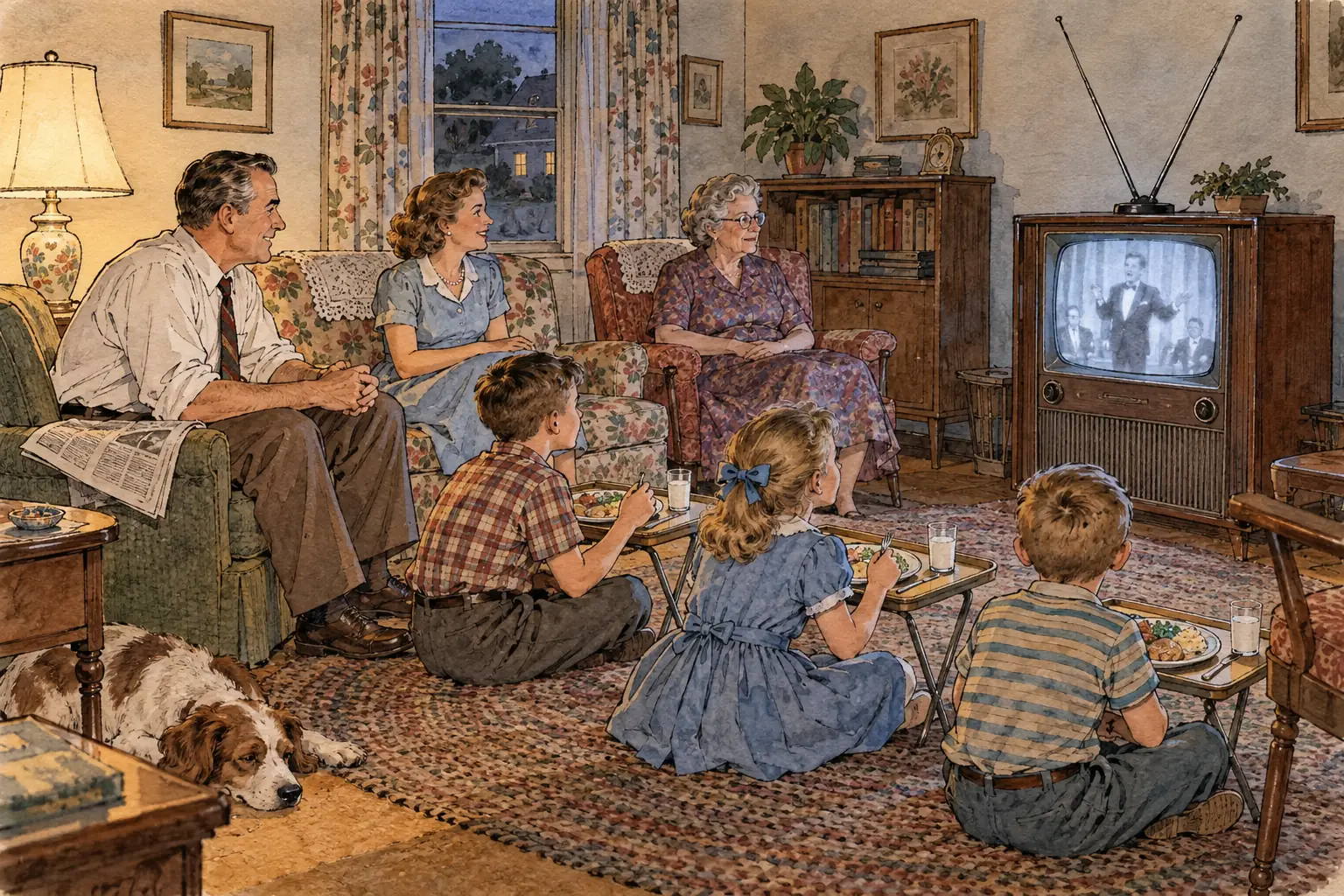
Television transformed American society in the post-war era, evolving from a novelty to a household staple. By the mid-1950s, most families owned a set, which altered daily routines and social interactions in profound ways.
Ways television reshaped leisure activities
- Family entertainment - Programmes like variety shows and sitcoms turned evenings into shared viewing experiences, replacing activities such as radio listening or cinema visits.
- Home-centred recreation - People spent more time indoors, engaging with content that promoted suburban ideals and family bonding, though this sometimes reduced community-based leisure.
Influence on politics
- Public engagement - Televised events, such as presidential debates, allowed candidates to reach millions directly, emphasising image and charisma over policy depth.
- Shaping opinions - News broadcasts brought global events, like the civil rights movement, into living rooms, fostering greater awareness and influencing voter attitudes.
Effects on consumer habits
- Promotion of products - Commercials encouraged the purchase of household goods, linking them to modern lifestyles and contributing to the consumer boom of the era.
How advertising reshaped consumer habits
Advertising exploded alongside television's rise, using the medium to create desires and normalise consumption. Sponsors funded programmes, embedding marketing into entertainment and driving economic growth.
Key strategies in television advertising
- Targeted messaging - Ads portrayed idealised family life, promoting appliances and convenience foods as essential for happiness and efficiency.
- Creation of brand loyalty - Repetitive slogans and jingles built familiarity, encouraging repeated purchases and shifting habits towards mass-produced goods.
Broader impacts on society
- Consumerism boom - Advertising fuelled demand for cars, electronics, and fashion, aligning with economic prosperity and suburban expansion.
- Cultural standardisation - It spread uniform tastes across regions, reducing local variations in consumption patterns.
Emergence of rock & roll and youth culture
Image 1 of 2: Teenagers danced to rock and roll records at school dances called 'sock hops'
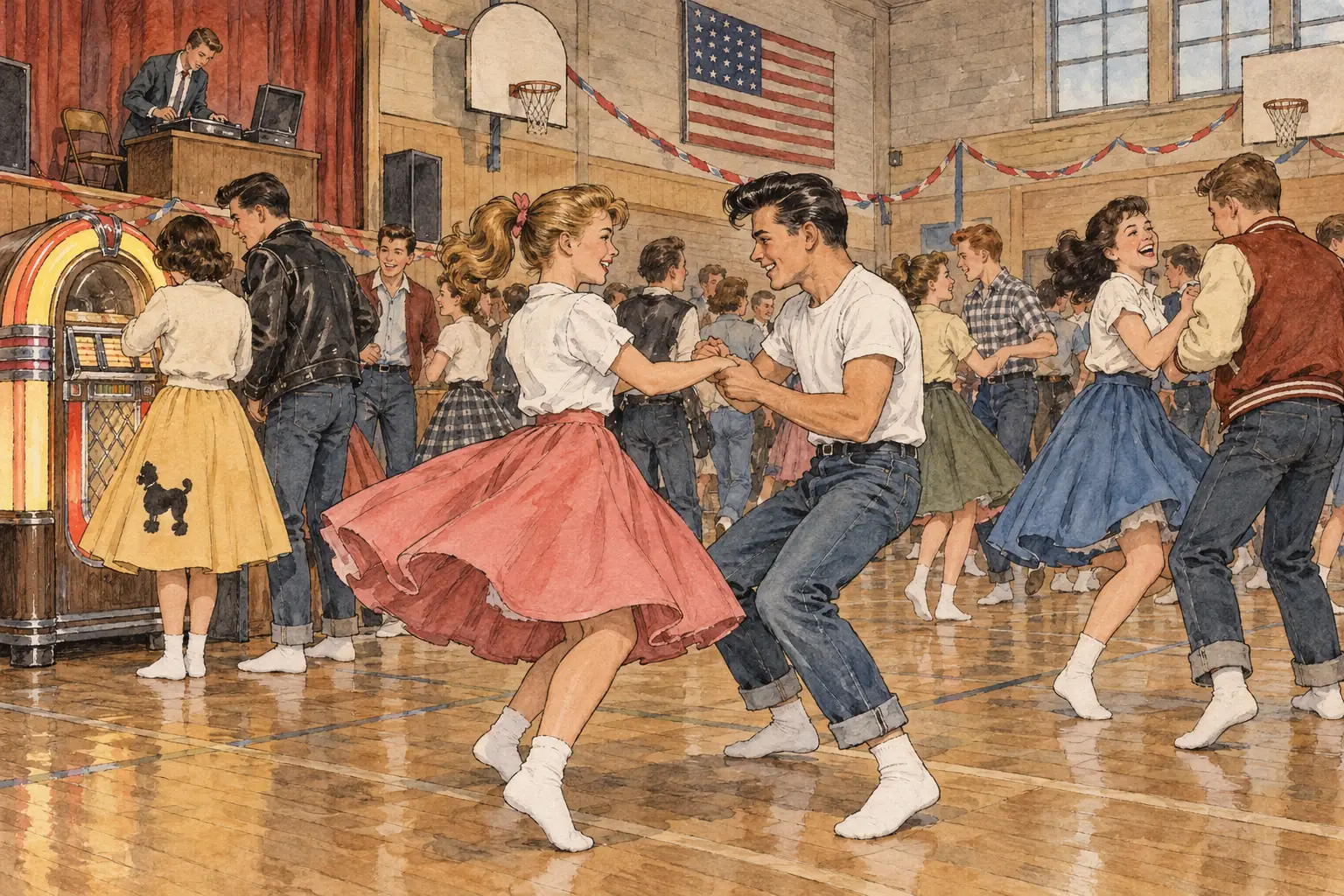
Rock & roll emerged in the 1950s as a fusion of rhythm and blues, country, and gospel, appealing to teenagers seeking identity amid post-war conformity. It spawned a distinct youth culture centred on music, fashion, and social expression.
Origins and key elements of rock & roll
- Musical roots - Artists like Chuck Berry and Little Richard blended genres, creating energetic sounds that resonated with young audiences.
- Rise of celebrities - Figures such as Elvis Presley became icons, their performances and personas elevating them to stardom through records and films.
Features of youth culture
- Style and fashion - Teenagers adopted leather jackets, jeans, and hairstyles like pompadours, symbolising rebellion against adult norms.
- Dance and social trends - Dances like the twist encouraged physical expression and group gatherings at sock hops or concerts.
- Sense of independence - Music provided an outlet for exploring themes of love, freedom, and defiance, fostering a generational identity separate from parents.
Older generations' reaction to youth culture
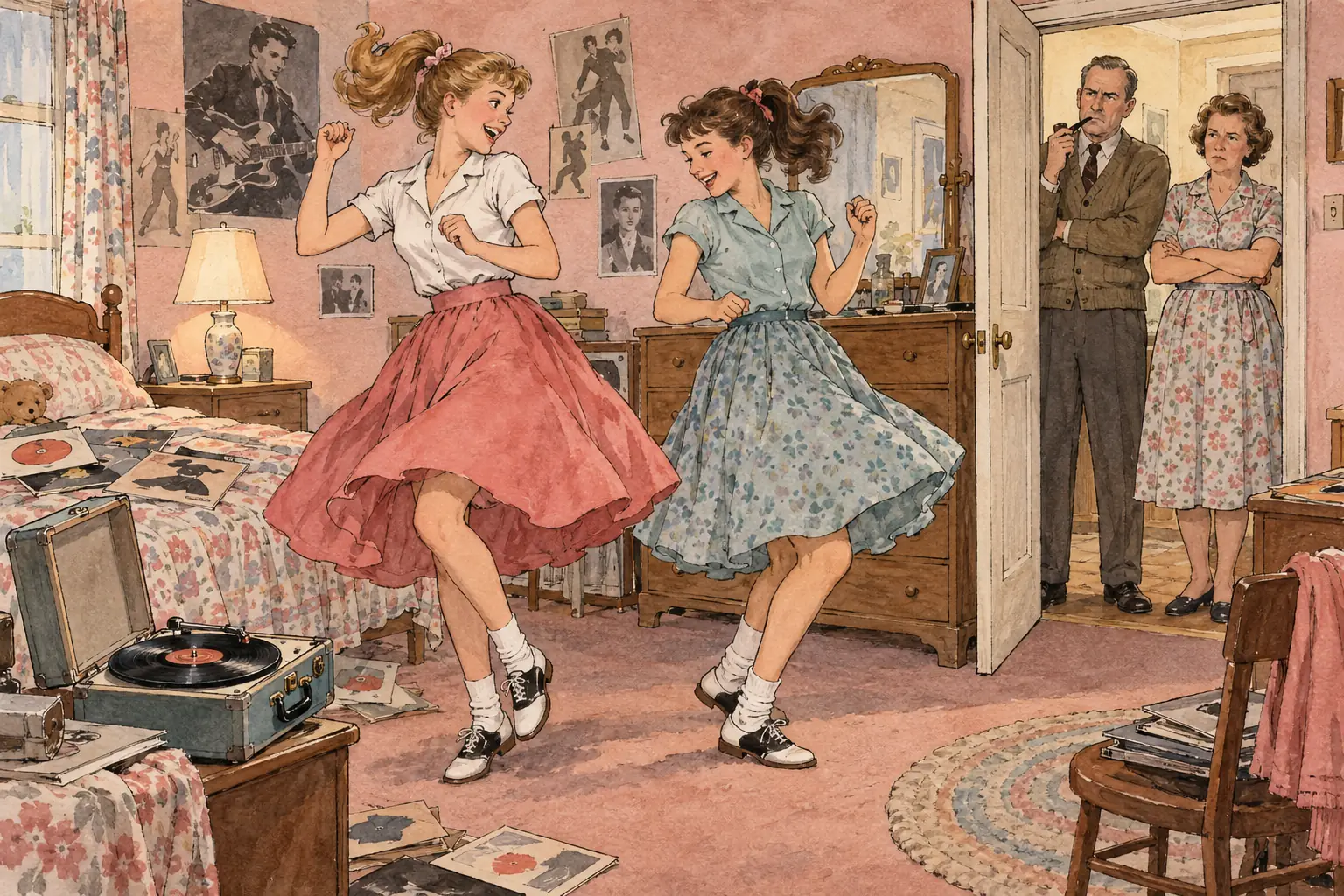
The rapid spread of rock & roll and associated youth behaviours alarmed many adults, who viewed them as threats to traditional values. This generational clash highlighted tensions over morality and social order.
Concerns raised by older generations
- Moral decline - Critics argued that suggestive lyrics and dances promoted promiscuity and delinquency, linking them to rising juvenile crime rates.
- Behavioural fears - Parents and authorities worried about the influence of celebrities, fearing it encouraged disrespect and rebellion against family structures.
Responses and actions
- Censorship efforts - Some radio stations banned certain songs, while television networks edited performances to tone down provocative elements.
- Public debates - Media and religious groups condemned the culture as corrupting, reflecting broader anxieties about rapid social change.
Continuity and change in values in popular culture
Popular culture served as a lens for examining evolving American values, blending enduring traditions with emerging progressive ideas. The period saw a mix of conservatism and innovation, influenced by economic growth and social movements.
Elements of continuity in values
- Family and conformity - Television often reinforced traditional roles, with shows depicting nuclear families and suburban stability, echoing pre-war ideals.
- Patriotism and consumerism - Advertising and programming promoted national pride and material success, maintaining a focus on economic achievement.
Aspects of change in values
- Youth empowerment - Rock & roll empowered younger people to challenge authority, paving the way for the counterculture of the 1960s with its emphasis on individualism and anti-establishment views.
- Social progress - Media exposure to issues like civil rights through television encouraged shifts towards greater equality and activism.
Overall patterns of continuity and change
| Aspect | Continuity (1950s focus) | Change (1960s shift) |
|---|---|---|
| Family values | Emphasis on domestic harmony and traditional roles | Growing acceptance of diverse lifestyles and independence |
| Moral standards | Concerns over decency and order | Embrace of personal freedom and expression |
| Consumer behaviour | Pursuit of material comfort | Critique of materialism in counterculture movements |
| Political engagement | Passive viewing of events | Active participation inspired by media coverage |