1.4 - Pevensey Castle & the Invasion Landing
Key facts and dates
The Norman invasion of England in 1066 began with William's landing at Pevensey, chosen for its strategic advantages. This event followed Harold's victory at Stamford Bridge and set the stage for the Battle of Hastings, marking a critical phase in the conquest.
Timeline of key events
- 25 September 1066 – Harold defeats Norwegian forces at Stamford Bridge, depleting his army.
- 28 September 1066 – William lands at Pevensey Bay, establishing a beachhead.
- Late September 1066 – Normans strengthen fortifications at Pevensey using the Roman fort Anderitum.
- Early October 1066 – William moves to Hastings, building timber defences and harrying local areas.
- 5–13 October 1066 – Harold marches south from York, arriving exhausted near Hastings.
- 14 October 1066 – Battle of Hastings occurs, partly due to William's provocative tactics.
Channel crossing and choice of Pevensey
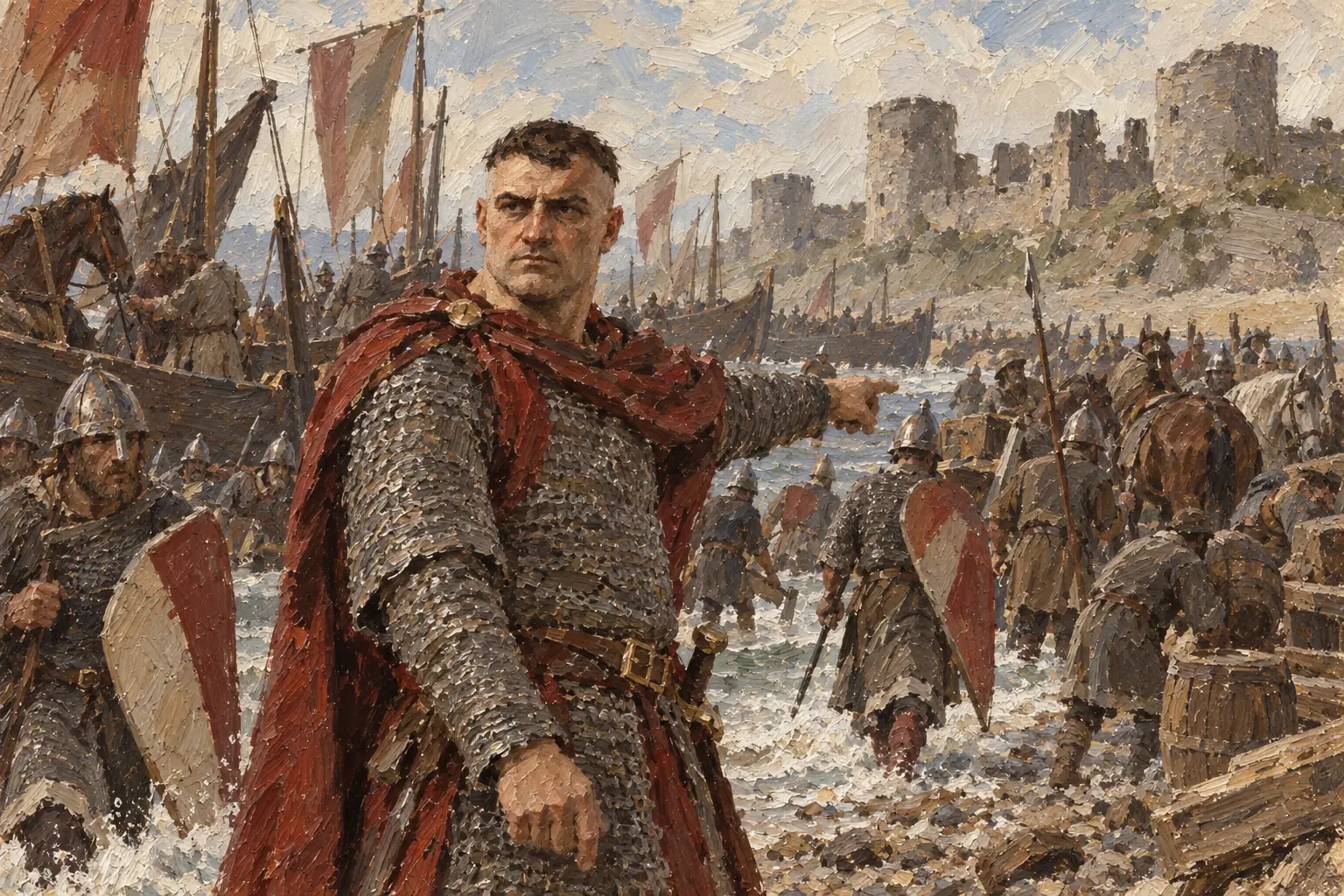
Crossing the English Channel posed significant challenges for William's invasion fleet in 1066, requiring careful planning and favourable conditions. The choice of Pevensey as the landing point was strategic, offering natural and historical advantages that minimised risks.
Challenges of the Channel crossing
- Weather and timing - Strong winds and rough seas could scatter ships or delay the journey; William waited for calm conditions in late September to ensure the fleet stayed together.
- Logistical demands - Transporting thousands of troops, horses, and supplies across open water demanded precise coordination, with risks of ships sinking or becoming separated during the 100-kilometre voyage.
- Vulnerability to attack - The fleet was exposed to potential interception by English naval forces, though Harold's ships were dispersed after his northern campaign.
Reasons for selecting Pevensey
- Sheltered anchorage - Pevensey Bay provided a protected harbour, shielding ships from storms and allowing safe unloading of men and equipment.
- Reusable Roman fort - The existing ruins of Anderitum, a Roman Saxon Shore fort, offered ready-made stone walls that could be quickly adapted for defence, saving time and resources.
- Geographical advantages - Its location on the Sussex coast allowed easy access to inland routes, facilitating rapid consolidation of the invasion force.
William's preparations and immediate actions
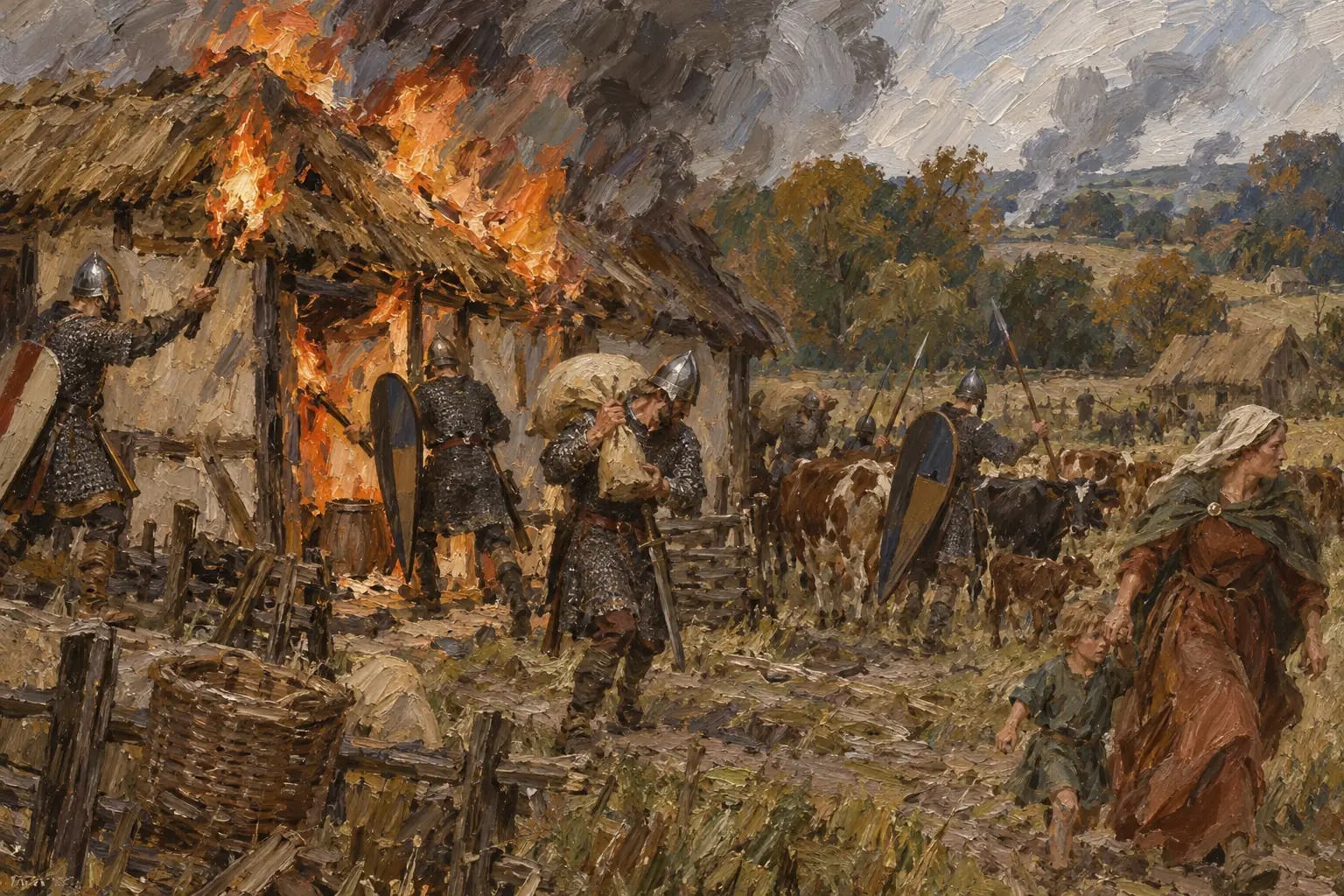
Upon landing at Pevensey on 28 September 1066, William prioritised securing his position and weakening English resistance. His actions focused on fortification, resource gathering, and tactics to draw Harold into battle on unfavourable terms.
Establishment of a secure beachhead
- Initial fortification - William's forces immediately reinforced the Roman fort at Pevensey with timber additions, creating a defensible base to protect against counter-attacks.
- Expansion to Hastings - Shortly after, the Normans constructed a new timber castle at Hastings, using prefabricated wooden parts brought from Normandy to establish a second strongpoint.
Tactics to provoke conflict
- Foraging and harrying - Norman troops raided local villages for food and supplies, deliberately devastating the countryside to disrupt English logistics and lure Harold southwards.
- Strategic provocation - By targeting areas loyal to Harold, William aimed to force a hasty response, choosing battlegrounds that favoured his cavalry and archers over English infantry.
Strategic function of the Sussex 'Rapes'
After the landing, William organised the Sussex region into administrative divisions known as 'Rapes' to maintain control and ensure reliable links back to Normandy. These divisions played a crucial role in the Norman consolidation of power.
Organisation and purpose of the 'Rapes'
- Division of land - Sussex was split into six 'Rapes', each granted to a trusted Norman lord; Pevensey formed part of one, with a castle at its centre to oversee the area.
- Securing communications - Each Rape controlled key coastal and inland routes, facilitating the movement of supplies, reinforcements, and messages between England and Normandy.
- Defensive and economic role - The system allowed for rapid mobilisation against threats while extracting resources from the local population to support the occupation.
Harold's response after Stamford Bridge

Following his victory at Stamford Bridge on 25 September 1066, Harold Godwinson faced the urgent threat of William's invasion. His decision to march south immediately carried significant risks due to the physical and strategic strains involved.
Harold's forced march south
- Journey details - Harold's army covered over 400 kilometres from York to Sussex in about two weeks, pushing troops to their limits after the exhausting battle against the Norwegians.
- Strain on troops - Many soldiers were fatigued, with losses from Stamford Bridge not fully replaced; the rapid pace led to desertions and reduced morale.
Risks of offering immediate battle
- Tactical disadvantages - Engaging William without waiting for reinforcements meant facing a rested Norman force on ground chosen by the invaders, limiting English defensive options.
- Strategic vulnerabilities - Harold's haste prevented full mobilisation of local fyrd militias, weakening his numbers and exposing divisions within his command structure.