1.5 - 1066 Battles: Fulford, Stamford Bridge & Hastings
Key facts and dates
The year 1066 marked a pivotal moment in English history, with three major battles determining the fate of the throne following Edward the Confessor's death. These conflicts involved rival claimants—Harold Godwinson, Harald Hardrada, and William of Normandy— and reshaped the political landscape through decisive military engagements.
Timeline of key events
- 20 September 1066 – Battle of Fulford: Harald Hardrada and Tostig defeat Earls Edwin and Morcar, securing control of York.
- 25 September 1066 – Battle of Stamford Bridge: Harold Godwinson defeats Hardrada and Tostig after a rapid march north, eliminating the Viking threat.
- 14 October 1066 – Battle of Hastings: William of Normandy defeats Harold Godwinson, leading to the Norman Conquest of England.
The Battle of Fulford and its outcomes
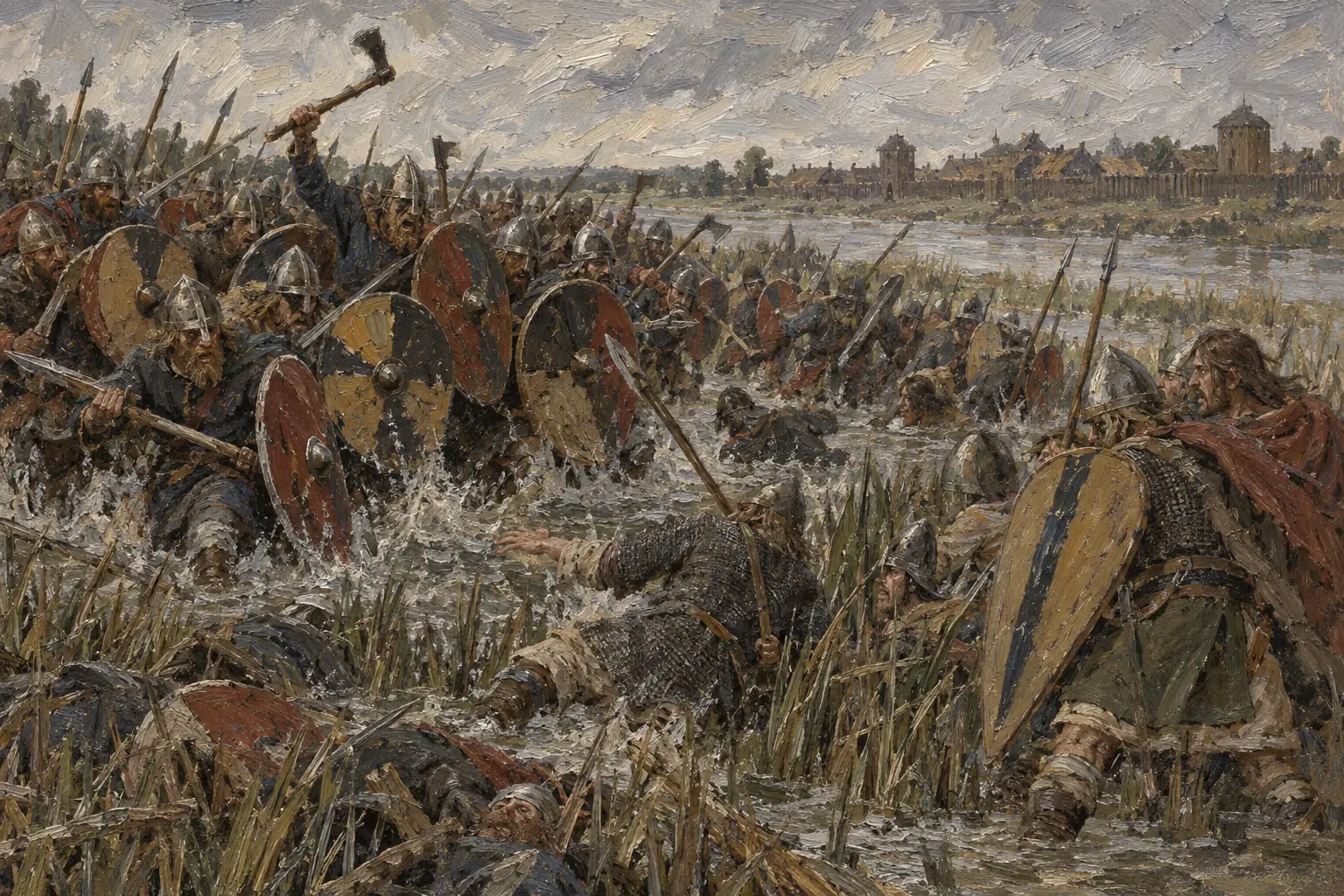
The Battle of Fulford, fought on 20 September 1066 near York, represented an early clash in the struggle for the English throne. It pitted the Norwegian king Harald Hardrada, allied with Harold Godwinson's brother Tostig, against the English earls Edwin and Morcar, who defended the north.
Key events and turning points at Fulford
- Initial positions and terrain - Hardrada's forces crossed a marshy area to engage the English, who held a defensive line along a ditch. The Norwegians exploited the flat, open ground to launch a flanking manoeuvre.
- Course of the battle - The English initially pushed back the invaders, but a Norwegian counter-attack broke their lines, leading to heavy casualties and a rout. Edwin and Morcar's army was decimated, with many drowning in the nearby river during retreat.
- Outcomes and significance - The victory allowed Hardrada and Tostig to capture York without resistance, opening northern England to Norwegian control. This forced Harold Godwinson to divert his army northward, stretching his resources and setting the stage for subsequent battles.
The Battle of Stamford Bridge and its implications
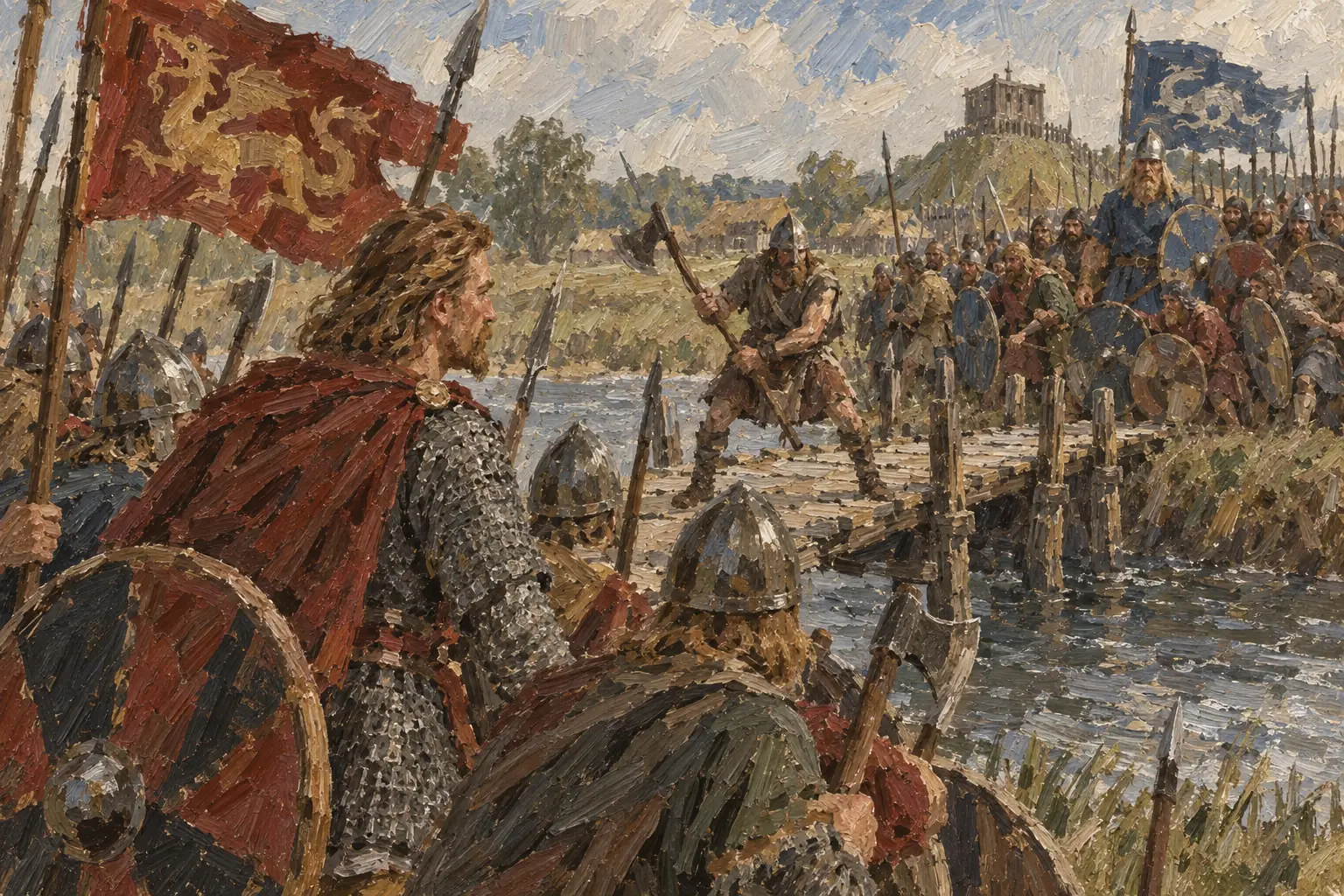
Just five days after Fulford, on 25 September 1066, Harold Godwinson confronted Hardrada and Tostig at Stamford Bridge, east of York. This engagement followed Harold's remarkable forced march of over 300 kilometres in four days, catching the Norwegians unprepared.
Key events and turning points at Stamford Bridge
- Surprise attack and initial resistance - Harold's army arrived unexpectedly while the Norwegians were divided across the River Derwent. A lone Viking warrior famously held the bridge against the English, delaying their advance until he was killed.
- Main engagement - Once across, the English formed a shield wall and overwhelmed the Norwegians in fierce hand-to-hand combat. Hardrada was killed by an arrow, and Tostig fell soon after, leading to the invaders' collapse.
- Costs and strategic implications - Harold's victory ended the Viking threat permanently, but at a high price: significant casualties among his elite housecarls, exhaustion from the march, and no time to recover before William's invasion in the south. The timing weakened Harold's position for the upcoming confrontation at Hastings.
The Battle of Hastings: phases and key events
Image 1 of 2: The English shield wall held the ridge at Senlac Hill against Norman archers, infantry and cavalry for hours
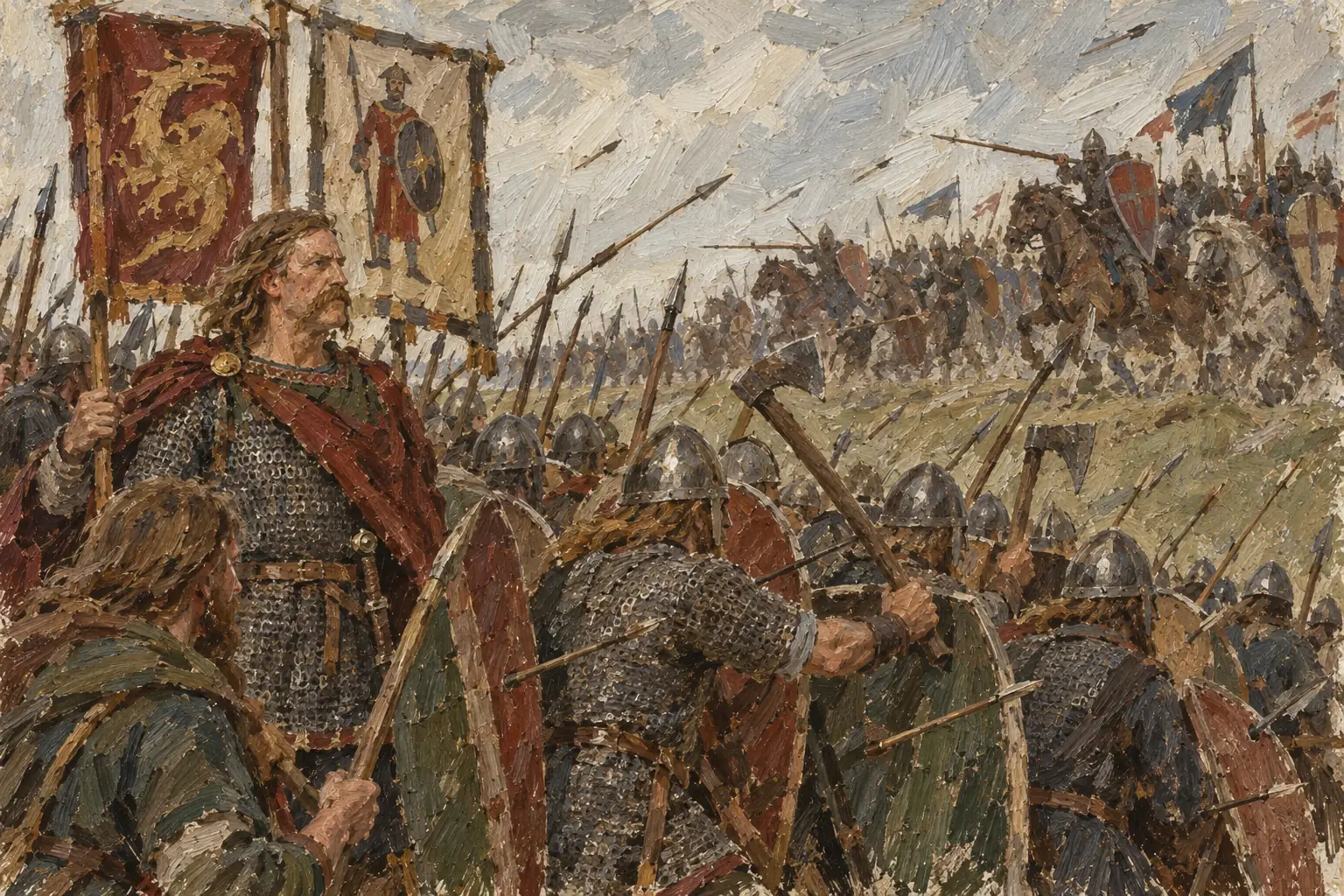
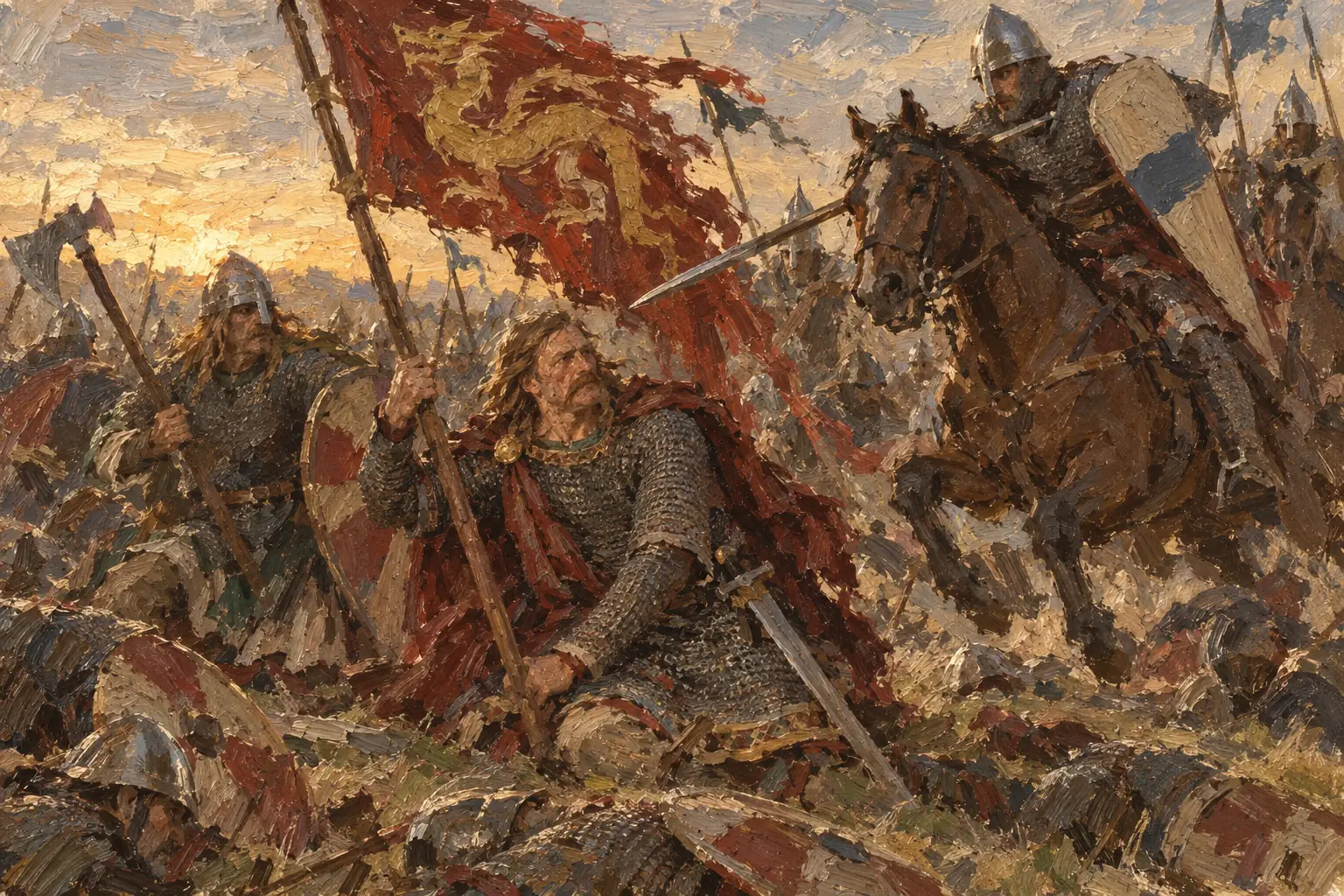
The climactic Battle of Hastings occurred on 14 October 1066 at Senlac Hill, near the Sussex coast. It saw William of Normandy's invading force clash with Harold Godwinson's army, which had rushed south after Stamford Bridge.
Phases of the battle
- Opening phase - William's archers advanced uphill against Harold's shield wall on the ridge, but their arrows proved ineffective against the elevated English position. Norman infantry then charged but were repelled by housecarls wielding axes.
- Feigned retreats - Norman cavalry pretended to flee, luring parts of the English fyrd down the hill in pursuit. This exposed them to counter-attacks, thinning Harold's lines through repeated tactics.
- Decisive phase - As English defences weakened, William's combined forces broke through. Harold was killed—traditionally by an arrow to the eye—causing his army to disintegrate and flee.
Terrain and other influencing factors
- Role of topography - The steep Senlac ridge gave Harold a defensive advantage, forcing Normans to attack uphill and limiting cavalry effectiveness initially.
- Luck and accidents - Unplanned English pursuits during feigned retreats turned the battle, while Harold's death at a critical moment sealed the outcome.
- Communication challenges - Poor coordination among the less disciplined fyrd contributed to breakdowns in the shield wall, contrasting with William's more organised command.
Comparison of armies and influencing factors
The 1066 battles highlighted stark differences in army compositions and strategies, influenced by leadership, sizes, and external factors. These elements determined causation and consequences across the campaign.
Composition of opposing armies
| Army | Key components | Strengths | Weaknesses |
|---|---|---|---|
| English (Harold's) | Elite housecarls (professional warriors with axes); fyrd (part-time militia with spears and shields) | Strong defensive shield wall; experienced in close combat | Limited archery; vulnerable to fatigue after long marches |
| Norwegian (Hardrada's) | Viking warriors with axes and swords; some archers | Aggressive tactics; battle-hardened from raids | Divided forces at Stamford Bridge; overconfidence after Fulford |
| Norman (William's) | Archers for ranged attacks; heavy infantry; mounted knights | Combined-arms approach; mobility of cavalry for charges | Initial disadvantages on uphill terrain; reliance on feigned retreats |
Factors shaping causation and consequences
- Army sizes and leadership - Harold's forces numbered around 7,000 at Hastings, facing William's similar-sized army; William's tactical innovation contrasted with Harold's defensive strategy, while Hardrada's boldness at Fulford led to his downfall at Stamford Bridge.
- Timing between battles - The short interval between Stamford Bridge and Hastings exhausted Harold's troops, preventing reinforcements and contributing to his defeat.
- Broader implications - William's victory at Hastings enabled the Norman Conquest, integrating England into European feudal systems, while the earlier battles eliminated rival claimants and reshaped alliances.