3.1 - Inoculation to Vaccination: Jenner & Prevention
Key facts and dates
The shift from inoculation to vaccination in the 18th century represented a major advancement in preventing smallpox, moving from risky traditional methods to a safer scientific approach. This transition, led by figures like Lady Mary Wortley Montagu and Edward Jenner, laid foundations for modern preventative medicine despite initial resistance.
Timeline of key events
- 1717 – Lady Mary Wortley Montagu observes variolation in the Ottoman Empire during her travels.
- 1721 – Montagu promotes variolation in Britain by having her children inoculated, gaining royal support.
- 1796 – Edward Jenner performs the first vaccination using cowpox material on a young boy.
- 1798 – Jenner publishes his findings in An Inquiry into the Causes and Effects of the Variolae Vaccinae.
- 1802 – British Parliament grants Jenner funding, recognising vaccination's potential.
- 1853 – Vaccination becomes compulsory in Britain, influencing global public health policies.
Definition and risks of inoculation (variolation)
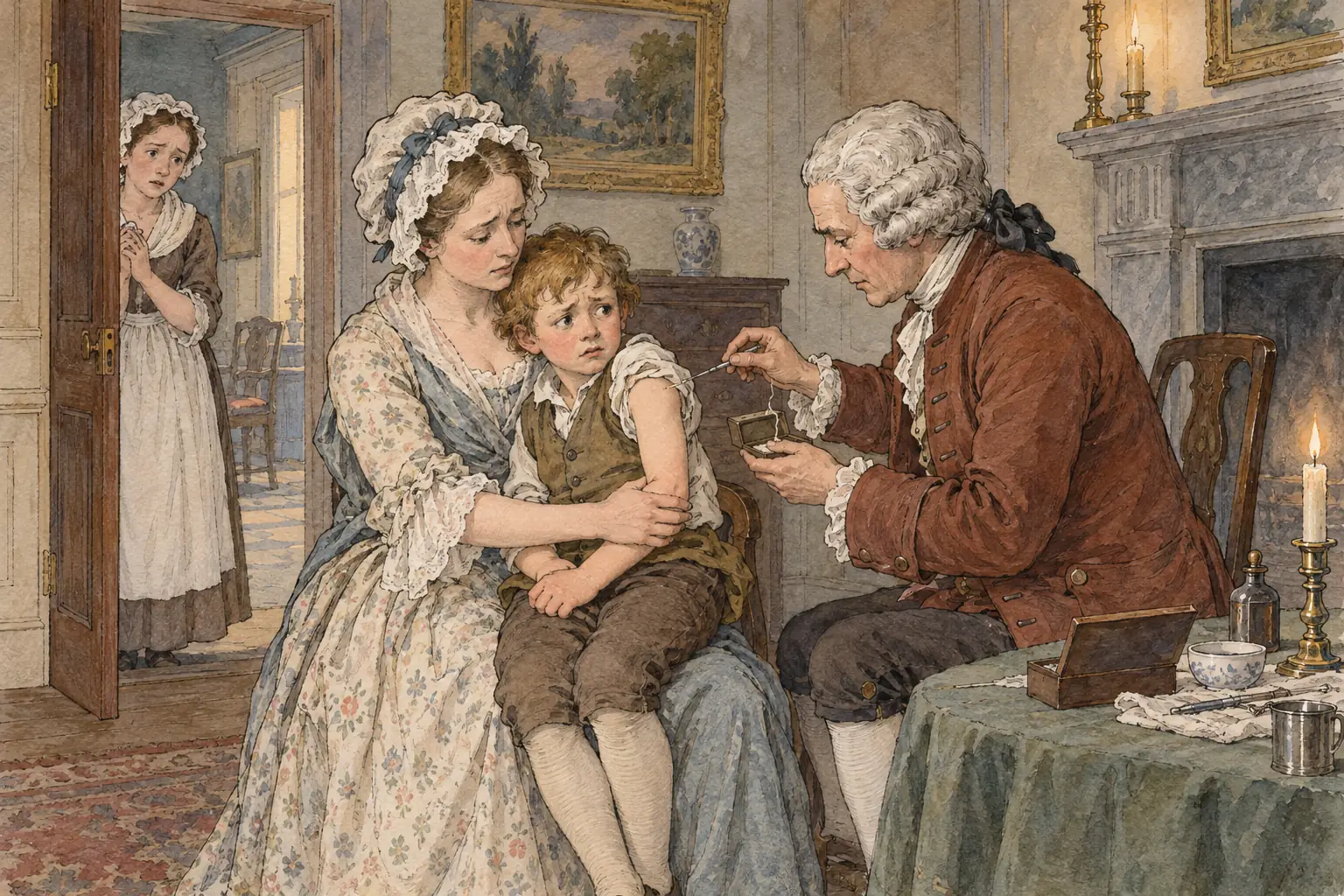
Inoculation, also known as variolation, was an early method used to prevent smallpox by deliberately introducing a mild form of the disease into a healthy person. This practice originated in regions like Asia and Africa before spreading to Europe, where it aimed to build immunity but carried significant dangers.
Key features and dangers of variolation
- Process - Involved taking pus from an infected smallpox sore and inserting it into a small cut on the skin of a healthy individual, intending to cause a less severe infection that would confer protection.
- High mortality rate - Around 2-3% of those inoculated died from the procedure, as it could trigger a full-blown case of smallpox.
- Risk of spreading disease - The method sometimes caused outbreaks, as inoculated people could transmit the virus to others before full recovery.
- Variable outcomes - Success depended on factors like the patient's health and the skill of the practitioner, leading to unpredictable results and public fear.
Montagu's role in popularising inoculation
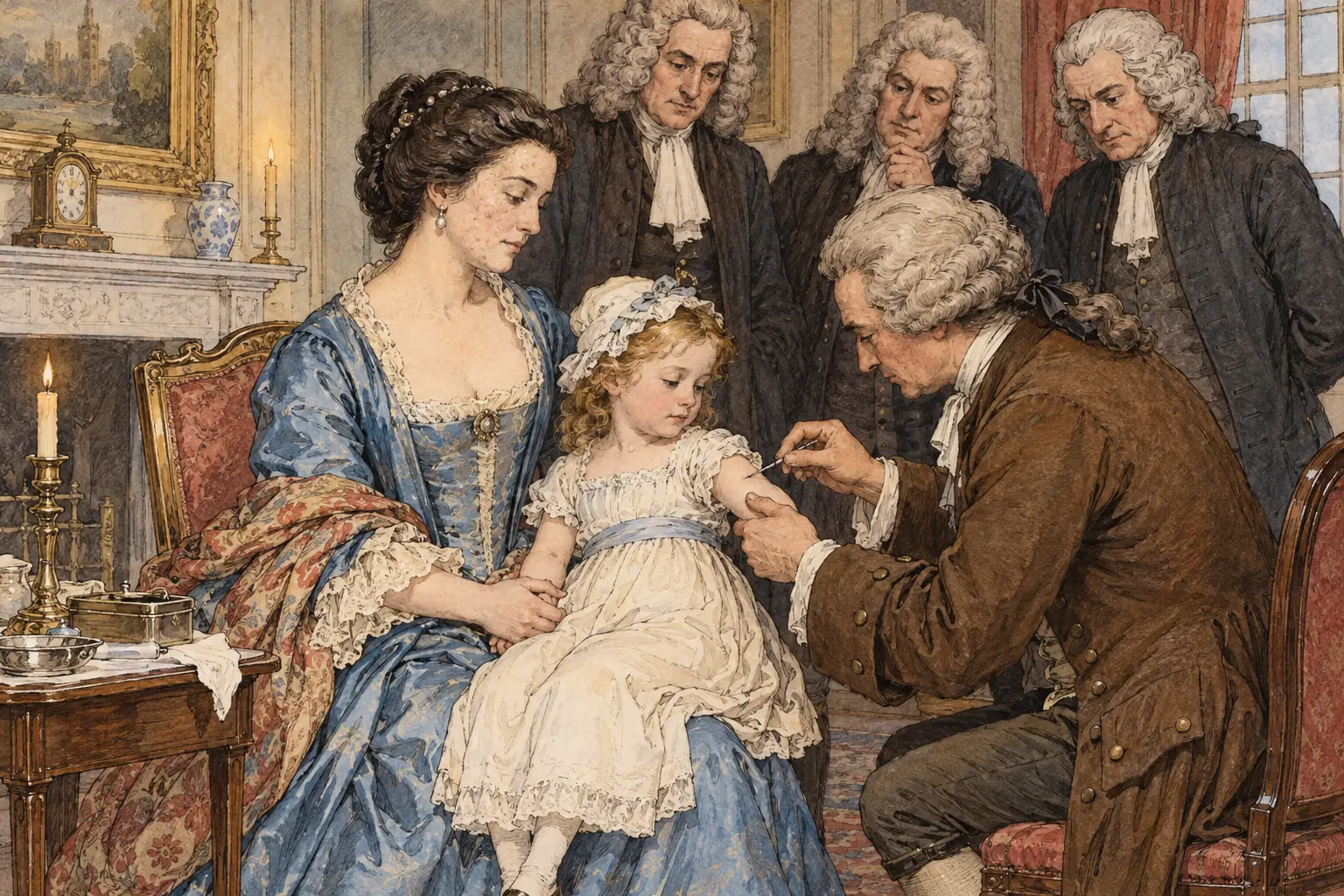
Lady Mary Wortley Montagu, an English aristocrat and writer, played a crucial part in introducing and advocating for variolation in Britain during the early 18th century. Her efforts helped bridge Eastern practices with Western medicine, challenging prevailing attitudes towards disease prevention.
Montagu's contributions to variolation
- Discovery abroad - While living in the Ottoman Empire as the wife of the British ambassador, she witnessed variolation being safely used on children and documented its effectiveness.
- Personal advocacy - In 1721, she had her own son and daughter inoculated in Britain, demonstrating the procedure's potential and encouraging others to adopt it.
- Influence on society - Montagu used her social status to promote variolation among the elite, including securing royal endorsement when the Princess of Wales had her daughters treated, which helped gain wider acceptance.
- Broader impact - Her writings and campaigns raised awareness, reducing smallpox deaths in some communities, though the method's risks limited its universal adoption.
Jenner's development of vaccination from cowpox
Image 1 of 2: Jenner noticed that dairy workers who caught cowpox rarely caught smallpox
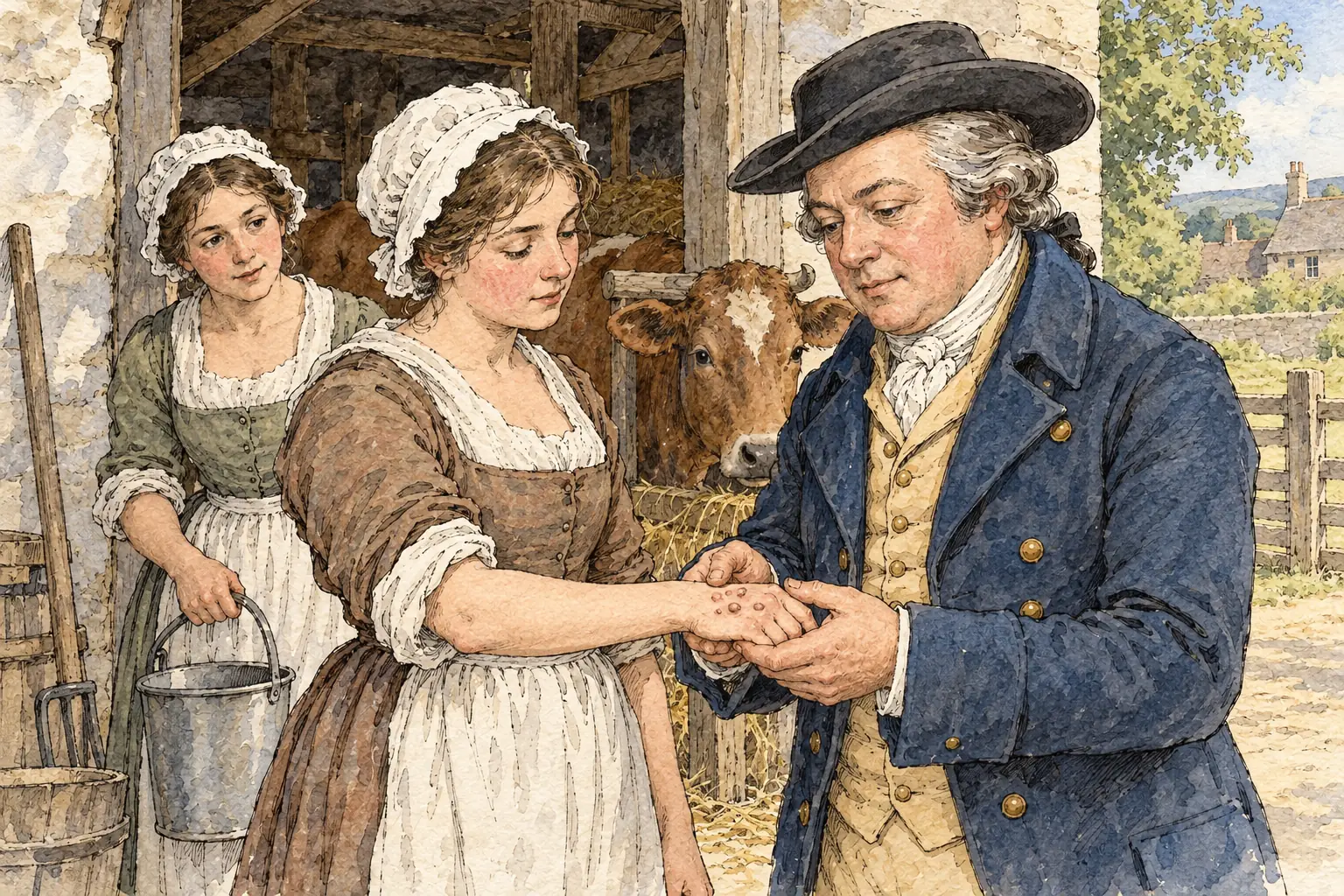
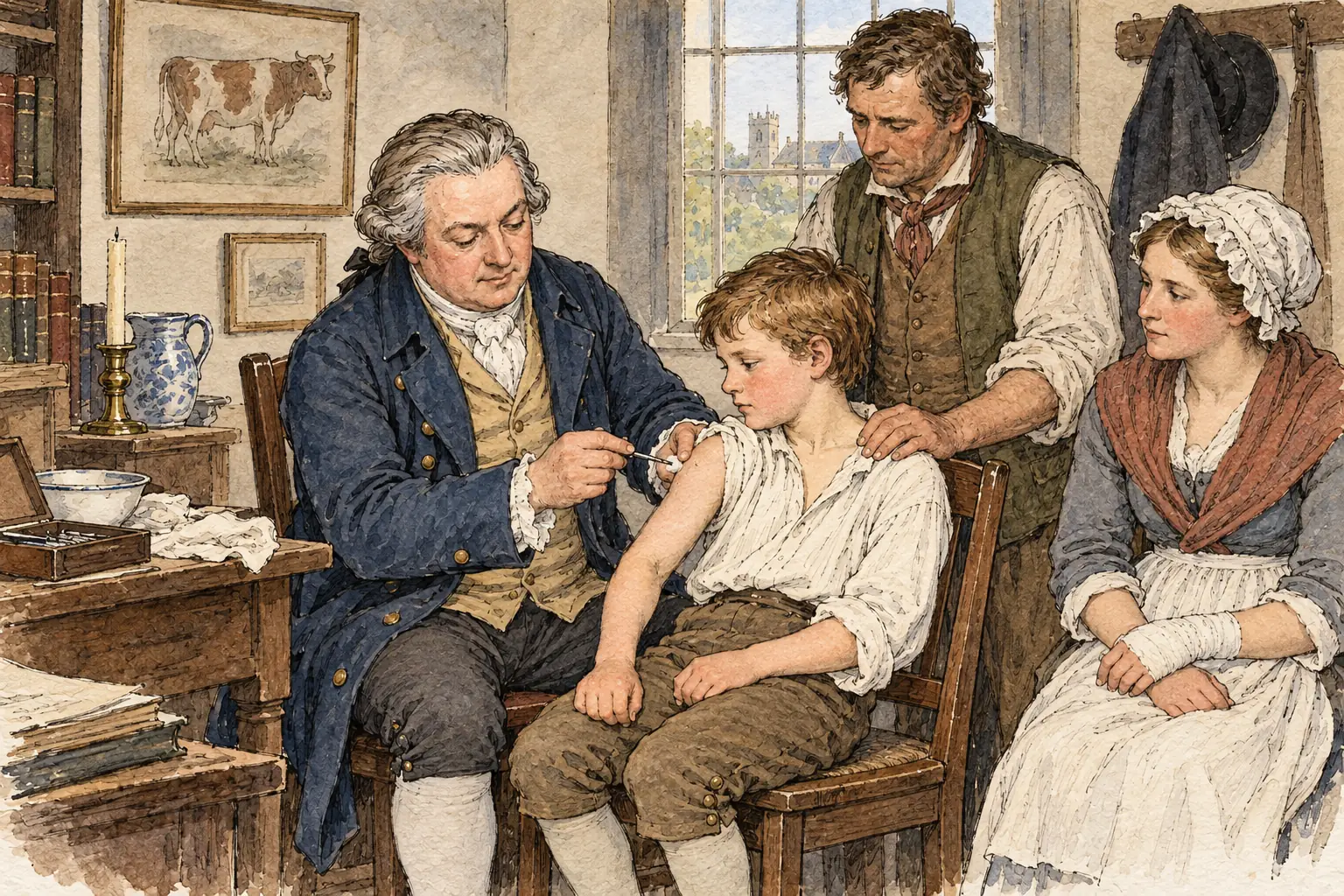
Edward Jenner, a British physician, revolutionised disease prevention by developing vaccination based on his observations of cowpox, a milder illness that seemed to protect against smallpox. His work in the late 18th century marked a shift towards evidence-based medicine.
Jenner's observations and experiments
- Initial insight - Jenner noticed that dairy workers who contracted cowpox from cattle rarely suffered from smallpox, suggesting a natural immunity link.
- First vaccination in 1796 - He tested his theory by inoculating a boy with cowpox pus, then exposing him to smallpox; the boy remained healthy, proving the protective effect.
- Gathering evidence - Over several years, Jenner conducted further trials on local villagers, documenting cases where cowpox exposure prevented smallpox infection.
- Publication of findings - In 1798, he self-published a book detailing his experiments and results, naming the process "vaccination" from the Latin word for cow (vacca).
Opposition to and spread of vaccination
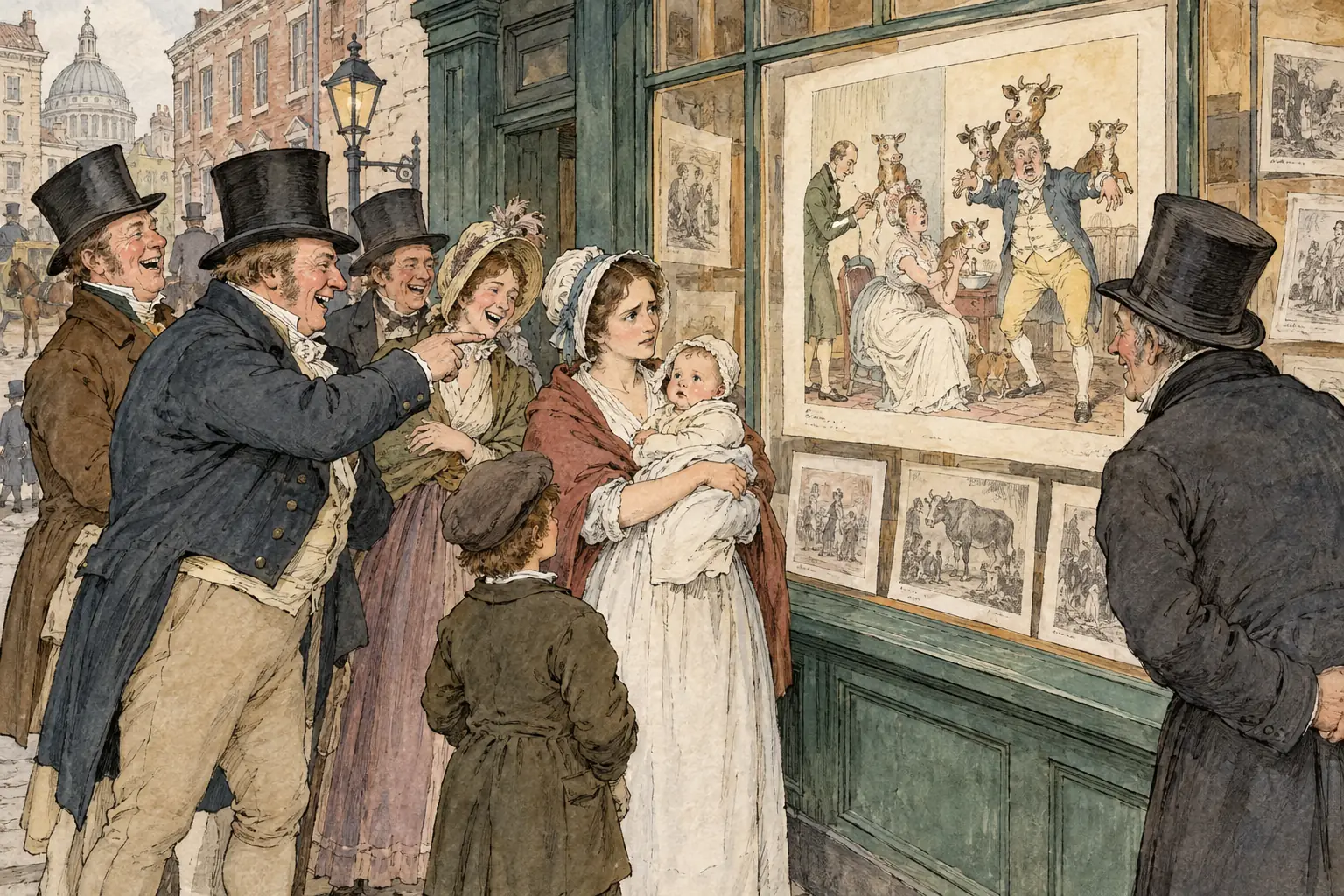
Image 1 of 2: Critics feared that material from cattle could cause strange side effects, and cartoons mocked the idea
Jenner's vaccination faced considerable resistance when first introduced, stemming from various societal and professional concerns. Despite this, it gradually gained traction due to its proven effectiveness and supportive measures.
Sources of opposition to vaccination
- Safety concerns - Critics feared that introducing animal-derived material could cause unknown diseases or deformities, with some early cases of side effects fuelling doubts.
- Religious objections - Some viewed vaccination as interfering with divine will, arguing that diseases like smallpox were punishments from God that should not be prevented.
- Economic impact - Traditional inoculators opposed it, as widespread vaccination threatened their livelihoods by replacing variolation.
Factors enabling the spread of vaccination
- Demonstrated success - Real-world evidence, such as reduced smallpox rates in vaccinated communities, convinced many of its value.
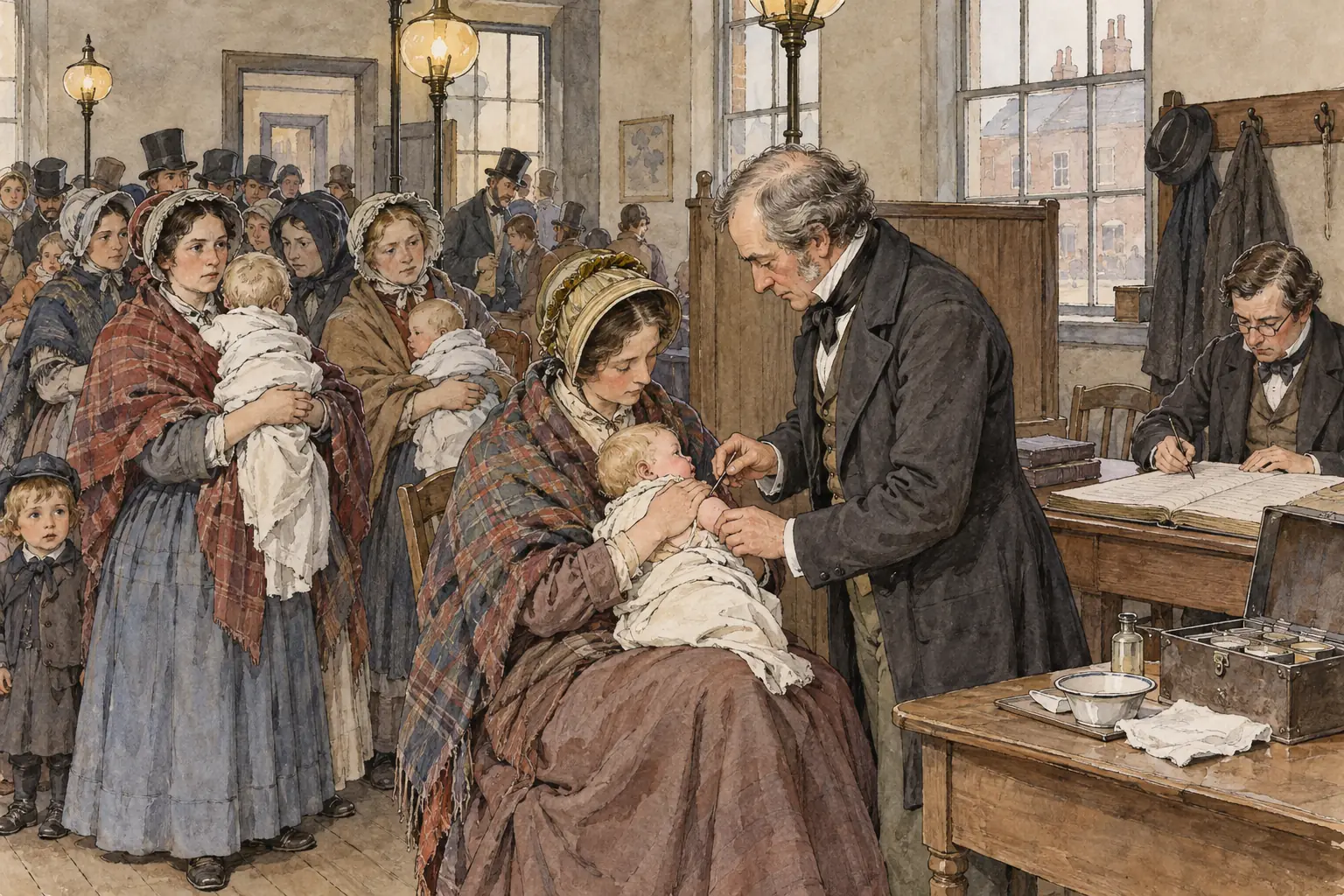
- Government support - In 1802, the British Parliament awarded Jenner grants, and by 1840, free vaccinations were offered, encouraging public uptake.
- Global adoption - News of Jenner's work spread internationally, with leaders like Napoleon mandating vaccination for troops, accelerating its use worldwide.
Short- and long-term significance of vaccination
Jenner's vaccination had immediate effects on smallpox prevention and set precedents for future medical advancements, influencing public health strategies over centuries.
Immediate impacts of vaccination
- Reduction in smallpox cases - In the short term, it saved countless lives by providing a safer alternative to variolation, with mortality rates dropping dramatically in adopting regions.
- Advancement in preventative medicine - It introduced the concept of using weakened pathogens for immunity, shifting focus from treatment to prevention.
Enduring effects on public health
- Foundation for modern vaccines - Long-term, Jenner's work inspired developments like Pasteur's rabies vaccine and the eventual global eradication of smallpox in 1980.
- Influence on policy - It led to compulsory vaccination laws, such as Britain's 1853 act, establishing government roles in public health and paving the way for widespread immunisation programmes.