1.4 - Managing Parliament & Royal Authority
Key facts and dates
Elizabeth I's management of parliament involved navigating tensions over authority, religion, and economic issues while maintaining her royal prerogative. These interactions highlighted the evolving relationship between the monarchy and parliament, with the queen using various tools to assert control amid growing demands for influence.
Timeline of key events
- 1571 – Parliament pushes for stricter anti-Catholic laws, but Elizabeth rejects bills that encroach on her religious authority.
- 1576 – Peter Wentworth imprisoned for advocating free speech in parliament, challenging the queen's limits on debate.
- 1587 – Puritan bills for church reform vetoed by Elizabeth, who imprisons MPs including Wentworth for overstepping.
- 1593 – Wentworth imprisoned again for questioning royal succession, dying in the Tower of London.
- 1597 – Growing complaints about monopolies lead to parliamentary debates on economic grievances.
- 1601 – Monopolies controversy peaks; Elizabeth delivers her Golden Speech to parliament, promising reforms.
Tensions between Elizabeth and parliament
Elizabeth I's relationship with parliament was marked by ongoing conflicts that went far beyond debates over her potential marriage. These tensions arose from differing views on governance, with MPs increasingly seeking to influence policy while the queen defended her absolute authority as monarch.
Sources of parliamentary tensions
- Expansion of parliamentary role - Parliament met more frequently during Elizabeth's reign to address national issues like finance and defence, leading MPs to expect greater involvement in decision-making.
- Challenges to royal prerogative - MPs often attempted to advise or pressure the queen on matters she considered her exclusive domain, such as foreign policy and church affairs.
- Economic and social pressures - Issues like inflation and poverty fuelled parliamentary demands for reforms, creating friction when these clashed with Elizabeth's preferences.
Religion, free speech, and monopolies
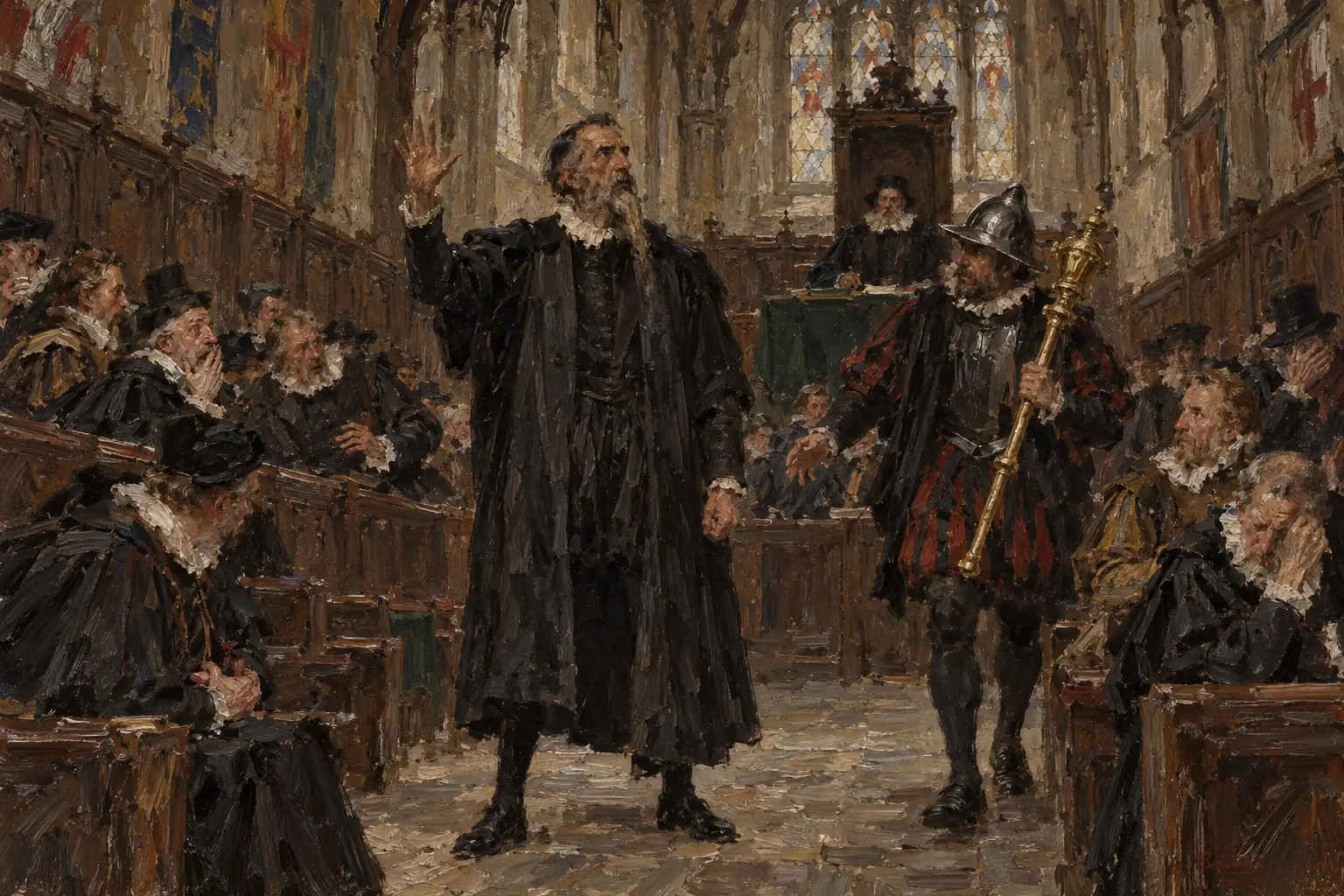
Specific controversies highlighted the strained dynamic between Elizabeth and parliament. These flashpoints often involved attempts by MPs to push reforms that Elizabeth viewed as threats to her control, leading to direct confrontations.
Key areas of conflict
- Religion and Puritan bills - Puritan MPs introduced legislation to reform the Church of England, such as removing Catholic elements; Elizabeth saw these as attacks on her role as Supreme Governor and consistently blocked them.
- Free speech - Debates arose over MPs' rights to discuss sensitive topics like the succession; figures like Peter Wentworth were punished for insisting on unrestricted parliamentary discussion.
- Monopolies - Royal grants of exclusive trading rights to favourites caused economic hardship; by the late 1590s, MPs vehemently protested these privileges, demanding their abolition as unfair burdens on ordinary people.
Elizabeth's methods for managing parliament
Elizabeth employed a range of strategies to control parliamentary proceedings and maintain her authority. These tools allowed her to guide debates while limiting MPs' ability to challenge her decisions.
Tools used to manage parliament
- Setting the agenda through the Privy Council - Elizabeth's advisors influenced what topics parliament could discuss, ensuring sessions focused on her priorities like raising taxes.
- Prorogation and dissolution - The queen could suspend or end parliamentary sessions early to prevent unwanted debates from escalating.
- Withholding royal assent - Elizabeth vetoed bills she disapproved of, using this power to reject over 20 measures during her reign.
- Disciplining MPs - Rebellious members, such as Peter Wentworth, faced imprisonment for questioning her prerogative, serving as warnings to others.
The significance of the 1601 Golden Speech
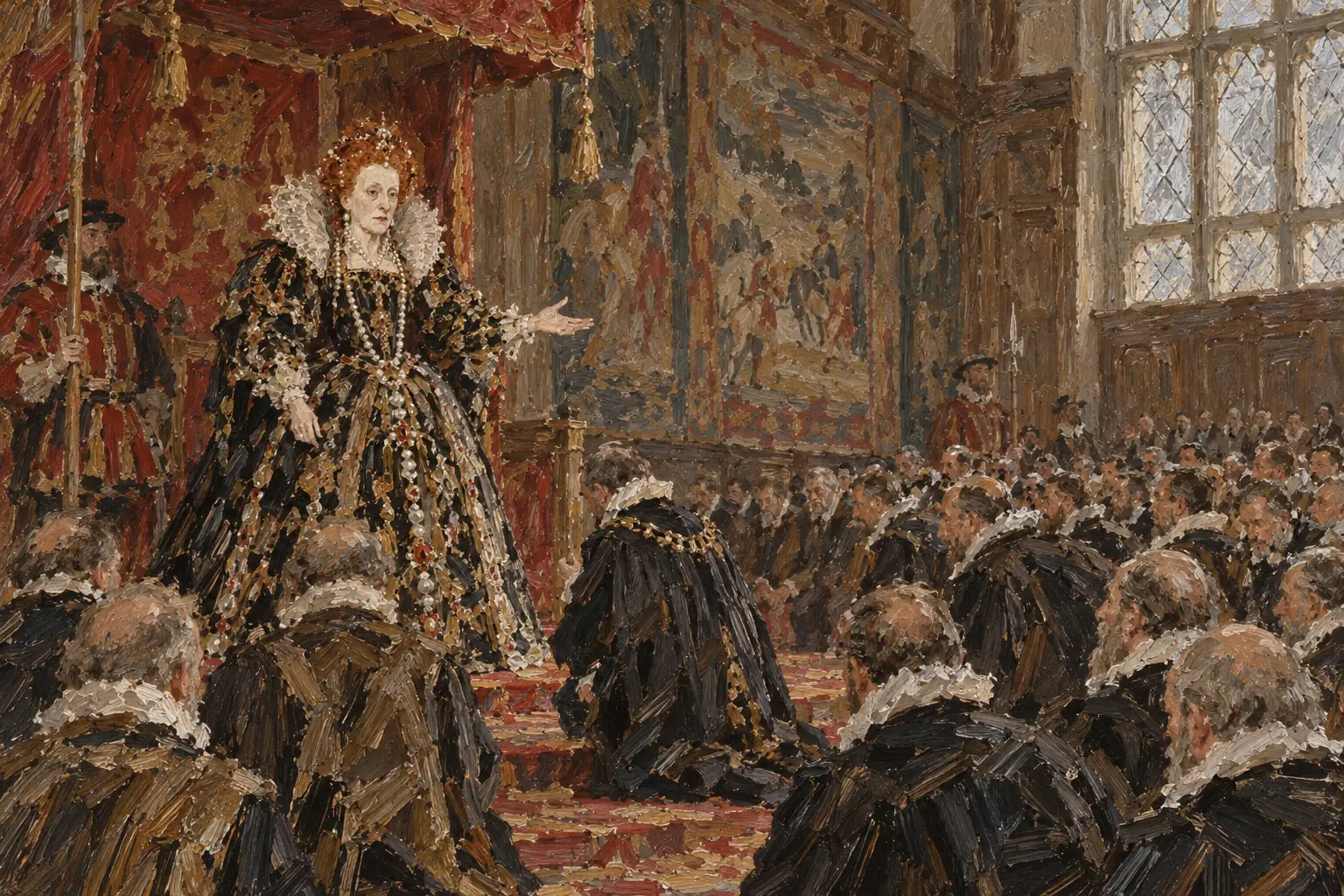
In response to the escalating monopolies crisis, Elizabeth addressed parliament in 1601 with her famous Golden Speech. This oration demonstrated her skill in using rhetoric to defuse tensions and reaffirm her bond with her subjects.
Features and impact of the Golden Speech
- Context of delivery - Amid widespread anger over monopolies, Elizabeth promised to review and revoke abusive grants, acknowledging parliamentary grievances.
- Rhetorical elements - She emphasised her devotion to England, declaring that her heart was "ever in your good," which helped restore goodwill and portrayed her as a caring ruler.
- Outcomes - The speech led to immediate reforms on monopolies and strengthened her image, showing how she could turn potential conflict into a display of unity.
Elizabeth's balance of consultation and control
Throughout her 45-year reign, Elizabeth navigated a delicate balance between consulting parliament and asserting firm control. This approach evolved as challenges grew, but it ultimately preserved her authority while incorporating some parliamentary input.
How Elizabeth maintained balance
- Consultation practices - She regularly summoned parliament for advice on matters like warfare funding, showing willingness to listen and collaborate when it suited her goals.
- Assertion of control - By limiting sessions to short periods and using vetoes, Elizabeth ensured parliament remained a tool rather than a rival, preventing it from gaining too much independence.
- Overall assessment - While tensions persisted, her strategies largely succeeded in maintaining royal dominance, though they sowed seeds for future conflicts under her successors.