1.5 - Essex’s Rebellion & Late-Elizabethan Authority
Key facts and dates
The career of Robert Devereux, Earl of Essex, exemplifies the complexities of court politics and patronage in the final years of Elizabeth I's reign, highlighting factional rivalries and the pressures of prolonged warfare. His rapid rise and dramatic fall culminated in a failed rebellion that tested the stability of the monarchy.
Timeline of key events
- 1588 – Essex gains early favour at court, building a military reputation during the Armada crisis.
- 1596 – Leads successful raid on Cadiz, enhancing his status as a military hero and royal favourite.
- 1599 – Appointed Lord Lieutenant of Ireland but fails to suppress rebellion, leading to unauthorised truce and return to England.
- 1600 – Loses lucrative monopolies on sweet wines, placed under house arrest after court hearing.
- 8 February 1601 – Launches rebellion in London, attempting to seize control but fails due to lack of support.
- 19 February 1601 – Tried for treason and executed, marking the end of his challenge to royal authority.
The rise of Robert Devereux, Earl of Essex
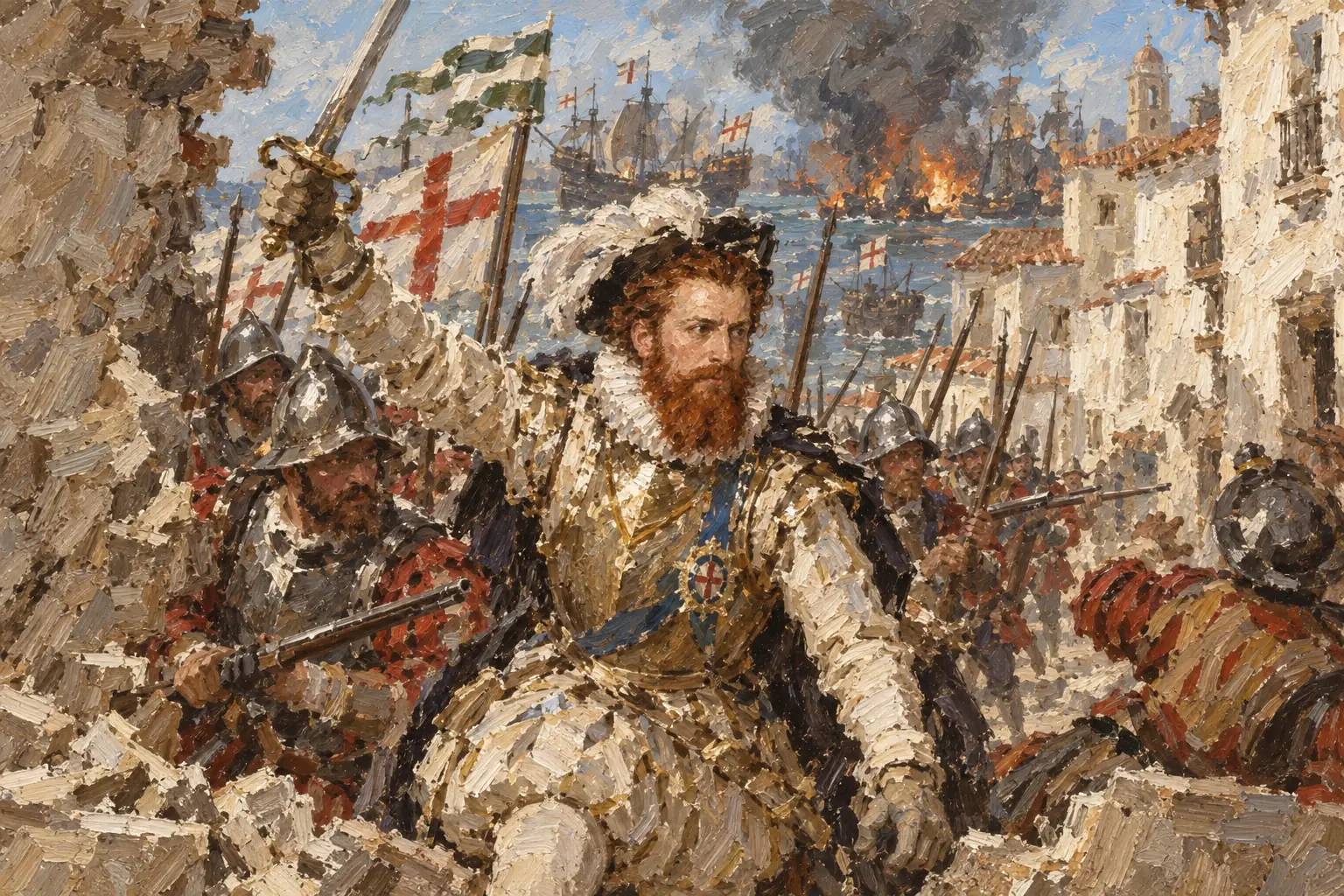
Robert Devereux, the second Earl of Essex, emerged as a prominent figure in Elizabeth I's court through a combination of personal charm, noble lineage, and military prowess. His ascent illustrates the importance of patronage in late-Elizabethan politics, where proximity to the queen could yield significant influence and rewards.
Factors contributing to Essex's rise
- Court favour and patronage - As the stepson of Robert Dudley, Earl of Leicester, Essex inherited connections that propelled him into the queen's inner circle, where he received titles, lands, and positions of power.
- Military reputation - Essex distinguished himself in campaigns against Spain, most notably leading the 1596 raid on Cadiz, which captured ships and treasure, boosting England's naval prestige and his own heroic image.
- Personal ambition - His charisma and ambition allowed him to build a network of supporters at court, positioning him as a potential successor to ageing advisors and a rival to established figures.
Rivalry with Robert Cecil and failure in Ireland

Essex's growing influence sparked intense rivalries within the court, particularly with Robert Cecil, the queen's principal secretary. This factionalism, exacerbated by the strains of ongoing wars, culminated in Essex's disastrous campaign in Ireland, which marked the beginning of his downfall.
Key elements of the rivalry and Irish campaign
- Competition with Cecil - Essex and Cecil vied for the queen's ear, with Cecil representing a more cautious, administrative approach, while Essex advocated aggressive military policies; their feud divided the court into factions, reflecting broader tensions over patronage and policy.
- Appointment to Ireland - In 1599, Essex was sent as Lord Lieutenant to quell the Irish rebellion led by Hugh O'Neill, Earl of Tyrone, commanding a large army amid expectations of swift victory.
- Campaign failures - Plagued by supply issues, disease, and elusive enemies, Essex failed to engage Tyrone decisively; he negotiated an unauthorised truce, abandoned his post, and returned to England without permission, defying royal orders.
Loss of monopolies and house arrest
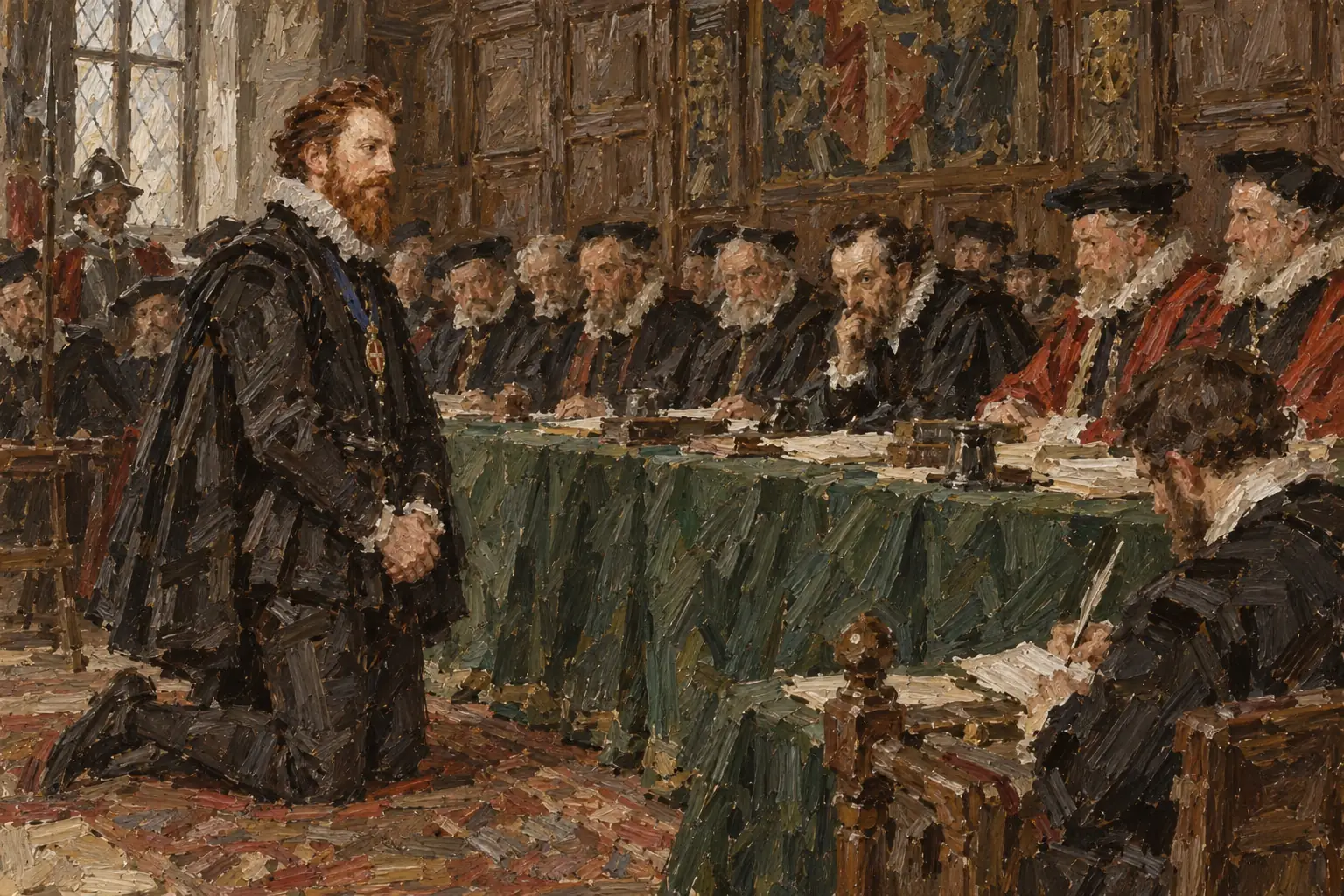
Following his unauthorised return from Ireland, Essex faced the queen's displeasure, leading to a series of punitive measures that stripped him of economic privileges and confined his movements. This period exposed the fragility of court favour and the financial pressures on nobles in the 1590s.
Consequences of the Irish debacle
- Court hearing and disgrace - In 1600, a special court censured Essex for insubordination, suspending him from offices and imposing fines, though Elizabeth initially showed leniency due to their past relationship.
- Revocation of monopolies - Essex lost his monopoly on sweet wines, a key source of income granted by the queen, worsening his financial woes amid the economic strains of prolonged warfare and poor harvests.
- House arrest - Confined to his London residence, Essex grew increasingly isolated and resentful, blaming Cecil and other rivals for his misfortunes, which fuelled his desperation.
The 1601 rebellion and its consequences
Image 1 of 2: On 8 February 1601 Essex led about 300 followers into the City of London, but the citizens did not join him
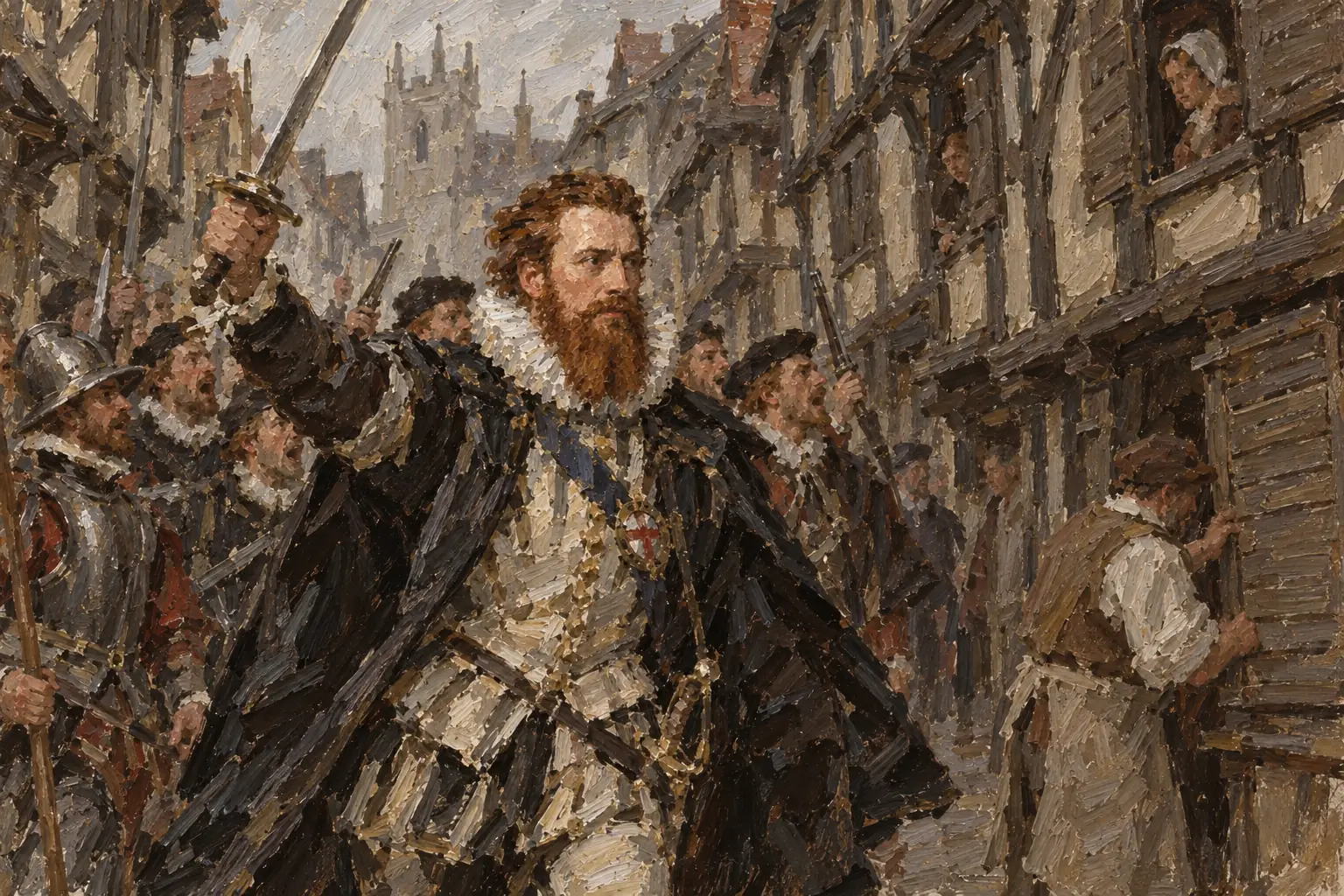
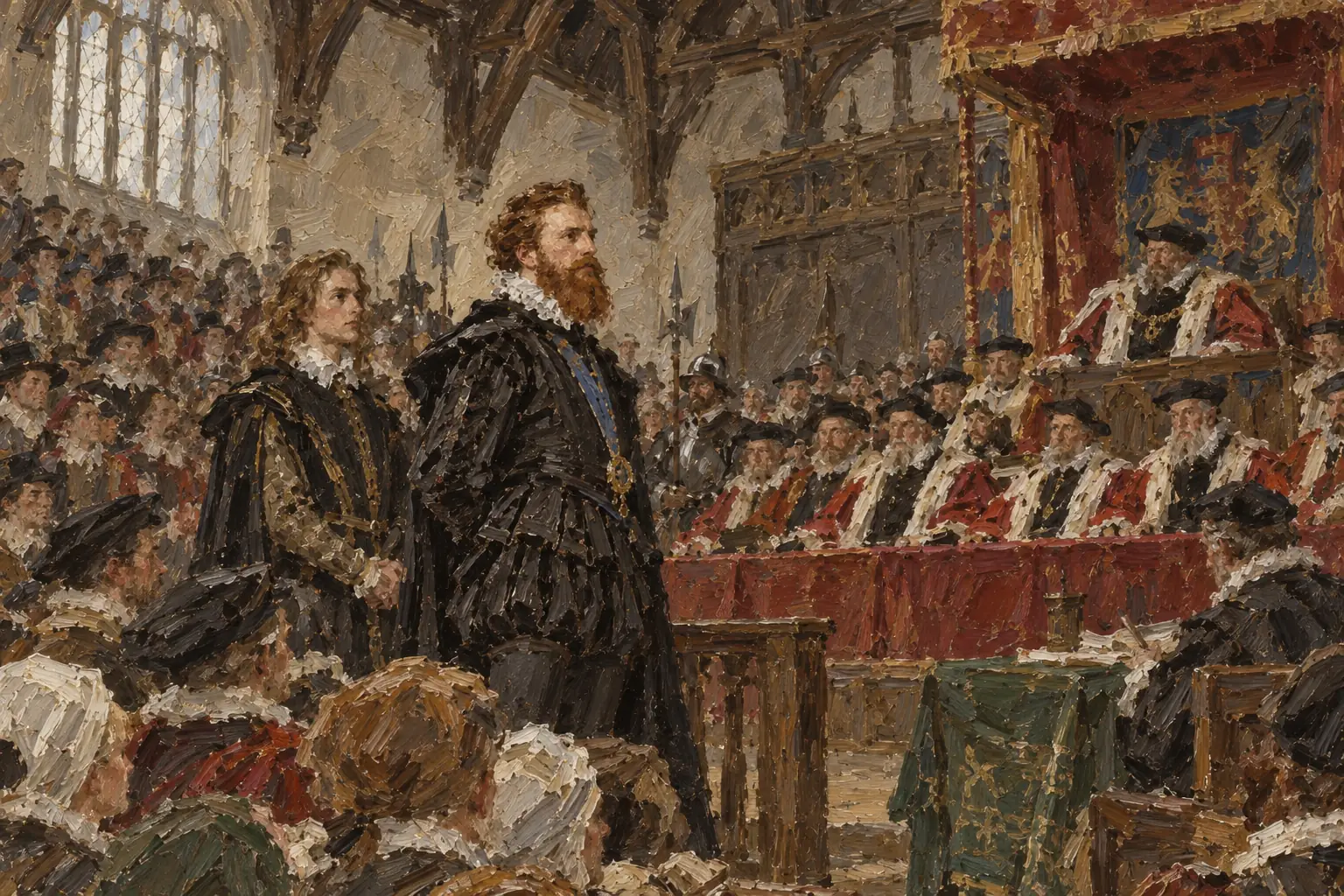
Driven by personal grievances and political ambitions, Essex orchestrated a rebellion in February 1601, aiming to overthrow his rivals and restore his position. The swift failure of this plot demonstrated the limits of noble dissent in Elizabeth's England.
Events of the rebellion
- Planning the coup - Essex gathered supporters, including disaffected nobles, and planned to march on London to capture the queen's advisors, presenting it as a defence against corrupt influences like Cecil.
- Attempted uprising in London - On 8 February 1601, Essex and about 300 followers entered the city, calling for public support to "rescue" the queen; however, the anticipated uprising failed as citizens remained loyal and no widespread backing materialised.
- Trial and execution - Arrested and tried for treason, Essex was convicted based on evidence of plotting against the state; he was executed on 25 February 1601, with his death serving as a stark warning to potential challengers.
Challenges to Elizabeth's authority in the 1590s
Essex's rebellion provides valuable insights into the resilience of Elizabeth I's rule during her final years, while also revealing underlying pressures that strained the regime. Despite factional divisions, the monarchy's authority proved durable.
Revelations from Essex's case
- Durability of royal authority - The quick suppression of the rebellion, with minimal support for Essex, underscored Elizabeth's firm control and the loyalty of key institutions like the privy council and London militia.
- Factional tensions at court - The rivalry between Essex and Cecil highlighted how patronage networks could create bitter divisions, yet the queen skilfully managed these to prevent broader instability.
- Strains of war and finances - The 1590s were marked by the burdens of the long war with Spain, economic hardships from poor harvests, and inflationary pressures, which amplified noble discontent and made figures like Essex vulnerable to financial ruin..