2.6 - John Hunter: Science, Surgery & Training
Key facts and dates
John Hunter was a pioneering figure in 18th-century medicine who transformed surgery from a craft-based practice into a more scientific discipline through systematic observation and evidence. His work bridged anatomy, experimentation and teaching, influencing the professionalisation of surgery in Britain.
Timeline of key events
- 1728 – John Hunter born in Scotland, later moves to London to assist his brother William in anatomical studies.
- 1748 – Begins training under William Cheselden and others, gaining practical experience in dissection and surgery.
- 1750s – Conducts early experiments on animal physiology, including studies of digestion and reproduction.
- 1760 – Appointed as army surgeon, where he researches gunshot wounds and venereal diseases.
- 1767 – Elected Fellow of the Royal Society, recognising his scientific contributions.
- 1768 – Becomes surgeon at St George's Hospital, establishing a teaching programme.
- 1786 – Publishes A Treatise on the Venereal Disease, emphasising evidence-based approaches.
- 1793 – Hunter dies, leaving a vast collection of over 14,000 specimens that forms the basis of the Hunterian Museum.
John Hunter's background and training
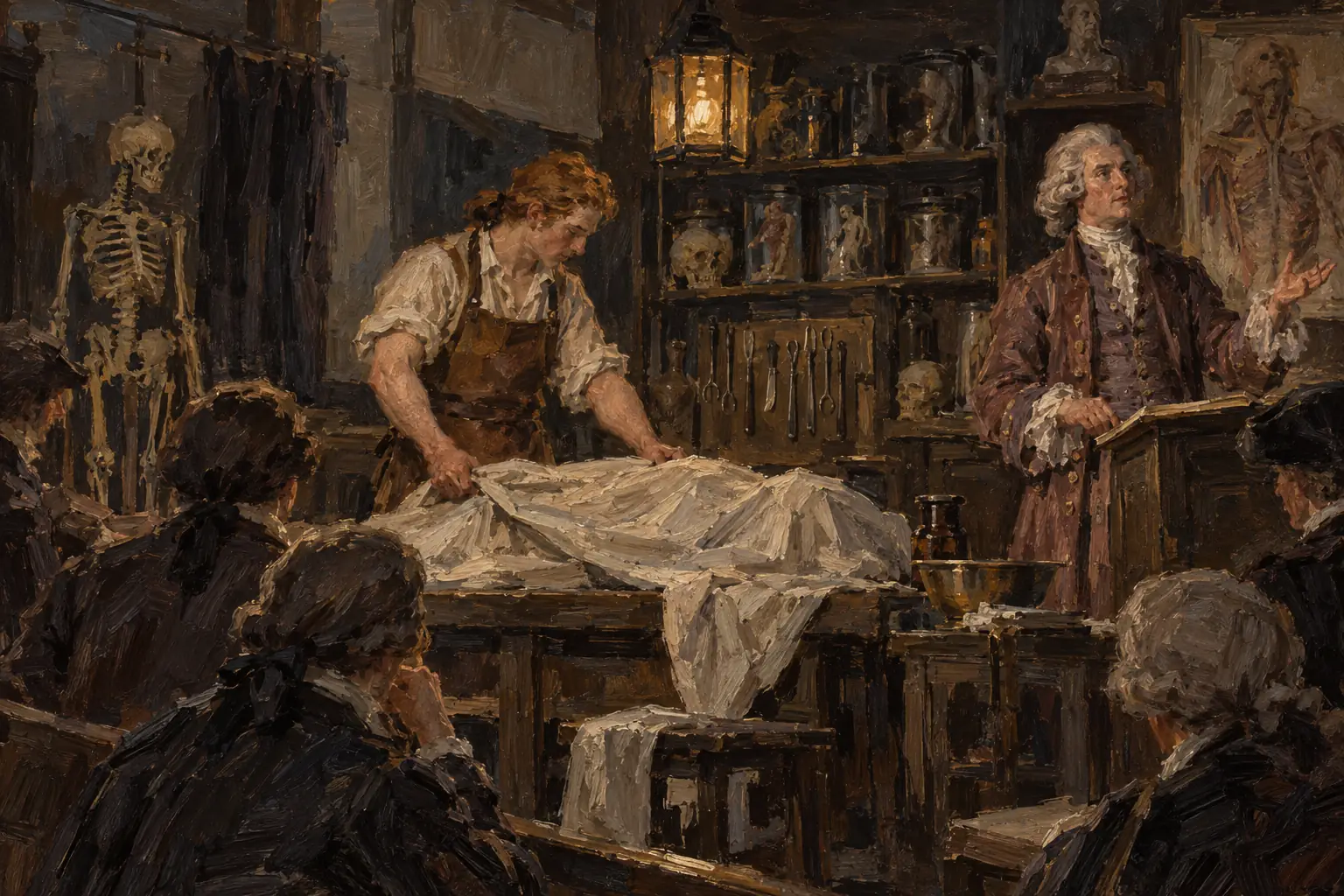
John Hunter emerged as a key innovator in 18th-century surgery, shifting it towards a scientific foundation. Born in Scotland, he initially lacked formal education but developed his skills through hands-on experience in London.
Early life and path to surgery
- Humble beginnings - Hunter grew up on a farm and showed little interest in traditional schooling, instead pursuing practical knowledge after relocating to assist his brother William, who ran an anatomy school.
- Apprenticeship and dissection work - From 1748, he trained under prominent surgeons like William Cheselden and Percivall Pott, mastering dissection techniques and assisting in lectures, which built his expertise in human anatomy.
- Military experience - Serving as an army surgeon during the Seven Years' War from 1760, Hunter treated battlefield injuries, gaining insights into wound healing and infection that informed his later experimental methods.
Experiments, collections and publications
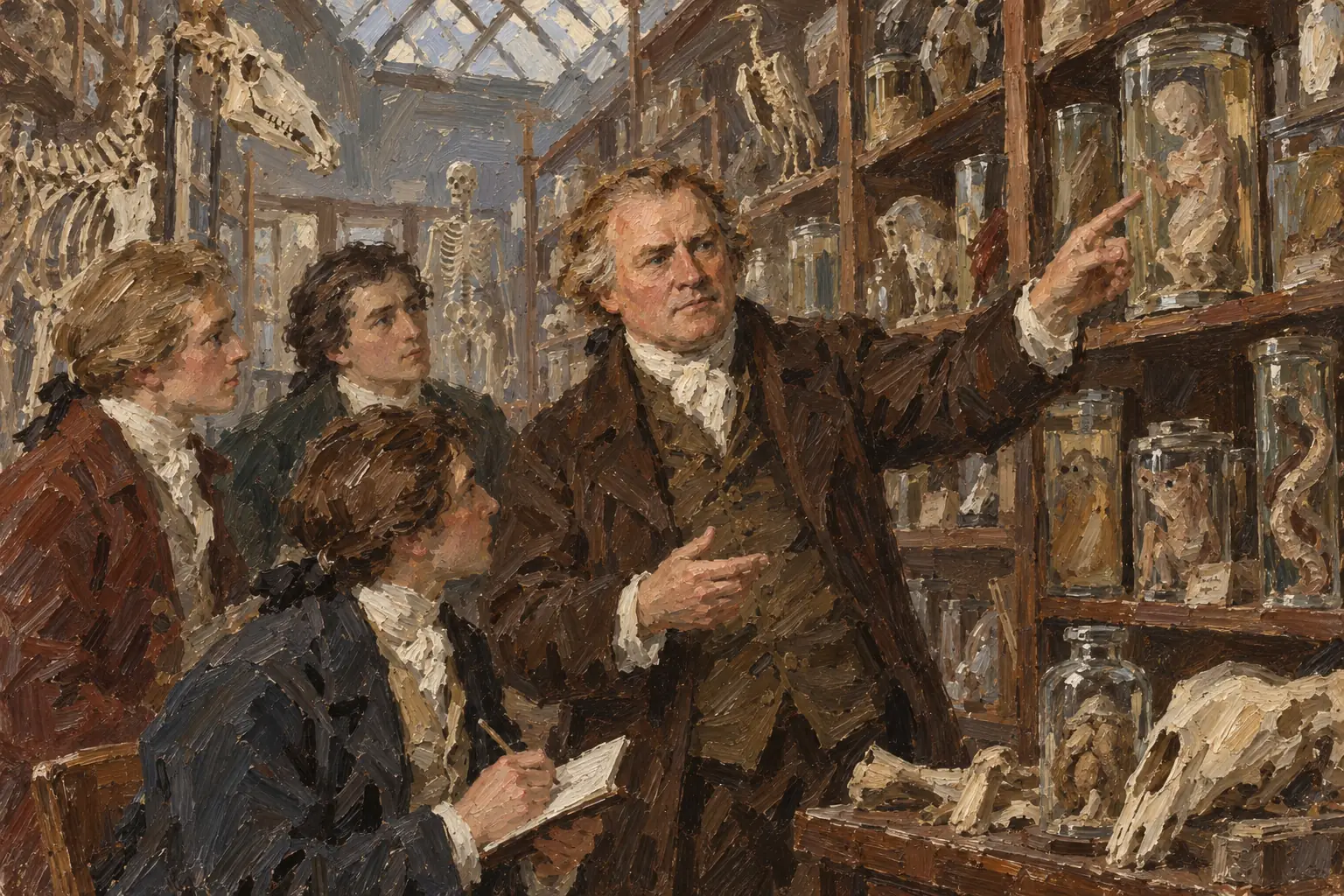
Hunter's approach emphasised empirical evidence over traditional dogma, using experiments and collections to advance surgical knowledge. He conducted numerous studies on animals and humans, amassing a huge array of preserved samples.
Key experimental work
- Animal and physiological studies - Hunter performed dissections on various species to explore functions like circulation and growth, including tying off blood vessels in deer to observe tissue regeneration.
- Research on diseases - He investigated conditions such as venereal infections by self-inoculation experiments, demonstrating that gonorrhoea and syphilis were distinct, though this method carried personal risks.
- Focus on observation - His work stressed careful recording of results, challenging unproven theories and promoting surgery based on verifiable facts.
Development of specimen collection
- Scale and purpose - Hunter built a collection exceeding 14,000 items, including animal skeletons, diseased organs and fossils, used to illustrate anatomical principles and pathological changes.
- Educational value - These specimens served as teaching tools, allowing direct comparison between healthy and abnormal structures to train surgeons in accurate diagnosis.
Major publications
- Emphasis on evidence - Works like A Treatise on the Venereal Disease (1786) and Observations on Certain Parts of the Animal Oeconomy (1786) compiled experimental findings, advocating for treatments grounded in observed outcomes rather than speculation.
- Broader impact - His writings disseminated ideas on topics from digestion to transplantation, encouraging a scientific mindset among medical practitioners.
Influence on surgical education and standards
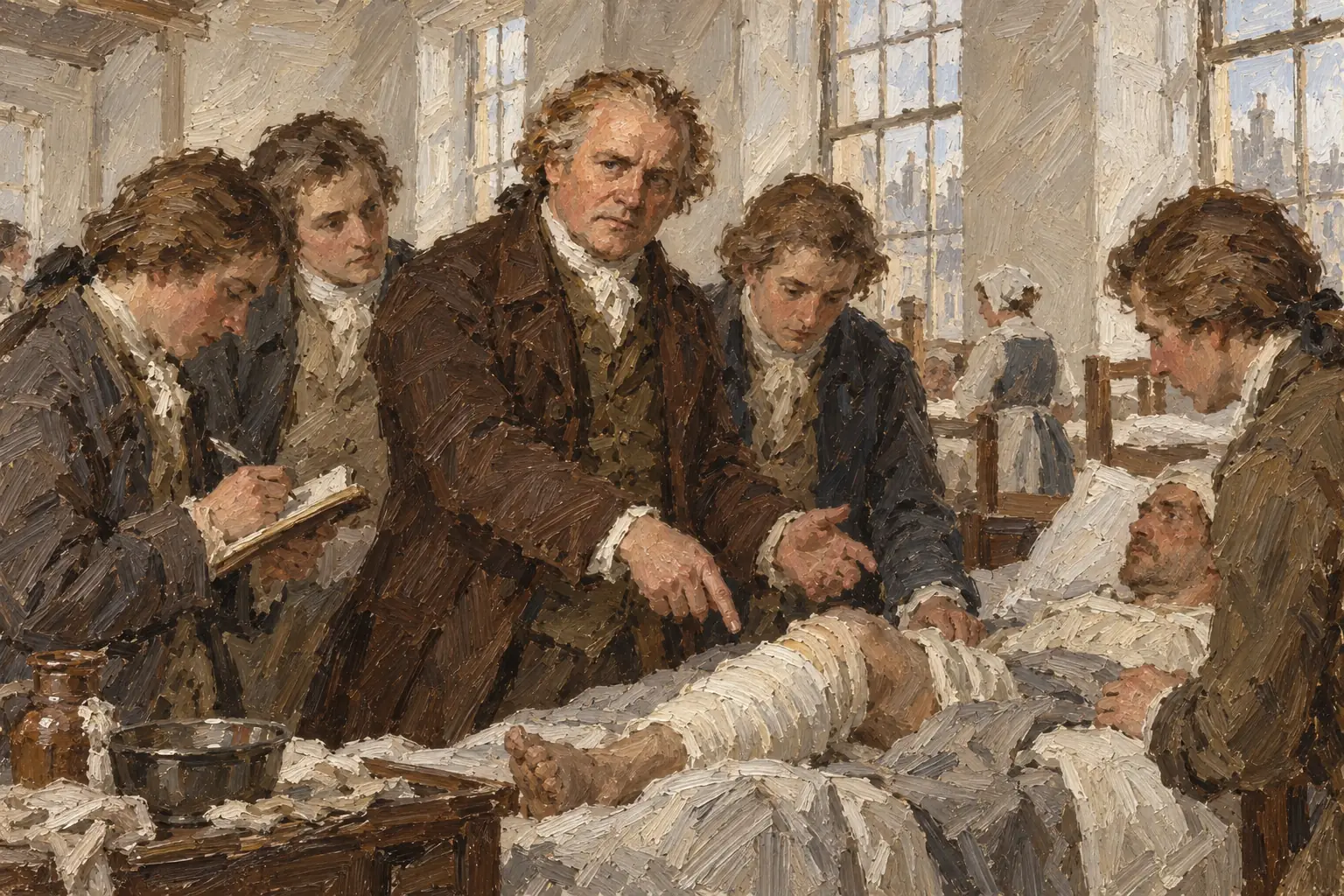
Hunter revolutionised how surgery was taught and practised in the late 18th century, elevating its status through integrated learning environments. He connected practical training with scientific inquiry, setting new benchmarks for the profession.
Reforms in surgical training
- Teaching methods - At St George's Hospital from 1768, Hunter delivered lectures combining anatomical demonstrations with clinical cases, insisting students observe operations and perform dissections themselves.
- Linking facilities - He integrated laboratories for experiments, museums for specimen study and operating theatres for live procedures, creating a comprehensive educational system that fostered evidence-based skills.
- Mentorship of pupils - Hunter trained notable figures like Edward Jenner, emphasising rigorous observation and ethical practice, which raised the overall quality of surgical instruction.
Elevation of professional standards
- Professionalisation efforts - By founding the Company of Surgeons in 1745 (later the Royal College of Surgeons), Hunter helped separate surgery from barbering, promoting it as a respected, knowledge-based field.
- Ethical and scientific norms - He advocated for humane techniques, such as ligating arteries to treat aneurysms, and discouraged unnecessary operations, influencing codes of conduct that prioritised patient welfare.
Significance in surgical practice
Hunter's contributions marked a turning point in surgery, enhancing its status, refining methods and steering its future direction. While not without limitations, his legacy endured in modern medical education.
Significance for status and methods
- Raising professional status - Hunter elevated surgery from a manual trade to a scientific profession, gaining recognition through royal appointments and fellowships, which attracted more educated individuals to the field.
- Innovative methods - His evidence-based techniques, like improved wound management and vascular surgery, reduced mortality rates and inspired systematic approaches still used today.
Direction of surgical practice
- Long-term influence - By linking research with practice, Hunter paved the way for 19th-century advances, such as antisepsis, though his era lacked understanding of infection causes.
- Limitations and criticisms - Some experiments were risky or ethically questionable by modern standards, and his vast collection was not always accessible, but overall, his work directed surgery towards empirical progress.
| Aspect | Positive impact | Limitations |
|---|---|---|
| Status | Gained prestige through scientific rigour and royal patronage | Surgery still viewed as inferior to physic in some circles |
| Methods | Introduced observation-led techniques, reducing reliance on tradition | Lacked knowledge of germs, limiting infection control |
| Direction | Shifted focus to experimentation and education, influencing global standards | Ideas spread slowly due to limited formal structures |