2.7 - Why the League Failed by 1939
Key facts and dates
The League of Nations, established in 1919 to promote peace and cooperation after the First World War, ultimately failed to prevent another global conflict by 1939. Structural flaws, economic turmoil, and aggressive expansionism undermined its authority, leading to its ineffectiveness in the face of rising tensions.
Timeline of key events
- 1919 – League of Nations founded without US membership, weakening its global influence from the start.
- 1929 – Wall Street Crash triggers the Great Depression, intensifying national self-interest over collective security.
- 1931 – Japan invades Manchuria, exposing the League's inability to enforce decisions against aggressors.
- 1933 – Germany withdraws from the League under Hitler, signalling rejection of disarmament and peace efforts.
- 1935 – Italy invades Abyssinia, with League sanctions failing due to lack of military backing.
- 1939 – Outbreak of the Second World War, marking the League's complete failure to avert general conflict.
Structural weaknesses in the League
The League of Nations was hampered from its inception by fundamental flaws in its structure and composition. These issues limited its ability to act decisively and maintain international order.
Key structural limitations of the League
- Absence of the United States - Despite being a key architect of the League, the US never joined due to domestic isolationist policies, depriving the organisation of crucial economic and military power.
- Lack of independent military force - The League had no standing army of its own, relying instead on member states to provide troops, which often proved unreliable when national interests conflicted.
- Unanimous decision-making process - All major decisions in the Council required agreement from every member, leading to delays and vetoes that paralysed effective action.
- Competing national interests - Member states prioritised their own agendas over collective goals, with powerful nations like Britain and France often pursuing appeasement rather than confrontation to avoid another war.
Impact of the Great Depression
The economic crisis of the 1930s severely undermined the League's efforts to foster international unity. As countries grappled with domestic hardships, they turned inward, weakening the spirit of cooperation essential to the League's success.
Effects of the Depression on the League
- Rise in protectionism - Nations imposed tariffs and trade barriers to protect their economies, fracturing global trade and reducing willingness to engage in League initiatives.
- Growth of extremism - Economic despair fuelled the rise of authoritarian regimes in countries like Germany and Italy, which rejected the League's principles in favour of aggressive nationalism.
- Reduced support for disarmament - With unemployment soaring, governments focused on rearmament to stimulate jobs, ignoring League calls for arms reduction and heightening tensions.
- Erosion of collective security - The Depression made member states reluctant to impose sanctions or intervene in crises, as they feared further economic damage to themselves.
Rise of aggressive powers
The emergence of expansionist regimes in Japan, Italy, and Germany directly tested the League's authority. These powers ignored League resolutions, exposing its weaknesses and accelerating its decline.
Actions of aggressive powers against the League
- Japan's invasion of Manchuria (1931) - Japan seized Chinese territory, and the League's condemnation without enforcement led to Japan's withdrawal in 1933, setting a precedent for unchecked aggression.
- Italy's conquest of Abyssinia (1935) - Mussolini's invasion defied League sanctions, which were half-hearted and ineffective, resulting in Italy's exit from the organisation in 1937.
- Germany's rearmament and expansion - Under Hitler, Germany reoccupied the Rhineland in 1936 and pursued territorial gains, withdrawing from the League in 1933 and ignoring its disarmament treaties.
- General pattern of defiance - These acts demonstrated how aggressive states exploited the League's lack of power, emboldening further violations and eroding faith in international diplomacy.
Key failures in handling international crises
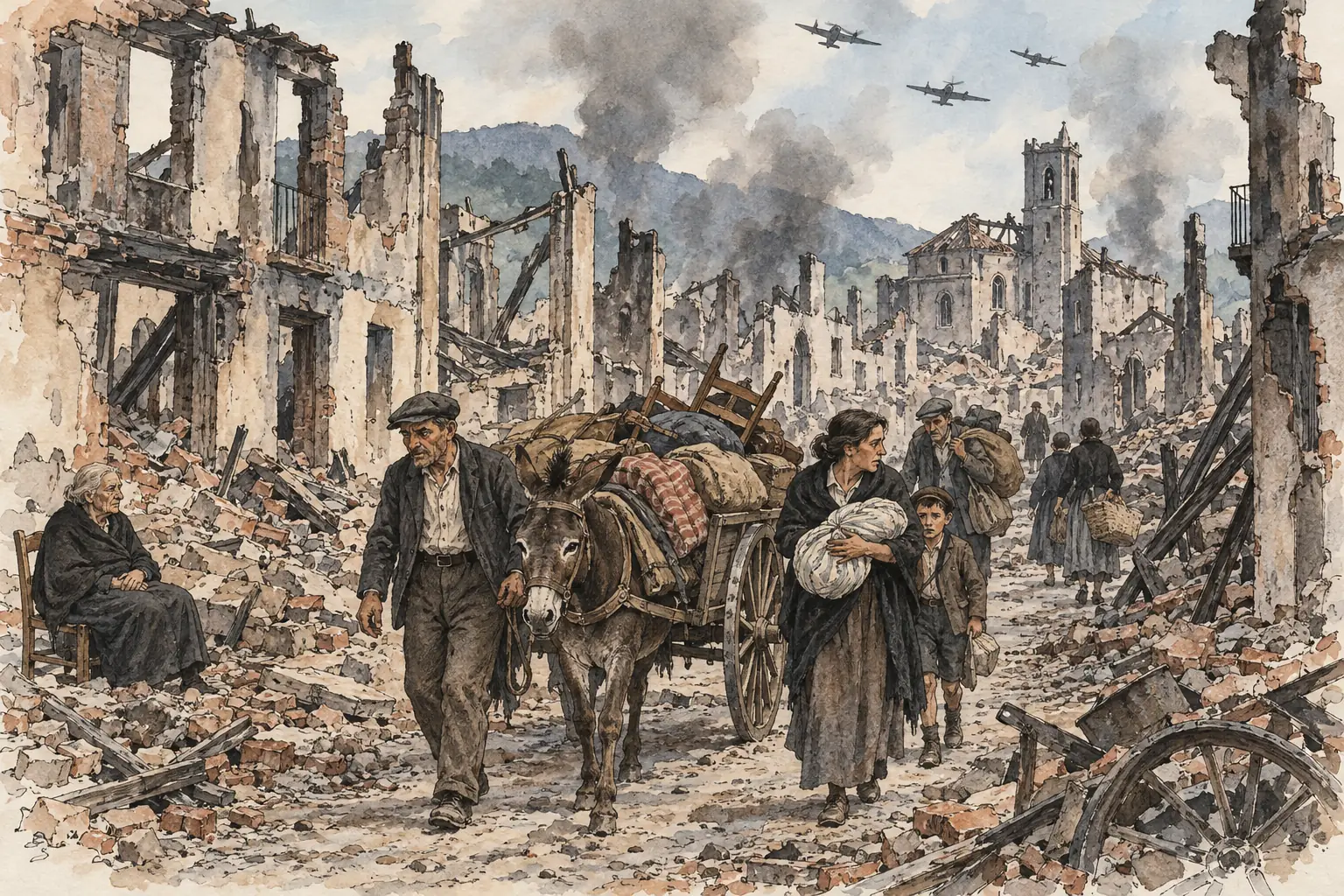
The League's inability to resolve major disputes highlighted its practical shortcomings. While it achieved some successes in humanitarian and technical areas, these were overshadowed by failures in core peacekeeping roles.
Major crises and League responses
| Crisis | League action | Outcome and reasons for failure |
|---|---|---|
| Manchurian crisis (1931-1933) | Issued a report condemning Japan and called for withdrawal | Japan ignored the ruling and left the League; lack of military support and US absence prevented enforcement |
| Abyssinian crisis (1935-1936) | Imposed economic sanctions but excluded key resources like oil | Sanctions failed due to incomplete implementation and fear of provoking war; Italy completed the invasion |
| Spanish Civil War (1936-1939) | Attempted non-intervention but could not stop foreign involvement | League powerless against German and Italian support for Franco; highlighted divisions among members |
| German remilitarisation of the Rhineland (1936) | Issued verbal protests but no action | France and Britain chose appeasement over confrontation, weakening League credibility |
These failures stemmed from the League's dependence on voluntary cooperation and its inability to compel compliance.
Reasons for the League's collapse
By 1939, the League had failed to prevent the slide into general war, primarily due to a combination of internal weaknesses and external pressures. However, it did record notable achievements in non-political domains.
Factors leading to ultimate failure
- Inability to prevent war - The cumulative effect of structural flaws, economic crises, and aggressive challenges rendered the League ineffective in maintaining peace, culminating in the outbreak of the Second World War.
- Humanitarian and technical successes - Despite its collapse, the League made progress in areas like refugee aid, labour standards through the International Labour Organization, and health initiatives, providing a foundation for the United Nations.
- Lessons for the future - The League's shortcomings emphasised the need for stronger enforcement mechanisms and broader membership in post-war international bodies, influencing the design of successor organisations.