3.1 - Hitler's Aims, Early Moves & Allied Reactions
Key facts and dates
Hitler's foreign policy in the 1930s focused on expanding German power and reversing post-World War I restrictions, while exploiting divisions among other nations. His actions were influenced by ideological goals and pragmatic testing of international responses, setting the stage for later aggression.
Key facts to remember
- Treaty of Versailles – 1919 agreement that limited German military strength and territory, which Hitler sought to dismantle.
- Grossdeutschland – Concept of uniting all German-speaking peoples into a greater German state.
- Lebensraum – Policy of acquiring living space in eastern Europe for German expansion.
- Anti-communism – Hitler's deep opposition to communism, which influenced alliances and targets.
- Rearmament – Secret military build-up starting in 1933, defying Versailles restrictions.
- Allied divisions – Weaknesses among Britain, France, and others that Hitler probed through early actions.
- Opportunism debate – Question of whether Hitler's moves were part of a fixed war plan or flexible responses to events.
Hitler's foreign policy aims
Hitler's approach to international relations was driven by a set of core objectives that reflected his nationalist and expansionist ideology. These aims were outlined in his writings, such as Mein Kampf, and guided Nazi Germany's actions from 1933 onwards.
Main objectives of Hitler's foreign policy
- Overturning the Treaty of Versailles - Hitler viewed the 1919 treaty as a humiliating imposition that restricted Germany's military, economy, and territory. His goal was to dismantle its key provisions, including arms limitations and territorial losses.
- Uniting German-speakers under Grossdeutschland - This involved incorporating regions with significant German populations, such as Austria and parts of Czechoslovakia, into a unified greater German state to strengthen national identity and power.
- Acquiring Lebensraum in the East - Hitler sought additional living space for the German people by expanding eastward, particularly into Poland and the Soviet Union, to secure resources and land for settlement.
Anti-communism's role in shaping his decisions
Anti-communism was a fundamental aspect of Hitler's worldview, influencing both his domestic policies and international strategies. It stemmed from his belief that communism posed an existential threat to Germany and Aryan supremacy.
Ways anti-communism influenced foreign policy
- Ideological opposition - Hitler saw the Soviet Union as the centre of a Bolshevik menace, which justified his eastward expansion plans as a defensive crusade against communism.
- Strategic alliances - This stance led to pacts with anti-communist regimes, such as the Anti-Comintern Pact with Japan in 1936, aimed at containing Soviet influence.
- Target selection - Anti-communism shaped choices like prioritising eastern territories for Lebensraum, where communist regimes could be portrayed as enemies to rally domestic support.
Early moves to test Allied reactions
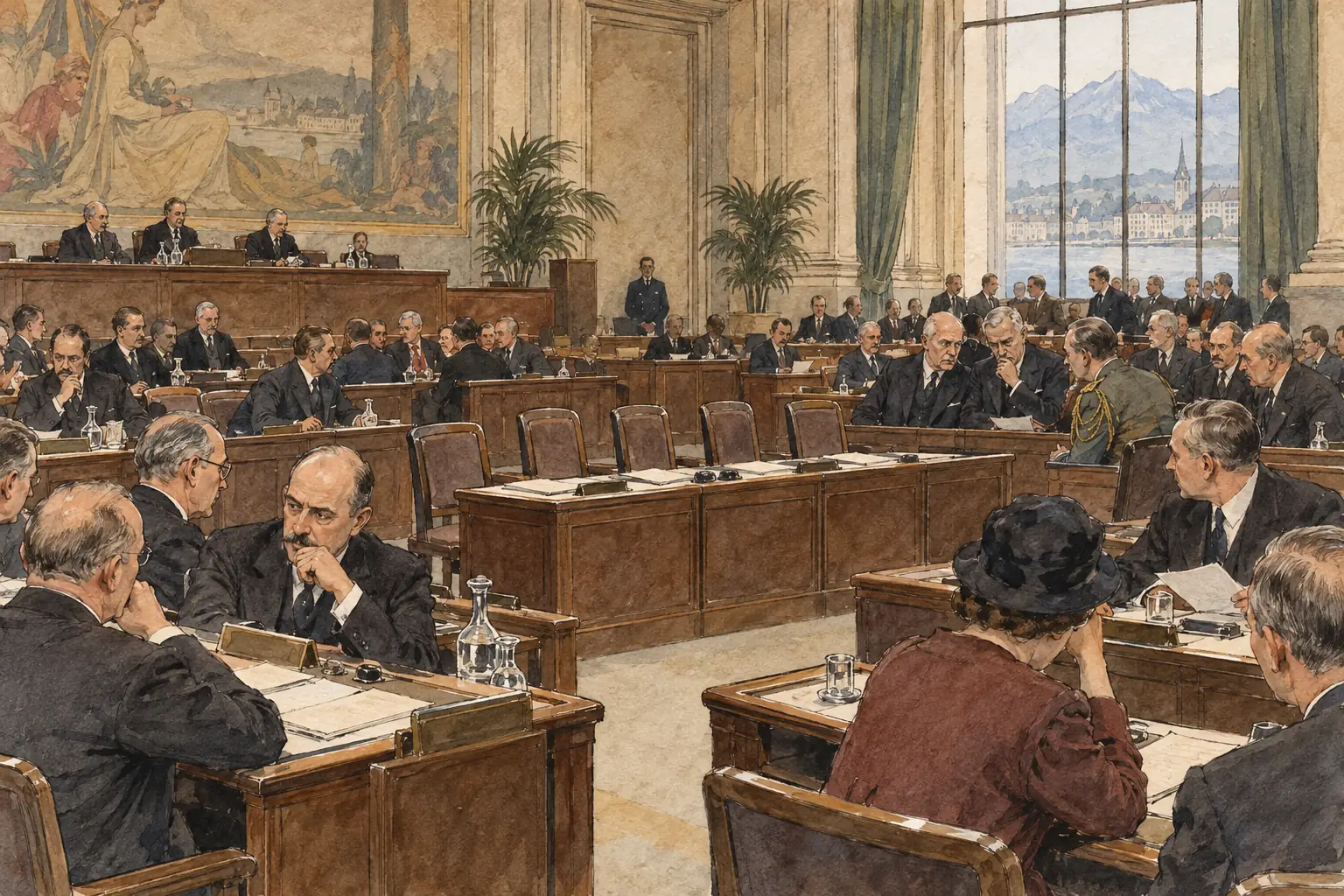
From 1933, Hitler implemented a series of cautious steps to challenge the post-World War I order while gauging responses from Britain, France, and other powers. These actions were designed to exploit weaknesses without provoking immediate conflict.
Key early actions and their purposes
- Rearmament planning from 1933 - Hitler initiated secret military expansion, including building an air force and increasing army size, in violation of Versailles limits. This tested whether the Allies would enforce restrictions.
- Cautious diplomacy - Through negotiations and treaties, such as the 1935 Anglo-German Naval Agreement, Hitler presented Germany as a reasonable partner, dividing Allied unity and buying time for rearmament.
- Probing Allied divisions - Moves like withdrawing from the League of Nations in 1933 and remilitarising the Rhineland in 1936 exploited disagreements between Britain and France, revealing their reluctance to confront Germany militarily.
Debate on planned war versus opportunism
Historians debate the extent to which Hitler's foreign policy followed a deliberate blueprint for large-scale conflict or adapted flexibly to emerging opportunities. This discussion centres on evidence from his writings, speeches, and actions.
Arguments for a planned intention for war
- Fixed ideological goals - Hitler's writings in Mein Kampf (1925) outlined long-term aims like Lebensraum and anti-communism, suggesting a premeditated path towards conquest that would inevitably lead to war.
- Systematic escalation - Early moves, such as rearmament and territorial demands, appear as steps in a coordinated strategy to prepare for and initiate a general European conflict by the late 1930s.
Arguments for opportunistic exploitation
- Adaptation to circumstances - Hitler often reacted to events, such as the weak Allied response to the Rhineland remilitarisation, adjusting plans to capitalise on divisions rather than following a rigid timetable.
- Flexible diplomacy - Actions like the 1938 Munich Agreement show Hitler exploiting British and French appeasement policies to achieve gains without immediate war, suggesting pragmatism over a set war plan.
Evidence supporting both views
| Aspect | Evidence for planned war | Evidence for opportunism |
|---|---|---|
| Ideology and writings | Mein Kampf details expansionist aims requiring conflict | Hitler revised tactics based on international reactions |
| Key actions | Rearmament from 1933 as preparation for aggression | Rhineland move in 1936 risked war but succeeded due to Allied inaction |
| Allied responses | Ignored as temporary obstacles in a long-term strategy | Exploited to accelerate gains without fixed deadlines |