1.1 - Post-War Aims, Ideologies & Leadership
Key facts and dates
The end of the Second World War in 1945 exposed deep divisions between the victorious allies, as differing ideologies and national goals turned cooperation into rivalry. This period marked the beginning of the Cold War, with leadership changes and territorial disputes accelerating the breakdown of the wartime alliance.
Timeline of key events
- February 1945 – Yalta Conference: Roosevelt, Churchill, and Stalin agree on post-war plans, but tensions emerge over Eastern Europe.
- April 1945 – Death of President Roosevelt; Truman assumes US presidency, adopting a firmer stance against Soviet expansion.
- May 1945 – End of war in Europe; Soviet forces occupy much of Eastern Europe, raising Western concerns.
- July 1945 – UK general election: Attlee replaces Churchill as prime minister, shifting British policy towards reconstruction.
- July–August 1945 – Potsdam Conference: Truman, Attlee, and Stalin clash over reparations and borders, highlighting ideological divides.
- Late 1945 – Disputes over Poland's government intensify, symbolising broader East-West rivalry.
Contrasts between capitalism and communism
The wartime alliance between the Western powers and the Soviet Union fractured in 1945 due to fundamental ideological differences. Capitalism, dominant in the USA and Britain, emphasised individual freedoms and market-driven growth, while communism, as practised in the USSR, focused on state control and collective ownership. These opposing systems created mistrust that undermined post-war cooperation.
Key differences between capitalism and communism
| Aspect | Capitalism (USA and Britain) | Communism (USSR) |
|---|---|---|
| Political systems | Multi-party democracy with regular elections and competing parties | One-party rule under the Communist Party, with no opposition allowed |
| Economic organisation | Market economy driven by private enterprise and competition | State planning with central control over production and resources |
| Civil liberties | Emphasis on individual rights, free speech, and personal freedoms | State prioritises collective goals, often restricting dissent and personal expression |
National priorities of the USA and USSR
Image 1 of 2: The USA ended the war with a booming economy and wanted open markets for its exports
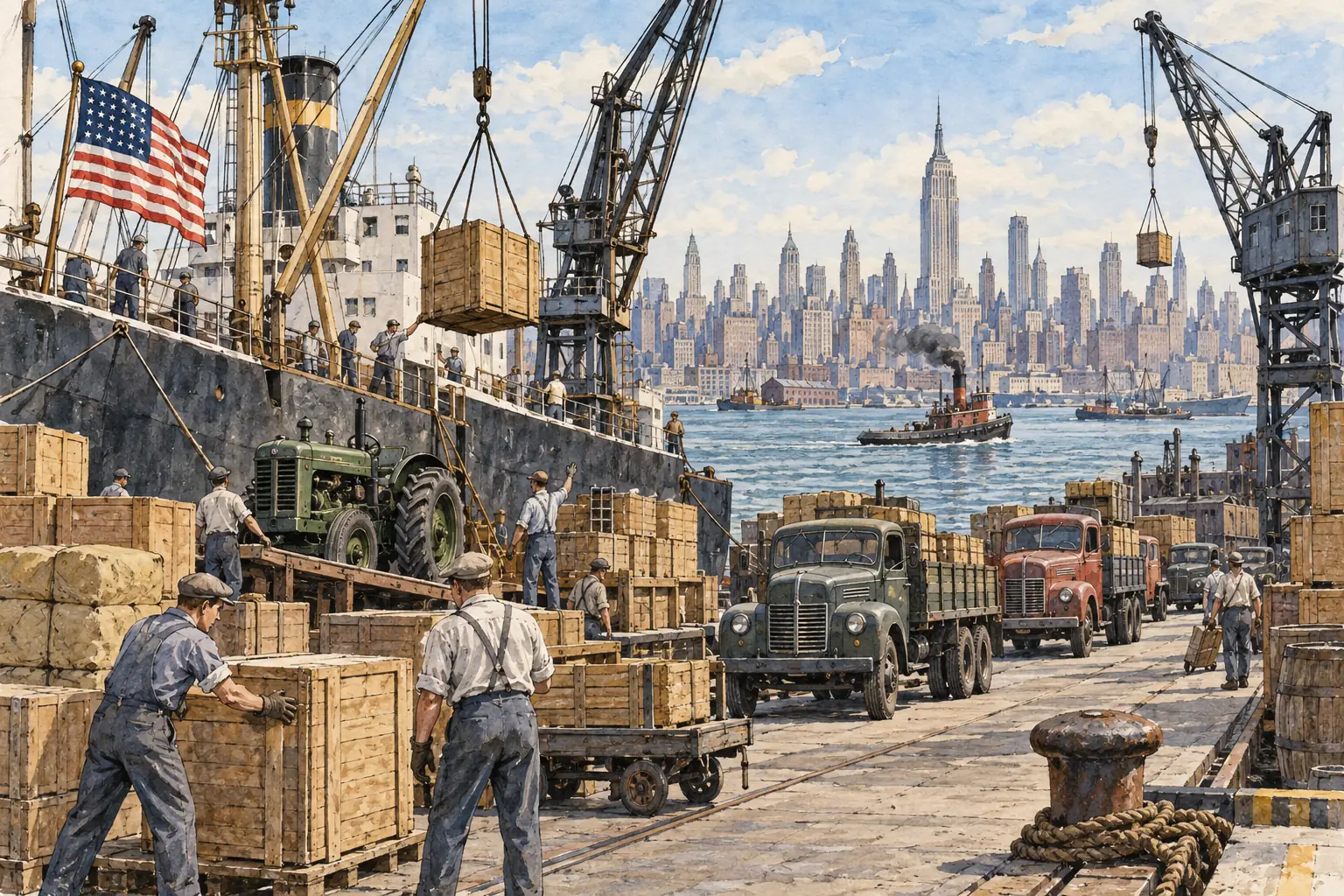
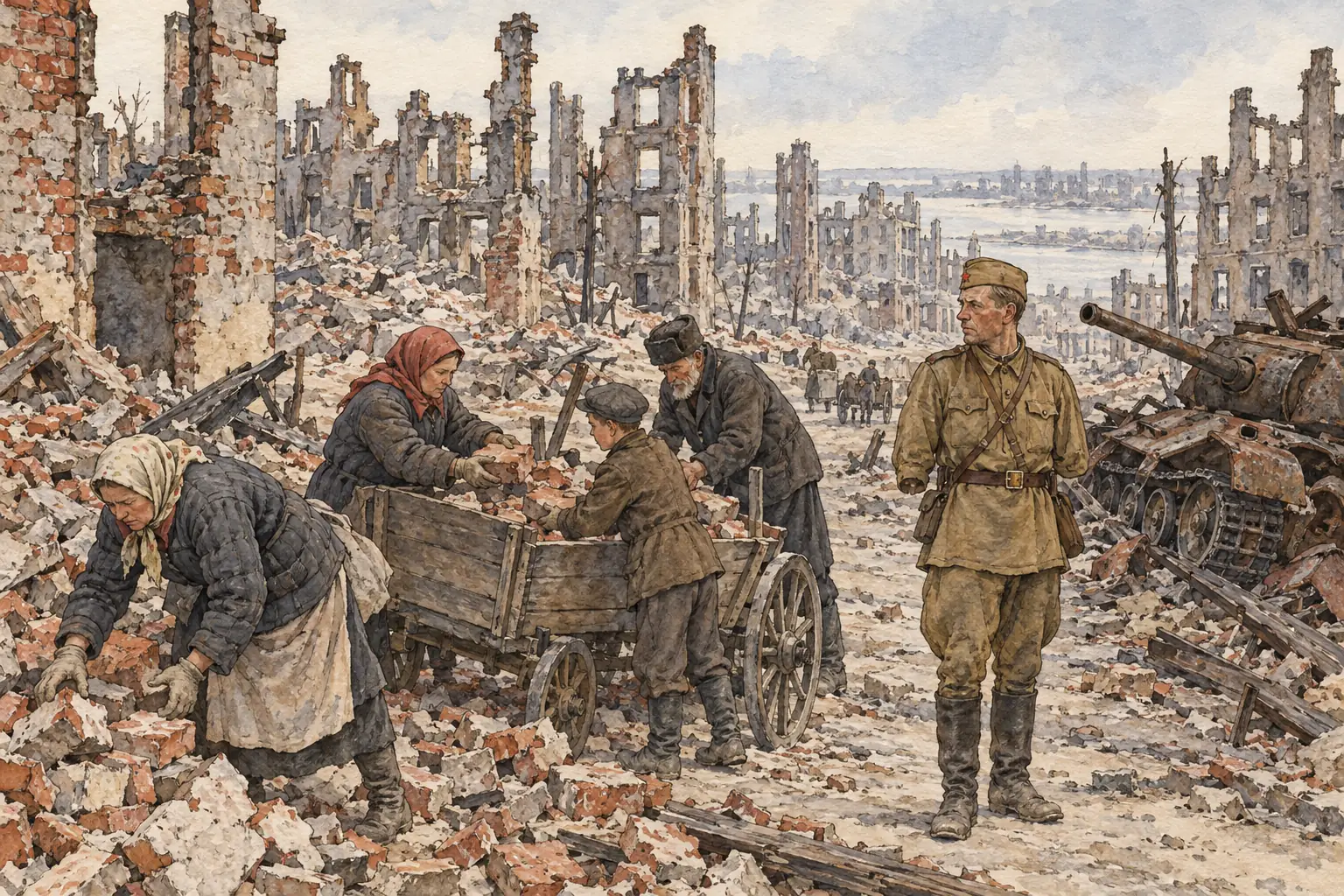
After the Second World War, the superpowers pursued distinct goals shaped by their experiences and ideologies. The USA sought global stability through economic openness, while the USSR prioritised recovery from massive wartime devastation, leading to conflicting visions for the post-war world.
Priorities of the USA
- Open markets - The USA aimed to promote free trade worldwide to boost its economy and prevent future depressions.
- Self-determination - Emphasised the right of nations to choose their own governments, opposing imperial or authoritarian control.
- Global influence - Sought to spread democratic values and contain communism to maintain its superpower status.
Priorities of the USSR
- Security - After suffering over 20 million deaths and widespread destruction, the USSR focused on protecting its borders from future invasions.
- Reparations - Demanded compensation from defeated powers, such as Germany, to rebuild its shattered economy.
- Defensive buffer - Aimed to create a zone of friendly states in Eastern Europe to act as a shield against Western threats.
Aims of key leaders and leadership changes
Image 1 of 2: Harry Truman was sworn in as President on 12 April 1945, a few hours after Roosevelt died
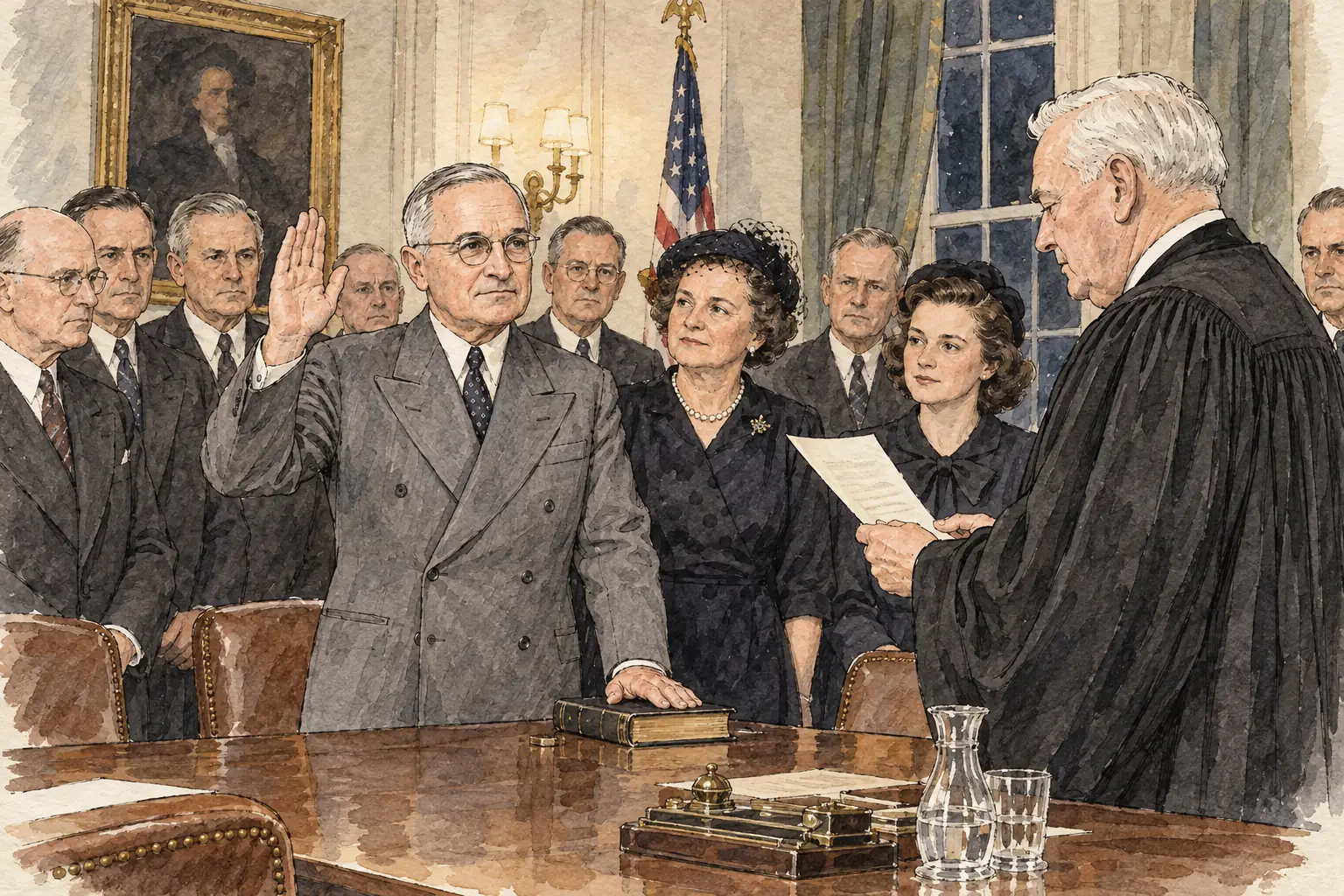
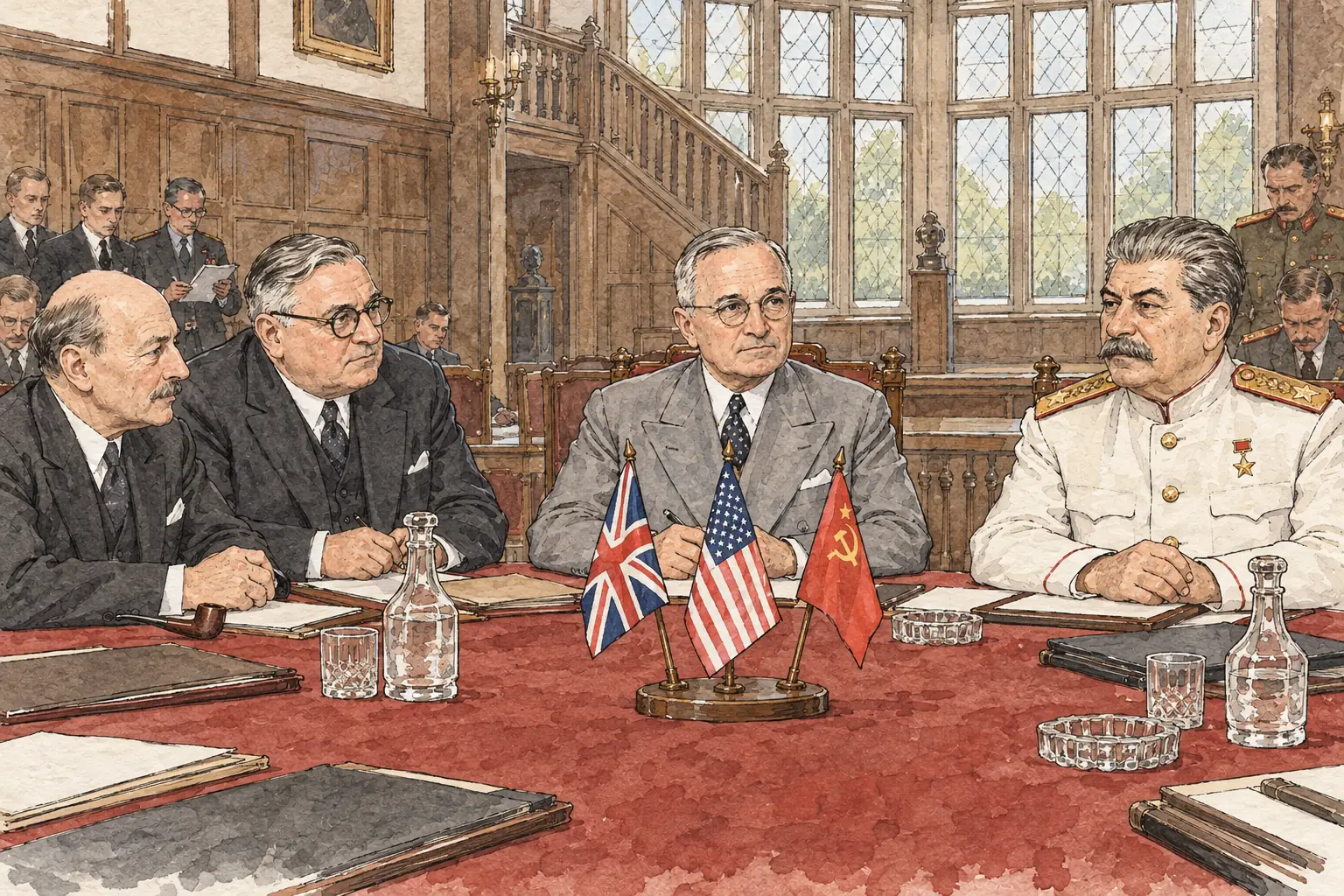
Key leaders shaped post-war policies through their personal aims and ideologies. Changes in leadership during 1945 introduced more confrontational approaches, hardening attitudes and accelerating the alliance's breakdown.
Aims of key leaders
- Joseph Stalin (USSR) - Pursued Soviet security by establishing communist governments in Eastern Europe and extracting reparations to rebuild the USSR.
- Winston Churchill (Britain, until July 1945) - Focused on preserving British influence, containing communism, and ensuring free elections in liberated territories.
- Franklin D. Roosevelt (USA, until April 1945) - Advocated cooperation with the USSR for global peace, emphasising self-determination and economic recovery.
- Clement Attlee (Britain, from July 1945) - Prioritised domestic reconstruction and welfare, while maintaining a cautious stance towards Soviet expansion.
- Harry S. Truman (USA, from April 1945) - Adopted a tougher policy against communism, viewing Soviet actions as aggressive and pushing for containment.
Impact of leadership changes in 1945
- Truman replacing Roosevelt - Truman's less conciliatory approach, informed by suspicions of Stalin, led to firmer demands at conferences like Potsdam.
- Attlee replacing Churchill - Attlee's Labour government focused on internal reforms but continued Churchill's anti-communist outlook, contributing to a united Western front.
- Overall hardening of attitudes - These shifts reduced willingness for compromise, as new leaders interpreted Soviet moves as ideological threats rather than defensive measures.
Disagreements over Poland and Eastern Europe
Competing visions for post-war Europe led to early clashes, particularly over Poland and broader Eastern European territories. These disputes exemplified how ideological differences translated into territorial conflicts, eroding trust between the allies.
Key disagreements in Eastern Europe
- Poland's government - The USA and Britain pushed for democratic elections, while the USSR installed a communist regime to secure its western border, ignoring Yalta agreements.
- Soviet occupation - USSR forces remained in countries like Romania and Bulgaria, establishing pro-Soviet governments to create a buffer zone.
- Western concerns - Leaders like Truman saw these actions as expansionist, violating self-determination principles and fuelling fears of communist domination.
- Impact on cooperation - Such conflicts highlighted incompatible aims, making joint post-war planning increasingly difficult.
Ideological rivalry between former allies
By late 1945, the former allies viewed each other as ideological rivals due to irreconcilable differences in goals and systems. This shift marked the onset of the Cold War, as mutual suspicions replaced wartime unity.
Reasons for growing rivalry
- Ideological incompatibility - Capitalism's focus on freedom clashed with communism's emphasis on state control, leading each side to see the other as a threat to global order.
- Post-war actions - Soviet moves in Eastern Europe were interpreted as aggressive expansion, while Western demands for open markets appeared as economic imperialism to the USSR.
- Leadership dynamics - Changes in 1945 introduced more hawkish policies, amplifying perceptions of rivalry over cooperation.
- Long-term consequences - This rivalry fostered a bipolar world, with both superpowers competing for influence through alliances and propaganda.