2.4 - Locarno & Kellogg-Briand Beyond the League
Key facts and dates
The period following the First World War saw countries seeking diplomatic solutions beyond the League of Nations to stabilise Europe and prevent future conflicts. Agreements like the Locarno Treaties and Kellogg-Briand Pact aimed to foster peace but highlighted ongoing challenges in international cooperation.
Timeline of key events
- 1925 – Locarno Treaties signed, guaranteeing Germany's western borders and normalising relations with France and Belgium.
- 1926 – Germany joins the League of Nations, facilitated by the Locarno agreements.
- 1928 – Kellogg-Briand Pact signed by 15 nations, renouncing war as a tool of national policy.
- 1929 – Pact expanded to include 62 countries, symbolising a global commitment to peace despite lacking enforcement mechanisms.
Reasons for agreements outside the League
After the First World War, the League of Nations aimed to maintain global peace through collective security. However, its limitations prompted major powers to negotiate separate deals to address specific regional tensions and build trust more effectively.
Factors leading to external agreements
- League's structural weaknesses - The absence of key nations like the USA and initial exclusion of Germany reduced the League's effectiveness in resolving disputes, encouraging bilateral or multilateral talks outside its framework.
- Need for targeted diplomacy - Countries sought focused solutions to border issues and security concerns that the League's broad approach could not swiftly handle, such as Franco-German rivalries.
- Desire for reconciliation - Post-war bitterness lingered, and external pacts allowed for direct negotiations to normalise relations without the League's bureaucratic processes.
- Economic and political pressures - Nations aimed to stabilise economies through assured peace, bypassing the League's sometimes slow or inconclusive decision-making.
Key features of the Locarno Treaties
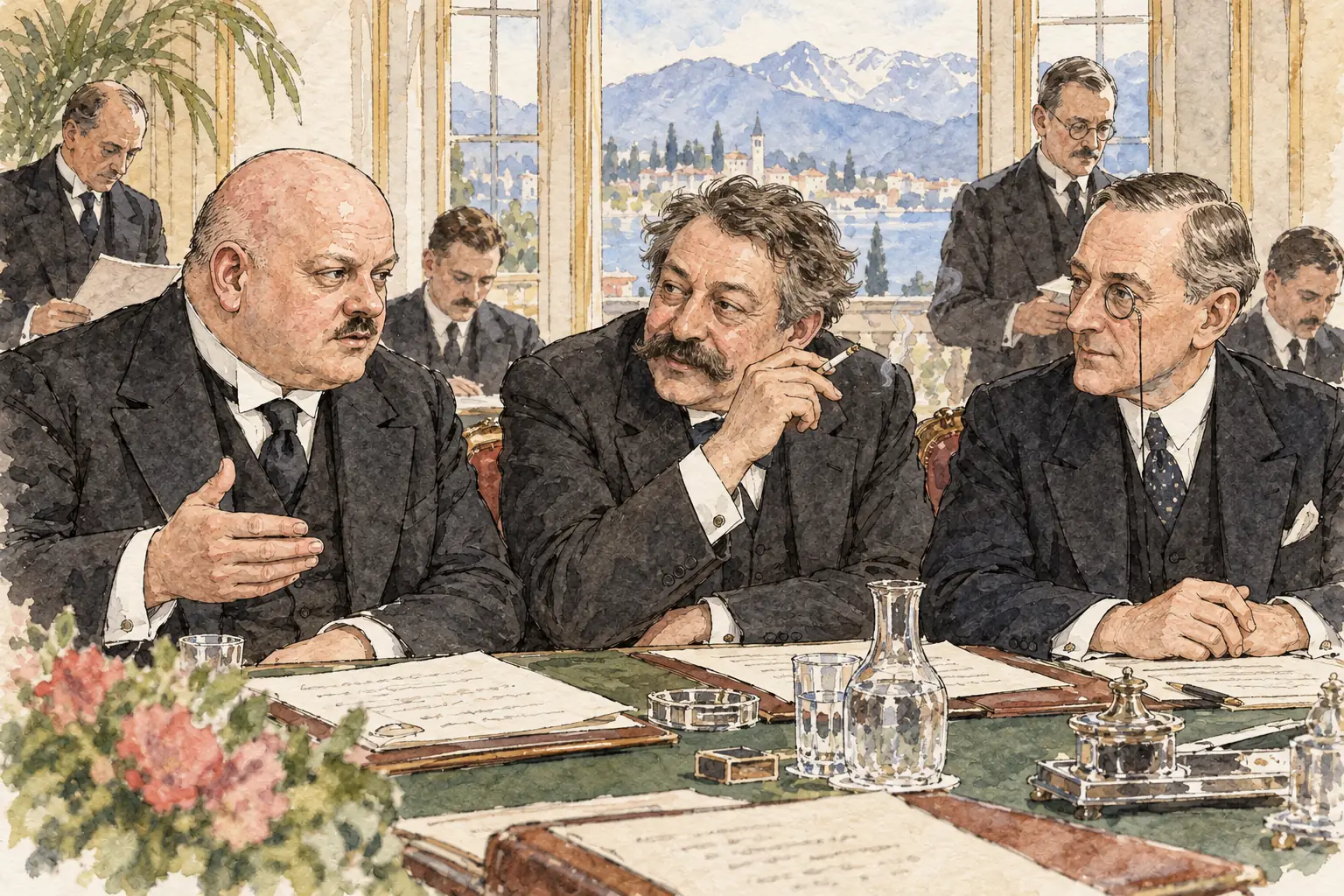
The Locarno Treaties, signed in 1925, represented a major diplomatic effort to secure peace in Western Europe. Involving Germany, France, Belgium, Britain, and Italy, these agreements focused on border guarantees and mutual non-aggression to reduce the risk of conflict.
Main elements of the Locarno Treaties
- Border guarantees - Germany accepted its western borders with France and Belgium as fixed, with Britain and Italy acting as guarantors to intervene if violated, promoting stability in the Rhineland region.
- Non-aggression pacts - Separate agreements ensured peaceful relations between Germany and its neighbours, including arbitration for disputes rather than military action.
- Path to League membership - The treaties facilitated Germany's entry into the League of Nations in 1926, marking its reintegration into international affairs.
- Limitations on eastern borders - While western frontiers were secured, Germany's eastern borders with Poland and Czechoslovakia remained unresolved, leaving potential for future disputes.
Significance of the Kellogg-Briand Pact
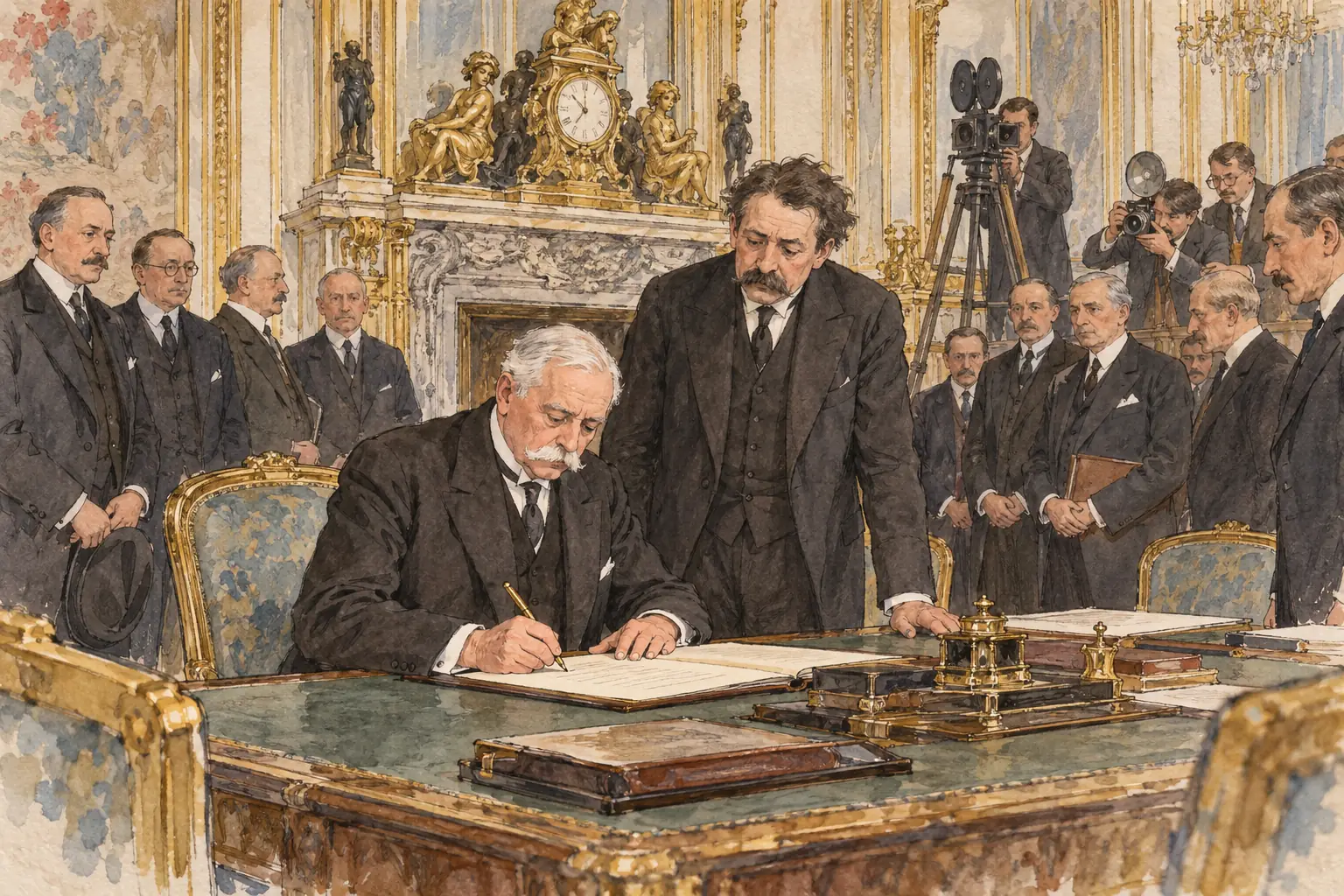
The Kellogg-Briand Pact of 1928, initiated by US Secretary of State Frank Kellogg and French Foreign Minister Aristide Briand, sought to outlaw war globally. Signed initially by 15 nations and later expanded, it reflected growing anti-war sentiment but faced practical challenges.
Core aspects of the Kellogg-Briand Pact
- Renunciation of war - Signatories pledged to abandon war as a means of resolving international disputes, committing instead to peaceful negotiations.
- Symbolic importance - The pact embodied idealistic hopes for a war-free world, gaining widespread support and eventually including 62 countries by 1929.
- Lack of enforcement - Without mechanisms for punishment or military backing, the agreement relied on moral suasion, making it ineffective against aggressive states.
- Influence on international norms - It set a precedent for later anti-war efforts, though its vagueness allowed nations to interpret self-defence broadly.
Easing tensions and limits of collective security
The Locarno Treaties and Kellogg-Briand Pact contributed to a temporary thaw in international relations during the 1920s, often called the "Locarno spirit." However, they also underscored the shortcomings of relying on voluntary commitments without robust enforcement.
Easing of international tensions
- Improved relations - Locarno fostered goodwill between former enemies, reducing immediate fears of invasion in Western Europe and encouraging economic cooperation.
- Broader diplomatic engagement - Germany's League entry and the pact's global reach promoted dialogue, temporarily stabilising the continent and averting minor crises.
- Moral and symbolic gains - These pacts boosted public confidence in peace efforts, aligning with widespread desires to avoid another world war.
Revelations of collective security's limits
- Selective guarantees - Locarno's focus on western borders ignored eastern vulnerabilities, showing how agreements could overlook broader security needs.
- Enforcement gaps - The Kellogg-Briand Pact's lack of sanctions highlighted the weakness of collective security without military or economic consequences for violators.
- Dependence on goodwill - Both relied on mutual trust rather than binding obligations, proving inadequate when economic depression and nationalism rose in the 1930s, leading to their eventual breakdown.