2.3 - Justice & Legal System: Courts, Ordeals & Murdrum
Key facts and dates
The Norman Conquest of 1066 brought gradual changes to England's legal system, building on existing Anglo-Saxon structures while introducing more uniformity and new elements to reinforce Norman control. Key aspects included court hierarchies, ordeal-based trials, and fines to protect the conquerors.
Key facts to remember
- Anglo-Saxon foundations – Pre-Conquest system featured local courts with varying procedures, which Normans largely retained for legitimacy.
- Norman modifications – Introduced uniformity in legal processes and new courts to centralise authority.
- Court types – Included royal, shire, hundred, manorial, honorial, and ecclesiastical courts.
- Ordeals – Trials by water or hot iron tested guilt through divine intervention.
- Trial by battle – Combat-based method used in disputes, especially involving Normans.
- Murdrum fine – Penalty on communities for unsolved murders of Normans to deter attacks.
The Anglo-Saxon legal system and Norman changes
Before the Norman Conquest, England had an established but varied system of justice rooted in local customs. The Normans, arriving in 1066, chose to keep many elements of this framework while introducing reforms that strengthened their rule and standardised practices across the kingdom.
Features of the Anglo-Saxon system
- Local courts and procedures – Justice was handled through community-based courts with rules that differed by region, focusing on compensation and collective responsibility rather than strict punishment.
- Lack of uniformity – Practices varied widely, reflecting the decentralised nature of Anglo-Saxon governance, which allowed for flexibility but could lead to inconsistencies.
Norman adaptations and their significance
- Retention for legitimacy – By preserving core aspects like local courts, the Normans portrayed themselves as rightful successors, reducing resistance and maintaining social order.
- Introduction of uniformity – Procedures were standardised to ensure consistent application of laws, helping to consolidate Norman authority and integrate their feudal system.
- Overall impact – These changes balanced continuity with control, making the legal system more efficient while deterring challenges to Norman dominance.
Hierarchy of courts under Norman rule
The Normans built on the Anglo-Saxon court system by creating a clearer hierarchy that included both existing and new types of courts. This structure ensured disputes were handled at appropriate levels, from local matters to those involving the king or church.
Types of courts and their roles
| Court type | Description | Jurisdiction and purpose |
|---|---|---|
| Royal (king's) courts | Overseen directly by the king or his representatives | Dealt with serious crimes or disputes affecting the crown, ensuring central control |
| Shire courts | County-level assemblies meeting regularly | Handled regional issues like land disputes and felonies, involving local officials |
| Hundred courts | Smaller divisions within shires, based on ancient administrative units | Addressed minor offences and community matters, promoting local accountability |
| Manorial courts | Held by lords on their estates for tenants | Focused on agricultural and feudal obligations, reinforcing lord-tenant relationships |
| Honorial (lord's) courts | New Norman creation for powerful barons' lands | Managed internal affairs of large estates, extending feudal authority |
| Church (ecclesiastical) courts | Operated by the clergy under canon law | Judged moral and religious offences, such as heresy or marital issues, separate from secular justice |
Types of trials by ordeal and battle
Image 1 of 3: Trial by hot iron, where the burn had to heal cleanly to prove innocence
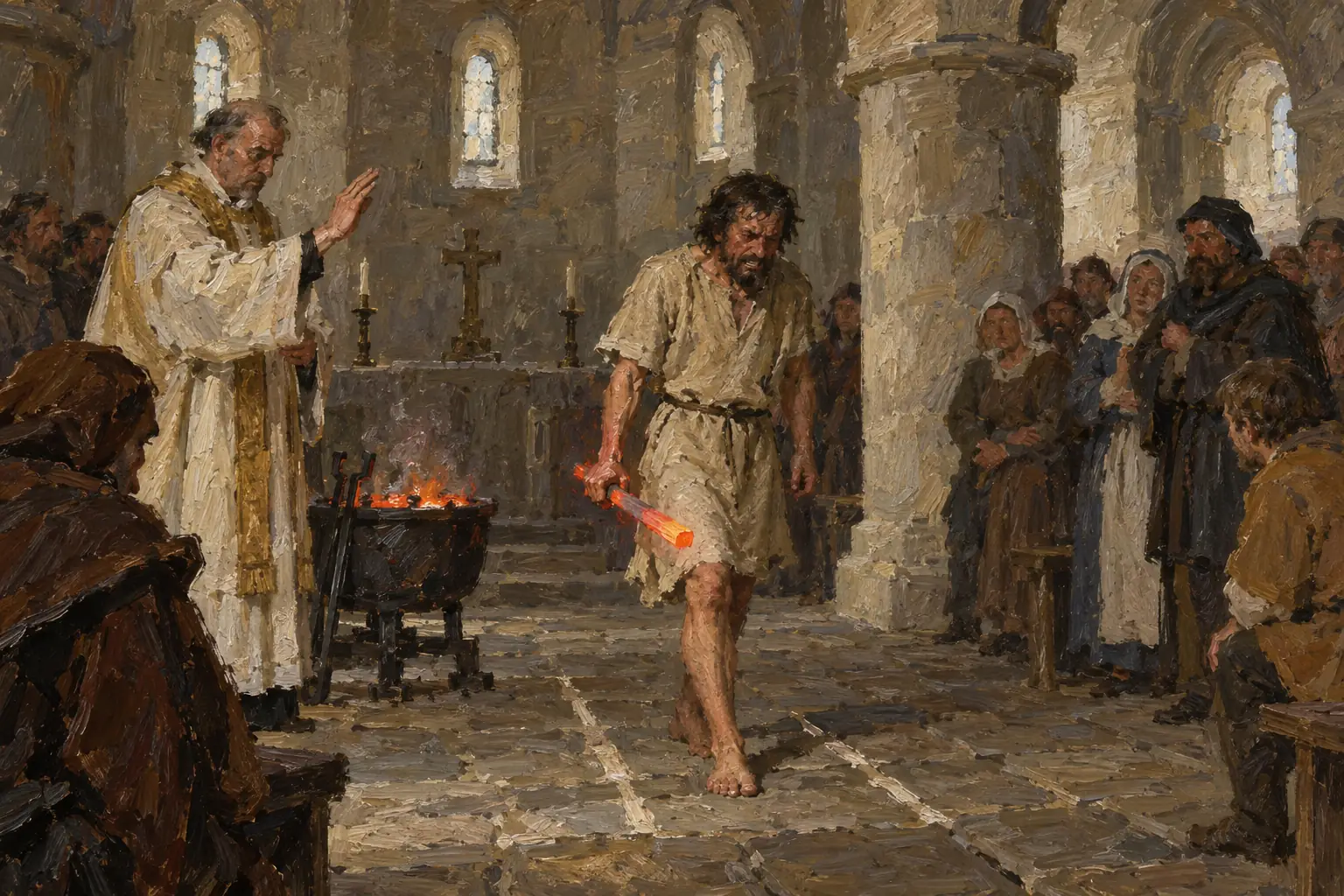
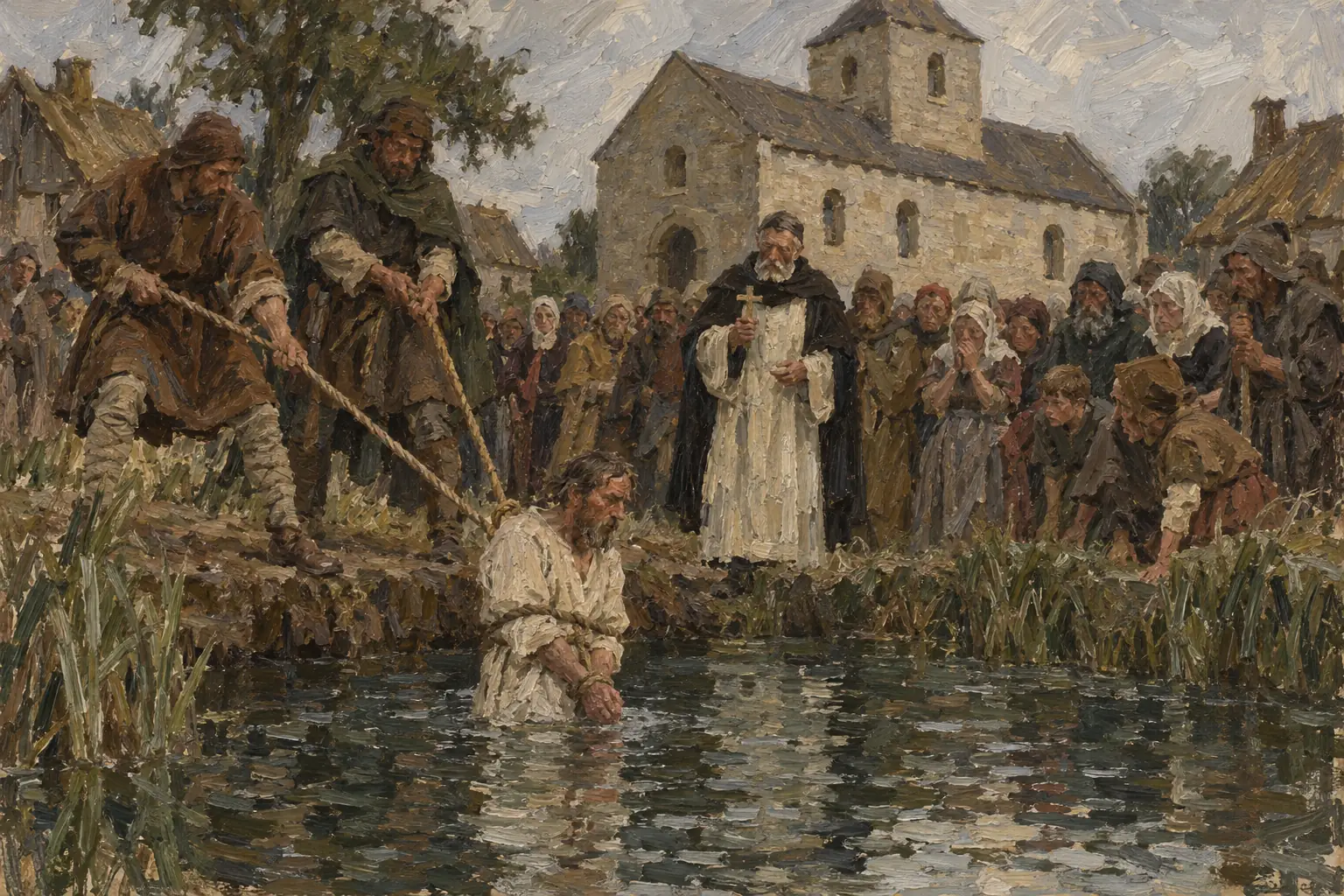
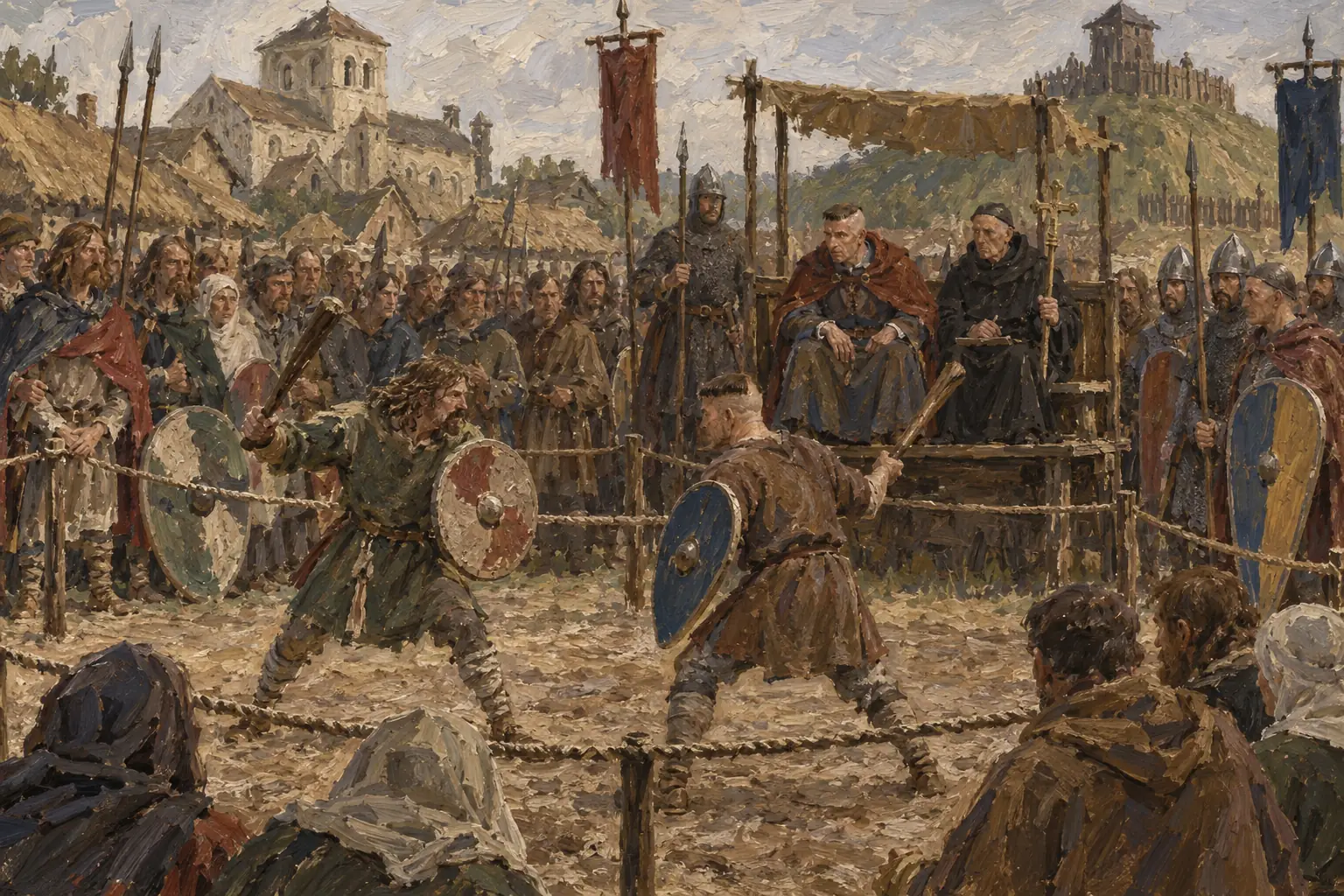
In cases where evidence was unclear, the Normans continued and adapted Anglo-Saxon methods of determining guilt through divine judgement or combat. These trials relied on the belief that God or physical prowess would reveal the truth.
Trials by ordeal
- Trial by water – The accused was bound and thrown into a body of blessed water; sinking indicated innocence (as pure water accepted them), while floating suggested guilt and rejection by the divine.
- Trial by hot iron – Involved carrying a heated metal bar a set distance; if the resulting burns healed cleanly within days, it signified innocence through God's favour.
Trial by battle
- Application – Used in disputes over land, honour, or serious accusations, particularly when Normans were involved, allowing champions to fight on behalf of parties.
- Process and outcome – Combat continued until one side yielded or was defeated; victory was seen as proof of righteousness, blending martial tradition with legal resolution.
The murdrum fine and its purpose
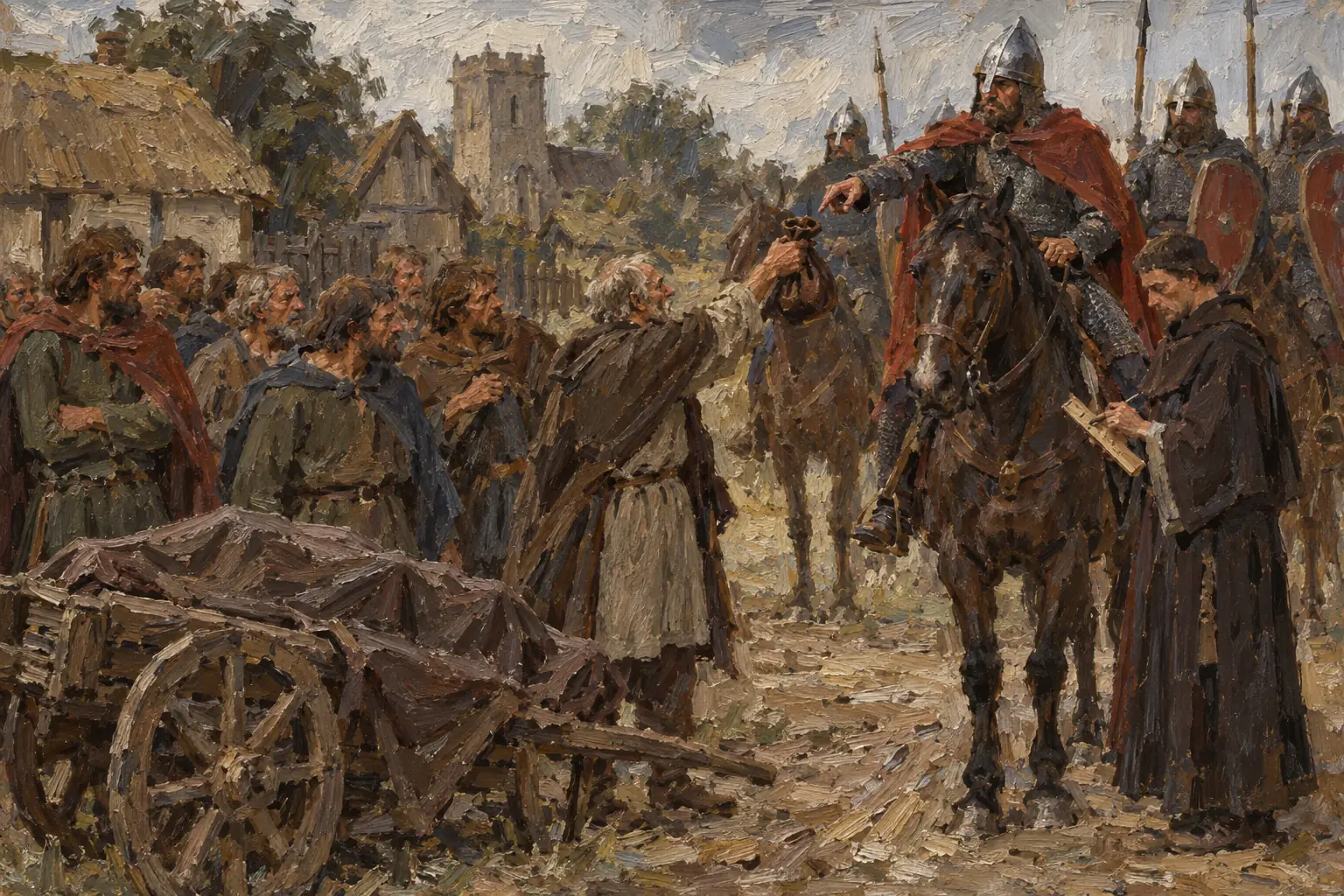
The murdrum fine was a specific penalty introduced by the Normans to protect their people in a hostile environment. It targeted communities rather than individuals, aiming to foster collective responsibility and reduce violence against the conquerors.
Operation of the murdrum fine
- Imposition – Applied to a hundred (a local administrative district) if a Norman's body was discovered and the killer could not be identified or produced within a set period.
- Financial penalty – The entire community faced a heavy collective fine, payable to the crown, which encouraged residents to cooperate in investigations.
Purpose and effectiveness
- Deterring attacks – By making whole areas financially liable, it discouraged targeted killings of Normans, as locals would suffer the consequences.
- Encouraging community policing – It promoted vigilance and self-regulation within hundreds, with people motivated to report suspects to avoid the fine.
- Overall impact – Proved effective in reducing anti-Norman violence by leveraging economic pressure, though it sometimes bred resentment among the English population.